
Испанийн хойд Африкийн нутаг дэвсгэр болох Сеута руу 24 цагийн дотор 60 мянга орчим хүн нэвтэрсэнтэй холбогдуулан Испанийн эрх баригчид хилийн аюулгүй байдлыг чангатгаж, нөхцөл байдлыг улсын бүрэн бүтэн байдалд халдсан үйлдэл хэмээн тодорхойллоо.
Испанийн Ерөнхий сайд Педро Санчес хилийн энэхүү зөрчлийг хүний наймааны бүлэглэлүүдтэй холбон тайлбарлаж, улсын нөөц бололцоог бүрэн ашиглан аюулгүй байдлыг хангахаа мэдэгдэв. Хилийн бүсэд үүссэн эмх замбараагүй байдлын улмаас 43 хүн амиа алдаж, олон зуун хүн бэртэж гэмтсэн байна. Мароккогийн аюулгүй байдлын хүчнийхэн усан буу, нулимс асгаруулагч хий ашиглан хилийн гарцуудыг хамгаалахад хүрсэн бөгөөд одоогоор Испани улс нэвтэрсэн хүмүүсийг буцаан гаргах ажиллагааг эхлүүлээд байна. Баасан гарагийн байдлаар ирсэн хүмүүсийн тал хувь нь Марокко руу буцжээ.
Энэхүү үйл явдал нь Европын холбооны улсуудын дунд дипломат маргаан дэгдээгээд байна. Италийн Ерөнхий сайд Жоржиа Мелони Шенгений бүсээс Испанийг түр хугацаагаар түдгэлзүүлэх санал дэвшүүлж, Европын хилийн аюулгүй байдлыг хамгаалах хатуу арга хэмжээ авахыг уриаллаа. Францын улс төрч Марин Ле Пен ч мөн адил хилийн хяналтыг нэн даруй чангатгах шаардлагатайг онцолсон байна.
Хямрал үүсэхэд Испанийн Дээд шүүхээс гаргасан шийдвэр нөлөөлсөн байж болзошгүй гэж үзэж байна. Тус шүүхийн шийдвэрээр тэнгисээр дамжин ирсэн цагаачдыг албадан гаргах боломжгүй гэсэн нь хүн наймаачдын дунд буруу мэдээлэл тархахад хүргэсэн гэж Ерөнхий сайд Санчес тайлбарлав. Хэдийгээр Сеута хотын удирдлага үндэсний хэмжээний онц байдал зарлахыг шаардсан ч Испанийн Дотоод хэргийн яам үүнийг няцааж, нэмэлт нөөц хүч илгээхээр шийдвэрлэжээ.
Дэлгэрэнгүйг эх сурвалжаас харах
↓Эх сурвалжийг нээх ↓
Europe faces a fresh border crisis after around 60,000 migrants from Morocco crossed into the Spanish enclave of Ceuta in just 24 hours.
At least 43 people died as border security struggled to deal with the sudden influx, with extraordinary footage capturing the huge crowds making their way into Spain’s North African territory.
Some drowned in the crossing while others were killed in a stampede at the Tarajal beach fence near a border checkpoint with Morocco.
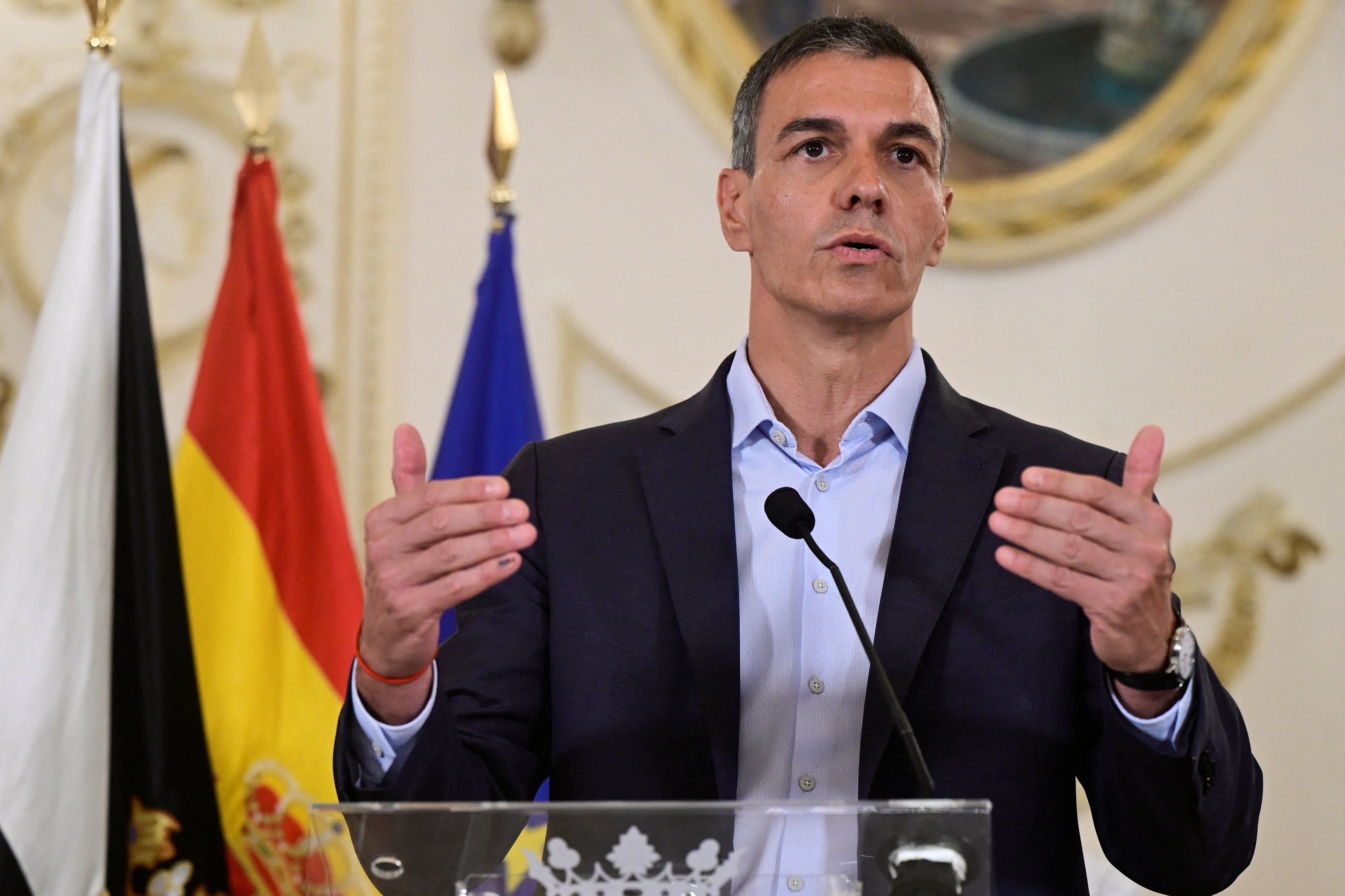
Spain’s prime minister Pedro Sanchez called the incident an “attack on Spain’s territorial integrity” and vowed to “use all the resources of the state to guarantee security and coexistence”.
Ceuta and the larger Spanish territory of Melilla that is some 400 kilometers (250 miles) east of it, are located on the northern shores of the Mediterranean coast at the tip of Africa. Both hold the European Union’s only land border with Africa.
Prime minister Andy Burnham called the scenes a “cause for concern” as the shadow home secretary Chris Phelp warned Spain’s border crisis could “rapidly become our border crisis”.
The incident has also sparked a diplomatic row across Europe with Italy’s prime minister Giorgia Meloni calling for Spain’s suspension from the Schengen zone.
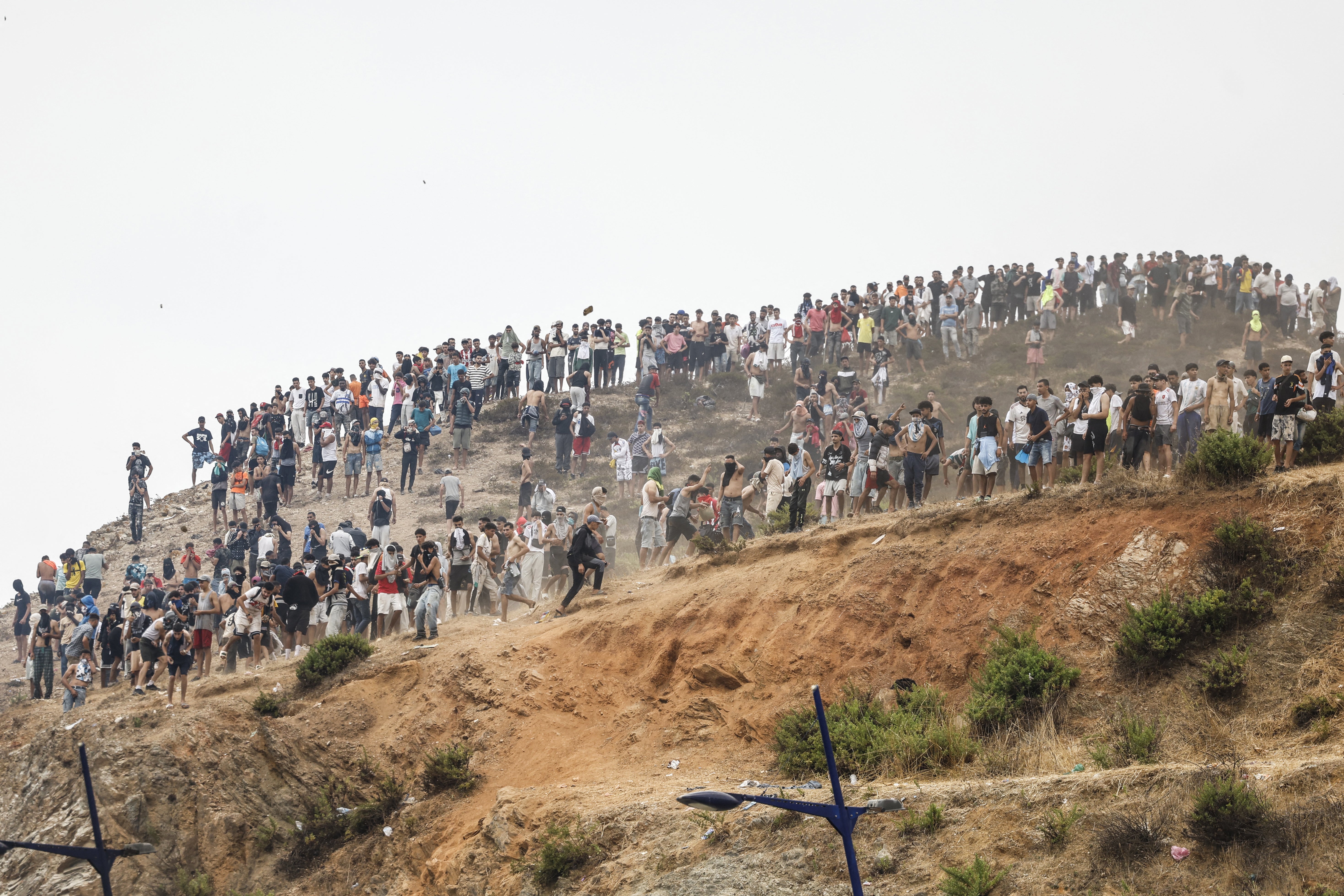
Thousands of people were seen attempting to breach the border by land and sea by swimming around coastal barriers and forcing their way through land-border infrastructure. It is one of the most significant breaches of the territory’s border in years.
Rachid Sbihi, head of the association representing Guardia Civil officers in Ceuta, described the scenes as “absolute chaos” and said the border had “totally collapsed”. Sbihi described the event as a “humanitarian crisis”.
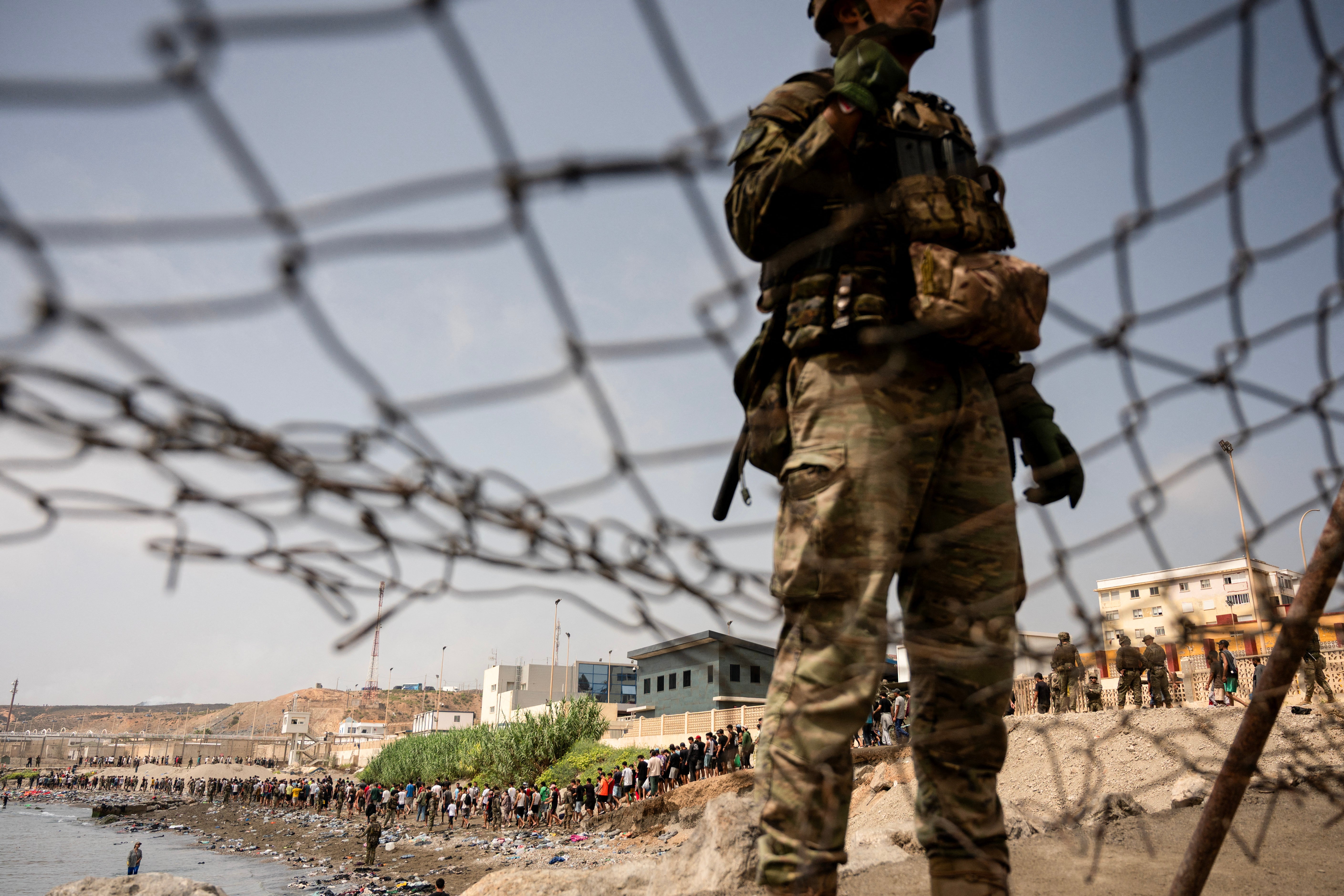
Spain has deployed police and military personnel to deal with the crisis and promised that those involved will be sent back to Morocco.
On Friday, authorities confirmed that half of the migrants had already returned, many of them voluntarily.
Moroccan forces used water cannons, batons and tear gas at the Ceuta gates to prevent more crowds storming the autonomous Spanish territory.
Sanchez went on to blame gangs for the crisis, saying that they “deceive so many young people, and ultimately lead many of them to their deaths — whether in the ocean or, as in this case, at Spain’s border in the autonomous city of Ceuta.”
Right wing leaders in Europe were quick to condemn the incident, urging tighter controls of EU borders.
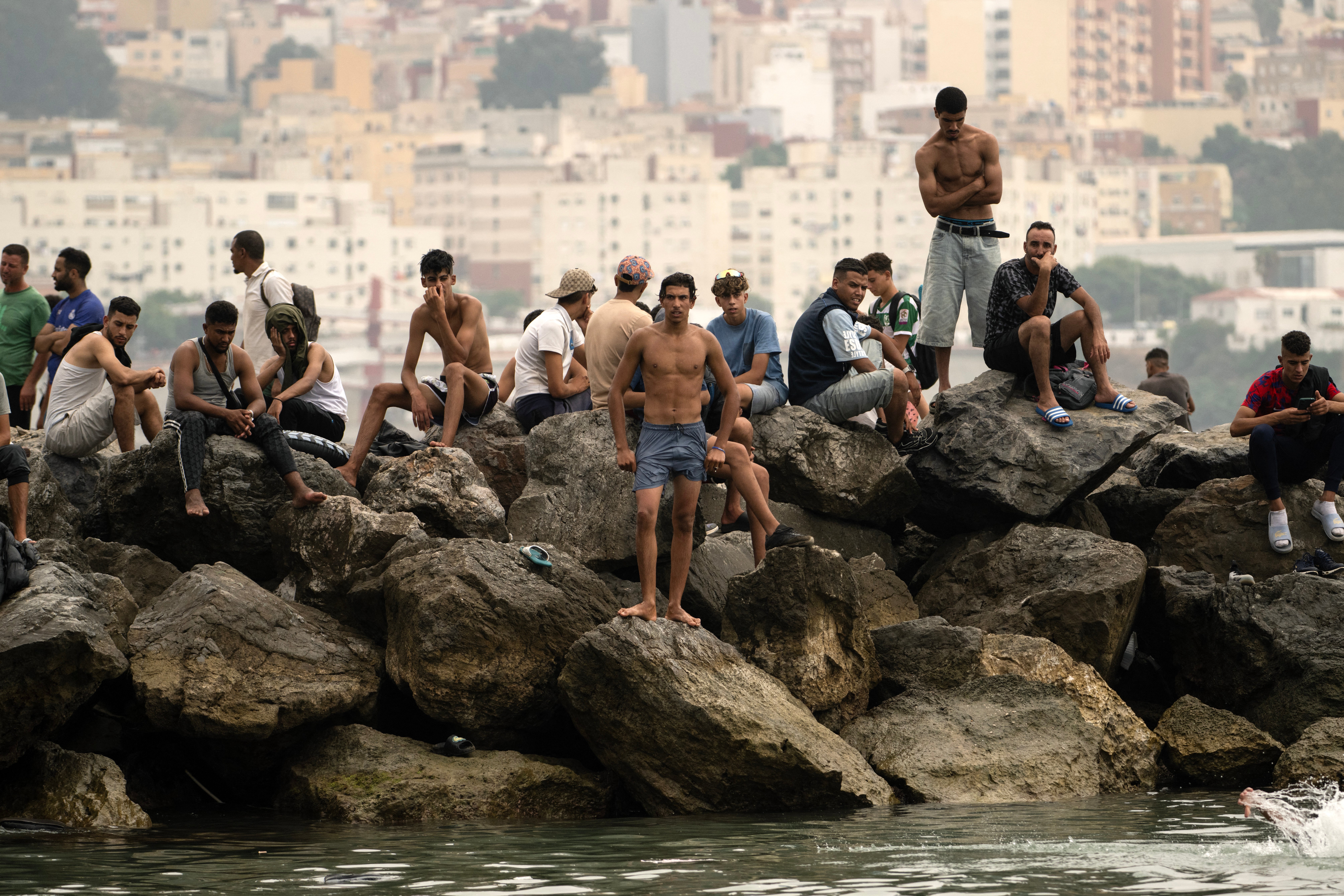
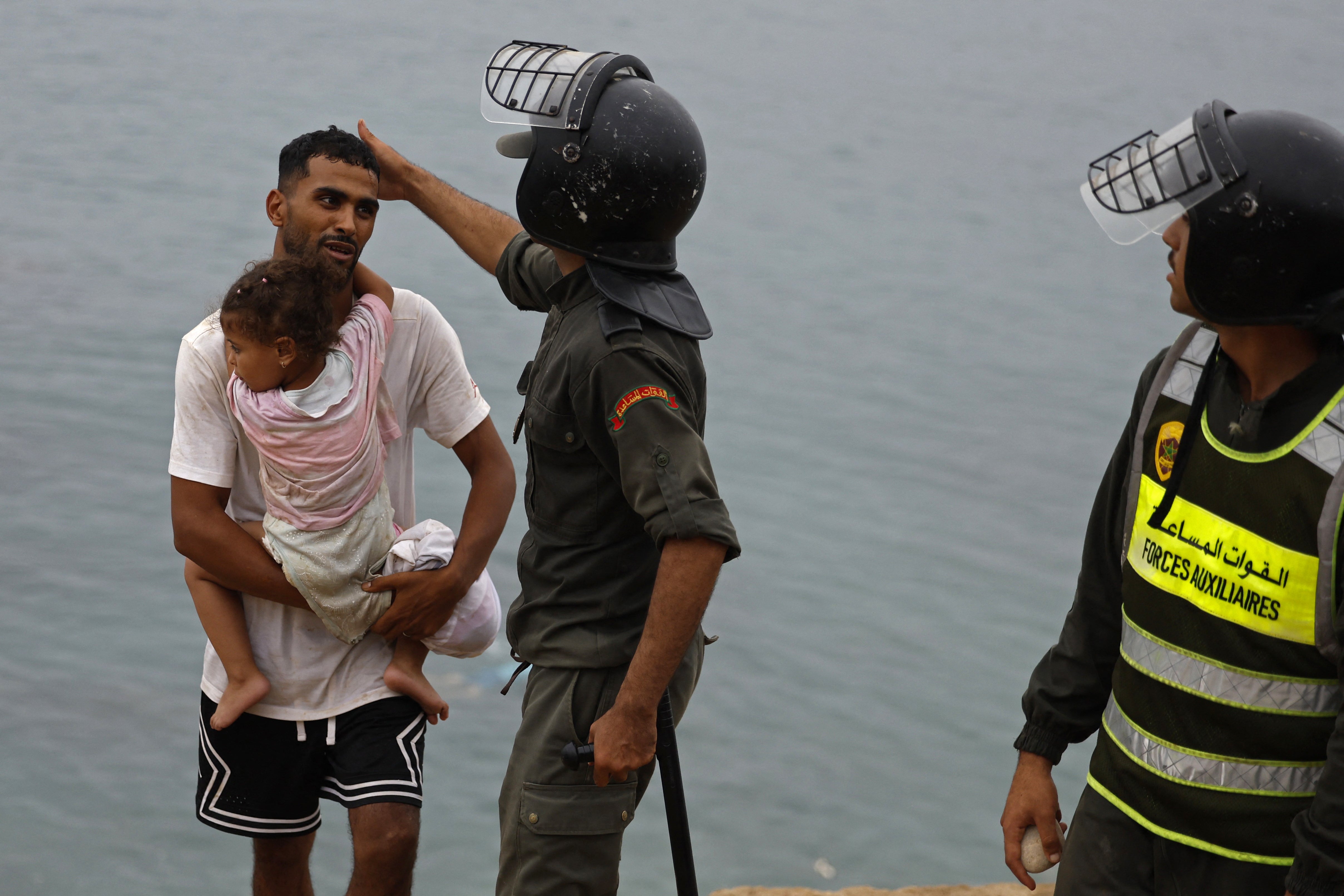
Meloni said that the “striking” images confirmed that “uncontrolled illegal immigration poses a concrete threat to the security of Europe’s borders”.
“Italy will not stand by and watch,” she wrote. “We are convening the relevant bodies, and following these meetings, we are prepared to intervene with extraordinary measures to defend the borders and the safety of citizens, including the suspension of the Schengen Area with Spain.
“On illegal immigration, we will not yield an inch: defending the borders, stopping human traffickers, and ensuring effective repatriations will continue to be the line of this Government.”
France’s far right Marine Le Pen accused the Spanish government of “encouraging” the crisis.
“Faced with the massive and coordinated influx of migrants into Spain, encouraged by the Spanish government, France must without delay strengthen controls at its borders,” she wrote in a post on X.
“And in 2027, we will put an end to this madness by reserving Schengen free movement for EU nationals.”
President of the EU Commission Ursula von der Leyen called for the swift return of migrants back to Morocco, while German chancellor Friedrich Merz said: “The protection of the EU’s external borders is crucial for combating illegal migration.
“I support Spain’s intention not to allow illegal migrants onto the European continent. The EU’s Return Directive must now be implemented without delay.”
The surge is reportedly linked to a recent ruling by Spain’s supreme court, which concluded that migrants intercepted at sea while attempting to reach Ceuta or Melilla cannot be deported or returned back under new rules. The decision does not apply to crossings by land.
Sanchez said that the ruling had been misinterpreted.
“It appears that this interpretation of the Supreme Court’s ruling spread like wildfire over the past few hours through the networks of human trafficking organisations, triggering the kind of mass surge we witnessed yesterday,” Sanchez said.
Juan Jesus Vivas, mayor-president of Ceuta, called on the government to declare a national emergency but the interior ministry rejected the calls on the grounds that migration did not constitute a national emergency but vowed additional resources.
Opposition leader Alberto Nunez Feijoo described the situation as a “national security crisis” and urged the government to take stronger action.


