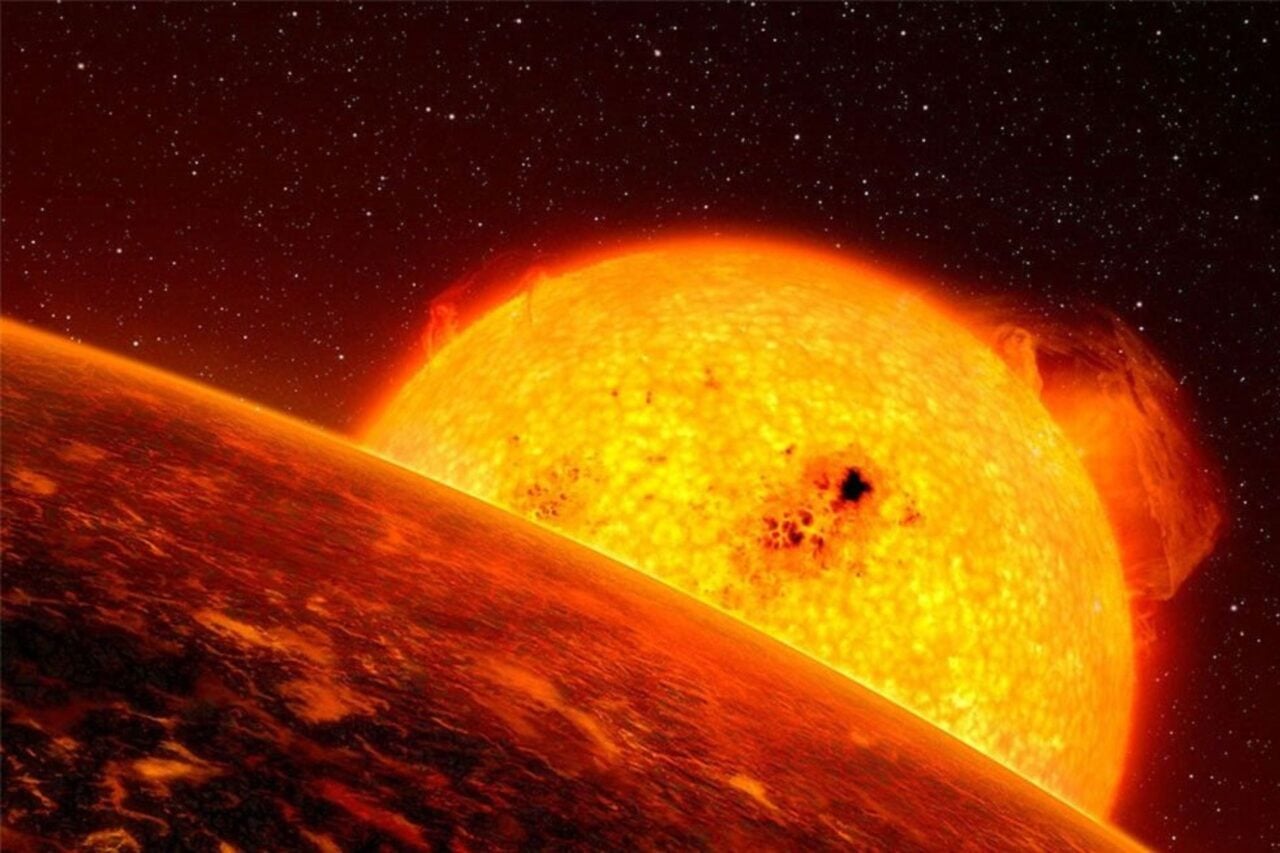
Эрдэмтэд Нарны тэлэлт болон мөхөл нь Дэлхий дээр амьдрах боломжгүй болгоно гэж үздэг ч үүнээс зайлсхийх аргыг нэгэн судлаач дэвшүүлжээ.
Британийн Интерпланетар Нийгэмлэгийн сэтгүүлд нийтлэгдэхээр төлөвлөгдсөн судалгаандаа бие даасан судлаач Габриэл Харри Нарны аюулаас амьд үлдэх төлөвлөгөөг боловсруулсан байна. Тэрээр нарны гэрэлтэлт, наранд залгигдах, ус алдах, гаригийн тэнхлэг болон эргэлтийн өөрчлөлт зэрэг Дэлхийн оршин тогтноход заналхийлэх олон аюулаас хамгаалах мега инженерчлэлийн концепцуудыг танилцуулжээ. Эдгээр олдворыг arXiv урьдчилсан хэвлэлийн серверт байршуулсан байна.
https://arxiv.org/abs/2607.13084
Хэрэв ямар нэг арга хэмжээ авахгүй бол Дэлхийн амьдрах орчин нэг тэрбум жилийн дараа дуусна гэж Харри судалгаандаа бичжээ. Гэсэн хэдий ч түүний санал болгож буй хамгаалалтын арга хэмжээг хэрэгжүүлснээр Дэлхий 9.1 квадриллион жилийн турш амьдрах боломжтой хэвээр үлдэх ажээ.
Энэхүү төлөвлөгөөний эхний алхам нь Нарны цацраг туяанаас хамгаалахын тулд Сарны тойрог замын гадна 700,000 км өргөнтэй нарны хаалт барих юм. Энэхүү хаалтыг Дэлхий болон Нарны таталцлын тэнцвэрт цэг болох Лагранжийн 1-р цэгт (L1) байрлуулж, сарны болон Церес одой гаригийн нөөцөөс гаргаж авсан хөнгөн цагаан болон нүүрстөрөгчийн утсаар бэхлэх аж.
https://gizmodo.com/earth-could-survive-the-suns-bloated-death-stage-but-theres-a-catch-2000778916
https://phys.org/news/2026-08-earth-habitable-sun-dies.html
https://gizmodo.com/the-age-of-the-most-distant-galaxy-ever-seen-barely-makes-any-sense-2000715503
Нар хаагдсаны дараа үүсэх дулаан, гэрлийн дутагдлыг нөхөхийн тулд Бархасбадь гаригийн агаар мандал дахь түлшийг ашиглан хиймэл нар бүтээх боломжтой гэж үзжээ. Мөн Бархасбадийн материалыг ашиглан бөөмөн цацраг үүсгэж, Дэлхийн тойрог замыг Нарнаас холдуулан аюулгүй зай руу шилжүүлэх гэнэ. Эдгээр дэвшилтэт инженерчлэлийн аргууд нь хүн төрөлхтнийг сансар огторгуйн урт хугацааны аюулаас аврах боломжтой юм.
Дэлгэрэнгүйг эх сурвалжаас харах
Эх сурвалжийг нээх ↓
The star that gave our planet life will one day take it away. Scientists have long agreed that the expansion and eventual death of the Sun will destroy Earth’s habitability, but one researcher believes he’s figured out a way for humanity to avoid this fate.
In a study set to appear in the Journal of the British Interplanetary Society, independent researcher Gabriel Harry outlines a plan that he claims could help us outlive the Sun. In fact, he presents megaengineering concepts designed to safeguard against a whole suite of long-term threats to Earth’s habitability: solar luminosity, solar engulfment, the end of tectonics, water loss, changes in the planet’s tilt and spin, object collision, and dangers from beyond our solar system. The findings are currently available on the preprint server arXiv.
“Left unchecked, the Earth’s current habitability will end in one billion years,” Harry writes in the paper. “Implementing and maintaining the set of safeguards would allow the Earth to remain habitable for 9.1 million billion years.”
Step 1: Blot out the Sun
As Harry describes in an accompanying article for Phys.org, the Sun will begin to run out of fuel and expand about 1 billion years from now, rendering Earth uninhabitable. As the star engulfs our planet, global temperatures will skyrocket, oceans will boil off, and the atmosphere will burn away.
In about 5 billion years, the Sun will shrink into a white dwarf, robbing the solar system of light and warmth. And in a hundred trillion years, the Milky Way galaxy will no longer be able to produce stars, and our cosmic neighborhood will wink out entirely.
The first problem we need to solve is the onslaught of solar radiation due to the Sun’s expansion, according to Harry. He proposes building a 435,000-mile-wide (700,000-kilometer-wide) sunshade, placing it just outside the Moon’s orbit, and anchoring it via a carbon cable attached to a weight placed at Lagrange Point 1 (L1). This is a location between Earth and the Sun where their gravitational pulls are balanced, allowing objects to stay put.
The sunshade would cover a 70-degree area of the sky, effectively blotting out the Sun. It would be made mostly of aluminum, and Harry conservatively assumes a total thickness of 0.1 millimeters, which is equal to that of the James Webb Space Telescope’s sunshield. Thus, it would have a mass of about 220 quadrillion pounds (100 quadrillion kilograms). Harry suggests mining the required aluminum from just 0.01% of the Moon’s total mass. To make the 1.2-million-mile (2-million-km) carbon tether, we could mine 40% of the dwarf planet Ceres.
Step 2: Deal with the consequences
With that taken care of, we’ll have another problem on our hands. Blocking the Sun will deprive Earth of the warmth and light that sustain life. To replace the Sun, we could use Jupiter as a massive fuel source for fusion reactors, Harry claims. These reactors would orbit the gas giant 4,000 miles (6,500 km) deep in its atmosphere, taking in helium-4 and hydrogen to produce energy. That energy could be beamed up to Jupiter’s L1, then transmitted by laser to a Lagrange relay and shone onto Earth’s surface, serving as an artificial Sun.
However, Earth will need to move away from the Sun to avoid being engulfed by its red giant phase. According to Harry, Jupiter could help us solve this problem, too. To extend Earth’s orbit from 1 astronomical unit to a safe distance of 1.2 astronomical units, we could mine oxygen from the gas giant and use it to fire a particle beam past Earth. The mass of the beam would be roughly equal to half of the Amazon River’s outflow, gradually propelling our planet away from the Sun.
Together, these interventions could save life on Earth from dying with the Sun, Harry claims. He goes on to recommend megaengineering solutions for other threats to our planet’s long-term habitability as well, including the eventual loss of plate tectonics, galactic collisions, water loss, and other cosmic threats. While they may sound outlandish, it is fascinating to imagine a highly advanced future civilization that could save itself from hazards currently considered death sentences.

