
АНУ-ын Тэнгисийн цэргийн хүчний алсын зайн цохилт өгөх чадавхыг нэмэгдүүлэх зорилготой алсын тусгалт шууд туורгагч зэвсгийн шинэ цувралын үйлдвэрлэл эхэлж байна.
Boeing компани АНУ-ын Тэнгисийн цэргийн хүчинд зориулсан “Joint Direct Attack Munition-Long Range” (JDAM-LR) өндөр нарийвчлалтай удирдан чиглүүлэгч зэвсгийг үйлдвэрлэж эхлэх зөвшөөрлийг авчээ. Энэхүү зэвсэг нь JDAM загварын нарийвчлалтай бөмбөгнөөс гаралтай жижиг далавчит пуужин бөгөөд F/A-18E/F Super Hornet сөнөөгч онгоцноос амжилттай туршигдсаны дараа тус хүчний агаараас хөөргөх алсын зайн зэвсгийн нөөцийг бэхжүүлэх шинэ боломжийг олгож байна.
Өчигдөр гаргасан мэдэгдлээр Boeing компани АНУ-ын Агаарын цэргийн хүчнээс 75 сая ам.долларын өртөг бүхий гэрээний урьдчилсан арга хэмжээний эрх авснаа зарлажээ. Агаарын цэргийн хүч нь JDAM хөтөлбөрийн төв удирдлагын үүргийг гүйцэтгэдэг бөгөөд дээрх гэрээ нь үнэ болон бусад эцсийн нарийн ширийн зүйлсийг цаашид тохиролцох шаардлагатай боловч яаралтай хэрэгцээнд үндэслэн ажлыг шуурхай эхлүүлэх зорилготой юм. Boeing-ийн удирдлагын мэдээлснээр GBU-75/B гэж нэрлэгдсэн уг зэвсэг нь хол зайн газрын болон тэнгисийн залуу хუქуйн заналхийллийг устгах боломжтой хямд, тогтвортой шийдэл байх ажээ.
JDAM-LR нь үндсэндээ бие даасан зэвсгээс илүүтэй иж бүрдэл юм. Тус зэвсгийн үндсэн хэсэг болох Ачаа хүргэх нэгж нь удирдлагын хэсэг, нисэх онгоцтой холбогдох систем, дэлгэгддэг далавч болон нягтаршуулсан турбореактив хөдөлгүүрийг багтаасан байна. Үүнийг 500 фунтын ангиллын стандарт бөмбөгтэй хослуулан бүрэн хэмжээний зэвсгийг бүтээдэг юм.
JDAM-LR нь одоо байгаа бусад JDAM төрлүүдтэй харьцуулахад хамгийн гол давуу тал болох алсын тусгалыг хангаж өгдөг. Boeing компанийн мэдээлснээр уг хөдөлгүүртэй хувилбар нь 345 бээрээс хол зайд орших байг онох чадвартай бөгөөд Агаарын цэргийн хүчний зарим эх сурвалжийн мэдээлснээр энэ нь хүндрэлтэй бүс нутагт цэргийн хүчин аюулгүй ажиллах боломжийг бүрдүүлэхэд чухал үүрэгтэй юм. Мөн энэхүү хөтөлбөр нь АНУ-ын цэргийн хүчний стратегийн чухал нөөцийг нөхөх, зардал багатайгаар алсын зайн цохилт өгөх чадавхыг өргөжүүлэх ач холбогдолтой юм.
Дэлгэрэнгүйг эх сурвалжаас харах
Эх сурвалжийг нээх ↓
Boeing has been cleared to start producing Joint Direct Attack Munition-Long Range (JDAM-LR) precision-guided weapons for the U.S. Navy. The JDAM-LR is essentially a small cruise missile derived from the JDAM family of precision-guided bombs. The weapon will give the Navy, and potentially other services, a new way to bolster stocks of air-launched stand-off munitions. This all follows the Navy’s announcement of successful test launches of JDAM-LRs from F/A-18E/F Super Hornet fighters back in April.
In a press release yesterday, Boeing announced that it had received an Undefinitized Contract Action (UCA) from the U.S. Air Force valued at $75 million related to JDAM-LR production for the Navy. The Air Force serves as the central manager for the joint-service JDAM program. By definition, a UCA means the parties still have to work out the final details of the deal, which could include the price point. UCAs are often used to kick-start work in response to urgent requirements.
“This first production contract is a major milestone for the JDAM LR program, demonstrating our ability to deliver long-range precision-strike capability at a significantly lower cost,” Bob Ciesla, Vice President of Boeing Precision Engagement Systems, said in a statement, underscoring confidence in the new UCA. “Scaling production of the GBU-75 will provide the fleet with an affordable, sustainable solution designed to eliminate long-range land and sea-based threats to U.S. and international forces and enable them to safely and effectively operate in a contested battlespace.”
GBU-75/B is the designation that has been applied, so far, to complete JDAM-LR munitions. Boeing’s release yesterday also revealed that the core component of the weapon, the so-called Payload Delivery Unit (PDU), has now also been designated BSU-111/B.
Like unpowered JDAMs, the JDAM-LR is more of a kit than a munition by itself. The PDU contains the guidance section, systems to interface with the launching aircraft, a pop-out wing kit, and a compact turbojet engine (understood to be the TDI-J85). PDU is then combined with a standardized low-drag 500-pound-class bomb as its ‘warhead’ to create a complete weapon.
As with JDAM variants – which also come in 1,000-pound-class and 2,000-pound-class variations – the modular kit-type design creates immense flexibility for how JDAM-LRs can be configured. In the past, Boeing has shown depictions of what it originally called the Powered JDAM (PJDAM) paired with general-purpose high-explosive bombs and air-dropped shallow-water anti-ship mines. There are many other 500-pound-class bombs with this same form factor already available, including specialized designs intended to reduce the risk of collateral damage.
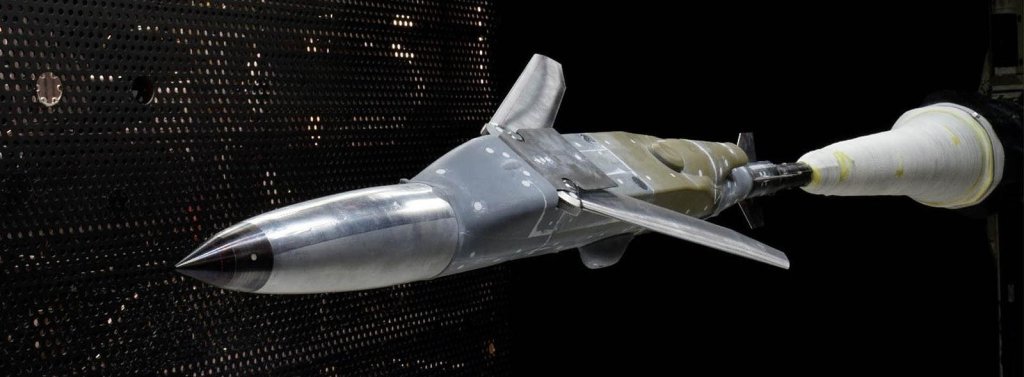
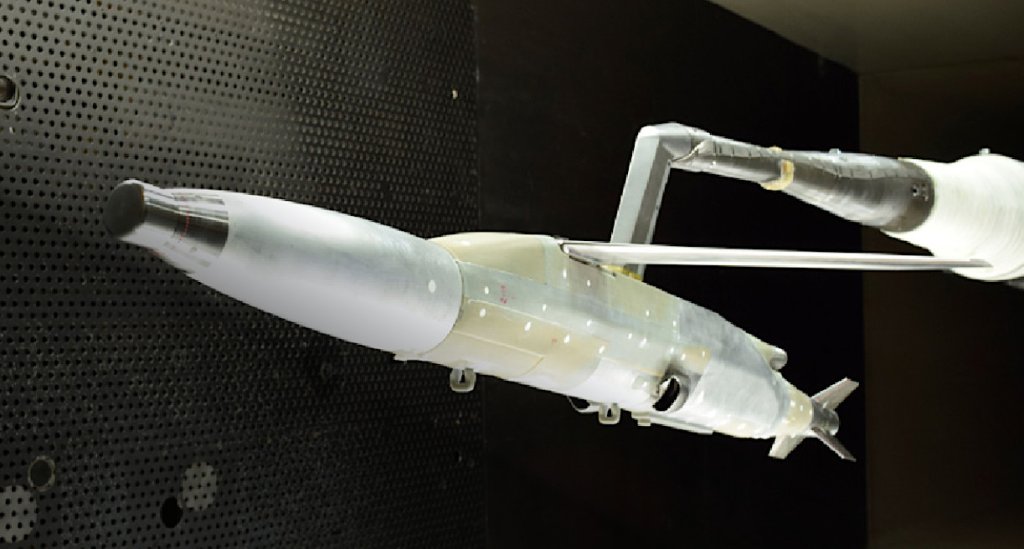
In terms of guidance, JDAM-LR leverages the GPS-assisted inertial navigation system from the unpowered JDAM family. This guidance method can only be used to target static coordinates. Boeing has previously shown concepts for multi-mode guidance packages that could also include active seekers, such as a radar or imaging infrared system, which would enable strikes on moving targets at sea and on land. Boeing already produces a version of the 500-pound-class JDAM that adds a laser seeker to allow for the engagement of moving targets.
The biggest capability boost offered by the JDAM-LR over existing JDAM types is, of course, the stand-off range. Boeing says the powered version can hit targets more than 345 miles (300 nautical miles) away. A typical underpowered JDAM can still glide after release, but only out to around 15 miles, according to the Air Force. With the addition of a pop-out wing kit, JDAM-Extended Range (JDAM-ER) types have greater reach, extending out to roughly 45 miles. This all depends on various factors, especially release altitude and the speed of the launch platform.
There are also benefits to this design, and to leveraging existing technology from the JDAM family, when it comes to cost and scalability of production. Boeing says it has also invested nearly $100 million of its own money in this program, which traces its roots back to the late 2010s, at least.
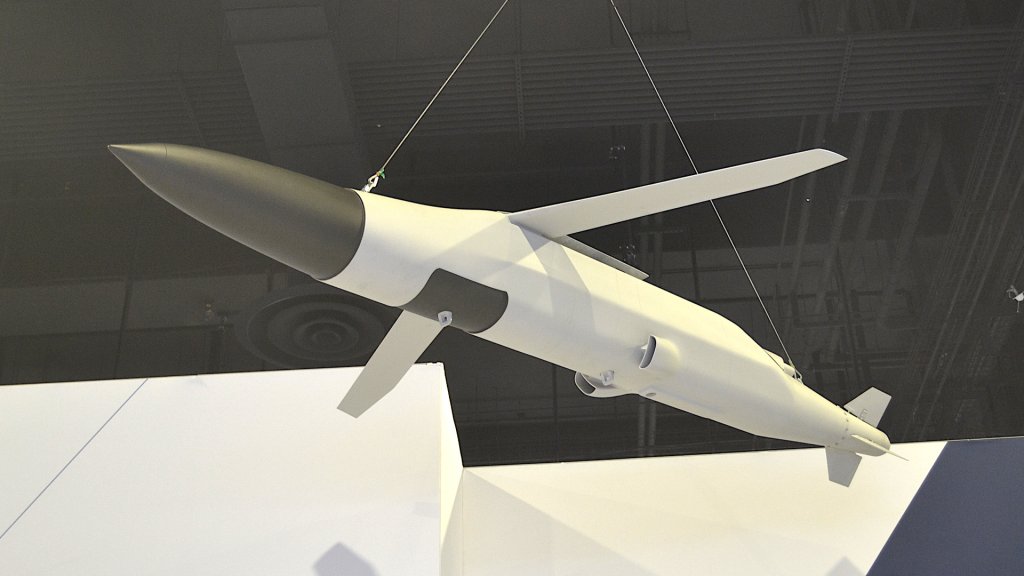
What the exact unit cost of a typical JDAM-LR will be is unclear. However, historically, standard JDAM kits have cost between$20,000 and $30,000. The current price point for a TDI-J85 engine is unknown, but TWZ has used theWilliams F107, a larger turbojet used in various cruise missiles, as a point of comparison in the past. Past reports have put the F107’s price tag at some $190,000. A typical 500-pound-class low-drag bomb would add another few thousand dollars to that total.
Regardless, for the Navy especially, JDAM-LR offers a lower-cost and lower-risk pathway to bolstering the standoff munition capabilities of its carrier air wings, and stockpiles of those weapons for future fights. The sevice notably cancelled previous plans to acquire a turbojet-powered version of the AGM-154 Joint Stand-Off Weapon (JSOW) glide bomb back in 2021 in favor of a new version of the AGM-158C Long-Range Anti-Ship Missile (LRAM) with secondary land attack capability. In 2024, the Navy also disclosed that it was axing plans to incorporate land attack functionality on the AGM-158C-3 variant. It should also be noted here that LRASM is a very capable, but also very expensive weapon, with unit costs generally pegged in the $3 million range, regardless of version.
Navy carrier air wings do also have access to the AGM-84K Standoff Land Attack Missile-Expanded Response (SLAM-ER) missile, which can be employed by F/A-18E/F Super Hornets. An air-launched land-attack outgrowth of the Harpoon anti-ship cruise missile, the SLAM-ER’s maximum range is reportedly around 170 miles. These missiles also have unit costs in the $3 million range.
Extending the reach of strike aircraft in Navy carrier air wings is already a top priority and is only set to continue being so in the future as adversaries, especially China, continue to expand their anti-access and area denial bubbles (A2/AD). This, in turn, will push carriers further and further from target areas. Standoff range also helps keep launch platforms further away from hostile air defenses.
On top of this, ongoing fighting with Iran, which has followed years of other crises in and around the Middle East and elsewhere globally, has also underscored concerns about munitions stockpiles and the ability to replenish them quickly. Alarm bells are now ringing very loudly. The U.S. military has been taking steps to reverse these trends, but they are still years away from yielding substantial results. Capabilities like JDAM-LR offer increasingly critical additional avenues for refilling stockpiles of standoff strike munitions.
With this in mind, it is possible, if not highly probable, that JDAM-LR production will expand to other services beyond the Navy. As noted, the Air Force is the central manager for the JDAM program and is the one placing the orders. Foreign allies and partners, especially ones that already have stocks of JDAMs, could also join in this new acquisition effort, creating additional economies of scale benefits.
If nothing else, after years of development, Boeing is now set to finally put the JDAM-LR into production starting with the orders for the Navy.
Contact the author: joe@twz.com
The post Jet-Powered JDAM Production Is A Go For The U.S. Navy appeared first on TWZ.


