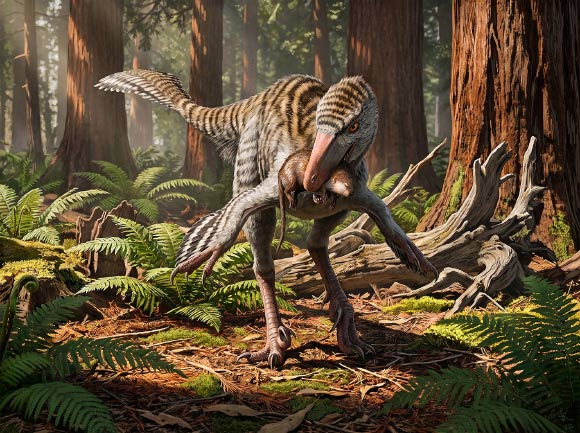
Эрдэмтэд 20 жилийн өмнө олдсон, удаа дараа ангилал нь өөрчлөгдөж байсан үлэг гүрвэлийн олдворыг судалсны дүнд Dinevenator robustus хэмээх шинэ зүйлийг илрүүлжээ.
АНУ-ын Шинэ Мексик мужийн Сан Хуаны сав газраас 2005 онд олдсон гавлын ясны хэлтэрхийг (SMP VP-1955) судлаачид олон жилийн турш өөр өөр төрөлд хамааруулж байв. Анх 2006 онд Saurornitholestes хэмээх махчин үлэг гүрвэлийн төрөлд тооцож байсан бол хожим Troodontidae овогт шилжүүлж, сүүлийн үеийн судалгаагаар өөр зүйл болохыг нь тогтоожээ. Стивен Э. Жасински болон Роберт М. Салливан нарын шинэ судалгаагаар уг олдворыг Dinevenator robustus хэмээх бие даасан төрөл болохыг баталсан байна.
Ойролцоогоор 73 сая жилийн тэртээ амьдарч байсан энэхүү үлэг гүрвэл нь 3 метр хүртэл урт, 140 орчим килограмм жинтэй байжээ. Энэ нь Troodontidae овгийн бусад жижиг үлэг гүрвэлүүдтэй харьцуулахад харьцангуй том биетэй, зузаан гавлын ястай болохыг харуулж байна. Судлаачдын дүгнэснээр, Dinevenator robustus нь уг овгийн зузаан гавлын ястай бүлгийн хамгийн эртний төлөөлөгч юм.
Уг олдвор нь Цэрдийн галавын сүүл үед Хойд Америкийн нутагт амьдарч байсан үлэг гүрвэлүүдийн олон янз байдал болон тэдгээрийн хувьслын холбоог ойлгоход чухал ач холбогдолтой юм. Шинэ Мексикийн байгалийн түүхийн музейн судлаачдын үзэж буйгаар, энэхүү нээлт нь тухайн бүс нутгийн эртний экосистем өвөрмөц байсныг гэрчилж байна. Судалгааны үр дүнг Fossil Studies сэтгүүлд наймдугаар сарын 3-нд нийтэлжээ.
Дэлгэрэнгүйг эх сурвалжаас харах
↓Эх сурвалжийг нээх ↓
A fossil bone found in New Mexico has revealed a new species of bird-like predatory dinosaur that lived around 73 million years ago. Named Dinevenator robustus, the dinosaur was identified after scientists revisited a specimen that had changed classification several times over the past two decades.
A newly discovered species has expanded the Troodontidae family, which includes small and medium-sized theropods with close evolutionary ties to birds. Scientists estimate that Dinevenator robustus reached up to 3 meters in length and weighed around 140 kilograms, making it a giant among troodontids. The fossil behind the discovery is a nearly complete piece of skull bone, known as the left frontal bone, and is registered as SMP VP-1955. It was found in 2005 in the De-na-zin Member of the Kirtland Formation, located in the San Juan Basin of northwestern New Mexico.
For years, scientists were unsure where this dinosaur belonged. The specimen was first described in 2006 as a new species of Saurornitholestes, a raptor-like dinosaur from the Dromaeosauridae family, before later studies moved it into Troodontidae.
A Fossil That Changed Identity Several Times
The story of Dinevenator robustus is also the story of how dinosaur research evolves. The same fossil specimen has been studied under different interpretations as scientists compared it with new discoveries from around the world.
After the first classification in 2006, researchers challenged the idea that the fossil belonged to Saurornitholestes. By 2014, it was considered a member of Troodontidae, but some scientists still questioned whether it represented a separate species.
A 2026 study even suggested that the fossil could belong to Xenovenator, a troodontid dinosaur discovered in Mexico. According to the new research published by Steven E. Jasinski and Robert M. Sullivan, the New Mexico specimen was different enough from Xenovenator and other related dinosaurs to receive its own genus.
The researchers named the new dinosaur Dinevenator robustus, a genus with only one recognized species. Their analysis compared the fossil with other troodontids and examined its place on the dinosaur family tree.
A Rare Troodontid With A Powerful Skull
The study placed the species within a group of large-bodied troodontids with thick skulls. This group includes Xenovenator espinosai from Mexico and Albertavenator curriei from Canada. The new analysis, published in the journal Fossil Studies on August 3, changed how scientists viewed its evolutionary relationships. Rather than being closely related to Xenovenator, as previously suggested, Dinevenator appears to be the earliest known member of this robust-skulled lineage.

The discovery gives scientists a better look at the variety of forms that existed among troodontids during the Late Cretaceous. While many members of this family were smaller dinosaurs, Dinevenator robustus shows that some troodontids reached much larger sizes.
“This really helps us get a clearer picture of the diversity in this family of dinosaurs during the Late Cretaceous in North America, and it adds to our knowledge of dinosaurs that once roamed New Mexico,” noted to Dr. Steven Jasinski, paleontology curator at the New Mexico Museum of Natural History & Science and paleontologist at Harrisburg University.
More Dinosaur Diversity Found In The San Juan Basin
The region of the San Juan Basin has already produced several species that appear to have been unique to its ancient ecosystems. Researchers say the new species also shows how connected dinosaur populations were across North America during the final part of the Cretaceous period. Different dinosaur groups share relationships with species found in other regions, pointing to a complex history of movement and evolution.
“The recognition of a distinct, large, robust, thick-skulled troodontid adds to the unique nature of the ancient ecosystems of the San Juan Basin,” the authors wrote in their study.

Dr. Anthony Fiorillo, executive director of the New Mexico Museum of Natural History & Science, said the discovery highlights how dinosaur research continues to evolve as scientists revisit old ideas with new evidence.
Enjoyed this article? Subscribe to our free newsletter for engaging stories, exclusive content, and the latest news.

