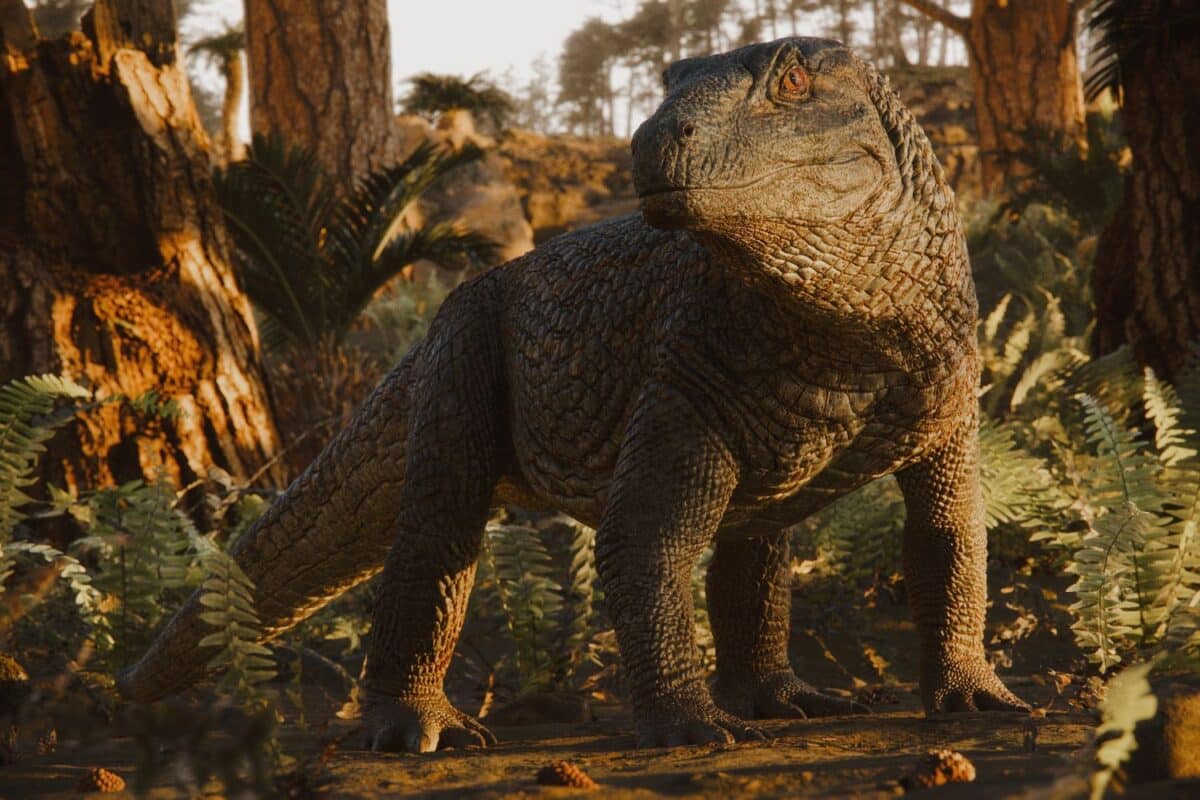
Бразилын нутгаас олдсон 240 сая жилийн настай чулуужсан яс нь динозавртай төстэй гадаад төрхтэй, матрын өвөг дээдэс болох шинэ зүйлийн махчин амьтан байсныг тогтоожээ.
Бразилын Дона Франсиска хотын ойролцоо хийсэн малтлагаар Tainrakuasuchus bellator хэмээн нэрлэсэн уг амьтны эрүү, нуруу болон аарцагны ясны хэсгүүдийг илрүүлжээ. Арваннэгдүгээр сарын 13-нд Journal of Systematic Palaeontology сэтгүүлд нийтлэгдсэн судалгаагаар, энэхүү амьтан нь динозаврын гэр бүлд хамаарахгүй, харин орчин үеийн матрын өвөг болох Pseudosuchia бүлгийн poposauroids төрөлд багтдаг болохыг тогтоосон байна. Триасын галавын үед амьдарч байсан энэхүү махчин амьтан нь ойролцоогоор 2.4 метр урт, 60 кг жинтэй байжээ.
Уг махчин амьтан нь урт хүзүү, хурц шүдтэй, нуруугаа ясан хуягаар бүрхүүлсэн өвөрмөц бүтэцтэй байсан нь матрын төрлийн амьтдын хувьслын эртний шинж тэмдгийг харуулж байна. Судлаач Родриго Тэмп Мюллер болон түүний багийнхан уг олдвор нь динозаврууд дэлхийн экосистемийг эзлэхээс өмнөх үеийн амьтдын төрөл зүйлийн олон талт байдлыг ойлгоход чухал ач холбогдолтойг онцолжээ. Хэдийгээр тухайн үед 7 метр хүртэлх аварга том махчид байсан боловч энэхүү амьтан нь идэвхтэй анчин байсан гэж үзэж байна.
Tainrakuasuchus bellator-ын олдвор нь тухайн үед Танзаниас олдсон Mandasuchus tanyauchen зүйлтэй нягт холбоотой болохыг харуулсан нь эх газрууд Пангея тивд нэгдэлтэй байсныг баталж байна. Энэхүү нэгдмэл байдал нь амьтад одоогийн далайгаар тусгаарлагдсан бүс нутгуудын хооронд чөлөөтэй шилжин суурьших боломжийг олгож байжээ. Энэхүү нээлт нь динозавруудын эринээс өмнөх үеийн экосистемийн түүх болон амьтдын хувьслын явцыг тодруулахад чухал хувь нэмэр оруулж байна.
Дэлгэрэнгүйг эх сурвалжаас харах
↓Эх сурвалжийг нээх ↓
A strange armored predator that roamed Brazil 240 million years ago has been identified as a distant crocodile relative that looked surprisingly similar to a dinosaur. The newly named Tainrakuasuchus bellator lived just before dinosaurs began their rise and reveals how diverse life was during the Triassic period.
The fossil was found in the Dona Francisca municipality in Brazil and includes parts of the animal’s lower jaw, backbone and pelvis. Researchers say the discovery helps complete the picture of a time when many groups of reptiles were competing for dominance before dinosaurs became the most famous inhabitants of the planet. Described in a study published in the Journal of Systematic Palaeontology on November 13, Tainrakuasuchus bellator belonged to Pseudosuchia, the group that eventually gave rise to modern crocodiles. Despite its dinosaur-like shape, it was not part of the dinosaur family tree.
Around 240 million years ago, Earth was in the middle of the Triassic period, when archosaurs ruled many land ecosystems. These reptiles split into two major branches: one leading toward dinosaurs and birds, and another leading toward crocodilians. The new species belongs to a rare group of pseudosuchians called poposauroids. Fossils from these animals are uncommon, especially in South America, making the discovery a useful clue for understanding what life looked like before dinosaurs became dominant.
A “Warrior Crocodile” with Dinosaur Features
Tainrakuasuchus bellator was not a giant animal by the standards of its time. It measured about 7.9 feet (2.4 meters) long and weighed around 130 pounds (60 kilograms). Its body included a long neck, a thin jaw packed with sharp teeth and a back covered with bony plates called osteoderms. Those plates gave the animal an armored appearance. Modern crocodiles also have osteoderms, showing that this protective feature appeared deep in crocodilian evolution.
According to Rodrigo Temp Müller, a paleontologist at the Federal University of Santa Maria and lead author of the study, the discovery sheds light on the period before dinosaurs became dominant. He said that pseudosuchians were highly diverse at the time, but many of their branches are still poorly understood because their fossils are rare.
The newly discovered predator was an active hunter, although it was not the largest animal in its environment. Researchers noted that:
“This animal was an active predator, but despite its relatively large size, it was far from the largest hunter of its time with the same ecosystem home to giants as big as seven meters long.”
A Prehistoric Connection Between Brazil and Africa
The fossil also tells a story about a world that no longer exists. When Tainrakuasuchus bellator lived, South America and Africa were still connected as part of Pangaea, allowing animals to move between areas that are now separated by oceans.
“At that time, the continents were still united, which allowed the free dispersal of organisms across regions that are now separated by oceans,” Müller explained. “As a result, the faunas of Brazil and Africa shared several common elements, reflecting an intertwined evolutionary and ecological history.”

Müller explained in a press release that the Brazilian reptile was closely related to Mandasuchus tanyauchen, a pseudosuchian discovered in Tanzania that lived around 245 million years ago. The connection between the two species reflects how closely linked ecosystems were across Pangaea. These similarities between fossils found in Brazil and Africa show that ancient animals were able to spread across large connected regions.
Earth Before Dinosaurs Was Unlike Anything Today
The discovery, published in the peer-reviewed Journal of Systematic Palaeontology, of Tainrakuasuchus bellator shows that the world before dinosaurs was already filled with unusual predators. While dinosaurs would later become the dominant land animals, crocodile relatives like this armored hunter were already evolving their own distinctive forms millions of years earlier.
The fossil gives scientists a better look at a period that remains less familiar than the later dinosaur ages. The authors of the study said that the new species helps reveal the variety of life that existed before dinosaurs transformed Earth’s ecosystems.

With its armored back, sharp teeth and crocodile ancestry, Tainrakuasuchus bellator adds a new chapter to the long history of reptiles and shows that some of the most surprising creatures appeared long before the famous dinosaurs.
Enjoyed this article? Subscribe to our free newsletter for engaging stories, exclusive content, and the latest news.


