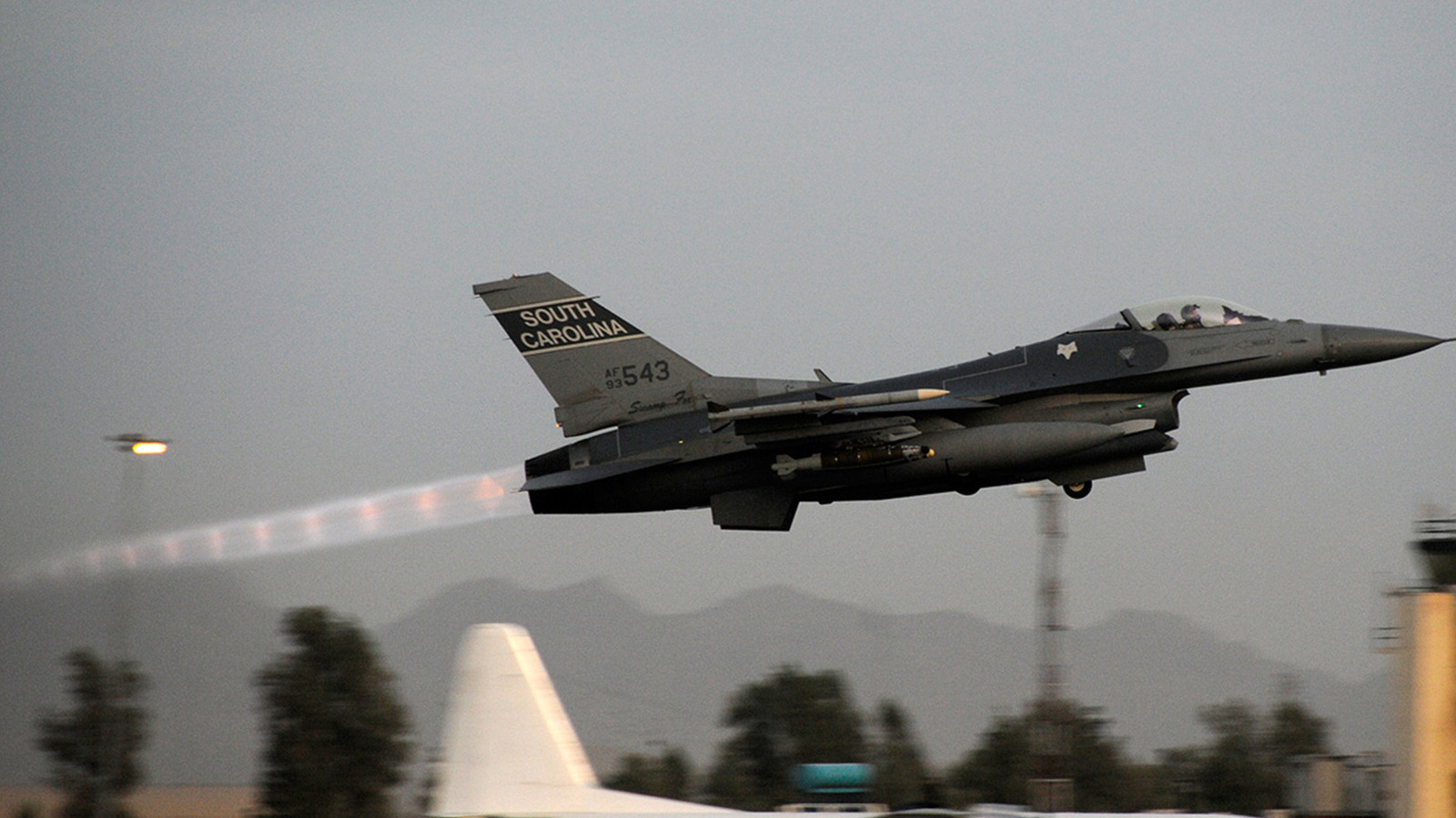
Тийрэлтэт хөдөлгүүрийн ялгаруулах хий нь агаар мандлын даралттай харилцан үйлчлэх үед үүсдэг энэхүү оптик үзэгдэл нь нисэх онгоц болон пуужингийн системийн аэродинамик шинж чанарыг илэрхийлдэг.
Сөнөөгч онгоцны форсаж (afterburner) ажиллах үед ажиглагддаг “шок алмаз” буюу Махын диск нь хөдөлгүүрээс гарч буй дууны хурднаас давсан хурдтай хийн урсгал болон хүрээлэн буй агаарын даралтын зөрүүгээс үүсдэг. Энэхүү үзэгдэл нь зөвхөн сөнөөгч онгоц төдийгүй пуужин болон сансрын хөлгийн хөөрөлтийн үед ч тохиолддог бөгөөд урсгалын даралт тэнцвэржих хүртэл үргэлжилсэн даралт болон тэлэлтийн долгионы дарааллыг илэрхийлдэг.
Форсажийн горимд хөдөлгүүрийн турбины дараа нэмэлт түлш шахаж шатааснаар утааны хийн температур болон хурд эрс нэмэгддэг. Жишээлбэл, Pratt & Whitney F-135 хөдөлгүүрийн зүтгэх хүч форсажийн горимд 28,000 фунтаас 43,000 фунт хүртэл өсдөг бөгөөд энэхүү хүчин чадлын огцом өсөлт нь агаар мандлын даралтын зөрүүг улам тодотгож өгдөг.
Хийн урсгалын хурд дууны хурдыг давсан үед даралт нь агаар мандлын орчинтой тэнцвэржих гэж оролдох явцад “нормаль шок” буюу урсгалд перпендикуляр цочролын долгион үүсдэг. Энэхүү долгионы нөлөөгөөр хийн температур дахин нэмэгдэж, урсгалд үлдсэн шатаагүй түлшийг асааснаар “шок алмаз” хэлбэрийн гэрэлтэлт болон цагираг хэлбэрийн дүрслэл бий болдог байна.
Дэлгэрэнгүйг эх сурвалжаас харах
Эх сурвалжийг нээх ↓
If you’ve ever watched a jet fighter taking off with its afterburners firing, you may have noticed an unusual phenomenon — “shock diamonds.” We’ll cover why shock diamonds happen in more detail later, but put simply, these occur when the supersonic exhaust flow of an afterburning engine interacts with the surrounding atmosphere. While afterburning jet engines are one place these can happen, shock diamonds can also happen with missile systemsand rocket launches.
The key is reaching speeds faster than sound. Supersonic speeds are incredibly fast;however, shock diamonds don’t need the jet or missile to be traveling at Mach speeds, justtheir exhaust gases.This is why shock diamonds are also known as Mach diamonds or Mach disks. While these certainly look dramatic and spectacular, they’re really just a visual representation of what happens when supersonic exhaust gases come face to face with the atmospheric pressure outside of the engine.
This phenomenon is most usually seen at lower altitudes, because the afterburner exhaust gases are blasting into much denser, higher-pressure air. It’s this pressure that makes the supersonic gases form the “diamond-like” bright shapes that we recognize as shock diamonds. As a fighter jet climbs and the surrounding air thins out, the diamonds begin to increase in size but decrease in number.
Let’s take a closer look at the afterburner shock diamonds and the physics behind this spectacular display.
The physics behind shock diamonds
Put simply, shock diamonds form because the exhaust leaving a jet or rocket engine is moving at supersonic speed and at a pressure that doesn’t match the surrounding atmosphere. When a flow is supersonic, it can’t smoothly adjust to changes in pressure in the same way that subsonic air can. For a very rough analogy, we could compare the differences between supersonic and subsonic airspeeds to digital and analog signals. While subsonic exhaust gases will continuously reactwith the surrounding atmosphere, supersonic gases react in a series of distinct compression and expansion waves. It’s this process that creates the repeating pattern of shock waves and expansion regions that stack along the exhaust plume. These stacked regions are what are known as shock diamonds, and the alternating high-pressure and low-pressure zones — or ones and zeros in our analogy — within them are what produce the bright and dark diamond shapes.
The exact pattern depends on how the exhaust pressure compares to the ambient air pressure. Near the ground, the exhaust plume is usually overexpanded, meaning its pressure is lower than the atmosphere. In this case, the plume is squeezed inwards before expanding again, repeating the shock-wave pattern associated with shock diamonds. At higher altitudes, where there’s lower air pressure, the exhaust flow can become underexpanded;this can also produce the shock diamond effect. In both cases, the exhaust is trying to equalize with the surrounding air, and the repeating compression-and-expansion process continues until the two pressures match.
Why afterburners make shock diamonds glow
To understand why shock diamonds form and the role of afterburners in the process, it’s useful to take a quick look at the science behind afterburners. When an afterburner is engaged, one immediate effect is the additional thrust the engine produces. This is because afterburners work by injecting extra fuel into the hot exhaust stream after it passes through the turbine (hence the afterburner name). Because that exhaust is already extremely hot, the fuel ignites almost immediately; this creates a much hotter and faster plume than the engine can produce on its own.
Of course, faster means more power and substantially so. For instance, one of the most powerful jet engines ever made — the Pratt & Whitney F-135 — has a thrust rating of 28,000 pounds;with afterburner, this rises to 43,000 pounds.But along with all that added thrust, the hotter exhaust gas also exaggerates the pressure mismatch between the exhaust and the surrounding air. As noted, it’s this mismatch that forms the shock diamonds.
Another aspect of the exhaust-gas/air interaction is something called the “normal shock”, a characteristic caused by shock waves occurring perpendicular to airflow. As the supersonic gases pass through this shock wave, their temperature rises. This sudden jump is enough to ignite any remaining unburned fuel in the flow, causing the Mach disk itself to glow and create a ring pattern.

