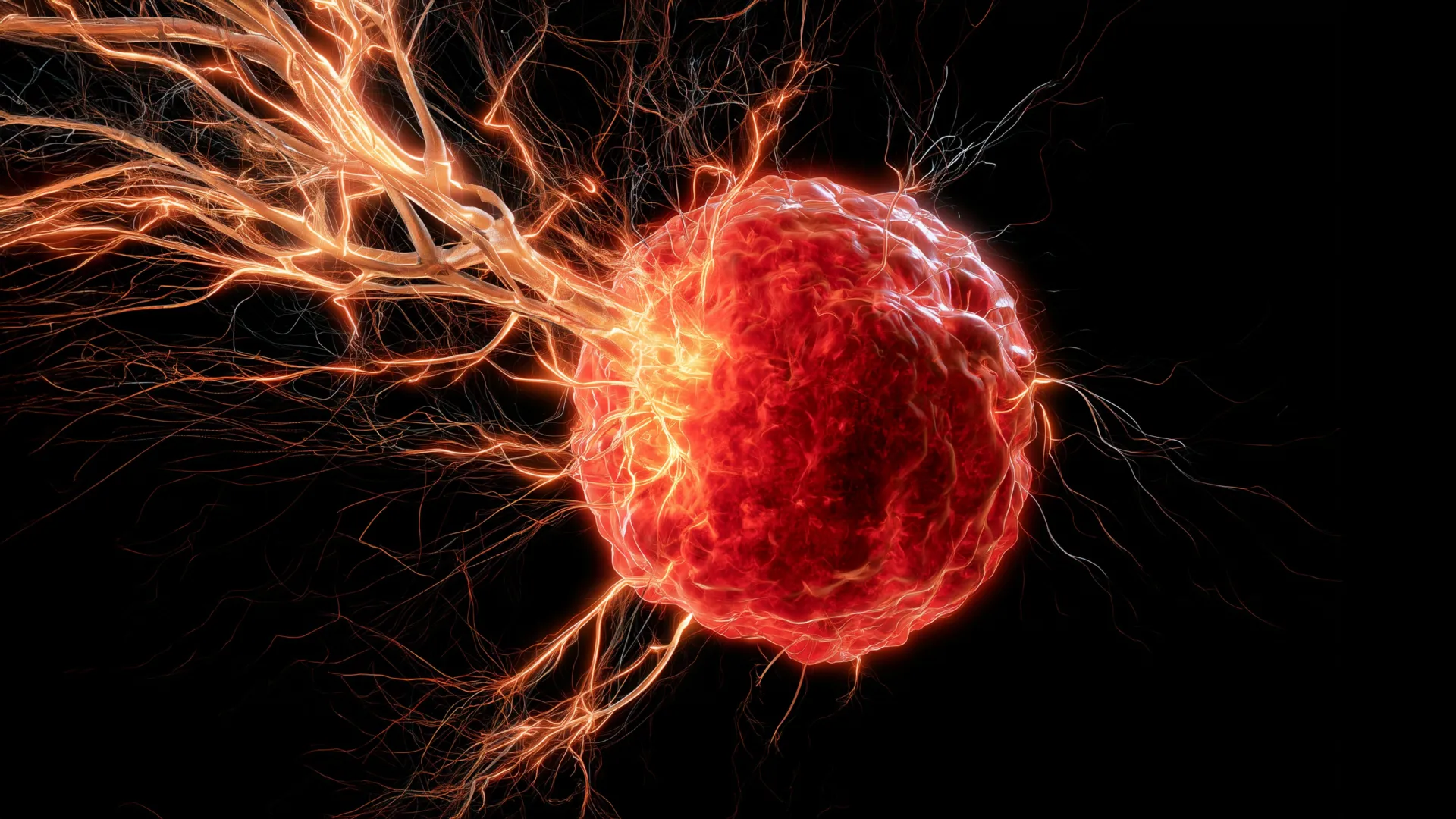
Оклахомагийн их сургуулийн судлаачид хөхний хорт хавдрын түрэмгий хэлбэр дархлааны системийг ашиглан мэдрэлийн эсүүдийг хавдар руу татах замаар өсөлтөө хурдасгадаг болохыг тогтоожээ.
Судлаачид Cell Death & Differentiation сэтгүүлд нийтлүүлсэн судалгаагаараа гурвалсан сөрөг (triple-negative) хөхний хорт хавдар нь дархлааны макрофаг эсүүдийг өөртөө татдаг болохыг олж мэдсэн байна. Эдгээр макрофаг нь хавдрын орчинд нэвтэрснийхээ дараа тархины гаралтай нейротрофик хүчин зүйл (BDNF) хэмээх уургийг ялгаруулдаг. Энэхүү уураг нь ойр орчмын мэдрэлийн эсүүдийг хавдрын эд эс рүү ургахад түлхэц өгдөг байна.
Хавдар доторх мэдрэлийн сүлжээний энэхүү бүрэлдэн тогтох процесс нь хавдрын өсөлтөд нөлөөлж, эмчилгээнд тэсвэртэй болоход хүргэж болзошгүй гэж эрдэмтэд үзэж байна. Судалгааны багийн ахлагч, доктор Морин Кокс макрофаг эсүүд нь бие махбодод ихэвчлэн эерэг үүрэг гүйцэтгэдэг ч энэ тохиолдолд хавдрын хортой үйл ажиллагааг дэмжиж байгааг онцолжээ.
Туршилтын хүрээнд судлаачид хулганад BDNF дохиог хаах үйлчилгээтэй эмийг хэрэглэхэд мэдрэлийн эсүүд хавдар руу ургахаа больж, хавдрын өсөлт мэдэгдэхүйц удааширсан байна. Энэхүү үр дүн нь хавдрын эсийг шууд устгахаас гадна макрофаг болон мэдрэлийн эсийн хоорондох холбоог таслах замаар эмчлэх шинэ арга барил боломжтойг харуулж байна.
Гурвалсан сөрөг хөхний хорт хавдартай өвчтөнүүдийн мэдээлэлд дүн шинжилгээ хийхэд макрофаг болон BDNF-ийн түвшин өндөр байх нь өвчний явц таагүй байхтай холбоотой болох нь тогтоогджээ. Цаашид судлаачид мэдрэлийн эсүүд хавдрын өсөлтөд хэрхэн нөлөөлдөг, тухайлбал цусны судас үүсэлт болон хавдрын үсэрхийлэлд ямар үүрэгтэйг илүү нарийвчлан судлахаар төлөвлөж байна.
Дэлгэрэнгүйг эх сурвалжаас харах
↓Эх сурвалжийг нээх ↓
New research from the University of Oklahoma has revealed how an aggressive type of breast cancer can manipulate the immune system to draw nerves into tumors, creating conditions that may help the cancer grow.
Scientists have known for years that many solid tumors contain extensive nerve networks. What has been less clear is how those nerves enter the tumor in the first place. The new study, published in Cell Death & Differentiation, provides an explanation for this process in triple-negative breast cancer, a particularly difficult form of the disease to treat.
Immune Cells Help Draw Nerves Into Tumors
The researchers discovered that tumors attract macrophages, a type of immune cell that normally helps the body fight infections and repair damaged tissue. After entering the tumor, these macrophages release brain-derived neurotrophic factor (BDNF), a protein that encourages nearby nerves to grow toward and into the cancer.
BDNF is most widely known for supporting the growth and survival of nerve cells in the brain. In breast cancer, however, the researchers found that tumors can take advantage of this same biological signal. By prompting nerve growth inside the tumor, the process may contribute to cancer progression and resistance to treatment.
“Macrophages are the critical source for drawing nerves into the tumor. Although macrophages typically play a positive role in the body, they are facilitating a negative function in this scenario of breast cancer,” said Maureen Cox, Ph.D., an assistant professor in the Department of Microbiology and Immunology at the OU College of Medicine and a research member of OU Health Stephenson Cancer Center.
Blocking the Signal Slowed Tumor Growth
The discovery could open the door to a different way of treating cancer. Instead of focusing only on destroying cancer cells, future therapies might interrupt the signaling between macrophages and the nerves that appear to support tumor growth.
Cox and her colleagues tested this strategy in mice. They used a drug that blocks BDNF signaling and found that nerves no longer grew into the tumors. Tumor growth was also significantly reduced.
“It looks really promising that we can use this drug, which is already on the market, to target BDNF,” Cox said. “We believe that the nerves are immunosuppressive, so if we can stop the nerves from growing in the first place, maybe we can boost the immune response to help fight the cancer.”
Evidence From Triple-Negative Breast Cancer Patients
The researchers also examined data from people with triple-negative breast cancer to determine whether the same biological pattern might occur in humans. Tumors containing higher levels of macrophages and BDNF were linked with poorer survival, providing evidence that the mechanism observed in mice could also be relevant to patients.
Cox and her team now want to better understand exactly how nerves contribute to tumor growth. Some evidence indicates that nerves may stimulate the formation of blood vessels, which can supply tumors with oxygen and nutrients. Other research suggests that cancer cells may move along nerves as they leave the original tumor and metastasize.
The researchers also plan to test the same intervention in high-grade ovarian cancer, another aggressive cancer that can be difficult to treat.
“Ultimately, we want to turn the anti-tumor immunity back on in cancer patients so their own immune systems can reject the tumors,” she said.
Research Support
The research was supported by the National Institute of General Medical Sciences of the NIH (award numbers P20GM103447 and P20GM103639). This project was also supported by Oklahoma’s Tobacco Settlement Endowment Trust (TSET), a primary funder of the Stephenson Cancer Center and TSET Health Promotion Research Center at the University of Oklahoma, and by the Oklahoma Shared Clinical and Translational Resources through an Institutional Development Award from the National Institute of General Medical Sciences (grant no. U54GM104938).

