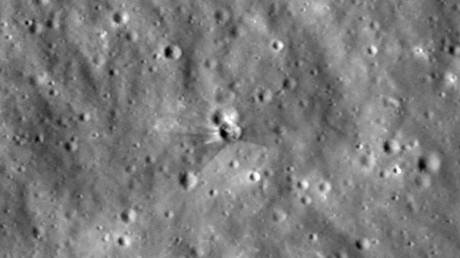
Сарны гадаргуу дээр 2026 оны наймдугаар сарын 5-ны өдөр унасан Falcon 9 пуужингийн хоёрдугаар шатны үлдэгдлээс үүссэн тогоог НАСА-гийн судалгааны төхөөрөмж баримтжуулжээ.
АНУ-ын Сансар судлалын агентлаг (NASA)-ийн “Lunar Reconnaissance Orbiter” (LRO) төхөөрөмж сарны гадаргуу дээрх шинэ тогооны зургийг авчээ. 2025 оны нэгдүгээр сард хөөргөсөн Falcon 9 пуужингийн 4 тонн жинтэй хоёрдугаар шат нь нэг жил гаруй хугацаанд сансарт хөвсний эцэст наймдугаар сарын 5-ны өдөр цагт 8,700 км-ийн хурдтайгаар сарны гадаргууг мөргөсөн байна. Уг тогоо нь 18 метрийн өргөн, 3 метрээс бага гүнтэй болохыг НАСА-гийн дүрс бичлэгээс харж болно.
SpaceX компани уг пуужингийн хэсгийг анх аюулгүй гэж тооцоолсон траектороор илгээсэн хэдий ч нарны идэвхжил болон таталцлын хүчний нөлөөгөөр чиглэл нь өөрчлөгджээ. Сарны гадаргуу дээрх байгалийн солирын мөргөлдөөн түгээмэл боловч хүний гараар бүтээгдсэн сансрын хөлгийн үлдэгдэл унах нь ховор тохиолдол юм.
Сансрын салбарын мэргэжилтнүүд сарны гадаргуу дээрх хүний үйл ажиллагаа идэвхжиж буй энэ үед хяналтгүй пуужингийн үлдэгдэл нь ирээдүйн дэд бүтцэд бодит эрсдэл учруулж болзошгүйг анхааруулж байна. НАСА-гийн зүгээс Аполло хөтөлбөрийн үеэр сейсмийн мэдээлэл цуглуулах зорилгоор пуужингийн хэсгүүдийг сар руу зориудаар мөргүүлж байсан түүхтэй.
Дэлгэрэнгүйг эх сурвалжаас харах
↓Эх сурвалжийг нээх ↓
The discarded Falcon 9 rocket stage slammed into the Moon earlier this month after drifting through space for more than a year
NASA has released images showing a crater blasted into the Moon by a discarded SpaceX Falcon 9 rocket stage that struck the lunar surface at around 5,400 mph (8,700 kph) earlier this month.
The US space agency published an animated before-and-after comparison on Tuesday, using images captured by its Lunar Reconnaissance Orbiter (LRO) that show the previously undisturbed surface and a dark new impact scar.
NASA said the crater measures roughly 18 meters (60 ft) across and less than 3 meters (10 ft) deep.
The images also reveal bright and dark rays spreading outward from the crater. NASA said the darker streaks consist of weathered lunar dust and rocks that were blasted out from the upper 1.5 ft (0.46 m) of the lunar surface by the impact. The material had been altered over time by solar wind, cosmic rays, and micrometeorite strikes. Brighter debris near the crater rim came from deeper underground.
Spotted: Falcon 9 impact site
NASA’s Lunar Reconnaissance Orbiter (LRO) has captured images of a new crater on the Moon. The crater formed on Aug. 5, 2026, when a SpaceX Falcon 9 upper stage impacted the lunar surface. https://t.co/aqduBYwpmgpic.twitter.com/hE83yvzmIk
— NASA Solar System (@NASASolarSystem) August 18, 2026
The 4-ton upper stage struck the Moon on August 5 after drifting through space for more than a year. The Falcon 9 launched in January 2025 carrying the US Blue Ghost and Japanese Resilience lunar landers. Its reusable first-stage booster returned to Earth, while the second stage remained in space.
SpaceX said the stage had initially been placed on a trajectory considered safe under existing rules. A combination of solar activity and gravitational forces later sent it toward the lunar surface.
Although the Moon is regularly struck by natural meteoroids, collisions involving man-made objects are much less common. NASA deliberately crashed rocket stages into the lunar surface during the Apollo era to collect seismic data.
Experts have warned that unplanned impacts could become a greater concern as human activity on and around the Moon increases. UK aerospace engineer Dean Sladen told Space.com last week that uncontrolled rocket stages could become a “tangible operational risk” as space agencies and private companies build permanent lunar infrastructure.


