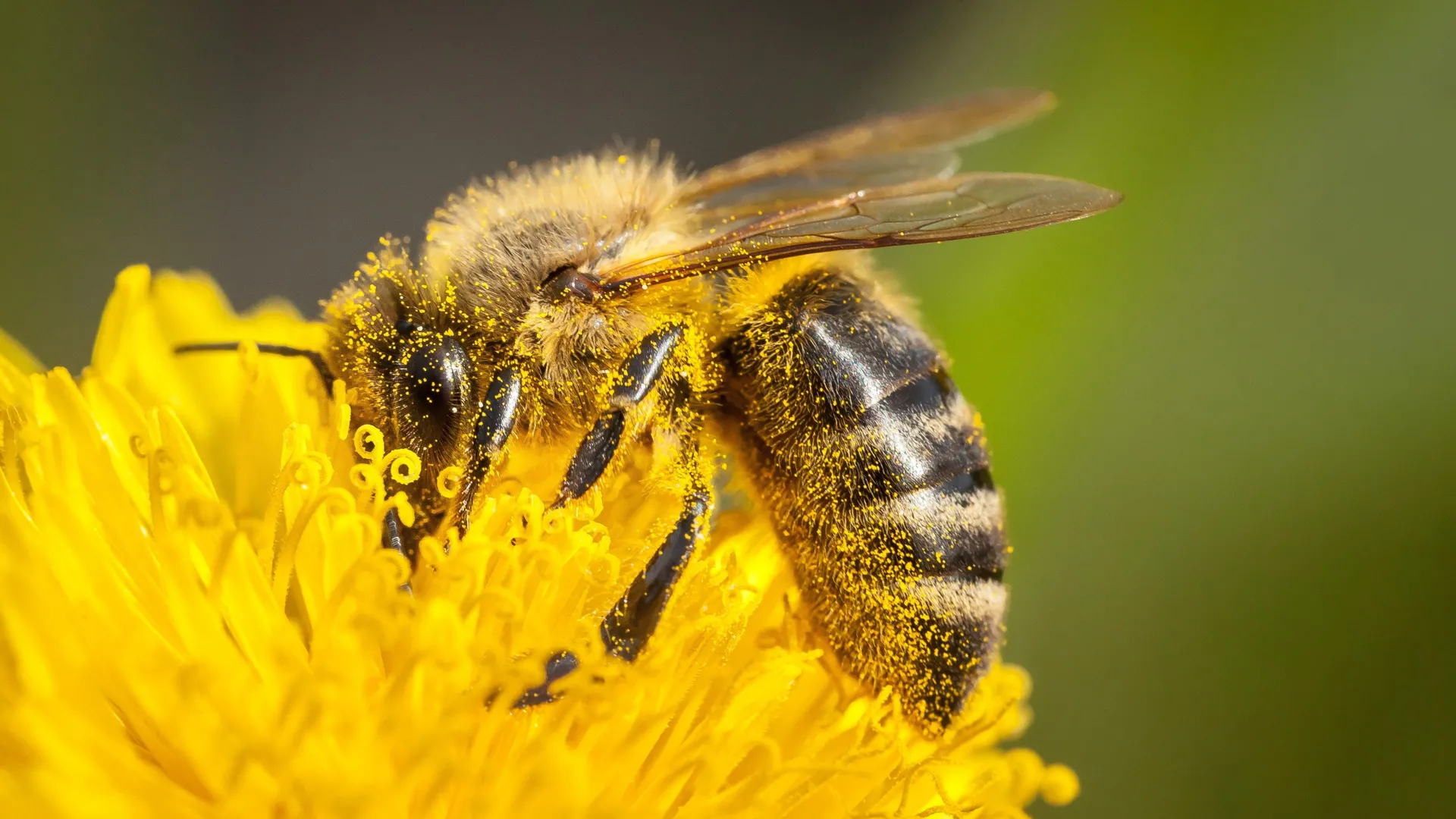
Оксфордын их сургуулийн судлаачид зөгий нь цэцгийн тоосон дахь амин хүчлийн найрлагаас хамааран хооллолтын хэмжээгээ өөрчилдөг болохыг илрүүлсэн байна.
Судлаачид Их Британийн 99 зүйл цэцэгт ургамлын тоосонцор болон зөгийн эдийн амин хүчлийн бүтцийг харьцуулан судалжээ. Туршилтаар ихэнх цэцгийн тоосонцор нь зөгийн бие махбодын хэрэгцээнд бүрэн нийцдэггүй нь тогтоогдсон байна. Тодруулбал, зөгий нь өөрийн биеийн бүтэцтэй илүү төстэй амин хүчлийн найрлагатай хоол хүнсийг илүү ихээр хэрэглэж, биеийн жин нэмэх хандлагатай байжээ.
Судалгааны багийнхан гистидин хэмээх амин хүчил зөгийн хооллолтын зан төлөвт нөлөөлдгийг ажиглав. Хэрэв хоол хүнсэнд гистидиний агууламж хэт өндөр байвал зөгий хооллох хэмжээгээ бууруулдаг бөгөөд энэ нь хортой хэмжээний амин хүчил хуримтлагдахаас сэргийлдэг бодисын солилцооны хариу урвал байж болзошгүй гэж үзэж байна. Энэхүү механизм нь зөгийг дутагдалтай шим тэжээлийг нөхөхийн тулд зөвхөн их хэмжээгээр идэх биш, харин илүүдэл шим тэжээлээс зайлсхийхэд тусалдаг ажээ.
Зөгийнүүд цэцгийн тоосонцрын шим тэжээлийн дутагдлыг нөхөхийн тулд тоосонцрыг цуглуулан “зөгийн талх” болгон боловсруулж, улмаар үр төлөө тэжээхдээ хааны сүү зэрэг булчирхайн ялгадас болгон хувиргадаг байна. Эдгээр боловсруулсан тэжээл нь зөгийн авгалдайг өсөлтөд шаардлагатай амин хүчлийн оновчтой харьцаагаар хангадаг болохыг судалгаагаар тогтоожээ.
Гэсэн хэдий ч энэхүү нарийн систем нь зэрлэг зөгийн бүх төрөлд байдаггүй тул цэцгийн төрөл зүйл багатай орчинд тэд хоол тэжээлийн бэрхшээлтэй тулгарч болзошгүй юм. Иймд тоос хүртээгчдийг хамгаалах, дэмжих зорилгоор газар тариалан болон цэцэрлэгжүүлэлт хийхдээ зөвхөн цэцгийн тоог бус, олон төрлийн ургамлын эх үүсвэрийг бүрдүүлэх нь нэн чухал гэдгийг мэргэжилтнүүд онцоллоо.
Дэлгэрэнгүйг эх сурвалжаас харах
↓Эх сурвалжийг нээх ↓
New research led by the University of Oxford has uncovered an unexpected ability in bees. They can change how much they eat depending on the balance of essential amino acids in their food. This feeding behavior may protect them from consuming excessive amounts of certain amino acids when pollen does not provide the nutritional mix they need.
The findings, published in Current Biology, also show that many types of pollen contain essential amino acids in proportions that do not closely match the needs of bees. Essential amino acids are protein building blocks that animals cannot produce themselves and therefore must obtain through food. The discovery could help farmers, landowners, conservationists and gardeners make better decisions about how to support healthy pollinator populations.
Why Pollen Is Not Always Perfect Bee Food
Bees obtain nearly all of their food from flower nectar and pollen. Nectar supplies mostly sugar, while pollen is their primary source of protein. However, pollen did not evolve mainly as a food reward for pollinators. It is the male reproductive material of plants, so its nutritional composition does not necessarily provide bees with the ideal mixture of nutrients needed for growth, survival and reproduction.
To explore this nutritional mismatch, researchers compared the essential amino acid composition of honeybee tissues with pollen collected from 99 UK flowering plant species representing 26 plant families. They also produced artificial foods designed to mimic either the amino acid composition of different pollens or the composition of honeybee tissues. Newly emerged worker honeybees were then given these diets during controlled laboratory experiments.
Most of the pollen samples turned out to be a relatively poor match for the essential amino acid composition of honeybee tissues. Bees given food that more closely resembled their own tissue composition (rather than pollen) consumed more food, gained more body mass, and chose a diet containing a greater proportion of protein.
One Amino Acid May Help Control Bee Appetite
The researchers suspected that histidine could play an important role in this response. Histidine is an essential amino acid, but bees require it only in relatively small amounts.
To investigate further, the team created artificial diets containing either relatively high or low levels of histidine compared with branched-chain amino acids (such as leucine and isoleucine) that are important for bee growth and development. When the relative amount of histidine was high, the bees reduced their overall food intake. They consumed less protein as well as less carbohydrate.
According to the researchers, this behavior could result from a post-digestive feedback mechanism that prevents bees from taking in potentially harmful quantities of particular amino acids. Instead of simply eating more pollen to compensate for missing nutrients, bees may reduce their intake when another nutrient becomes excessive. Similar responses have been observed in other animals. In rats, for example, excess histidine can be converted into histamine, which activates brain receptors involved in controlling food intake.
Lead author Professor Geraldine Wright (Department of Biology, University of Oxford) said: “Although pollen is often assumed to be a near-perfect food for bees, it is the male gamete of plants and, unlike nectar, it is rarely produced solely as a reward for pollinators. This creates a conflict of interest between the plant and the pollinator.”
Honeybees Create Better Food for Their Young
Honeybees appear to have another way of dealing with the nutritional limitations of pollen, especially when feeding their developing larvae.
Workers gather pollen from a wide variety of flowers and store it inside the hive as ‘bee bread’. Nurse bees eat this material and process its nutrients into glandular secretions, including royal jelly, which are then fed to developing larvae.
The researchers found that bee bread contained a more balanced essential amino acid profile than most individual pollen sources. Royal jelly provided an even closer match to the amino acid composition of bee tissues. The results suggest that combining pollen from different plants and then processing it through nurse bees may allow honeybee colonies to compensate for the nutritional shortcomings of individual pollen sources.
Professor Wright added: “We predict that honeybees have evolved to create glandular secretions which are the perfect food for their larvae, providing them with the ratios of essential amino acids that maximize growth.”
Wild Bees May Face a Greater Nutritional Challenge
This nutritional system is not available to every bee species. Many wild bees, including bumblebees and solitary bees, provide pollen directly to their offspring. In habitats with only a small variety of flowering plants, these bees may have difficulty obtaining the appropriate balance of essential amino acids for both themselves and their developing young.
The results indicate that pollinator-friendly planting schemes may need to consider more than simply providing large numbers of flowers. The nutritional quality of pollen and the diversity of plants producing it may also be important.
Professor Wright said: “Our results suggest that planting for pollinators should not only focus on providing flowers throughout the season, but also on ensuring a diversity of pollen sources. A varied diet may be essential for bees to obtain the right balance of nutrients.”
The research also included scientists from the University of Southampton, Lancaster University, Newcastle University and The Hebrew University of Jerusalem.

