Эрдэмтэд Жэймс Вэбб дуран авайг ашиглан ертөнцийн түүхэн дэх хамгийн эртний супернова дэлбэрэлтийг олж тогтоов
2025 оны гуравдугаар сарын 14-нд сансрын гэнэтийн үзэгдлүүдийг хянадаг хиймэл дагуул 10 секунд үргэлжилсэн гамма туяаны хүчтэй тэсрэлтийг бүртгэж авчээ. Энэхүү дохио нь ертөнцийг үүссэнээс хойш ердөө 730 сая жилийн дараа болсон томоохон одны мөхлийн үр дүн болохыг олон улсын судалгааны баг тогтоосон байна. GRB 250314A гэж нэрлэгдсэн уг үзэгдэл нь өмнөх дээд амжилтыг эвдэж, шинжлэх ухаанд бүртгэгдсэн хамгийн алс холын супернова дэлбэрэлт болжээ.
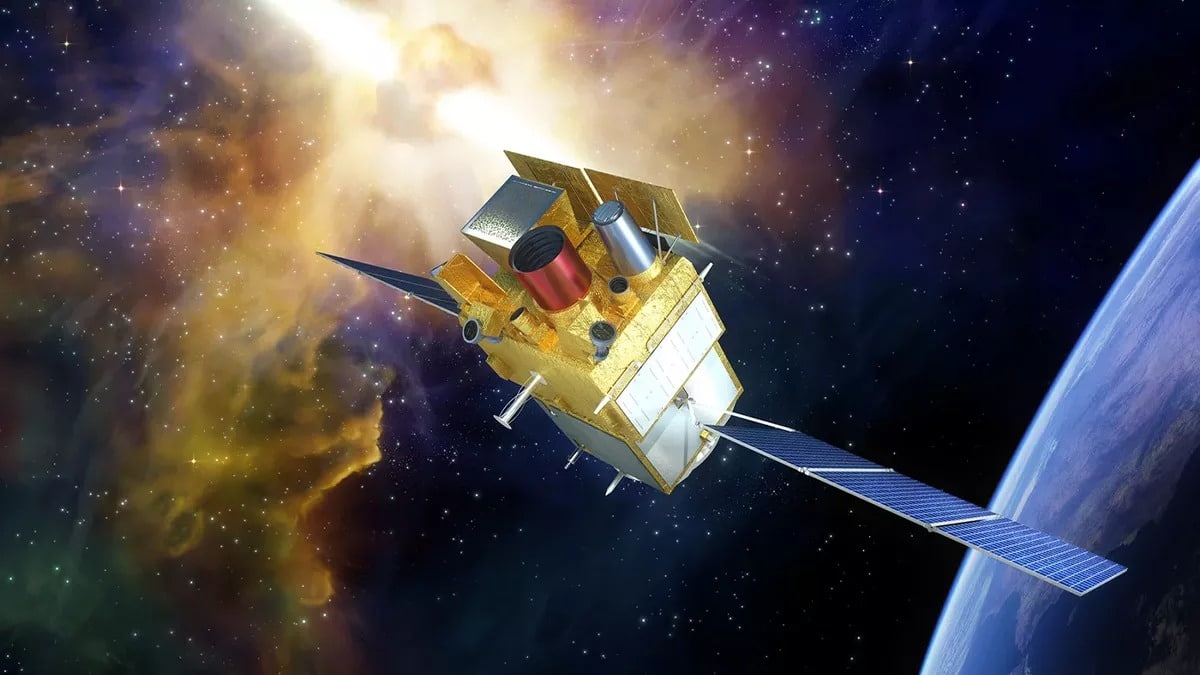
Франц-Хятадын хамтарсан SVOM сансрын дуран авайгаар анх илрүүлсэн тус дохиог хэдэн цагийн дараа дэлхий дээрх болон тойрог зам дахь бусад дуран авайгаар ажиглаж эхэлсэн байна. Чили дэх Very Large Telescope болон бусад төхөөрөмжүүдийн тусламжтайгаар уг тэсрэлт нь улаан шилжилтийн 7.3 утгатай болохыг тогтоож, Жэймс Вэбб дуран авайгаар нарийвчилсан судалгаа хийх хуваарийг гаргажээ. Жэймс Вэбб дуран авай 2025 оны долдугаар сарын 1-нд уг эх үүсвэрийг ажиглаж, суперновагийн гэрэл болон түүнийг агуулж байсан бүдэг галактикийг дүрсжүүлсэн байна.
Судлаачдын олж мэдсэнээр, 13 тэрбум гаруй жилийн тэртээх энэхүү эртний супернова нь өнөөгийн орчлонд ажиглагддаг супернова дэлбэрэлтүүдтэй гайхалтай төстэй шинж чанартай байжээ. Эртний оддын найрлага, масс нь орчин үеийн ододтой харьцуулахад ялгаатай байх магадлалтай гэж таамаглаж байсан ч бодит ажиглалт нь үүнийг үгүйсгэж байна. Гэсэн хэдий ч тус галактикийн хэмжээ маш жижиг, гэрэл нь бүдэг байгаа нь түүний нарийвчилсан бүтцийг судлахад хязгаарлалт үүсгэж байгаа бөгөөд цаашид нэмэлт мэдээлэл цуглуулах шаардлагатай байгааг эрдэмтэд онцолжээ.
Дэлгэрэнгүйг эх сурвалжаас харах
↓Эх сурвалжийг нээх ↓
For about 10 seconds on March 14, 2025, a burst of gamma rays flashed across detectors aboard a satellite monitoring sudden events in deep space. The source was so distant that the explosion had occurred when the universe was still within its first billion years.
Within hours, telescopes on Earth and in orbit were following the fading signal. An X-ray position came first, then an infrared afterglow. Further observations placed GRB 250314A at an extraordinary distance and gave astronomers enough information to schedule a later look with the most powerful infrared space telescope available.
That follow-up delivered the key result. The James Webb Space Telescope identified the source as the earliest supernova detected to date, an exploding massive star from when the universe was only 730 million years old. Webb also detected the faint galaxy that hosted the explosion. NASA’s Webb observations broke the telescope’s previous supernova record, set by an explosion from when the universe was about 1.8 billion years old.
GRB 250314A Is Traced to Redshift 7.3
The first alert came from SVOM, the Franco-Chinese Space-based multi-band astronomical Variable Objects Monitor mission. About an hour and a half later, NASA’s Neil Gehrels Swift Observatory pinpointed the X-ray source on the sky, allowing other telescopes to focus on the same location.
Eleven hours later, the Nordic Optical Telescope in the Canary Islands detected an infrared afterglow. Roughly four hours after that, the Very Large Telescope in Chile estimated that the event had occurred 730 million years after the Big Bang.
Ground-based follow-up by the Stargate collaboration established a redshift of 7.3. The Paris Observatory’s account of the campaign identifies GRB 250314A as the third most distant gamma-ray burst whose distance has been determined by spectroscopy. The burst came from the era of reionization, less than a billion years after the Big Bang.

Its duration offered another clue. Gamma-ray bursts can last from seconds to minutes, and longer events are frequently associated with the explosive deaths of massive stars. GRB 250314A lasted around 10 seconds.
Astronomers now knew where to point Webb and when to look. Rather than observe immediately, the team scheduled the telescope’s visit for the period when light from the underlying supernova was expected to reach its brightest point.
Webb Observes the Supernova Three and a Half Months Later
Webb observed the source on July 1, about three and a half months after the gamma-ray burst. The timing accounted for the way the expansion of the universe stretches light arriving from extremely distant objects. It also stretches the apparent timescale of the event, so this supernova brightened over months rather than the several weeks typical of a nearby supernova.
The near-infrared images directly identified the stellar explosion associated with the burst. They also revealed its host galaxy, a faint, reddened source occupying only a few pixels in Webb’s images. Its small apparent size limits how much detail astronomers can extract about the galaxy itself.

“Webb provided the rapid and sensitive follow-up we needed,” said Benjamin Schneider, a co-author and postdoctoral researcher at the Laboratoire d’Astrophysique de Marseille in France.
Webb’s previous supernova record holder had exploded when the universe was about 1.8 billion years old. GRB 250314A moves that record back to 730 million years after the Big Bang.
Ancient Supernova Closely Resembles Nearby Explosions
After identifying the supernova, researchers compared it with modern supernovae observed in the nearby universe. Despite the enormous difference in cosmic age, the distant explosion closely matched the more recent examples used for comparison.
Early stars were expected to differ from later ones. The European Space Agency’s report notes that stars from this period likely contained fewer heavy elements and may have differed in mass and lifespan. Researchers said more data are needed to identify smaller differences between GRB 250314A’s supernova and nearby examples.
“We went in with open minds,” said Nial Tanvir, a professor at the University of Leicester and a co-author of the research. “And lo and behold, Webb showed that this supernova looks exactly like modern supernovae.”
Webb’s images also provided the first detection of a galaxy hosting a supernova at such a remote distance. The galaxy resembles others known from the same period, although its light is blended into only a few pixels.
Enjoyed this article? Subscribe to our free newsletter for engaging stories, exclusive content, and the latest news.

