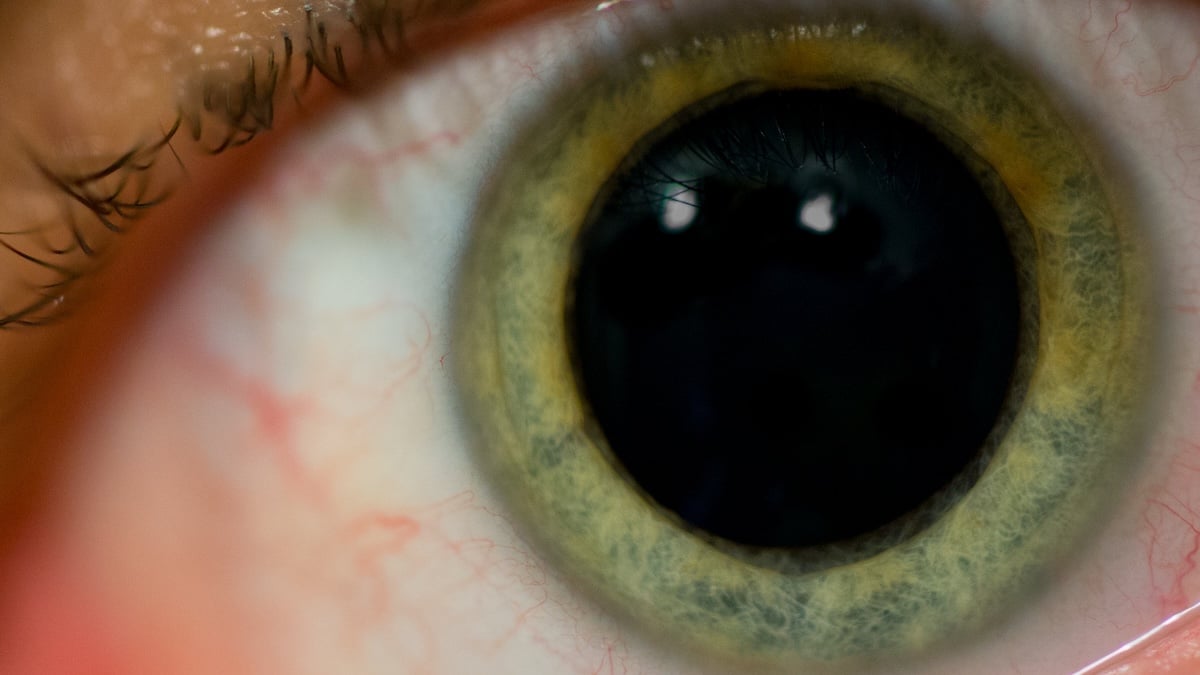
Судлаачид хүний цөцгий томрох үзэгдэл нь гэнэтийн үйл явдалд дасан зохицох, тархины мэдээлэл боловсруулах үйл явцтай шууд холбоотой болохыг тогтоожээ.
Браун их сургуулийн эрдэмтдийн хийсэн судалгаагаар цөцгий томрох нь зөвхөн гэрлийн хэмжээгээр зохицуулагддаг рефлекс төдий бус, харин тархины сэрэл сэдэлтийн өөрчлөлтийг илэрхийлдэг болохыг тогтоосон байна. Гэнэтийн үйл явдлын үед цөцгий томрох нь тархины үйл ажиллагааг “шинэчлэх” горимд шилжүүлж, хуучирсан хүлээлтийг арилган, шинэ мэдээлэлд суралцах чадварыг нэмэгдүүлдэг ажээ.
Тус судалгаанд 63 оролцогчийг хамруулж, тэднийг дэлгэц дээрх өнгөт дүрсүүдийг таамаглах туршилт хийлгэсэн байна. Энэ үед эрдэмтэд оролцогчдын тархины цахилгаан идэвхжил болон цөцгийн хэмжээний өөрчлөлтийг хянаж, гэнэтийн дүрс гарч ирэх үед тархины үүдэл хэсэг дэх “locus coeruleus” бүтэц идэвхжиж, норэпинефрин даавар ялгарч байгааг илрүүлжээ.
Судлаач Мэтт Нассарын тайлбарласнаар, цөцгий томрох нь тархи шинэ нөхцөл байдалд дасан зохицож, өмнөх туршлагаас үүдэлтэй өрөөсгөл ойлголтыг халж байгаагийн гаднын илрэл юм. Энэхүү механизм нь хүнийг хувьсан өөрчлөгдөх орчинд илүү хурдан суралцах, шинэ нөхцөл байдлыг зөв үнэлэхэд тусалдаг гэж дүгнэжээ. Энэхүү судалгааны үр дүн “Nature Human Behaviour” сэтгүүлд нийтлэгдсэн байна.
Дэлгэрэнгүйг эх сурвалжаас харах
↓Эх сурвалжийг нээх ↓
Your pupils quickly dilate when you enter a dark room, letting in more light to help you see. Once you’re in brighter conditions, they contract accordingly.
This reflex is well-known, but pupil dilation can also happen for other, less obvious reasons.
When we’re surprised, for example, our pupils may dilate as if we’re suddenly engulfed in darkness, part of a transient arousal response whose function and behavioral effects remain poorly understood.
In a new study, researchers shed light on the link between surprise and pupil size, finding evidence that dilated pupils –and the broader arousal response they signify –may play a key role in helping us react to unexpected events.
Following a surprise, the brain seems to shift into a “refresh” mode, with dilated pupils serving as one of the more outwardly visible signs, explains co-author Matt Nassar, an associate professor of neuroscience and of cognitive and psychological sciences at Brown University.
“Pupil dilation signals a spike in arousal, and our findings support the idea that these rapid fluctuations in arousal are doing something useful in the brain,” Nassar says.
“They’re enabling us to deal with a world that often changes from one context to another context.”
Studies have shown pupil dilation is more complex than it seems, potentially reflecting an array of internal details beyond the widely known association with external illumination.
Your pupils can dilate in response to cognitive effort, physical exertion, or emotional arousal, for example, or due to certain medications. Their size may also reveal clues about what you’re imagining or which memories you’re reviewing as you sleep.
Pupils also regularly change size in coordination with breathing, typically expanding as we exhale and constricting at the start of inhalation.
Arousal fluctuations following a surprise are mediated partly by the locus coeruleus, a small cluster of neurons in the brainstem.
This structure is our main source of norepinephrine, a neurotransmitter and hormone involved with the “fight or flight” response.
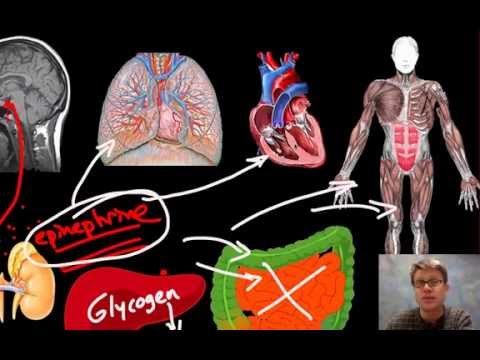
The locus coeruleus often leaps into action after a surprising event, showing increased activity that correlates with changing pupil sizes and with particular brain waves detectable via electroencephalography (EEG).
Research has previously found evidence of norepinephrine spikes and other arousal markers in the wake of surprising events, Nassar notes, yet it’s still unclear what function they serve and how they might influence behavior.
To investigate, Nassar and his colleagues recruited 63 healthy adult participants for an experiment in which they would make predictions about colored stimuli on a screen.
Screens displayed a series of colored patches for participants, who were first asked to simply recall which colors they had just seen. They eventually moved on to predicting which colors would appear in the next image, based on patterns they had learned from earlier ones.
As participants did this, researchers gathered physiological data – including EEG signals and changes in pupil diameter –to examine how the brain reacts to an unexpected twist.
“We wanted to capture the phenomenon associated with two overarching ideas about how the arousal system affects behavior,” says co-author Harrison Marble, a research assistant and manager in Nassar’s lab.
“One of them is related to learning, and the other is related to perceptual bias.”

When the screens displayed surprising colors that defied predictions, participants did exhibit dilated pupils, the study found, along with an increase in specific brain waves linked to transient arousal and activation of the locus coeruleus/norepinephrine system.
Those who experienced this response seemed to benefit, exhibiting condition-appropriate learning adjustments and reduced perceptual bias.
Participants grew more biased as images fit their predictions, but seeing an unexpected image seemed to snap them out of this groove. Pupil and brain-wave data suggest they learned from surprises and used that to inform future predictions.
This may function sort of like a refresh mechanism for the brain, helping us shed outdated expectations and priming us to start learning new ones.
Related: Do Eyes Really See The World Upside Down? Here’s The Science.
“The brain holds on to some mental context, and then when it recognizes that you’re in a new situation, you replace that context. Changes in pupil diameter, as well as specific EEG readings, are external markers of the brain that shows it’s loading that new context,” Nassar says.
“This both limits the effect that the previous context had on perception and also provides a clean slate, unencumbered by previous expectations, thereby allowing one to learn faster,” he adds.
The study was published in Nature Human Behaviour.
This article was fact-checked by Fiona MacDonald and edited by Fiona MacDonald. While we pride ourselves on our process, we are only human. If you spot a mistake, please let us know.


