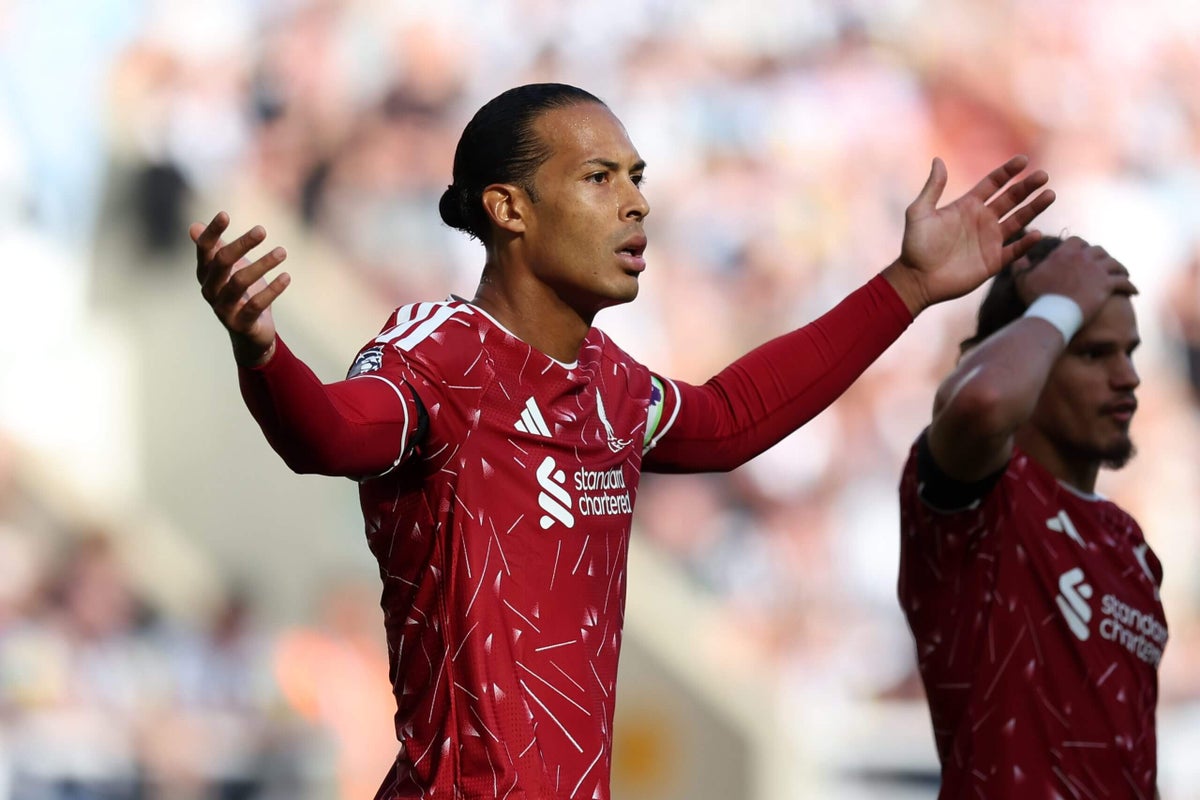
Премьер лигийн шинэ улирлын эхний тоглолтод Ливерпүүл Ньюкаслын эсрэг 2-2-ын харьцаатай тэнцэхдээ довтолгооны үеийн хамгаалалтын сул талуудаа илтгэлээ.
Андони Ираолагийн удирдлага дор Ливерпүүл илүү их бөмбөг эзэмшиж, довтолгоонд олон тоглогчоо оролцуулж байгаа нь сөрөг довтолгооны эсрэг хамгаалалтын бүтэц буюу “rest defence”-д сөрөг нөлөө үзүүлж байна. Тоглолтын эхний гоолын үеэр Райан Гравенберх бөмбөгтэй урагшлах үед багийн байрлал алдагдаж, Ньюкаслын тоглогч Энтони Элангад гоол оруулах боломж гарсан юм. Хоёр дахь гоолын үед ч мөн адил Гравенберхийн эрсдэлтэй дамжуулалтаас үүдэн багийн хамгаалалт суларч, Жо Уиллок гоолдсон байна.
Ливерпүүлийн хувьд бөмбөг алдсан үеийн шилжилтийн үе шатанд тоглогчдын байрлал болон шийдвэр гаргалтыг сайжруулах шаардлагатай байгааг энэхүү тэнцээ харууллаа. Дасгалжуулагч Андони Ираола тактикийн өөрчлөлт хийх эсвэл Трей Ньони, Алексис Мак Аллистер зэрэг тоглогчдыг ашиглах замаар хамгаалалтын тогтвортой байдлыг хангах боломжтой юм. Хэдийгээр баг бөмбөг эзэмшилтээр давамгайлж, боломжуудыг үүсгэж байсан ч сөрөг довтолгооны үеийн хамгаалалтын асуудлаа шийдвэрлэх нь тэдний улирлын амжилтад чухал нөлөөтэй байна.
Дэлгэрэнгүйг эх сурвалжаас харах
↓Эх сурвалжийг нээх ↓
Ever since Andoni Iraola made the step into elite football with Liverpool this summer, we’ve been talking about ‘scalability’.
Yes, Iraola had enjoyed success with mid-table sides both in La Liga and the Premier League. But could you really expect a style of play that relies on intensity, physicality and collective endeavour — particularly when a team don’t have the ball — to have the same kind of impact at a club which expects to be challenging for a league title in the near future?
With Liverpool heading into a tough opening game in the new Premier League season, these debates started to reach a crescendo, and as I settled into my seat before the game, my head was swirling with the potential hurdles that could unseat Iraola at the first available opportunity.
Of all the nightmare scenarios running, none of them involved the concept of ‘rest defence’. But by the end of the game — a somewhat fortuitous 2- 2 draw for Liverpool — plenty of people were talking about this fairly esoteric idea and how it had contributed to both of Newcastle’s goals.
So let’s begin this season’s noticing with a quick refresher on what rest defence is as we attempt to understand what Liverpool’s draw with Newcastle could mean for their season.
Iraola’s Liverpool will have more of the ball than his Bournemouth side… but still have to deal with turnovers (Molly Darlington/Getty Images)
If you break football down into its constituent parts, it can be reduced to two basic phases of play: in possession and out of possession. Usually, when a team are in possession of the ball, they will be looking to move the ball towards the opponent’s goal in a bid to score. You could call this “the attacking phase”.
When a team are out of possession, they will generally be looking to stop the opponent from moving the ball closer to their own goal so as to make it harder for them to score. You could call this “the defensive phase”. There are, of course, outlier situations in both phases but between these two phases of play you have the most basic moments in football.
Now it’s tempting to think of these two phases of play as being completely separate from one another, but they’re actually opposite sides of the same coin. If a team is not in possession, then, by definition, they are out of possession. If they lose the ball when they are attacking, then they are now defending.
It is this process — of teams shifting between in-possession and out-of-possession phases of play — that offers the context to understand rest defence. Because for any team that is in an attacking phase, there is always the possibility that they lose the ball and enter a defensive phase.
This is the question that the concept of rest defence seeks to answer: How well prepared are you in the attacking phase to deal with that shift to defending?
If you’re wondering where the phrase rest defence actually comes from, it’s a translation of the German phrase, restverteidigung. This is a portmanteau word that is built from two separate words: the word ‘verteidigung’ means ‘defence’ and the word ‘rest’ translates directly into English.
There is a potential etymological problem here, though. When a native English speaker hears the word ‘rest’, they will most likely associate it with the verbal form of the word and think ‘relaxing’ or ‘putting less effort in’. In German, though, its usage is nounal. It refers to the idea of what is left over: the remainder.

To put it in practical terms: in the attacking phase, a team will commit a number of players forward to try to score a goal. The ‘rest’ of ‘rest defence’ refers to the players that are left over — the non-attacking players in the attacking phase.
‘Rest defence’ refers to the defensive attitude of these non-attacking players and asks, “How are these players set up in order to best deal with a turnover of the ball?” This is rest defence in its simplest form.
With all this in mind, it’s easy to see why everyone was talking about rest defence after Liverpool’s game with Newcastle. Both of the goals they conceded began with Liverpool in dangerous attacking positions, and there were clear issues at play with how they defended the counter-attacking moments that ensued.
Of course, we could break down both goals purely in terms of mistakes made in the out-of-possession phase. But because of the tight relationship between in- and out-of-possession phases we outlined above, many of the problems in the defensive phase can be traced back to decisions made when Liverpool had the ball.
Let’s start with Liverpool’s structure for the first goal. At the point when Ryan Gravenberch receives the ball, turns smartly and begins carrying into space, there are a few things to notice.

Firstly, he is the deepest midfielder. His partner, Dominik Szoboszlai, is actually taking up quite an attacking position in the front line, threatening to run in behind, and Florian Wirtz is to his left.
All three of them are looking to drive forward as the attack develops.

This opens up plenty of space in front of the Liverpool defence, which could become a problem if a Newcastle player finds themselves unmarked within it in the event of a turnover.

When it comes to the principles of a solid rest defence structure, what you’ll generally see is teams trying to get decent proximity to opponents who could become threatening in a counter-attack.
In this instance, William Osula is a player who has enough space to cause problems if he receives the ball, but there is no Liverpool player with good access to him.
Virgil van Dijk is probably too deep — something he later admitted in a post-match interview — while Wirtz is probably too aggressive stepping forward, given Szoboszlai’s own aggressive positioning.
As a result, when the ball breaks free, Osula is able to receive it under no pressure, easily building momentum to force the Liverpool centre-backs deeper.


But the issues with Liverpool’s rest defence aren’t purely structural. At the point at which Gravenberch attempts to pass the ball to Alexander Isak, he has a number of options available to him.
He could feed the ball through to Szoboszlai to his right. This is probably the most difficult option for him given that he is right-footed and the angle he would need to find to hit Szoboszlai requires either the use of his left foot or a less standard passing technique.

Alternatively, he could shoot. Both of these options would make it unlikely that Newcastle would benefit from the poor rest defence structure Liverpool have created in their attacking shape, given the ball would either end up going out of play or in an area where the space in front of the Liverpool defence is less accessible.
Instead, though, Gravenberch attempts the risky pass, but it bobbles along the Newcastle box, and Amar Dedic is able to prod it through to Osula, triggering the counter-attack.

There’s another structural issue here. With Milos Kerkez not close enough to Anthony Elanga, there is no chance that he can snuff out Dedic’s weak pass. Had he retained better proximity, he might have been able to intercept the ball, preventing it from becoming terminal for Liverpool.
From this point onwards, the problems become defensive: Van Dijk isn’t able to force Osula to the left-hand side of the pitch, enabling the pass through to Elanga, and Kerkez is too passive tracking Elanga, allowing him to get around him from a position of advantage, giving one of the fastest players in the division direct access to goal.
In the end, it’s a smart finish from Elanga, and Newcastle are 1-0 up within five minutes of the game kicking off.

There are similar issues at play for Newcastle’s second goal.
This time, the structure is slightly better. Szoboszlai has much better access to Yoane Wissa in the space that opens up as Gravenberch pushes forward and Wirtz drops back to cover (no doubt after a half-time reminder about the importance of covering the space).
But the centre-backs are still a little deep, and Liverpool could probably afford to push one up and leave the other covering the space behind.


But the decision-making problems continue. Once again, Gravenberch plays a risky pass — this time an ambitious backheel — which is probably not worth the trade-off that it produces.
From here, although both Wirtz and Szoboszlai very quickly get back to cover the space, Wissa is able to break past them both, raising questions about why neither player thought to pull him down and take the tactical foul and subsequent booking. Perhaps they felt that their team-mates had adequate coverage so that it wasn’t necessary.

It was certainly the case that they had an overload against the Newcastle forwards. But they couldn’t prevent Joe Willock from finishing sharply from the edge of the box.

Again, there is plenty of scope for defensive improvement here from Liverpool, particularly when it comes to arriving into duels for the second goal and allowing the Newcastle players to ride pressure too easily.
But the main concerns here are rest-defence concerns: can you make better decisions when your team have the ball to ensure that you aren’t being punished when you lose it?
So what does this tell us about how Liverpool’s season will unfold?
First and foremost, it’s worth noting that these sorts of issues weren’t being talked about when Iraola was at Bournemouth. In part, that is because the expectations are different at Liverpool than they were at Bournemouth.
Now, the team Iraola is leading is expected to have more of the ball and so the problem of rest defence becomes much more applicable.
But in the moments when Bournemouth found themselves in rest defence situations under Iraola, there weren’t these same kinds of concerns. Liverpool fans should be confident, then, that their new manager will find a way of solving these teething issues.
And there are plenty of potential routes for solutions to emerge. On the one hand, it’s important to remember that these solutions will arrive tactically. As we’ve seen, both goals against Newcastle emerged from a number of poor decisions both in and out of possession. Not only will the players learn how to position themselves better to reduce the risk of counter-attack, but they’ll also make better decisions with the ball so that the functionality of their rest defence structure isn’t tested in the first place.
It’s also important to point out that these sorts of solutions are easily implemented without compromising anything in Iraola’s approach. Making sure the midfield are aware of the positioning of their team-mates or pushing up one of the centre-backs in certain situations to ensure good access to opponents will not have negative effects on what Iraola is trying to achieve with the ball.
And the available solutions aren’t just tactical. There are solutions to be found in terms of personnel too. One of the reasons why Liverpool struggled with their rest defence against Newcastle was because Gravenberch’s instinct on the ball is to carry it forward and open up space in front of the Liverpool back line. This isn’t to say that the issues were entirely of his making: his team-mates should be aware of his tendencies and look to offset them when he moves the ball forward. But it does mean that using different players in that role will reduce the rest defence threat.
Instinctively, the fans will want to start writing out a shopping list to go to the transfer market to fix these sorts of problems there. But there are potential solutions within Liverpool’s current squad. Trey Nyoni has looked the best fit for the deeper of the two midfielders in preseason and, if his legs are up to it, Alexis Mac Allister has looked promising too.

Trey Nyoni is a potential solution to Liverpool’s rest defence concerns (Jack Thomas/Getty Images)
We came into this season expecting to see a Liverpool side who looked open in the press and a little clunky in terms of in-possession dynamics. What we got in the game against Newcastle was a team who dominated possession, generated more than enough chances to be competitive, but who got caught out twice in transitional moments.
There is still plenty of work to be done, of course, but this is a promising starting point.


