Английн Премьер лигийн шүүгч асан Грэм Скотт тоглолтын үеэр гарсан маргаантай шийдвэрүүд болон шүүгчдийн дүрэм баримтлах зарчмын талаар мэргэжлийн байр сууриа илэрхийлэв.
Ньюкасл Юнайтед болон Ливерпүүл багуудын тоглолтод Иоан Висса хоёр дахь шар хуудсаа аваагүй явдалд Грэм Скотт тайлбар өгөхдөө, хоёр дахь шар хуудсыг олгох босго өндөр байдгийг онцоллоо. Тэрээр шүүгчид тоглолтын урсгалыг хадгалахын тулд зарим тохиолдолд шийдвэр гаргахад болгоомжилдог бөгөөд тухайн тоглолтод Виссагийн гаргасан алдааг дүрмийн дагуу сануулах боломжтой байсан ч тоглогчийн жүжиглэлт шүүгчийн шийдвэрт нөлөөлсөн байж болзошгүй гэв. Мөн Ковентри болон Арсенал багуудын тоглолтын үеэр Калеб Иренкигийн үйлдсэн алдаа нь шар хуудас авах хэмжээний зөрчил биш байсан гэж үзжээ.
Брайтон болон Астон Вилла багуудын тоглолтын 80 дахь минутад Жон Макгинн, Ибрагим Осман нарын хооронд гарсан мөргөлдөөнийг шүүгч торгуулийн цохилт гэж үзээгүй нь зөв шийдвэр байсан хэмээн Скотт дүгнэв. Тэрээр удаашруулсан бичлэгээр харахад торгуулийн цохилт мэт харагдавч бодит байдал дээр тоглогчдын хонго хоорондын мөргөлдөөн байсан гэдгийг тодотголоо. Түүнчлэн Манчестер Сити болон Борнмут багуудын тоглолтод Жошко Гвардиолын үйлдсэн үйлдлийг хүчирхийллийн шинжгүй, тоглолтын нэг хэсэг гэж үзэн улаан хуудас олгох шаардлагагүй байсан гэж тайлбарлав.
Шүүгчдийн бүрэлдэхүүний тухайд Фарай Халламыг тоглогчидтой харилцах өндөр чадвартай, ирээдүйтэй шүүгч хэмээн онцолсон байна. Тэрээр мэргэжлийн тоглогчид дүрмийн мэдлэгээ сайжруулах шаардлагатай байгааг тэмдэглээд, VAR-ын шүүгчдийн үүрэг оролцоо болон шүүгчийн шийдвэр гаргах үйл явц дахь нарийн ялгааг тайлбарлалаа.
Дэлгэрэнгүйг эх сурвалжаас харах
↓Эх сурвалжийг нээх ↓
The Premier League is back — and so are the refereeing controversies.
Fortunately, we have just the man to offer some clarity and reason amid the hysteria: Graham Scott, the former Premier League referee and VAR official, who worked at the top level of the English game for a decade.
On Monday, we asked you to send in questions to pose to Graham, drawing on the weekend’s big talking points or on wider issues within the world of refereeing.
Here, he provides his answers. And if you didn’t get yours into the article this time, don’t worry — Graham will be responding to subscribers’ queries regularly on Tuesdays throughout the season.
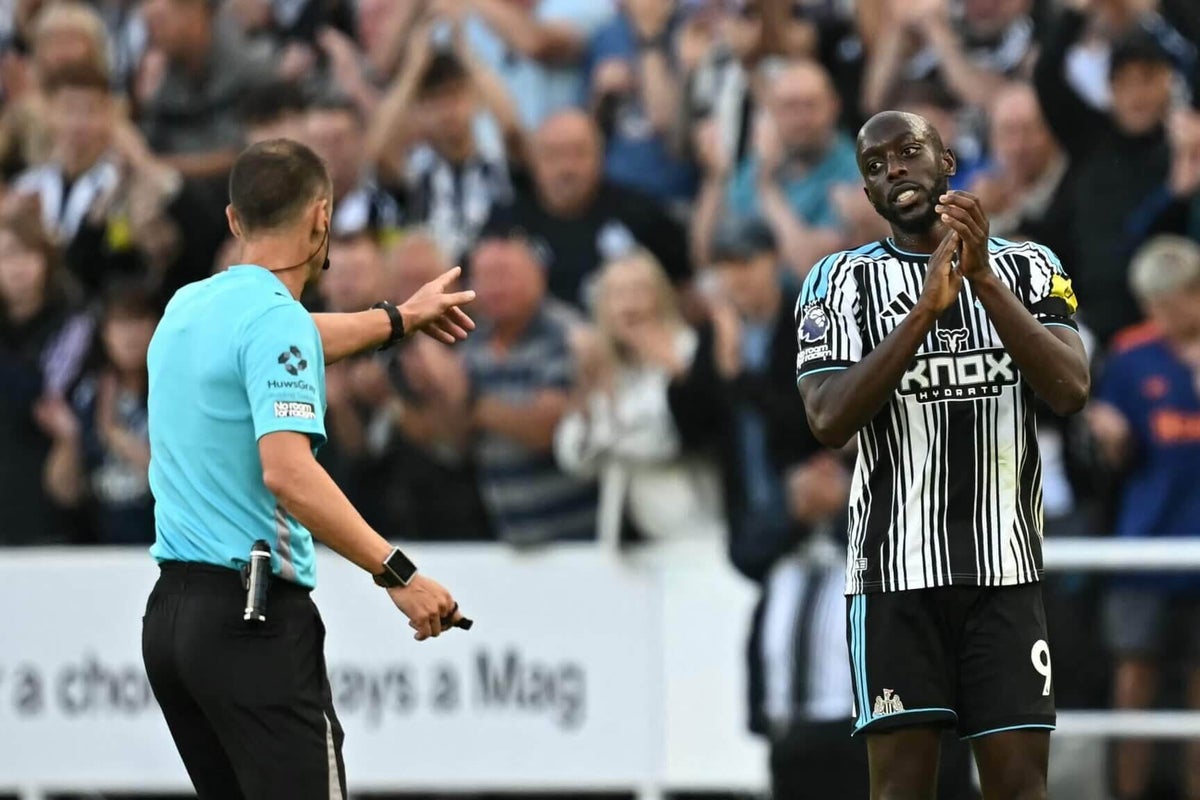
Gary O: Why did Stuart Attwell not produce a second yellow card for Yoane Wissa in the Newcastle United vs Liverpool game, given that he seemed to be booking players for very minor interactions in the first half? Do referees have a responsibility to keep the game flowing, or should they always follow the letter of the law?
Scott: The simple answer is that the threshold for a second yellow card is higher than for a first. That is what’s decreed by the Premier League, which reviews each incident and only wants players to be sent off if there is incontrovertible evidence that the referee had no choice.
The problem this creates is that refs can be reluctant to award a second yellow. Of the 12 errors last season, nine involved the failure to dismiss a player who should have walked.
In this instance, Wissa’s foul on Ryan Gravenberch would likely have led to a first yellow, as the Liverpool player was moving into space. A second caution could easily be justified by the letter of the law, because the foul prevents a promising attack. The independent panel that sits in judgement may tell Attwell he was wrong.
Wissa is probably saved from a second because he tries to pull out of the challenge, and Gravenberch takes a theatrical tumble. It’s as if his primary motivation is to get Wissa sent off, and some referees take against such antics. I know because I was one of them.
Patrick D: Did Caleb Yirenkyi escape a second yellow card in the 44th minute of Coventry’s match against Arsenal?
Scott: Yirenki’s challenge on Christos Tzolis is clumsy, but well short of a first yellow card, let alone a second. Referee Thomas Bramall did not even see it as a foul.
Michael A: Who do you think is the next up-and-coming referee to watch out for in the newly-formed Professional Referees Group?
Scott: Farai Hallam has started his Premier League career well, and he certainly has the potential to fly high. Barring injury or a major setback, he will join the international list in January, which will further stretch him.
He stands out from the other contenders because his player management is so much better. Hallam strikes the right balance between being approachable — he readily engages in conversation and explains his thinking — and not taking any nonsense.

Farai Hallam could be a star of the future among referees (Alex Livesey/Getty Images)
This is out of kilter with the other younger referees coming through, who either lack personality or have been drilled not to show it.
For all that people in football say they want consistency, in my experience, they loathe robotic refs more than those who have a feel for the game and adjust accordingly.
Rich Stone (via X): What percentage of the rules do you think the average fan or player knows?
Scott: Fans are allowed to watch in blissful ignorance, swear blind that the referee was wrong and join in the chants questioning the officials’ fitness or the extent to which they know what they are doing.
Professional players have no excuse for not knowing the laws of the game inside out, yet only a tiny proportion will have read them — some will know the rules of golf better.
Goalkeepers tend to be the most knowledgeable, and most players have a good understanding of the fundamentals, but a routine question about what constitutes a foul throw usually produces an incredibly high number of incorrect answers.
Anonymous: In the thrashing that was Brighton vs Aston Villa, John McGinn goes in for what appears to be a rough tackle on Ibrahim Osman in the penalty area in the 80th minute. Why was it not a penalty, as it seemed a clear foul?

Ibrahim Osman topples over after a challenge from John McGinn (Mike Hewitt/Getty Images)
Scott: Watching in real time, I viewed this as a fair challenge in which the two players come together, collide, and one comes off worse. The main camera view was at a similar angle to that of referee Peter Bankes, who calmly turned away as if he felt there was no decision to make.
None of the three Brighton players closest to the incident appeal for a penalty, which is only a clue, but it does add weight to the view that Bankes was right. Players do not have to appeal for a spot kick to be awarded, but they usually try their luck on even the most marginal calls.
Only from the replay behind the goal does it look like a potential penalty, as, in slow motion, it creates the impression that McGinn places his right leg in the path of Osman and brings him down. Other angles strongly suggest that the contact was, in fact, hip-on-hip.
The nearest comparison last season was in the Newcastle-Chelsea game, when Trevoh Chalobah took out Anthony Gordon. That challenge involved considerably more force than McGinn’s and should have been a penalty but was not considered a clear error by the independent panel that reviews such incidents.
Expect this one to be viewed as a correct decision when the panel’s verdict is released next week.
Jacktimmis31: Do referees look at comments made on social media about them or do they avoid that?
Scott: A referee who reads comments about themselves on social media would be a complete imbecile, yet a few of them do! Fools.
Nathan L: I have never understood why there are no specialist VAR officials. The skill set is so different from what is required on the field.
Scott: The pool of VAR officials has been widened over the past two seasons to include officials who referee in the EFL or operate as assistants in the Premier League.
You’re right that the skill sets are different, with a greater emphasis on process in the VAR chair than on the field. But you still need a good feel for what’s expected in any given situation — there is more to officiating at the top level than stringently applying the laws, whatever your role.
Initially, there was some professional snobbery about officials who had not reffed at the highest level, potentially recommending that decisions be changed. But Pro Ref’s chief refereeing officer Howard Webb has worked hard to change that, with some success.
Among the top-performing VARs last season were EFL referee Paul Howard and EPL assistant Neil Davies. That goes unnoticed because it’s only errors that get a lot of attention.
That said, England’s best VARs are still predominantly EPL referees, too. Attwell, John Brooks and Jarred Gillett sat in judgement of 215 key match incidents last season, and did not make a single error between them.
Ashley L: In the 64th minute of the Newcastle vs Liverpool match, do you think Attwell is too quick to whistle for a foul on Alexander Isak just outside the box? The ball is immediately played through to Victor Munoz in the area, who is then taken down. There would have been a case for a penalty. By comparison, he played a very similar advantage in the same position later in the match. Would that first incident have been going through his head?

Alexander Isak sits on the turf after being brought down (George Wood/Getty Images)
Scott: Yes, on both counts. In the first incident, Attwell will have had to keep his eyes down on the tackle, which is late and deliberate, and so loses his peripheral vision that might have picked up Munoz breaking into the area. Also, as refs, we tend to blow quicker when a foul is a clear yellow card, as in our early careers we are taught that doing so helps sell the sanction and prevent potential retaliation. That habit is hard to break.
The second incident involves more of a routine foul, and the ball breaks immediately to a player in red, so it’s easier to find advantage. I cannot be sure, but I agree that the earlier incident would surely have been on his mind.
Jordan L: Was the elbow from Josko Gvardiol a red card in Sunday’s match between Manchester City and Bournemouth?
Scott: No, there is nowhere near enough in Gvardiol’s actions to justify a dismissal, given the boundaries set by the Premier League in recent seasons. It looks more like one player shrugging off another’s unwanted attention than an act of violence. The delayed and overplayed reaction of the ‘victim’ reinforces that view.
These incidents often look worse as still images or in slow motion. Watch in real time and there’s little in it.
There’s a case for a yellow card for an aggressive act, but even that feels fairly thin.


