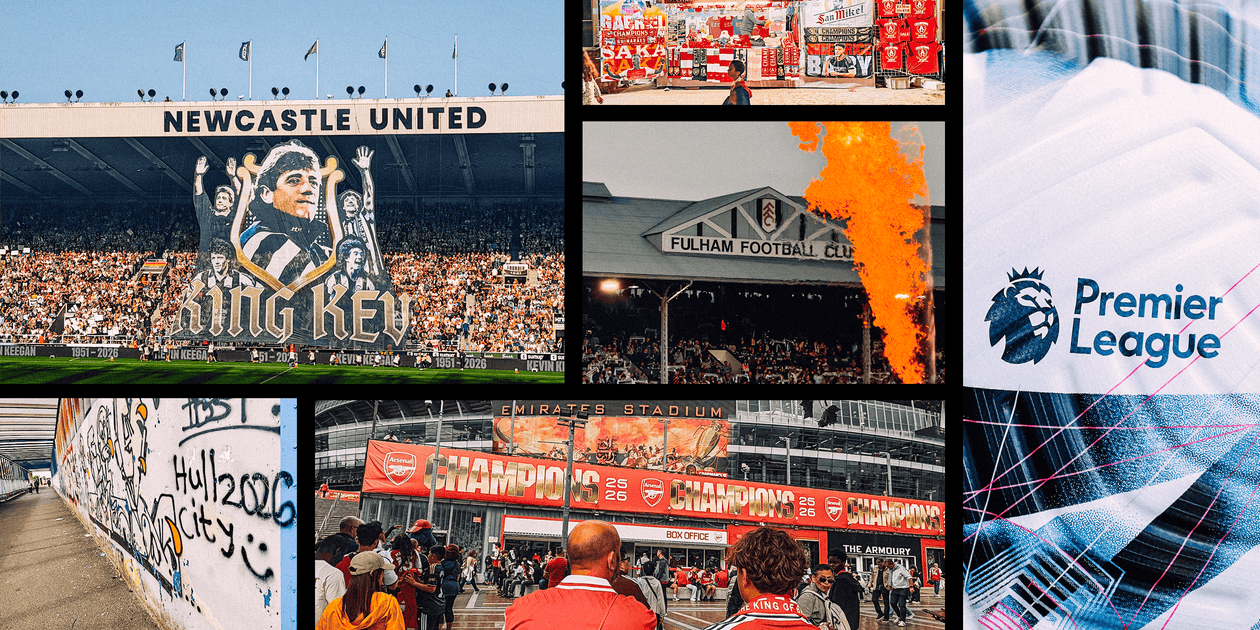
Премьер лигийн шинэ улирлын эхний тоглолтууд өрсөлдөөнтэй эхэлж, Арсенал, Халл Сити зэрэг багууд чухал ялалтуудыг байгууллаа.
Арсенал өөрийн талбайдаа Ковентри Ситиг 3-0-ийн харьцаатай хожлоор буулган авч, улирлыг амжилттай эхлүүлэв. Тоглолтын эхний гоолыг Милан ван Эвейк оруулсан бол Кристос Тзолисын дамжуулалтаар хоёр дахь гоол бүтжээ. Ингэснээр Арсенал хүснэгтийг тэргүүлж эхэлсэн бөгөөд дасгалжуулагч Микел Артетагийн баг өөрсдийн байр суурийг бататгах зорилготой байна.
Манчестер Юнайтед айлын талбайд Халл Ситид 2-0-ийн харьцаатай хожигдож, улирлыг тааруухан эхлүүлсэн бол Ньюкасл Юнайтед болон Ливерпүүл багуудын тоглолт 2-2-оор тэнцээгээр өндөрлөв. Ньюкасл Юнайтедийн хувьд энэ тоглолтод Иоан Висса онцгой байж, багтаа үнэтэй хувь нэмэр оруулсан юм. Харин Фулхэм болон Челси багуудын дерби тоглолт өрсөлдөөнтэй өрнөж, хоёр талын дэмжигчдийн хувьд сэтгэл хөдөлгөм мөчүүдийг бэлэглэлээ.
Энэхүү тойрогт нийт 10 тоглолт явагдаж, 30 гоол орсон нь лигийн өрсөлдөөнтэй байдлыг харуулж байна. Шинээр дэвшсэн багуудаас хоёр нь ялалт байгуулж, есөн баг шинэ дасгалжуулагчийн удирдлага дор тоглолтоо эхлүүлжээ. Премьер лигийн 380 тоглолтоос бүрдэх энэ улирлын үйл явдлууд дөнгөж эхэлж байна.
Дэлгэрэнгүйг эх сурвалжаас харах
↓Эх сурвалжийг нээх ↓
Outside the Tollington Arms, Steve Chandler is in full flow. On the back of his replica shirt is the number 26 and a single word, “Champions” and, on the front of his head, lips are flapping overtime. Pint in hand, Steve is telling anyone who will listen that the first word he spoke as a kid was “Gooner” (a slang term for an Arsenal fan). “Correction,” one of his mates jumps in. “The first thing you said was ‘s***’. And you’re still talking s***.” It is pure, well-worn vaudeville.
The laughter is easy and beery; Friday evening vibes. Football vibes. Steve has been a regular at the Emirates Stadium — and Highbury before it — “since forever,” he says, fretting and fidgeting through those 22 years without a Premier League title and he is “loving this feeling. We’re the best team in the country; something I’ve been waiting to say for a very long time. And, guess what — we’re going to do it again.” Around him, there is a rumble of agreement: “Yerrrrr.”
After a brutal summer, London is parched, but the Tollington specialises in quenching and the mood is just as it should be; loose and liquid. Over the opening weekend of the Premier League season, versions of this conversation are ubiquitous across the country; in pubs, queues at burger vans, stadiums, online, at home. We are hopeful and fearful and excited precisely because, in this moment of not knowing, you can invest in possibility.
The Tollington pub in Islington, an Arsenal fans’ favourite (George Caulkin/The Athletic)
Over the next nine months, there will be 380 occasions like this, every one a story. The richest and most watched football league in the world will bring us brilliance, talent, glitz and jamboree. There will be controversy, grift and venality, supporters will get lost and lose themselves in a fog of legalese, accounting and abbreviations — VAR, SCR, LOL, FFS — there will be ugliness and misgivings and a lot of meh. Away from the cameras, we will get to see and hear the good and bad of humanity.
This is the first in a new series which The Athletic is calling Our League, where we will attempt to tell some of those stories. Perhaps we will follow the controversies, perhaps we will find an issue to dissect or perhaps we will go in search of meaning. Maybe we will pick a fun-looking game, just for the hell of it. It might be serious or frivolous, but, over the course of the season, we promise to write about every club and try to explain how it feels to actually be there. No filter.
We start with four fixtures in the space of four days; Arsenal vs Coventry City, Hull City vs Manchester United, Newcastle United vs Liverpool and Fulham vs Chelsea. And we start by the Tollington where Steve is heading to the bar to buy another round. Kick-off is 90 minutes away and you can feel it now, the buzzy hum of anticipation.
“This is our time and it’s our league,” he offers over a red-and-white shoulder, but 19 other sets of supporters will get a say in that, too.
Arsenal get three points, none of them awarded for subtlety. “Champions” is not just on Steve’s shirt, it is everywhere, plastered across the outside of the ground and in huge, golden letters above the Clock End, where Coventry fans like Susan Wales wait to file in. It is the psychology of the blunderbuss, but it speaks of a club transformed by their trophy. They are not shy about crowing; this is who they are now. Their own clock has been reset.

Arsenal fans do not mind reminding you they are champions… (George Caulkin/The Athletic)
Back in the spring, each game here was harrowing torture. “I haven’t enjoyed a single moment of this season,” an Arsenal-supporting friend said in late April after a narrow, nervy 1-0 victory over Newcastle, when the atmosphere was laden and nauseous. As they scrapped for every inch, the sentiment was not implausible. They were grappling with their own identity, the nearly-men, habitual second-placers, locked in a gilded cage. Now? Comfortable.
Mikel Arteta is suddenly the longest-serving manager in the division; none of his peers have won the Premier League. With their traditional, legacy rivals — the Manchester clubs, Liverpool, Chelsea and Tottenham Hotspur — in various guises of transition, Arsenal are suddenly the team to beat and the Emirates is suddenly a library of sound; noise please. The night begins with pyrotechnics and ends with a statement: “We are top of the league.” Suddenly, they may take some shifting.

There’s that word again (George Caulkin/The Athletic)
Coventry get some tuition in the details. They tear forward, winning a corner after 20 seconds. They look athletic. Arsenal have quality, but when both sets of fans join in a chorus of “Campeones, campeones..” — Coventry finished top of the Championship after all — there is a form of parity. Then Milan van Ewijk messes about on the right side and, bang, 1-0. And then Christos Tzolis crosses from the left, Carl Rushworth can only parry and bang, it’s two.
“I know we’re not going to win tonight,” Susan says beforehand. “I’m not expecting miracles; the miracle is being here in the first place.” Coventry have had their own long wait to endure — far more traumatic and existential than Arsenal’s — since dropping out of the Premier League 25 years ago, flatlining into the fourth tier of English football, losing their home ground, playing elsewhere. In that context, a 3-0 defeat to Arsenal barely registers. Bouncing back is in their DNA.
Susan is with her 11-year-old son Josh, both of them wearing Coventry’s new blue and white shirt, which echoes back to the kit they wore when they won the FA Cup in 1987. “We’re dreaming and I can’t explain how amazing that feels,” she says. Josh has a go: “It’s magic.” Susan tries again. “We were just existing,” she says, “and there were moments when it was barely even that. We were like the memory of a club. And now we’re living. That’s the difference.”
Manchester United are now what Arsenal were. They wait and wait for their very own leap forward and yearn for the clocks to stop. They last won the title in 2013, since when seven permanent managers have not provided permanence, with new dawns and fresh starts leading to dusky cul-de-sacs. In historical terms, this drought is far from their longest, but no team has won the Premier League more times than them (13), and limbo jabs at a leviathan.
Maybe this time things will be diff … Oh. Michael Carrick’s players step onto the pitch at MKM Stadium surrounded by a frothing sea of orange; every home supporter has a flag to wave with the slogan “One Family. One Dream” emblazoned on it. But some families are dysfunctional and Manchester United have that aura of doom-loop about them. Whatever they try, square one crooks a finger and beckons.

Hull City fans celebrate towards those their more illustrious opponents, Manchester United (Photo: Annabel Lee-Ellis/PA Images via Getty Images)
Maybe they should try running faster. Carrick won more points than any Premier League manager following his return to Old Trafford in January, but that was in a temporary capacity; the first competitive fixture of yet another new era concludes with a rusty old cannonball to the stomach. They are rotten, blindsided by Hull’s pace and physicality, by their whipped delivery from the wings.
Hull are not supposed to do this. The numbers said they could not possibly get promoted and plenty of the pundits have said they cannot possibly stay up; their beauty as a team is in saying “f*** you” to the numbers and the pundits and to cannot possibly and not supposed to and going for it anyway. If it counts as luck, then they have made it, just as Manchester United have an indefatigable capacity to forge their own haplessness.

Hull City are back in the Premier League for the first time since 2017 (George Caulkin/The Athletic)
Home supporters bait Joe Cole, the former England player, who said on a podcast last week “Hull are gone, man.” Of Bruno Fernandes, they sing: “Your teeth are offside.” Of Carrick: “You’re getting sacked in the morning.” When the stadium announcer blares over the tannoy — glee unrestrained — that trains to Manchester have been canceled, there is a roar followed by a refrain of “Going home in a taxi.” Hull are here, man.
No team wants to peak on the first Saturday, but our league loves a narrative and what happens right now sets a tone; Manchester United’s is discordant, flat, lethargic. Carrick serves up calm and blandishments; defeat “doesn’t mean we always have to shout and scream and come out and create some chaos because of it,” he says. “Inside, we’re hurting. The boys know we need to get better.” These are early moments, but the knack is in the doing.
At Hull’s railway station an hour or so later, a few Manchester United fans are scanning the departures board near Philip Larkin’s statue, which captures the late poet mid-stride. “F***ing Hull, f***ing 2-0, f***ing Hull,” says one supporter as he scans and sways, considering scant options. Larkin was a master of melancholy. “You can look out of your life like a train and see what you’re heading for, but you can’t stop the train,” he once wrote. Still waiting.

Take your pick from the menu (George Caulkin/The Athletic)
At St James’ Park, communion is followed by carnage. Up in the Milburn Stand, a fella with grey hair and a black hoodie is weeping. Kevin Keegan’s likeness is being shown on the big screens, the stadium is a riot of cards and banners and everybody is applauding and belting out a rendition of “Walking in a Keegan wonderland.” The man in black is wracked and choking, mangling the words, eyes dripping.

The Newcastle fans pay tribute to Kevin Keegan before their club’s game with Liverpool (George Caulkin/The Athletic)
Five minutes later, the same fella is on his feet screaming the word “C***” at top volume. He bellows it repeatedly, interspersed with “RAT” for a bit of variety: “C*** C*** RAT C***”. The object of his attention is Alexander Isak, the striker who left Newcastle for Liverpool a year ago after downing tools and refusing to play and is now back on Tyneside for the first time. It brings a peculiar intersection between legend and legacy.
Over the course of a vivid afternoon, supporters chant Keegan’s name lustily. Keegan was a fine player for Liverpool, but he was Newcastle’s shock therapy, stunning a middling, second-tier club when he first arrived in 1982 and stunning them again when he returned as manager a decade later. He hauled them back from oblivion, pushed them into the Premier League, playing feverish attacking football. He transformed them into strivers and dreamers.
Newcastle yearned to win, to fulfil the dream awoken by Keegan — who died of cancer last month — and Isak was part of the team that finally did it, a languid forward with a kiss for a touch who scored at Wembley when Liverpool were beaten. A first domestic trophy for 70 years made a legend of everybody and Isak made it all look so easy until he made his own departure so unbearably difficult. Winning became a strange kind of burden.

Newcastle fans queue to get into St James’ Park on a day that will renew hope (George Caulkin/The Athletic)
All clubs are defined by their recruitment, but the interesting thing about Isak’s £125 million transfer to Anfield — a British record — is how it turned everything sour. Newcastle caved at the last reckoning, spent in desperation and laboured in the Premier League, finishing 12th. Eddie Howe left this summer, exhausted from fighting fires, and other big players have gone. Liverpool did not do much better out of it. Isak was out injured and then out of form. Arne Slot was out, full stop.
Eras end and begin on Sunday. Supporters say farewell to their dream-bringer and spit invective at their deserter; St James’ echoes to chants of “Isak’s a c***, olé olé olé,” and “One greedy b*****d.” There are hand gestures, finger gestures and clenched fist gestures when Lewis Hall clatters into Isak and then does not acknowledge him. “Newcastle 2.0” as David Hopkinson, the chief executive, has described it, feels like a cleansing, a purge.

Isak is floored on his return (Photo: Gaspafotos/MB Media/Getty Images)
Liverpool equalise twice, the second a late penalty which carries a familiar sting, but Newcastle look the more rounded team, breaking with urgency, even though Matthias Jaissle, Howe’s replacement, has only been in the role for three weeks. The standout performer is Yoane Wissa, who was signed after Isak’s defection last summer and then barely resembled a footballer. “I want to be here,” Wissa tells journalists afterwards. On a day of love and spite and contrasts, his words resonate.
The conclusion of a long weekend draws some of our themes together as Fulham take on Chelsea, albeit in a wholly, unholy manner. Derby fixtures — meetings between teams brought together by geographical proximity and driven apart by rivalry — have their own twisted tempo and warped logic. There is a minute’s ovation for Keegan, who was chief operations officer and then manager at Craven Cottage in the late 1990s, there is an unchained melody of bedlam, the creation of chaos and there are a lot of c***s.
A summer condenses. A head coach goes and another comes. You buy players and report for pre-season, you have warm-up games, you sweat on the training pitch, you drill the details, you study the opposition. Fans look forward and fantasise, hope and wait. They get to the ground early to soak up the sunshine and sponge up the drink and the flamethrowers spew fire and the music erupts and then it’s 32 seconds gone and you are losing. And you think: all that, for this?

The opening Premier League weekend concludes in west London with a local derby (George Caulkin/The Athletic)
Yet there is little time for the thought to curdle, because this game is a Monday night maelstrom. Chelsea attack with venom; Cole Palmer, Joao Pedro and Morgan Rogers are darting flashes of blue steel. At other end, Robert Sanchez elicits blue murder and the combination is riotous and compelling. Fulham are outplayed but given encouragement, going behind, clawing back, Josh King a dervish, behind again, edging back, seeing more of the ball and pushing for a draw.
It is not a derby of bile and loathing, like Newcastle vs Sunderland, when history and the air weigh heavy and which can still, even now, knock a season off course. It is more fraternal than that, like bickering, badgering siblings. At various points, both groups of fans claim “There’s only one team in Fulham,” and both are factually, knowingly wrong because Stamford Bridge and the Cottage sit inside the same borough. By the end, Chelsea are singing it louder. The game thuds and whistles by.
There are other ties that bind. Xabi Alonso and Alvaro Arbeloa are close friends now coaching nearby competitors for the first time in anger, and both have cause for pleasure and consternation. They will have to get used to this particular, parochial drumbeat because, across the season, there will be 30 London derbies. Chelsea do not play a league match outside the nation’s capital until October. Later, Alonso calls it a “good first day.”
Down by the riverside, a Fulham choir is singing “Stamford Bridge is falling down,” and “You can stick your blue flag up your a***.” When Enzo Fernandez comes on for Chelsea, targets shift. Fernandez’s Argentina beat England in the World Cup semi-final and celebrated with a flag referencing the Falkland Islands and so now it is “Enzo, Enzo, you’re a c***” and “Enzo Fernandez, the Falklands are ours.” This is football, somehow. Football, maybe. No pattern, just a manic splodge of surreal.

Fulham fans relax in the late summer sunshine before their game with Chelsea (George Caulkin/The Athletic)
Match-week one gives us 10 games, 30 goals, one red card, two victories for the three promoted teams, a few shocks or half-surprises, nine new managers, a batch of new laws, fresh haircuts and a narrowing of possibilities. It throws up questions: can Arsenal be stopped; can Spurs and Aston Villa be jump-started; can the newbies again be usurpers? It gives us pointers, but no definitive answers. It gets the ball rolling, the dice tumbling.
The Premier League, our league, is a bulldozer, flattening anything and everything. It can be prohibitively expensive, it is sanitised and more diverse and focused on families than ever before, yet it can still be nasty and grasping and putrid and beautiful. We glory in the mess of it and we recoil from the venality and hyperbole. There’s plenty to dislike about it and there’s nothing like it. Here we are, coming back for more.


