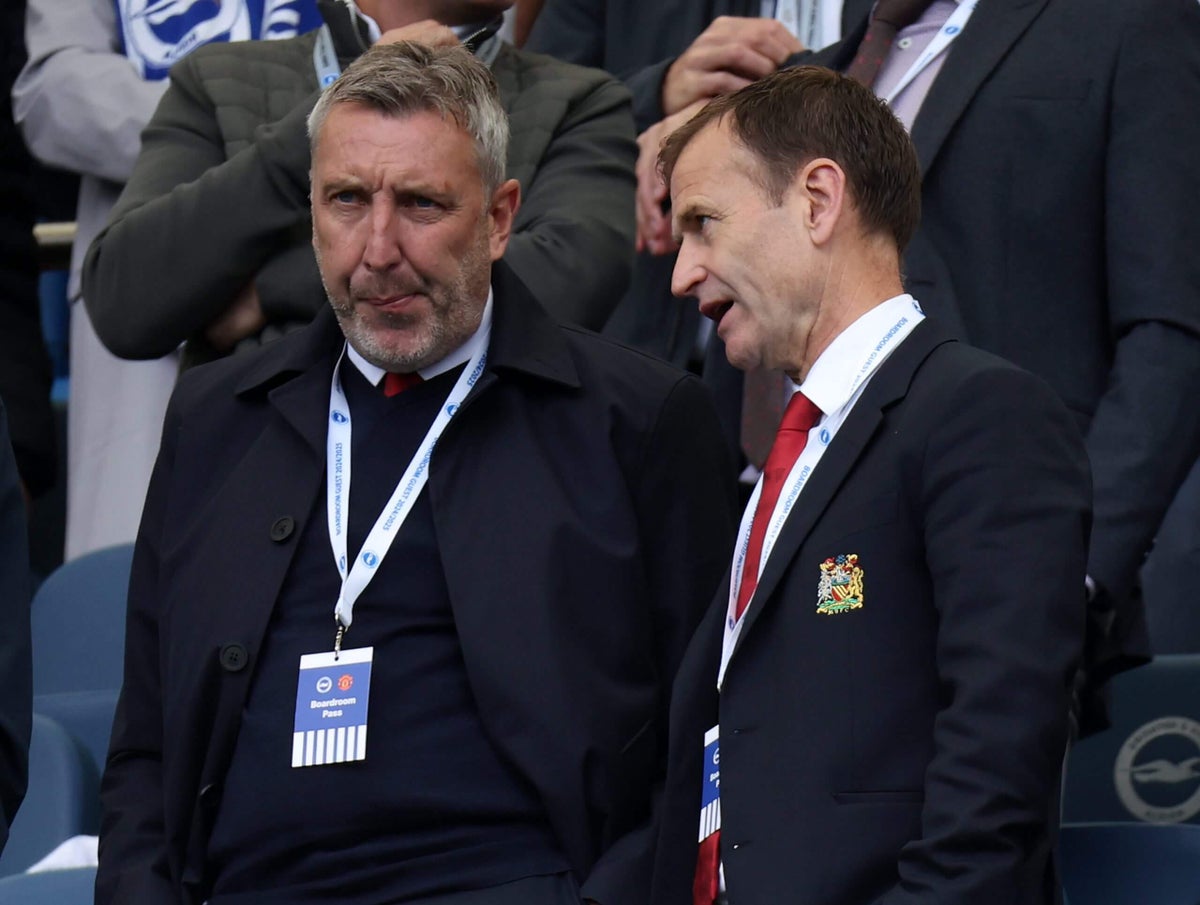
Английн хөлбөмбөгийн клубуудын стратеги болон бодлогыг урт хугацаанд зангидах үүрэгтэй спортын захирлуудын албан тушаалд сүүлийн жилүүдэд томилгоо ойр ойрхон хийгдэх болжээ.
Премьер лигийн багуудад спортын захирлын албан тушаал өмнө нь тогтвортой байдлын баталгаа гэгддэг байсан ч өдгөө дасгалжуулагчдын адил богино хугацаанд солигдох үзэгдэл түгээмэл боллоо. Тухайлбал, Манчестер Юнайтед 2025 онд Жейсон Уилкоксыг томилсон бол Арсенал клуб Андреа Бертаг ажиллуулаад 18 сар болж байгаа нь Эдугийн халааг авснаас хойшхи богино хугацаа юм. Мөн Ливерпүүл, Тоттенхэм, Манчестер Сити, Ньюкасл зэрэг клубууд сүүлийн жилүүдэд спортын захирлын албан тушаалдаа шинэ хүмүүсийг томилоод байна.
Салбарын шинжээчдийн үзэж буйгаар энэхүү өөрчлөлт нь спортын албад бүтэц, зохион байгуулалтын хувьд өөрчлөгдөж, эрх мэдэл олон хүнд хуваагдсантай холбоотой аж. Клубуудын удирдлага үр дүнд чиглэсэн богино хугацааны бодлого баримтлах болсон нь спортын захирлуудын ажлын байрыг дасгалжуулагчдын адил эрсдэлтэй болгож байна.
Зарим эх сурвалжийн мэдээлснээр, хөгжөөн дэмжигчдийн дарамт болон клубын эздийн нөлөөлөл ихэссэнээр спортын захирлууд нь бүтэлгүйтлийн “буруутан” болох эрсдэлтэй албан тушаал болон хувирчээ. Ийнхүү урт хугацааны стратегийн төлөвлөлтөөс илүүтэйгээр үр дүнд суурилсан удирдлагын арга барил Премьер лигийн хэмжээнд давамгайлж байна.
Дэлгэрэнгүйг эх сурвалжаас харах
↓Эх сурвалжийг нээх ↓
The Premier League’s sporting directors are not staying in the job as long as they should.
It’s strange, because sporting directors are supposed to provide football clubs with continuity. While head coaches and players come and go, sporting directors ensure that a club’s operating strategy remains in place, guaranteeing a baseline of efficiency through a singular vision for how a club should work.
Curiously, while the role is intended as a counterweight to football’s capricious nature, in England it hasn’t worked out that way. Sporting directors — or sporting CEOs, heads of football, or however you describe them — can be expected to last no longer than a head coach.
A glance around the Premier League shows that.
Jason Wilcox, Manchester United’s sporting director, was appointed in 2025. He succeeded John Murtough, who was in the role for only three years. Andrea Berta has held the equivalent position at Arsenal for 18 months. He was appointed to replace Edu, who lasted just under two years. At Liverpool, Julian Ward replaced Michael Edwards in 2022. He was then succeeded by Jorg Schmadtke a year later, who was employed on a short-term basis ahead of Richard Hughes’s appointment in 2024.
Across the rest of the league, many holding senior recruiting positions are relatively new to their roles.
At Tottenham, Rafi Moersen started work as director of football in June. Hugo Viana was appointed to the role at Manchester City in 2025 and Tiago Pinto, celebrated for his work at Bournemouth, has been President of Football Operations at the south coast club since 2024.
Andrea Berta has been sporting director of Arsenal for 18 months (Justin Setterfield/Getty Images)
Everton’s sporting department is run by committee, made up of Nick Hammond and Nick Cox – who both joined in 2025 – Angus Kinnear, who was appointed CEO in the same year, and Jonathan Williams, currently head of football operations, but who has held various roles at the club over the past 20 years.
At Newcastle, Ross Wilson was appointed as sporting director in October 2025; at Aston Villa, Roberto Olabe replaced Monchi in September 2025; while Mike Cave took over as sporting director at Brighton in July.
This fast-revolving door is a trend that seems to have developed quietly, without anyone really noticing. But why?
A former Premier League sporting director, speaking anonymously to protect relationships, feels that the role has changed, or is perceived inaccurately.
“These are departments now,” he tells The Athletic. “The power is often devolved and held by different people. There might be a technical director, a head of performance, and so on. Depending on the club, the hierarchies are still clear, and there might be little overlap between those positions. But the cost of losing one person from that group is less than it was, and so while there is probably more movement, it doesn’t necessarily create the problems that you’re imagining.”
The point is fair. Sporting directors tend to have the most name-recognition with supporters — particularly those with ‘transfer guru’ reputations — and that can make them the individual face of what, in reality, is a far broader operation. So, while it’s tempting to see their departure as a new chapter for a club, as the kind of strategic reset that clubs would be desperate to avoid, that is not actually the case.
It’s a topic that draws different opinions. One industry source, who asked not to be quoted directly, says that the Premier League has become such a results-oriented business that sporting directors are not really motivated to think long-term, and accept that the position carries a lifespan similar to that of a head coach. Equally, they are also happy to seek new positions regularly, and while not every club is the same, many are designed in a way that allows a new employee to drop into a pre-existing role. When new sporting directors are appointed, they often populate their new club with some of their own hires, but they rarely have to build a department from the ground up.
A Bundesliga technical director, who has never worked in the Premier League but who has spent his career within German sporting departments, questions whether efficiency and the gains associated with long-term appointments are that important in England.
“The rules are different,” he tellsThe Athletic, speaking anonymously in order to offer a candid opinion. “They can make many more changes. In Germany, it’s not possible to buy a new team for every new coach. That’s why everything must be stable. No big changes. Sign coaches who work with existing KPIs (key performance indicators).
“In England, I’m certain that clubs are thinking in this way, but they can afford not to. I think that’s true in the sporting department. If something doesn’t work, throw it away!”
The point he makes is that Premier League clubs have the resources to make ideological pivots, meaning that the necessity of keeping sporting directors in position is lesser than it might be elsewhere.
One president of a Europa League club tells The Athletic that the nature of ownership in England is partly responsible for the high turnover. He makes the same point about the diversification of power across a sporting department, but also highlights the desire of owners or investors for control over the club.
“Boards want some level of influence, too. That’s a big thing,” he says, speaking anonymously to protect relationships.
“I think if you look at the clubs these days in the Premier League, most of the boards bought into them thinking they could make efficiency gains. They think they’re pretty smart. The old-style chairman, who would hire people and just let them get on with it, seems much rarer.”
The fame of sporting directors, or at least fans’ growing awareness of their role and importance to the club, might also count against them. It makes them a target. Whereas owners previously diffused negative situations by sacking a head coach, changing a sporting director or someone prominent within the department can now have a similar effect.
“Before,” says the club president, “as a board, you used to have that head coach lever to pull that said: ‘It’ll be better now, fans, relax’. Now you have a nice sporting director lever to pull: ‘It was his fault’.”
The final point he makes describes something harder to define: the idea that the pursuit of long-term, efficient strategic thinking is not always an ultimate goal.
“Some of these guys just have way too much money. This is their fun. They may know that (some of the practices) are suboptimal, but they don’t care. They have loads of businesses to run clinically.”
Needless to say, these different factors apply unevenly across the league, and at some clubs not at all. But the overall impression is that while the role remains vital and key to a club meeting its targets, having a single person in the job for a long period seems to matter less. It’s similar to the fate that befell managers a few decades ago. Once kings, they are now head coaches — employees — who were seen to have lost much of their power to sporting directors. Now, as the modern game grows, it is the sporting directors who are no longer the load-bearing figures they once were.


