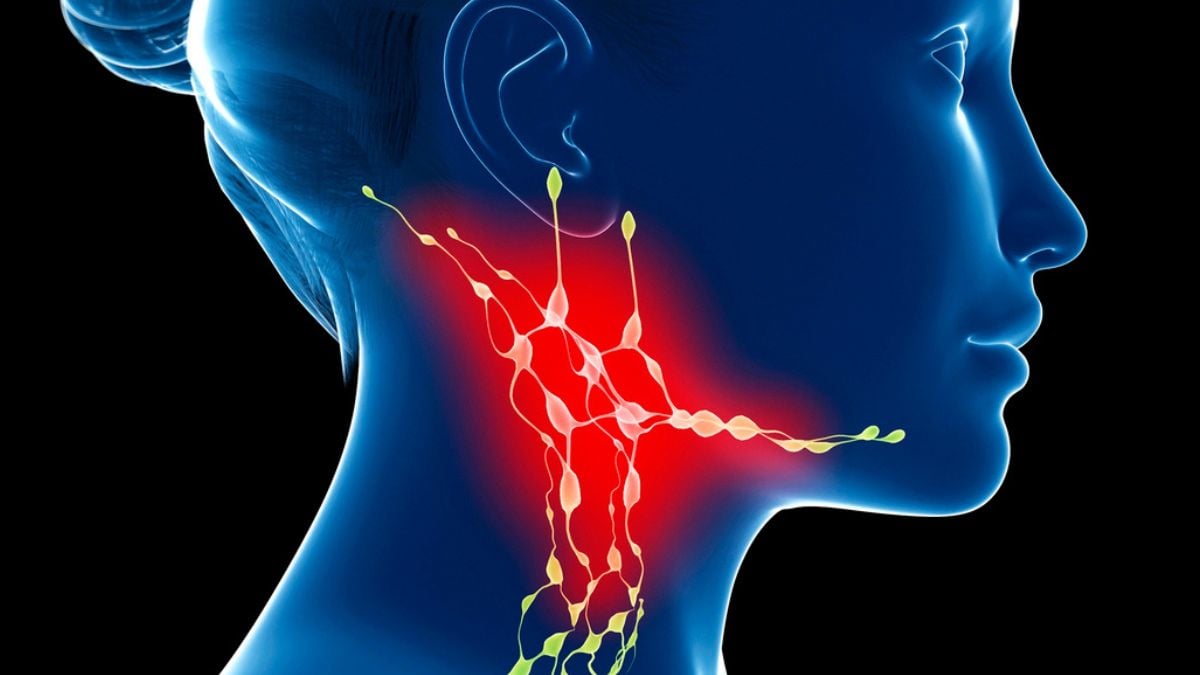
Хүний биеийн хөгшрөлтийн явцад хүзүүний тунгалгийн булчирхай агшиж, тархины хог хаягдлыг цэвэрлэх үйл ажиллагаа удааширдаг болохыг тогтоожээ.
“Neurobiology of Aging” сэтгүүлд нийтлэгдсэн 96 судалгаанд хийсэн системчилсэн шинжилгээгээр нас ахих тусам хүзүүний тунгалгийн булчирхайн хэмжээ багасдаг нь тогтвортой үзэгдэл болохыг нотолсон байна. Өмнө нь эрдэмтэд хүзүүний тунгалгийн булчирхайг зөвхөн биеийн захын эд эрхтнүүдийн шингэнийг цэвэрлэдэг гэж үздэг байсан бол сүүлийн үеийн судалгаагаар тэдгээрийг тархины хог хаягдлыг зайлуулах “хогийн сав” буюу дархлааны чухал эрхтэн гэж үзэх болжээ. 2015 онд тархины бүрхүүлд тунгалгийн судасны сүлжээ илэрснээр тархины нугасны шингэн болон хог хаягдал хүзүүний тунгалгийн системээр дамжин гадагшилдаг болохыг тогтоосон юм.
Өмнөд Каролины Анагаах ухааны их сургуулийн мэдрэл судлаач Ондер Албайрам тархины хөгшрөлтийг зөвхөн тархины дотоод үйл ажиллагааны доголдол бус, тархи болон түүнийг цэвэрлэх системийн хоорондох харилцаа холбоо тасалдаж буй үйл явц гэж тайлбарлаж байна. 2025 онд хийгдсэн судалгаагаар Альцгеймер өвчний үед илэрдэг уургийн түвшин залуу хүмүүсийн хүзүүний тунгалгийн булчирхайд өндөр байгаа нь нас ахих тусам энэхүү цэвэрлэх механизм суларч буйг илтгэж байна. Оксфордын их сургуулийн судлаач Адам Аль-Дивани энэ нь хүзүүний тунгалгийн булчирхай нь тархины цэвэрлэгээний системд голлох үүрэгтэйг баталж байгааг онцлов.
Одоогоор энэхүү үйл явц нь өвчний шалтгаан уу, эсвэл хөгшрөлтийн дагалдах үзэгдэл үү гэдэг нь тодорхойгүй байгаа тул цаашид хүний бие дээр урт хугацааны судалгаа хийх шаардлагатай байна. Мэдрэл судлаачид тархины цэвэрлэгээний системийг идэвхжүүлэх нь цус харвалт болон бусад мэдрэлийн эмгэгийг эмчлэхэд тустай байж болохыг таамаглаж, зарим улс оронд энэ чиглэлээр эмчилгээний төхөөрөмж хөгжүүлж эхэлжээ. Гэсэн хэдий ч судалгааны үр дүнгүүд нь амьтны загвар дээр суурилсан эсвэл дүрс оношилгооны тайлбарт тулгуурласан тул эмнэлзүйд бүрэн нотлогдоогүй байна.
Дэлгэрэнгүйг эх сурвалжаас харах
↓Эх сурвалжийг нээх ↓
With age comes wisdom – and, apparently, some rusty plumbing in the old noggin.
Growing evidence suggests that as we age, the lymphatic system that serves our central nervous system may drain out of our heads more slowly.
The reason may lie in our necks.
Now, a systematic analysis of 96 peer-reviewed studies has found that shrinking lymph nodes within the neck are a consistent feature of aging.
The consequences of that deterioration on the brain are unclear, but for the rest of the body, lymphatic aging is linked to impaired wound healing and diminished immune defenses.
If lymphatic drainage in the neck slows over time, could it lead to a build-up of waste products, fluid, or pathogens in and around the brain?
Scientists are beginning to investigate the possibility that cervical lymph nodes are ‘bins for the brain’.
“What struck me most was how consistently the evidence pointed beyond the brain itself,” neuroscientist Onder Albayram, who studies the aging brain at the Medical University of South Carolina, told ScienceAlert.
“That changed the way I think about brain aging. I increasingly see impaired clearance not simply as a local defect inside the brain, but potentially as a progressive loss of communication between the brain and its peripheral drainage infrastructure.”
The results of the review are published in Neurobiology of Aging.
Deep cervical lymph nodes are immune organs in the neck and head that receive and clean lymphatic fluid, trapping pathogens and old or abnormal cells.
The whole body contains roughly 800 lymph nodes, and 300 sit in the cervical space alone.
That’s a big number that hints at an important role, but until recently, scientists thought cervical nodes only dealt with peripheral lymphatic fluid.
“The cervical lymph nodes are not simply passive collection sites; they are also immunological organs.”
– Neuroscientist Onder Albayram
Then, in 2015, our understanding of these nodes changed dramatically. In mice, scientists discovered a lymphatic system hiding in the meninges, the membrane that covers the brain.
Two years later, we got the first evidence that a similar lymphatic network exists in the meninges of the human brain.
Since then, research on the meninges and their lymph vessels has exploded. Emerging studies now suggest these vessels drain into lymph nodes in the neck and also carry some of the brain’s cerebrospinal fluid.
This fluid probes the deepest parts of the brain, where it exchanges waste products and immune signals with the fluid between neurons. This is the ‘glymphatic system’, but only in the last decade have we realized that some cerebrospinal fluid also enters the meningeal lymphatic system.
That secret link could change our basic understanding of neurological disease.
“For many years, investigators focused on how waste moves through the brain but less on what happens after that material reaches the brain’s borders,” Albayram explained to ScienceAlert.
“Yet drainage has to have an endpoint. The cervical lymph nodes are not simply passive collection sites; they are also immunological organs receiving central nervous system-derived molecules and immune signals.”
Albayram argues it is now time to consider glymphatic transport, meningeal lymphatics, and cervical lymph nodes as “components of one connected clearance pathway.”
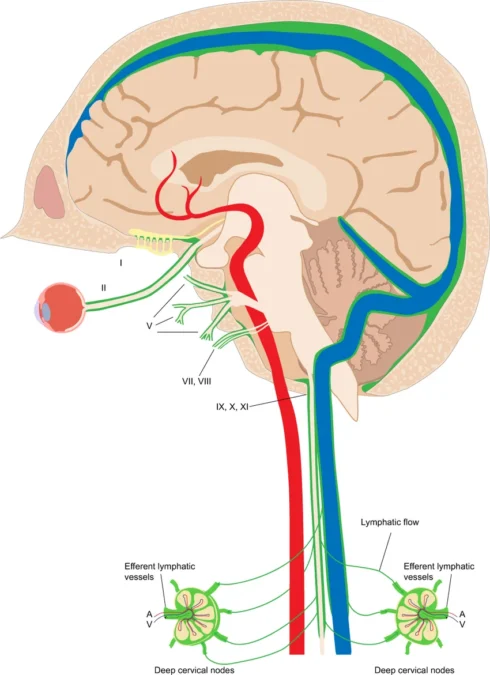
Increasingly, evidence suggests that lymphatic drainage from the brain’s meninges plays a significant role in neurological disease, such as Alzheimer’s or Parkinson’s.
If long-term clinical trials are conducted, deep lymph nodes in the neck might one day offer warning signs that the brain’s drainage system is faltering.
“I think this is one of the most exciting translational possibilities, although we are not yet at the point where cervical lymph-node measurements can be considered a clinical biomarker,” Albayram told ScienceAlert.
“More recent work has shown that central nervous system-associated proteins, including amyloid-beta and phosphorylated tau, can be detected and in some cases strongly enriched in cervical lymph nodes.”
In a 2025 study, for instance, researchers sampled the neck lymph nodes of 25 participants with autoimmune neurological diseases.
“We found high levels of proteins that usually define Alzheimer’s disease in lymph node samples from younger people,” explained the lead author, clinician-scientist Adam Al-Diwani, from Oxford University.
“This supported the hypothesis that the lymph nodes act as a drainage basin from the brain. We then saw that this reduced in older people, suggesting that this was less effective with age… We see this as evidence that the cervical lymph nodes are acting as ‘bins for the brain’.”
Albayram says the next step will be longitudinal human research. Otherwise, researchers won’t be able to distinguish whether neck lymph nodes contribute to disease, respond to disease, or simply accompany aging.
To date, most research on the brain’s lymphatic system has focused on animal models and high-resolution imaging in living humans.
MRI studies have revealed that compared to younger folk, those older than 50 show relatively small cervical lymph nodes and a thickening of lymphatic channels.
With age, glymphatic drainage also seems to slow down.
Whether those two findings are connected will require further clinical research, but the evidence among animals is promising.
In preclinical research, scientists have found that when meningeal lymphatics in mice are purposefully slowed, more toxic disease-associated byproducts deposit in the brain.
What’s more, initial evidence in rodents suggests that improving brain-draining lymphatic function may boost recovery following a stroke, or even improve memory.
Related: In a First, Chronic Fatigue Syndrome Linked to The Brain’s Clearing System
Emboldened by such results, researchers at Yale University and the Monash Institute of Pharmaceutical Sciences are already developing non-invasive devices that can help pump the neck’s lymphatic vessels more effectively.
Elsewhere, other teams are trying to use carbon dioxide to kickstart the brain’s drainage system to better treat diseases like Parkinson’s.
Still, it’s important not to get ahead of the evidence. It’s only been a decade since the brain’s lymphatic network took the field of neuroscience by storm.
What we see in mice may not hold up in clinical trials.

While imaging technology has allowed scientists a wider window into the brain’s drainage system than ever before, skeptics have also warned that some signals on MRI scans can be misinterpreted as lymphatic tissue.
“I would like to see the field move from describing individual lymphatic structures toward measuring the entire brain-to-neck clearance circuit in living humans,” Albayram told ScienceAlert.
“Ultimately, I hope we can determine whether lymphatic dysfunction is simply a consequence of brain aging or whether it is one of the processes that helps set the pace of brain aging.”
If the latter is true, an important part of brain aging may be accessible through the neck, making imaging and therapeutic interventions easier.
The brain’s drainage system may be slippery, but if scientists ‘go with the flow’ we might just be able to find its bottleneck.
The review is published in Neurobiology of Aging.
This article was fact-checked by Rebecca Dyer and edited by Rebecca Dyer. While we pride ourselves on our process, we are only human. If you spot a mistake, please let us know.


Энэ үнэн үү
Тийм ээ, энэ судалгаанууд хүзүүний тунгалгийн системийн хөгшрөлт тархины үйл ажиллагаанд нөлөөлдөг байж болзошгүй гэдгийг дэмжиж байна. Цаашид илүү нягт судалгаа хийвэл илүү тодорхой олон мэдээлэл гарч магадгүй.