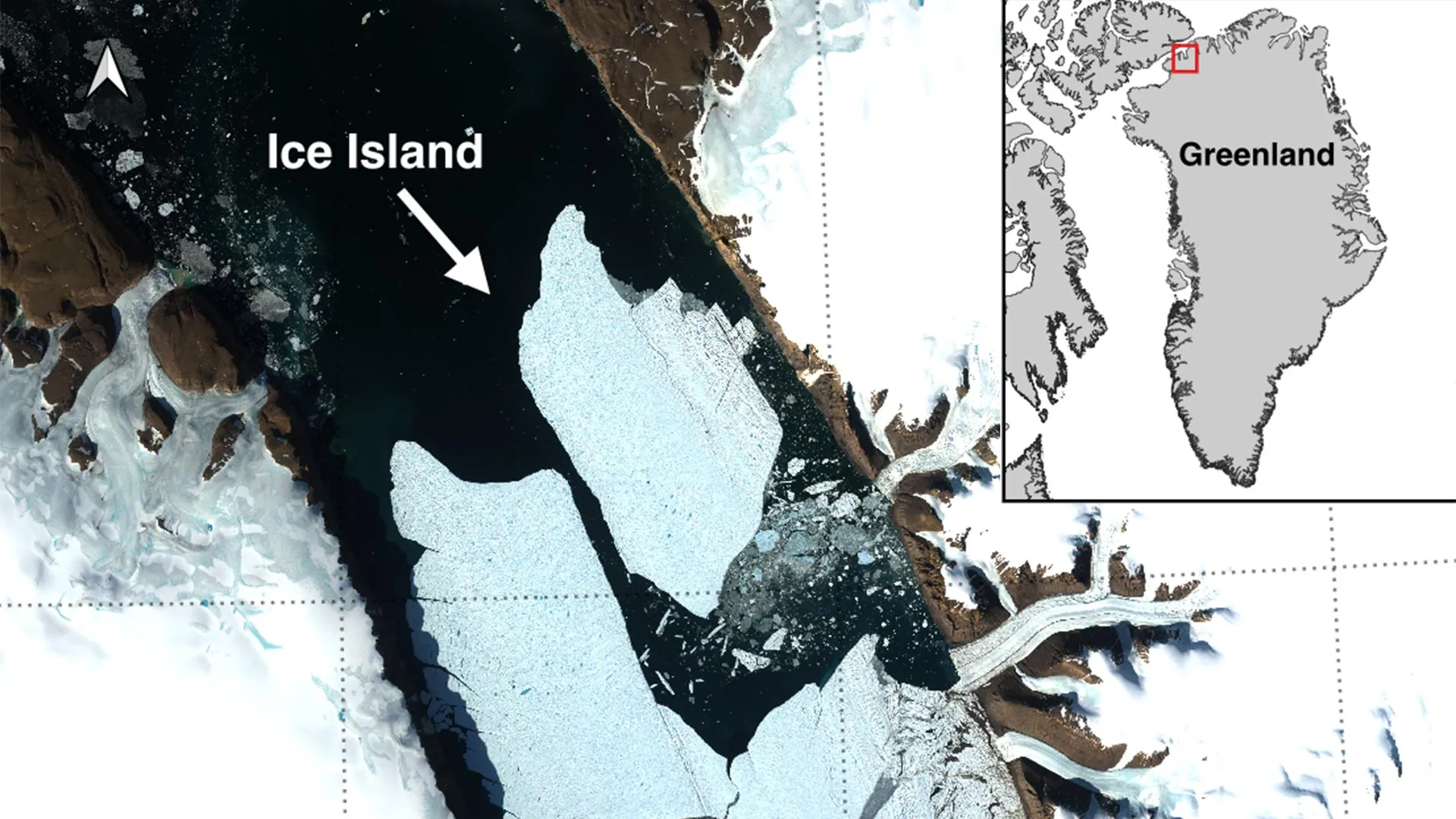
Арктикийн бүс нутагт сүүлийн жилүүдэд ажиглагдаагүй томоохон мөсөн уул салж, эрдэмтэд туйлын бүсийн мөсөн голын өөрчлөлтийг нарийвчлан судлах боломжтой боллоо.
Гренландын баруун хойд хэсэгт орших Петерманны мөсөн голын хөвөгч мөсөн хэллэгээс 2026 оны наймдугаар сарын 4-нд 76.4 км² талбай бүхий мөсөн уул тасран салжээ. Энэ нь 2012 оноос хойш тус мөсөн голоос салсан хамгийн том, 2020 оноос хойших Арктикийн хамгийн том мөсөн уул болохыг Отавагийн их сургуулийн тэргүүлсэн олон улсын судалгааны баг баримтжуулсан байна. 150 метр хүртэл зузаантай байж болох уг мөсөн уул нь гадаргын талбайгаараа Манхэттен аралтай дүйцэхүйц хэмжээтэй юм.
Судлаачид 2019 оноос хойш хиймэл дагуулын ажиглалтаар Петерманны мөсөн голын тогтворгүй байдлыг тасралтгүй хянаж ирсэн байна. ESA-гийн Sentinel-1 номлолын цуглуулсан мэдээллээр наймдугаар сарын 3-нд мөсөн хэллэгийн төв хэсэгт эвдрэлийн тодорхой шинж тэмдэг илэрч, улмаар наймдугаар сарын 4-ний 20:00 цаг гэхэд мөсөн уул бүрэн салжээ.
Арктикийн бүсэд ийм төрлийн хавтгай оройтой мөсөн уулс ховор тохиолддог тул эрдэмтэд үүнийг мөсөн голын хайлалт болон далайн нөхцөл байдлын өөрчлөлтийг судлах ховор боломж гэж үзэж байна. Цаашид Петерманны мөсөн голын хөвөгч хэллэгээс дахин хоёр том хэсэг салж магадгүй байгаа бөгөөд энэ нь нийт мөсөн хэллэгийн 22 орчим хувийг багасгах эрсдэлтэй гэж судлаачид таамаглаж байна.
Канадын Байгаль орчин, уур амьсгалын өөрчлөлтийн яамнаас уг мөсөн уулын шилжилтийг хянаж, далайн тээвэр болон далайн эрэг орчмын дэд бүтцэд учруулж болзошгүй аюулыг үнэлж байна. Том хэмжээний мөсөн уулс олон жилийн турш далайд хөвж, аажмаар жижиг хэсгүүдэд хуваагддаг нь усан онгоцнуудын аюулгүй байдалд эрсдэл учруулдаг байна. Судлаачид хиймэл дагуул болон агаарын ажиглалтын тусламжтайгаар уг үйл явцыг цаашид үргэлжлүүлэн судлахаар төлөвлөж байна.
Дэлгэрэнгүйг эх сурвалжаас харах
↓Эх сурвалжийг нээх ↓
An international team of researchers, led in part by the University of Ottawa, has documented a major calving event at Petermann Glacier in northwest Greenland. On August 4, 2026, the glacier released a 76.4 km2 ice island, its largest loss of floating ice since 2012 and the biggest Arctic calving event since 2020.
The newly separated tabular iceberg broke away from Petermann Glacier’s floating ice tongue and may be as much as 150 meters thick. Its surface area is roughly comparable to Manhattan Island, giving scientists a rare opportunity to observe how enormous Arctic ice masses develop, move through the ocean and eventually fragment.
The event was identified by Adam Garbo, a PhD student in glaciology at uOttawa’s Department of Geography, Environment and Geomatics. The discovery is part of an ongoing collaboration involving the University of Ottawa, the University of Stirling, Environment and Climate Change Canada, Lancaster University, and the University of Leeds.
Satellite Monitoring Revealed Years of Growing Instability
Scientists have been tracking changes at Petermann Glacier with long-term satellite observations since 2019. Over that period, they closely followed the condition of the glacier’s floating ice tongue, recording the expansion of fractures and watching for signs that a major section might eventually break away.
“Petermann Glacier has long been one of Greenland’s largest remaining ice tongues,” says Garbo. “We’ve anticipated this break for years, and seeing it finally happen is remarkable.”
Images collected by the European Space Agency’s Sentinel-1 mission showed clear signs of deterioration along the centerline of the ice tongue on August 3. By 20:00 UTC on August 4, the new ice island had fully separated from the glacier’s eastern side.
Rare Arctic Ice Islands Offer a Window Into Polar Change
Large, flat-topped icebergs are relatively common around Antarctica, but comparable ice islands are much less frequently seen in the Arctic. Their rarity and longevity make them especially valuable to researchers studying glacier retreat, changing ocean conditions and the risks posed by drifting ice in polar regions.
“While large, tabular icebergs are relatively common in the Southern Ocean that surrounds the Antarctic Ice Sheet, Arctic ice islands are far rarer,” explains Dr. Anna Crawford of the University of Stirling. “By studying Arctic ice islands, we will gain knowledge that can be transferred across Polar regions.”
Scientists do not expect the August calving event to be the last major change at Petermann Glacier. Two additional large sections of the floating ice tongue are expected to detach in the near future as rifts that have been developing for years continue to cut through the ice.
Those future ice islands are projected to measure about 94 km2 and 84 km2. If both break away, the three calving events combined would remove approximately 254 km2 from Petermann Glacier’s ice tongue, reducing it by about 22 percent.
Drifting Ice Could Create Hazards for Arctic Shipping
The newly formed ice island is important not only for scientific research, but also for marine safety. Massive pieces of floating ice can remain intact for years as they drift, then gradually fracture into smaller sections that may become difficult to track.
Environment and Climate Change Canada is monitoring the ice island’s movement, as it has done following previous Arctic ice shelf calving events, while evaluating potential risks to vessels and offshore infrastructure.
“These are thick blocks of ice that can drift for years,” specifies Dr. Abigail Dalton of the Canadian Ice Service, Environment and Climate Change Canada. “Over time, they fracture into smaller, harder-to-track pieces that pose hazards to vessels and resource operations.”
Garbo and his collaborators plan to continue following the aftermath with satellite imagery, aerial observations and tracking data. Their work is part of a broader effort to better understand the processes responsible for the calving and retreat of Arctic ice shelves.


Арктикийн хүйтэн бүсэд ийм хэмжээний мөсөн уул салж байгаа нь цаг уурын өөрчлөлтөө ямар хурдтай илэрч байгаагийн жишээ биш гэж үү? Манхэттен аралтай дүйцэх хэмжээтэй мөсөн их уут салсан нь ямар нөлөөтэй болохыг та бодож үзсэн үү? Ирээдүйд ийм том мөсөн уул дахин салж магадгүй гэсэн айдас байна уу?