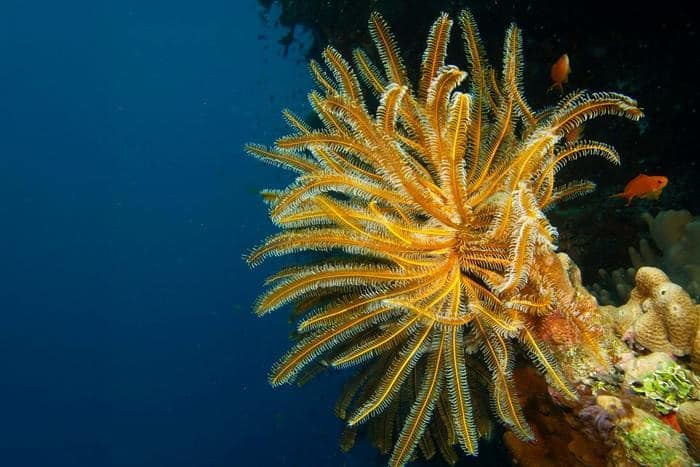
Палеонтологчид далайн цэцэг буюу криноидын зөөлөн эд эс бүрэн хадгалагдаж үлдсэн ховор тохиолдлыг илрүүлсэн нь эртний амьтдын хувьслыг судлахад чухал ач холбогдолтой байна.
Оклахомагийн их сургуулийн судлаачид Монреаль хотын Палеонтологи ба хувьслын музейн цуглуулгад олон жил хадгалагдаж байсан Dendrocrinus simcoensis төрлийн криноидын олдворыг судалжээ. Үлэг гүрвэлүүд үүсэхээс 200 сая гаруй жилийн өмнө амьдарч байсан энэхүү амьтны тэмтрүүл буюу хооллоход ашигладаг зөөлөн эд эсүүд нь 450 сая жилийн турш гайхалтайгаар хадгалагдан үлдсэн байна.
Палеонтологич Лена Коулын тайлбарласнаар, амьтныг үхсэний дараа арьс, дотоод эрхтэн зэрэг зөөлөн эд эсүүд хамгийн түрүүнд задардаг тул ийм нөхцөл байдал бүрдэх нь маш ховор юм. Судлаачид энэхүү олдворыг байгалийн хөргөгч эсвэл вакуум орчинд хадгалагдсантай адилтган үзэж байгаа бөгөөд дэлхий даяарх музейн сая сая криноидын олдвороос зөөлөн эдтэй нь ердөө хоёрхон тохиолдол бүртгэгдээд байна.
Судлаач Дэвид Райтын онцолсноор, криноидын тэмтрүүлүүд нь хөхтөн амьтдын шүдтэй адил үүрэг гүйцэтгэдэг тул тэдгээрийн бүтэц, хэмжээ нь тухайн амьтны хооллох зуршил болон амьдарч байсан хүрээлэн буй орчныг тодорхойлох түлхүүр болдог. Энэхүү олдворын анатомийг орчин үеийн криноидтой харьцуулан судалснаар олон зуун сая жилийн туршид хооллох стратеги хэрхэн өөрчлөгдсөнийг тодорхойлох боломж бүрджээ.
Энэхүү судалгаа нь шинжлэх ухааны шинэ нээлтүүд заавал хээрийн судалгаанаас бус, музейн сан хөмрөгт олон жил хадгалагдаж буй олдворуудыг орчин үеийн технологи, арга зүйгээр дахин судлах замаар хийгдэж болохыг харуулж байна. Оклахомагийн Байгалийн түүхийн музейн цуглуулгад л гэхэд ирээдүйд нээлт болох хүлээлттэй сая гаруй олдвор хадгалагдаж байгаа ажээ.
Дэлгэрэнгүйг эх сурвалжаас харах
↓Эх сурвалжийг нээх ↓
A crinoid fossil unearthed not in the field but in a small Montréal museum has stunned paleontologists by preserving soft tissue, delicate tube feet, for an astonishing 450 million years. According to University of Oklahoma researchers, it is only the second crinoid specimen ever discovered with soft tissue intact, and by far the oldest.
Crinoids, distant relatives of starfish that resemble flowers perched on stalks, were already flourishing in some of Earth’s earliest coral reefs long before the first dinosaurs walked the planet. For paleontologists, their fossils offer a valuable window into how early animal life evolved. The trouble is, most of what survives are the hard parts, such as shells, plates, and skeletal remains, while the softer, more revealing tissues typically rot away within days of an animal’s death.
That is precisely what makes this discovery so unusual. As reported by the University of Oklahoma researchers, the specimen belongs to the species Dendrocrinus simcoensis and had sat quietly in a museum collection for years before its true significance was recognized.
Soft Tissue That Should Not Have Survived
Fossilization is, by nature, a brutal filter. Skin, organs, and other soft structures are almost always the first casualties after death, long before bones or shells ever get the chance to mineralize.
“After an animal dies, soft tissues like skin, eyes, or internal organs are the first things to decay,” explained Dr. Lena Cole, an Oklahoma paleontologist and assistant curator of invertebrate paleontology at the Sam Noble Oklahoma Museum of Natural History.
She also noted in a statement that such tissue only survives when the surrounding environment behaves almost like “a natural refrigerator or vacuum-sealer,” conditions that, in her words, are “incredibly rare.” That rarity is reflected in the numbers. Crinoid fossils exist by the millions across museum collections worldwide, yet soft tissue has turned up in only two of them, ever.
“Preservation like this is truly one in a million,” Cole said. “Crinoid fossils number in the millions, and this is only the second time soft tissues have ever been found.”
This particular specimen also happens to be the oldest of the pair, its tube feet dating back more than 450 million years, over 200 million years before the earliest dinosaurs appeared, as Dr. David Wright, Cole‘s co-author on the study, pointed out.
A Feeding Strategy Written in Soft Tissue
Tube feet may sound like a minor anatomical footnote, but for crinoids they were essential, used for feeding, for reacting to shifting water currents, and for settling into particular ecological niches. Their size and spacing varied depending on habitat and feeding style, which means they can carry as much information about an animal’s lifestyle as teeth do for mammals.
“Since crinoid tube feet are used for feeding, you can think of them in a similar way to how we think about teeth in mammals,” Wright said, adding that structural differences reveal both environment and feeding behavior.
The team found striking differences when comparing the ancient specimen’s anatomy to that of crinoids living today, which Cole said reveals how dramatically feeding strategies have evolved over hundreds of millions of years.

A Discovery Waiting in a Museum Drawer
Perhaps the most understated part of this story is where the fossil was found, not on a remote dig site, but inside the Musée de paléontologie et de l’évolution, a small Montréal institution kept running largely through community donations. Its scientific value only became clear once Cole and Wright examined it closely during a research visit.
“New fossil discoveries ultimately come from fieldwork, but museum collections play a significant role in this kind of integrative research. We don’t always know the full significance of the specimens we collect. New technologies, ideas or expertise often find surprising ways to utilize existing specimens to make new discoveries.” Wright said.
The Oklahoma Museum of Natural History’s own invertebrate collection holds more than a million specimens, with new additions every year, a scale that, according to Wright, guarantees “more than a lifetime’s worth of discoveries waiting to be found.”
Enjoyed this article? Subscribe to our free newsletter for engaging stories, exclusive content, and the latest news.


Энэ олдвор ямар нэгэн шинэ нээлтийн гэрч болж болох юм, учир нь зөөлөн эдийг ийм үзэгдэлтэй байхад нь олж харсан нь ховор тохиолдол. Та энэ олдворын тухай сонсоод ямар бодол төрөв, өөр ямар амьтад ийм нөхцөлд хадгалагдаж болох уу гэж бодож байна?