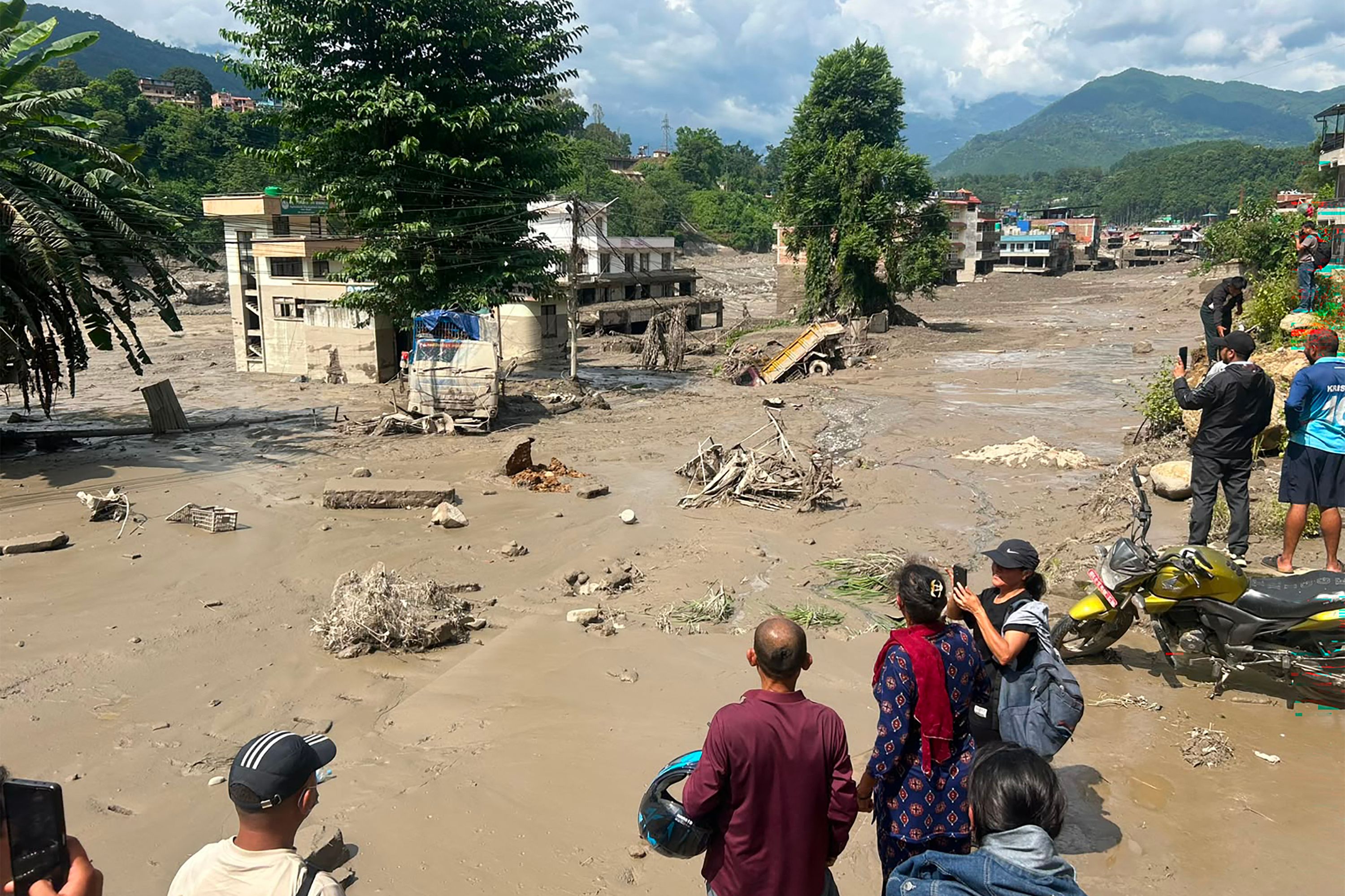
Хэт халалтын улмаас уулын мөсөн голууд тогтворгүйжиж, томоохон хэмжээний хөрсний нуранги болон үерийн аюулыг нэмэгдүүлж байна.
Непал болон Төвдийн хилийн бүсэд лхагва гарагт болсон гэнэтийн үерийн улмаас 160 орчим хүн амиа алдаж, олон зуун хүн сураггүй алга болжээ. Хиймэл дагуулын зураг болон Засгийн газрын тайлангаас үзэхэд, уг гамшиг нь мөсөн голын хэсэг олон зуун фут өндрөөс унаж, хөрсний нуранги үүсгэсний улмаас тохиолдсон байх магадлалтай байна.
Хойд Британийн Колумбийн их сургуулийн газарзүйн ухааны дэд профессор Жозеф Шэагийн тэмдэглэснээр, бүс нутгийн дулаарал нь мөсөн голуудыг хайлах, нимгэрэх, улмаар ухрахад хүргэж байна. 2000 оноос хойш дэлхийн мөсөн голууд нийт мөснийхөө 5 хувийг алдаад байгаа бөгөөд Непалын хувьд 1970-2010 оны хооронд мөсөн голын талбайн бараг дөрөвний нэг нь үгүй болж, 160 гаруй жижиг мөсөн гол бүрмөсөн хайлжээ.
Калгарийн их сургуулийн геологич Дэниел Шугарын хиймэл дагуулын дүрс бичлэгт хийсэн шинжилгээгээр 2000 фут өргөн мөсөн хэлтэрхий 4000 фут орчим өндрөөс унаж, хүчтэй цохилтын улмаас ус болон хувирсан байж болзошгүйг тогтоожээ. Мөн тухайн бүс нутагт агаарын температур нэмэгдсэний улмаас мөсөн гол дээрх цас хайлсан нь уг нуралтыг өдөөсөн байж магадгүй гэж судлаачид таамаглаж байна.
АНУ-ын Геологийн албаны мэдээлснээр, уг мөсөн голын нуралт болон түүнийг дагасан хог хаягдлын урсгал нь 5.2 магнитудын хүчтэй чичирхийллийг бүртгэжээ. Судлаачид мөсөн голын ухралт нь тунадас тогтоон барих чадварыг бууруулж, өндөр уулын нууруудын далан нурах эрсдэлийг нэмэгдүүлж байгааг анхааруулж байна.
Дэлгэрэнгүйг эх сурвалжаас харах
↓Эх сурвалжийг нээх ↓
Roughly 160 people are dead and hundreds more—including dozens of international tourists—are missing after flash floods hit a region on the mountainous border of Nepal and Tibet on Wednesday. Devastating footage posted to social media shows people fleeing a wall of water that washed away buildings and vehicles.
Initial analysis of satellite imagery and reports from the Nepalese government indicate that the floods was likely triggered by a landslide caused after a piece of a glacier fell hundreds of feet.
As the region warms, its ice is becoming increasingly unstable, raising the risk of catastrophic flooding.
“The glaciers over there are definitely in retreat,” says Joseph Shea, an associate professor of geography at the University of Northern British Columbia. “There’s a lot of glacier mass up there, but we’re seeing thinning, we’re seeing retreating.”
Since 2000, the world’s glaciers have lost 5 percent of their ice, with much more drastic impacts in certain regions. Nepal’s glaciers lost nearly a quarter of their area between 1970 and 2010. More than 160 smaller glaciers in the country, research has found, have vanished entirely.
A recent study finds that 40 percent of the world’s glacial ice could disappear if the world does not keep warming under 1.5 degrees Celsius.
Before and after imagery shows debris left behind by the floods.
The impacts of warming on glaciers in Nepal can cause cascading effects. Shea points out that retreating glaciers can help trigger landslides as they get smaller and can no longer hold back sediment. As these glaciers retreat, many are leaving large, dammed lakes at higher elevations. “If you have a landslide suddenly into a lake, you get an overtopping of the dam, and then the whole thing can collapse catastrophically,” Shea says. Known as glacial lake outburst floods, two of these events hit Nepal last year, and research shows millions are living in harms way around the world.
Wednesday’s disaster was more likely due to a glacial collapse that fell into the valley below. Daniel Shugar, a geologist at the University of Calgary in Canada, told the New York Times that satellite imagery suggested that a 2,000-foot-wide piece of ice may have fallen almost 4,000 feet, “[pulverizing] the ice into water” with the force of its fall. And while Shugar emphasized that it was still too early to make conclusive statements about the cause of the floods, he noted to Reuters that snow that was present on the glacier earlier in the week may have melted due to warm temperatures.
The collapse and debris flow were so large and forceful, they registered as a magnitude 5.2 seismic event, according the US Geological Survey.


Монголын уулс, мөсөн голууд хайлж байгаагаас үерийн аюул өсөж байна гэдэг үнэхээр аймшигтай. Та бүхэн энэ зүйлд ямар нэгэн өөрсдийн туршлага, бодолтой байна уу? Мөсөн гол унах нь зөвхөн Непалд биш, дэлхий даяар нөхцөл байдал ийм л эрсдэлтэй болж байгаа юм шүү дээ.