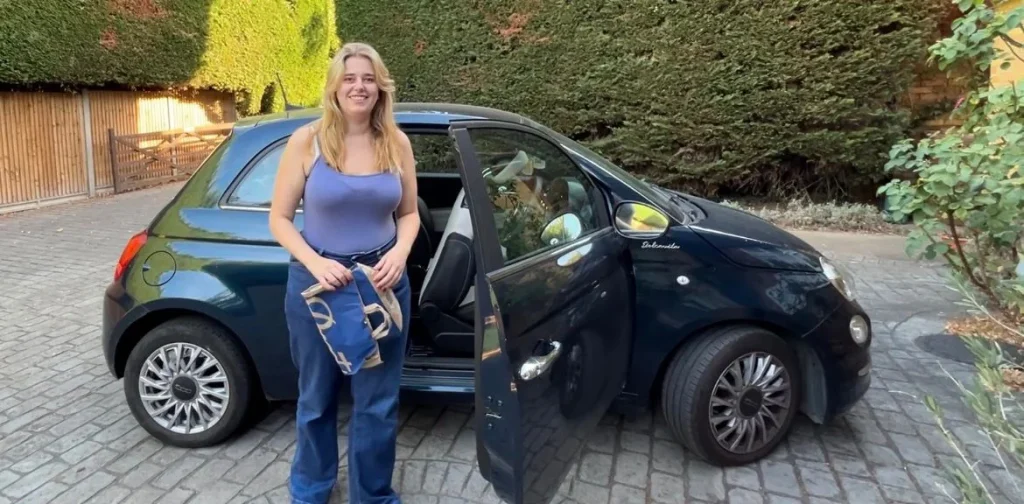
Автомашинд дотор муухайрах асуудлыг шийдвэрлэх төрөл бүрийн аргуудаас Apple компанийн Motion Cues технологи хамгийн үр дүнтэй нь болох нь тогтоогдлоо.
Автомашины сэтгүүлч Дэйзи Эдвардс Fiat 500 загварын автомашинд дотор муухайрахыг намдаах олон төрлийн аргыг бодит нөхцөлд туршиж үзжээ. Энэхүү туршилтад уламжлалт арга болох бор цаасан уут дээр суух, бугуйн Sea-Band зүүх, тусгай зориулалтын шил зүүх болон Apple-ийн Motion Cues технологийг ашиглах зэрэг аргуудыг хамруулсан байна.
Туршилтаар бор цаасан уут нь ямар ч нөлөөгүй болох нь батлагдсан бол Sea-Band нь тодорхой хэмжээгээр тусалдаг ч амархан гээгддэг сул талтай байв. Хөдөлгөөний таагүй мэдрэмжийг бууруулах тусгай шил нь үр дүнтэй байсан хэдий ч зүүхэд эвгүй, гадаад үзэмжийн хувьд тохиромжгүй байжээ.
Apple-ийн Motion Cues функц нь iPhone-ийн дэлгэцийн ирмэгээр хөдөлгөөнт цэгүүдийг харуулах замаар хүний тархинд автомашины хөдөлгөөний мэдээллийг зөв хүргэдэг байна. Энэхүү технологи нь ямар нэгэн нэмэлт хэрэгсэл шаарддаггүй, ашиглахад хялбар тул аялалын үед дотор муухайрах асуудлыг шийдэх хамгийн оновчтой арга хэмээн дүгнэжээ.
Дэлгэрэнгүйг эх сурвалжаас харах
↓Эх сурвалжийг нээх ↓
Now, I understand the irony of a car journalist having car sickness, but it means that I can conduct cool experiments like testing every single fix and share the research with our wonderful readers.
Fellow sufferers will understand the rising sense of nausea and dread when you’re in the back of the car or on a particularly windy road, or the jealousy of watching people read books in the car on long road trips, while you stare at the horizon breathing deeply.
I decided to try all of the non-drug solutions to car sickness that I could find online, from old wives’ tales to purpose-built Apple tech.
So, let’s jump into the back seat of my mom’s tiny Fiat 500 and try this experiment together.
Car sickness fix 1: The humble brown paper bag
According to the internet, there’s an old myth that you won’t feel sick in the back of a car if you sit on a brown paper bag.
I thought that this is a placebo effect situation we made up to trick children into not puking on road trips, and my experiment proved that this…was exactly correct.
I employed an old Boots Pharmacy brown paper bag to sit on during a car journey in my mom’s Fiat 500 and obviously, it didn’t work.
Maybe it didn’t work because the bag had a blue print on it? Was it scientific? No. Was it effective, though? Also, no.
Car sickness fix 2: Sea Bands
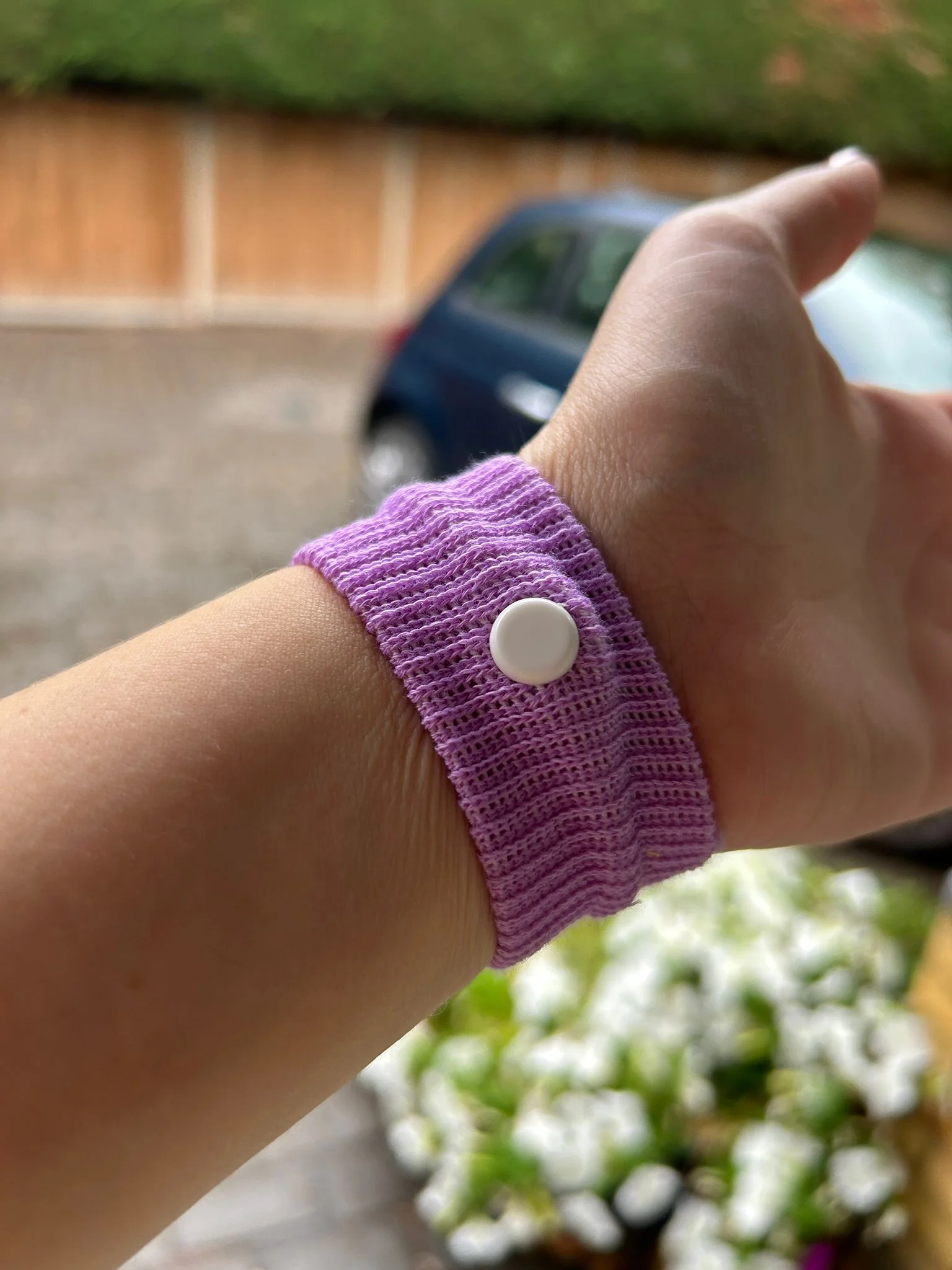
Sea-Bands are probably the most familiar solution on this list, because I’ve worn them throughout my life on car journeys, and they have always been a useful little tool to have around.
They’re small wristbands that use pressure on a specific point on the wrist, and for me, they can make a noticeable difference when I’m feeling sick, but the biggest problem is that they are incredibly easy to lose.
You have two tiny bands to keep track of, and because they’re so small, they have a habit of disappearing into the depths of a handbag, suitcase or glovebox.
Still, they’re cheap, reusable and have earned their place in my car sickness survival kit, and you can find some surprisingly cute ones online.
Sickness fix 3: Motion Sickness Glasses
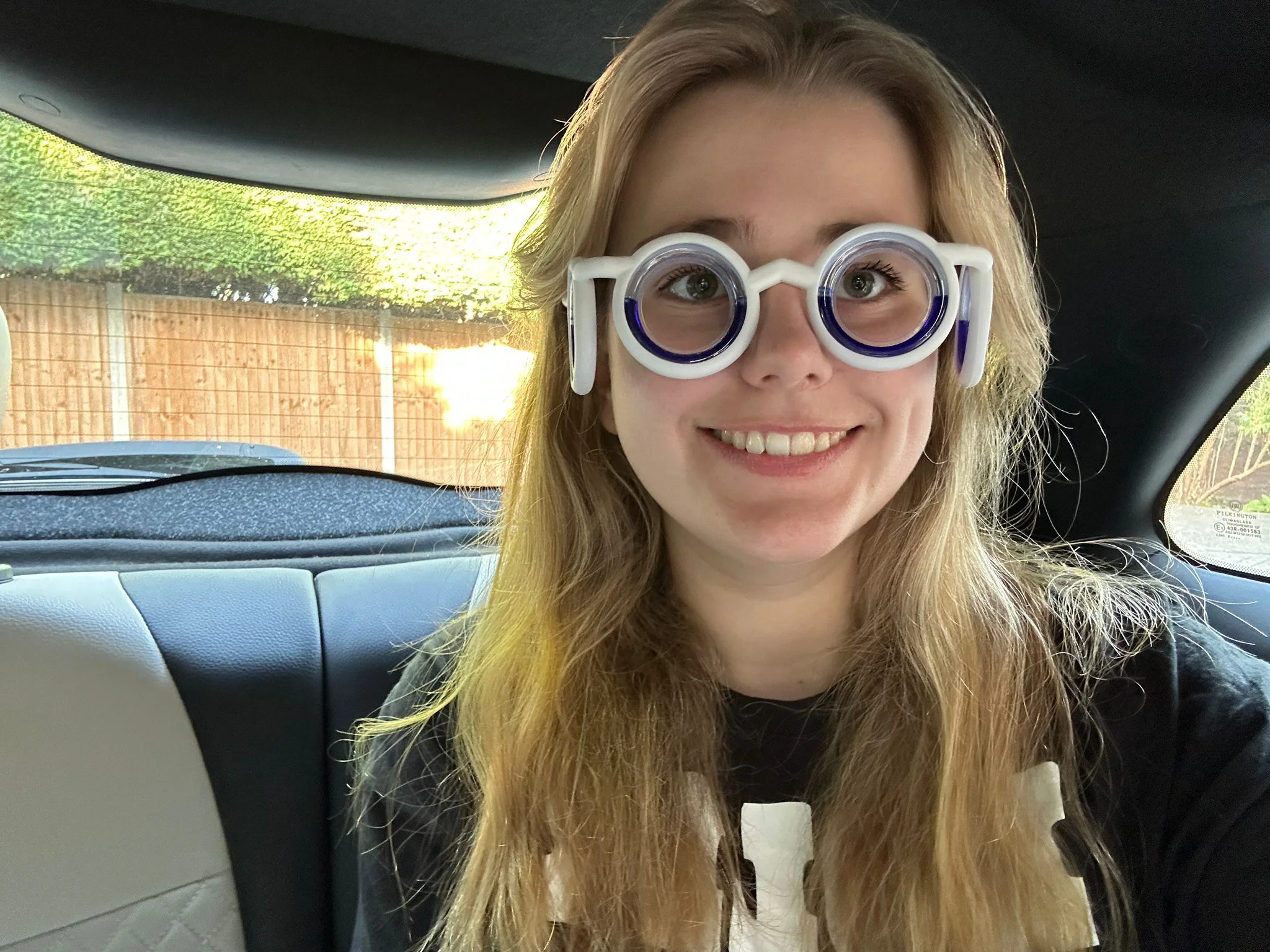
Next up were the bizarre-looking motion sickness glasses that have been popping up online.
The idea behind them is that the liquid-filled frames create an artificial horizon in your peripheral vision, helping your brain reconcile what your eyes are seeing with what your body is feeling and, annoyingly, they actually worked.
After wearing them in the car, I found that they helped reduce that familiar feeling of nausea, the problem was that I looked ridiculous wearing them, and they kept slipping off my face.
They’re definitely the sort of thing that could be useful if you’re more concerned about keeping your lunch down than looking cool, but I couldn’t see myself wearing them every time I got in a car.
Sickness fix 4: Apple Motion Cues
Finally, I tried something that required absolutely no additional equipment: Apple’s Motion Cues feature.
Motion Cues uses animated dots around the edges of the iPhone screen to represent changes in vehicle motion.
The idea is to give your brain another visual cue that matches the movement you’re experiencing, potentially reducing the disconnect that causes motion sickness.
And this was easily my favorite solution because the biggest advantage was that I didn’t need to remember to pack anything: there were no glasses to put on, no tiny wristbands to lose, and, thankfully, no paper bag involved.
I could simply use the phone I already had with me.

Which travel sickness hack worked best?
So, in conclusion, the Apple Motion Cues were the best solution by far.
The glasses worked but made me look silly, the Sea-Bands remained a reliable old favorite, and the brown paper bag was a spectacular failure.
But having a car sickness solution built directly into a device I already carry everywhere is hard to beat.
Maybe the best solution is to call shotgun on every single road trip, though…

