АНУ-ын Жонс Хопкинсийн их сургуулийн судлаачид Лаймын өвчний дараах шинж тэмдгийг (PTLD) эмчлэхэд псилоцибин ашиглах нь эерэг үр дүн үзүүлж болзошгүйг тогтоожээ.
АНУ-д Лаймын өвчнөөр жил бүр хагас сая орчим хүн оношлогддог бөгөөд антибиотик эмчилгээний дараа ч олон өвчтөнд ядрах, ой санамж муудах, бие өвдөх зэрэг шинж тэмдэг удаан хугацаагаар үргэлжилдэг. Scientific Reports сэтгүүлд нийтлэгдсэн Альберт Гарсиа-Ромеу болон түүний багийн судалгаагаар 20 оролцогчид эмнэлзүйн хяналтан дор псилоцибины хоёр тунг өгч ажиглажээ. Судалгаанд хамрагдсан хүмүүсийн өвчний шинж тэмдэг хоёр дахь тунг авснаас хойш хоёр долоо хоногийн дараа 52 хувиар, зургаан сарын дараа 40-50 хувиар буурсан үзүүлэлттэй байна.
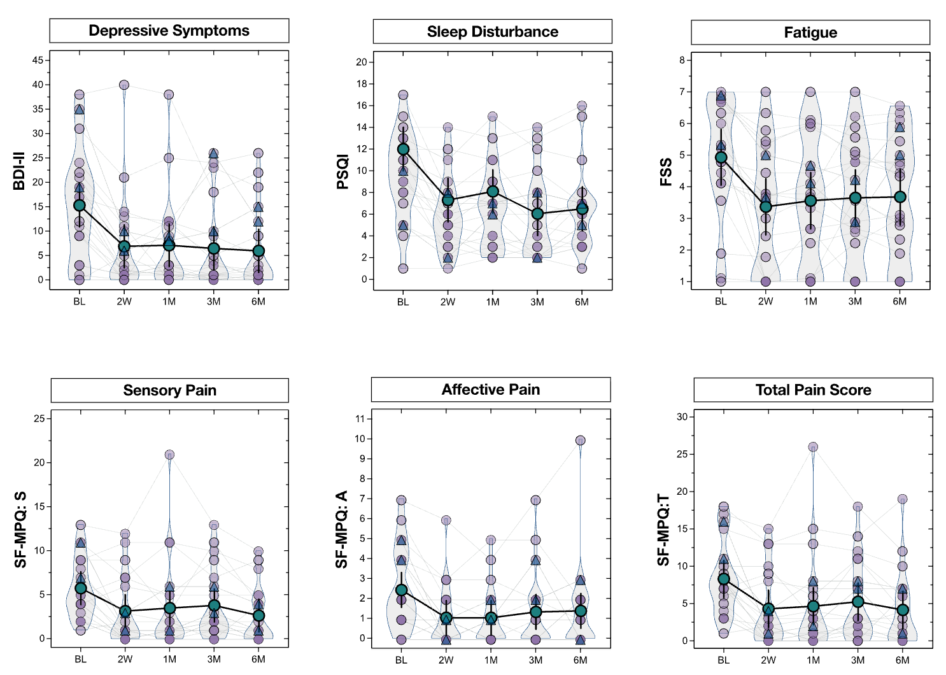
Түүнчлэн оролцогчдын сэтгэл гутрал 50-60 хувь, нойрны хямрал 40-50 хувь, ядаргаа 25-30 хувиар тус тус буурсан болохыг судалгаагаар тогтоожээ. Судалгааны явцад ноцтой гаж нөлөө илрээгүй ч толгой өвдөх, дотор муухайрах, цусны даралт ихсэх зэрэг түр зуурын шинж тэмдгүүд ажиглагдсан байна.
Гэсэн хэдий ч энэхүү судалгаа нь урьдчилсан шинжтэй бөгөөд плацебо бүлэг оролцуулаагүй тул псилоцибин нь шинж тэмдгийг шууд эмчилсэн гэж батлах боломжгүй юм. Судлаачид энэхүү үр дүнг баталгаажуулахын тулд илүү өргөн хүрээтэй, хяналттай, санамсаргүй түүвэрлэлт бүхий эмнэлзүйн туршилтуудыг хийх шаардлагатай гэж үзэж байна. Лаймын өвчний дараах шинж тэмдэг нь урт хугацааны COVID-19 эсвэл фибромиалги өвчтэй төстэй шинж тэмдгүүд агуулдаг тул ирээдүйд эдгээр өвчнийг эмчлэхэд псилоцибин болон бусад сэтгэцэд нөлөөлөх бодисын үр нөлөөг судлах нь чухал ач холбогдолтой юм.
Дэлгэрэнгүйг эх сурвалжаас харах
↓Эх сурвалжийг нээх ↓
Of all the diseases spread through the bite of an insect or arachnid in the United States, Lyme disease is the most common.
Each year, nearly half a million people are diagnosed with and treated for the condition, which is caused by bacteria transmitted by an infected tick.
But not everyone gets better after antibiotics.
A substantial number continue to suffer from fatigue, brain fog, and body aches for months or even years after treatment.
Perhaps there’s another drug that could help.
A small pilot study of 20 people has now shown that two doses of psilocybin, administered under clinical supervision, were associated with significant improvements in post-treatment Lyme disease (PTLD).
The experiments were led by Albert Garcia-Romeu at the Johns Hopkins Center for Psychedelic and Consciousness Research, and the results are published in Scientific Reports.
Two weeks after the second and final dose of psilocybin, participants reported a 52 percent reduction in their overall symptom burden compared with baseline.
Six months after the final dose, symptoms remained roughly 40 to 50 percent below baseline.
At every follow-up appointment, depressive symptoms remained 50 to 60 percent lower, sleep disturbance scores remained 40 to 50 percent lower, and fatigue severity remained 25 to 30 percent lower than baseline.
Total pain scores dropped approximately 40 to 50 percent over the course of the clinical trial.
“Across all outcomes,” the authors write, “within-participant standardized effect sizes were large and remained stable when excluding multivariate outliers.”
Garcia-Romeu and colleagues note that these results are “sufficiently positive”, however, they are just preliminary and need to be followed up with randomized, controlled, and blinded trials.
At this point, scientists cannot establish that psilocybin actually caused improvements in PTLD symptoms.
PTLD is sometimes known as ‘Chronic Lyme Disease’, but the US Centers for Disease Control and Prevention discourage the use of this term, as it implies that the bacterial infection is ongoing, which is not established.
“We propose further rigorous investigation of psilocybin and other classic psychedelics as potential avenues for novel, effective treatments for this debilitating condition,” the authors conclude, “as well as other infection-associated chronic conditions such as Myalgic Encephalomyelitis/ Chronic Fatigue Syndrome (ME/CFS), Post-acute sequelae of SARS-CoV-2 infection (PASC), and fibromyalgia, that may benefit from similar approaches.”
So far, research of this kind is scarce and scattered.
In 2025, a pilot trial in the US tested psilocybin-assisted therapy on five people with fibromyalgia. Compared to baseline, participants reported improvements in pain symptoms, mood, social cognition, sleep, and global functioning.
Another recent case study, meanwhile, shared the story of a woman whose long COVID allegedly improved after taking hallucinogens in consultation with a therapist. The details are muddy, but the idea gained widespread attention.
PTLD has many similar symptoms to post-viral illnesses, like long COVID, whose symptoms of infection can linger for unknown reasons.
Accepted treatments are lacking, which is why some patients and researchers are turning to hallucinogens.
Consider, for instance, the 2023 case report of an immunocompetent man who contracted Lyme disease and another tick-borne disease, babesiosis.
Even after several rounds of antibiotics, this patient continued to have partial remissions and relapses, each bout lasting about two years.
Over the decades, he suffered from fatigue, neck pain, myalgias, night sweats, anxiety, panic attacks, depression, cognitive dysfunction, and insomnia.
At 70 years old, the patient suffered another relapse. He tried anxiety and depression medication, but they didn’t work.
“After suffering for three months,” the patient’s case report reads, “he began microdosing psilocybin (desiccated whole mushrooms) 100 mg orally three times a week, increasing the dose to 125 mg after two weeks. Within two days, there was a noticeable improvement in mood. Within two weeks he was feeling consistently well again.”
At the time that the case report was published, the patient was still in remission and continuing to microdose psilocybin.
But this is just one case study outside of a clinical setting. The recent pilot trial at Johns Hopkins seeks to move beyond that.
Today, there is no approved diagnostic test for PTLD, but the authors of the pilot trial say they used stringent criteria to select their participants for psilocybin-assisted therapy.
Volunteers had to have a detailed history demonstrating prior Lyme disease, they had to be presenting with current symptoms, and other conditions that cause similar symptoms had to be ruled out.
After weeks of preparation, the participants received an initial dose of 15 mg of psilocybin, followed by a 25 mg dose two weeks later. Two participants remained on the lower dose throughout.
During each session, volunteers had their vitals carefully supervised, and they reported any new or worsening physical or mental health events observed during or after each dose.
There were no serious adverse health effects reported, although headaches, nausea, and hypertension were common and temporary.
A dozen of the 20 original study participants also agreed to have their sleep tracked using wearable monitors during and after the 8-week trial.
Those findings revealed a long-term reduction in total sleep time following psilocybin administration.

Further work is needed to see if those changes also impacted sleep quality or daytime sleepiness, but among those with PTLD, excessive sleep is often an issue.
At this point, however, nothing can be said conclusively about psilocybin and its effects on PTLD. This trial included no placebo, and patients knew they were taking psilocybin.
Garcia-Romeu and colleagues say that in forthcoming research, biomarkers of health measured before and after the psilocybin treatment, as well as firsthand accounts from trial participants, will be examined.
The study of hallucinogenics for mental health, pain, and inflammatory disorders is just beginning, and it will take time to carry out more rigorous, randomized studies.
Related: America’s First Legal Psilocybin Program Treated 346 People. Here’s What Happened.
“The results of the current trial are preliminary and should be considered with caution,” the trial researchers note.
“Yet findings underscore the compelling possibility that psilocybin-assisted treatment may significantly mitigate key symptoms of PTLD across several physical and neuropsychiatric domains, that participant quality of life may improve substantially… and that these benefits can persist well beyond the time course of acute drug effects for some patients.”
The study is published in Scientific Reports.
This article was fact-checked by Rachel Garner and edited by Peter Dockrill. While we pride ourselves on our process, we are only human. If you spot a mistake, please let us know.

