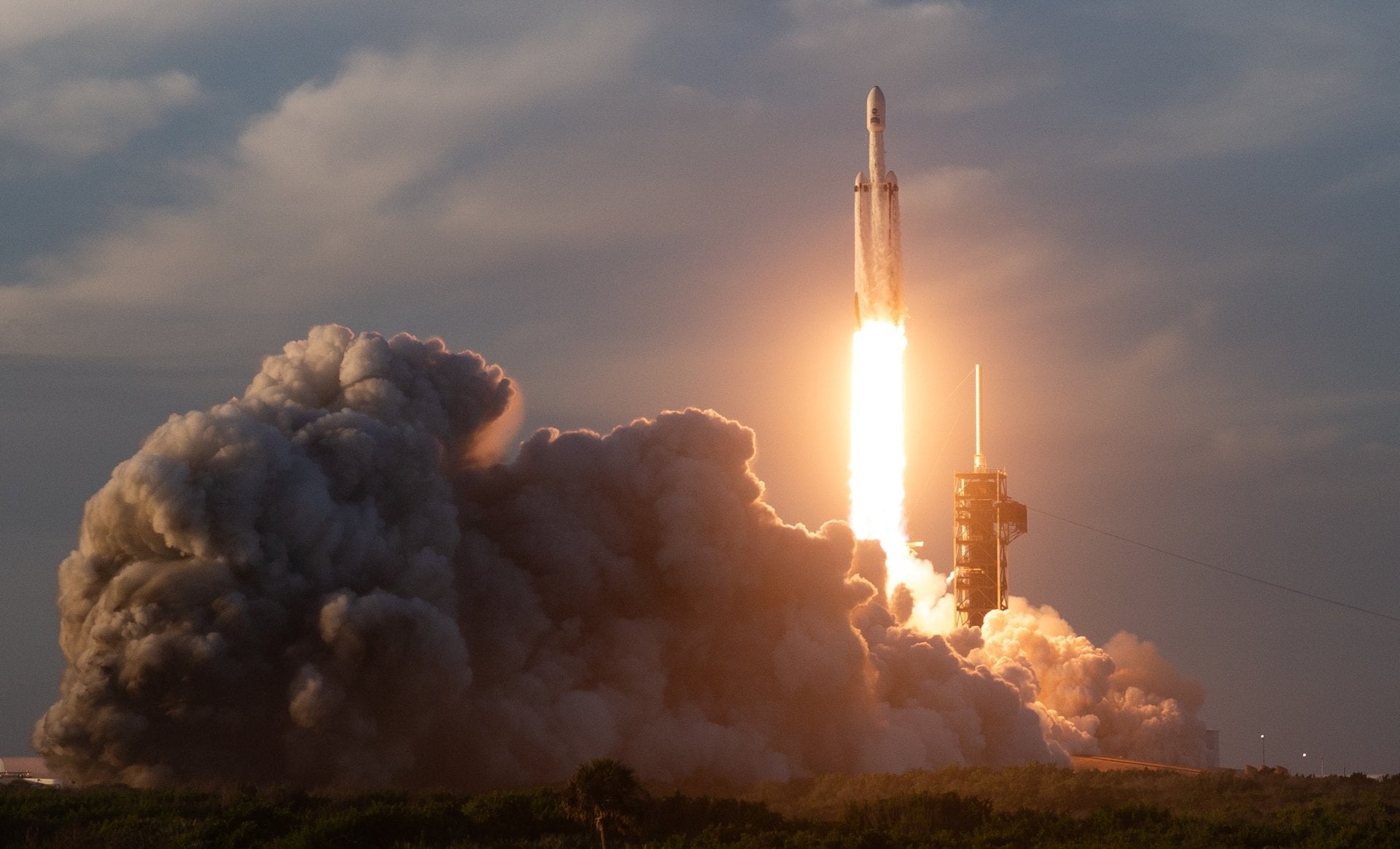
NASA-гийн шинэ үеийн сансрын дуран нь орчлон ертөнцийн нууцлаг бүрэлдэхүүн болох хар матери, хар энергийн шинж чанарыг тайлахаар сансарт амжилттай хөөрлөө.
Нэнси Грэйс Романы нэрэмжит 9 тоннын жинтэй сансрын дуранг SpaceX компанийн Falcon Heavy пуужингаар Флорида дахь Кеннедийн нэрэмжит сансрын төвөөс хөөргөв. Уг төхөөрөмж Дэлхийгээс 1.6 сая орчим км зайд орших таталцлын тэнцвэрт цэг буюу L2 цэг рүү гурван сарын турш аялах бөгөөд 4.3 тэрбум долларын өртөгтэй энэхүү номлолыг төлөвлөсөн хугацаанаас өмнө, төсөвт багтаан эхлүүлсэн байна. Анх тагнуулын хиймэл дагуулын зориулалттай байсан толь болон бусад эд ангийг ашиглан бүтээсэн энэхүү дуранг NASA-гийн нэрт одон орон судлаач Нэнси Грэйс Романы дурсгалд зориулан нэрлэжээ.
Энэхүү дуран нь Hubble сансрын дурантай ижил түвшний нарийвчлалтай боловч 100 дахин өргөн талбайг харах хүчин чадалтай юм. Өдөрт 1.4 терабайт шинжлэх ухааны өгөгдөл дамжуулах уг төхөөрөмж нь хар материйн таталцлын нөлөөгөөр гэрэл хэрхэн муруйж байгааг судлах замаар орчлон ертөнцийн бүтцийг тодорхойлно. Мөн тэрбум жилийн туршид хар энерги хэрхэн өөрчлөгдсөнийг судалснаар орчлон ертөнцийн насны талаарх одоогийн зөрүүтэй тооцооллуудыг нэгтгэх боломжтой гэж эрдэмтэд үзэж байна.
Тус дуран нь шинэ үеийн коронограф төхөөрөмжөөр тоноглогдсон бөгөөд энэ нь оддын хурц гэрлийг хааж, тэдгээрийг тойрон эргэх экзопланетуудыг шууд дүрслэх боломжийг олгоно. Ингэснээр Бархасбадь гаригтай төстэй, Дэлхийтэй ижил төстэй шинж чанартай ертөнцүүдийг илрүүлэх судалгаанд томоохон ахиц гарах юм. Үндсэн таван жилийн хугацаатай энэхүү ажиллагааг дахин таван жилээр сунгах төлөвлөгөөтэй байгаа бөгөөд ирэх 2027 оны эхээр анхны шинжлэх ухааны дүрсүүдээ дамжуулж эхлэхээр төлөвлөжээ.
Дэлгэрэнгүйг эх сурвалжаас харах
Эх сурвалжийг нээх ↓
NASA’s newest eye on the sky, the Nancy Grace Roman Space Telescope, has begun its journey to unravel the secrets of dark matter, dark energy and Earthlike planets — months ahead of schedule.
The 9-ton telescope rode to space today aboard a SpaceX Falcon Heavy rocket that was launched from NASA’s Kennedy Space Center in Florida at 7:26 a.m. ET (11:26 UTC). The ascent went off without a hitch, setting up the telescope for a three-month cruise to a gravitational balance point known as Earth-sun L2, almost a million miles beyond our planet. The Falcon Heavy’s two side boosters flew themselves back to landings on the Florida coast, near the launch site, while the core booster splashed into the sea after stage separation.
NASA had originally scheduled liftoff for 2027, but the $4.3 billion mission came in ahead of schedule and under budget.
Here are five key facts about the Roman Space Telescope and its mission:
It’s a spy satellite repurposed to scan the sky
The space telescope’s two mirrors were originally meant to be used on the National Reconnaissance Office’s next-generation spy satellites, but when the project was canceled, they were offered for NASA’s use. After years of deliberation, the space agency folded them into its plans for an observatory originally known as the Wide-Field Infrared Space Telescope, or WFIRST.
WFIRST was renamed to honor former NASA chief astronomer Nancy Grace Roman, whose work on the Hubble Space Telescope earned her the nickname “Mother of Hubble.” Roman died in 2018 at the age of 93. What would she think of her namesake? “I think Nancy would be very proud,” retired NASA scientist Ed Weiler told The Associated Press.
It’s as keen-eyed as Hubble, with a wider field of view
The Roman Space Telescope’s infrared imaging system is designed to match Hubble’s resolution and sensitivity, but with a field of view that’s more than 100 times wider than Hubble’s. “Roman’s vast reach will allow us to find the weird, the rare and the unusual,” senior project scientist Julie McEnery said before today’s launch. “We’ll redefine what it means to find a needle in a haystack.”
The telescope’s high-gain antenna is expected to send 1.4 terabytes of science data back to Earth every day. That’s the highest data rate for any NASA astrophysics mission so far. Roman’s largest image will take up more than a trillion pixels — and for what it’s worth, NASA has set up a system that lets fans “adopt” pixels on one of the first images.
It’ll delve into the universe’s dark secrets
The Roman Space Telescope’s ability to monitor a wide stretch of sky will help scientists untangle the mysteries of dark matter and dark energy. Dark matter is an invisible stuff that makes up roughly 27 percent of the universe’s mass-energy content, compared with less than 5 percent for visible matter. Roman will study how light is bent by dark matter’s gravitational effect, providing clues to its distribution and its nature.
Dark energy, which accounts for about 68 percent of the universe’s content, is an even deeper mystery. Data from the telescope should be able to reveal how dark energy’s effect has varied over the course of billions of years. Roman’s readings could also help astronomers resolve seemingly inconsistent estimates of the age of the universe — a scientific puzzle known as the Hubble tension.
It’ll widen the search for Earthlike worlds
The Roman Space Telescope is equipped with a next-generation coronagraph — a system of masks, prisms, detectors and self-flexing mirrors that is designed to block out the glare of distant suns. NASA says Roman’s active coronagraph is capable to detect planets that are 100 million times fainter than their stars.
Roman should be able to get a direct image of reflected starlight from a planet similar to Jupiter in size, temperature and distance from its parent star. That level of sensitivity would be 100 to 1,000 times better than what’s achievable using existing space-based coronagraphs. The system will blaze a trail for the Habitable Worlds Observatory, the first telescope designed specifically to look for signs of life on exoplanets.
Its mission has only just begun
Over the next three months, the Roman Space Telescope will undergo a series of calibrations and tests as it approaches L2. Science operations will begin once NASA finishes commissioning the telescope. The first science images are due to be released by early 2027.
Roman’s science program will be coordinated with other telescopes, including Hubble, the James Webb Space Telescope, the European Space Agency’s Euclid space telescope and the Vera C. Rubin Observatory in Chile. Its primary mission is due to run for five years, with a five-year extension already planned. After that, who knows? After all, Hubble’s mission was originally scheduled to last 15 years, and it’s still going strong 36 years after launch.

