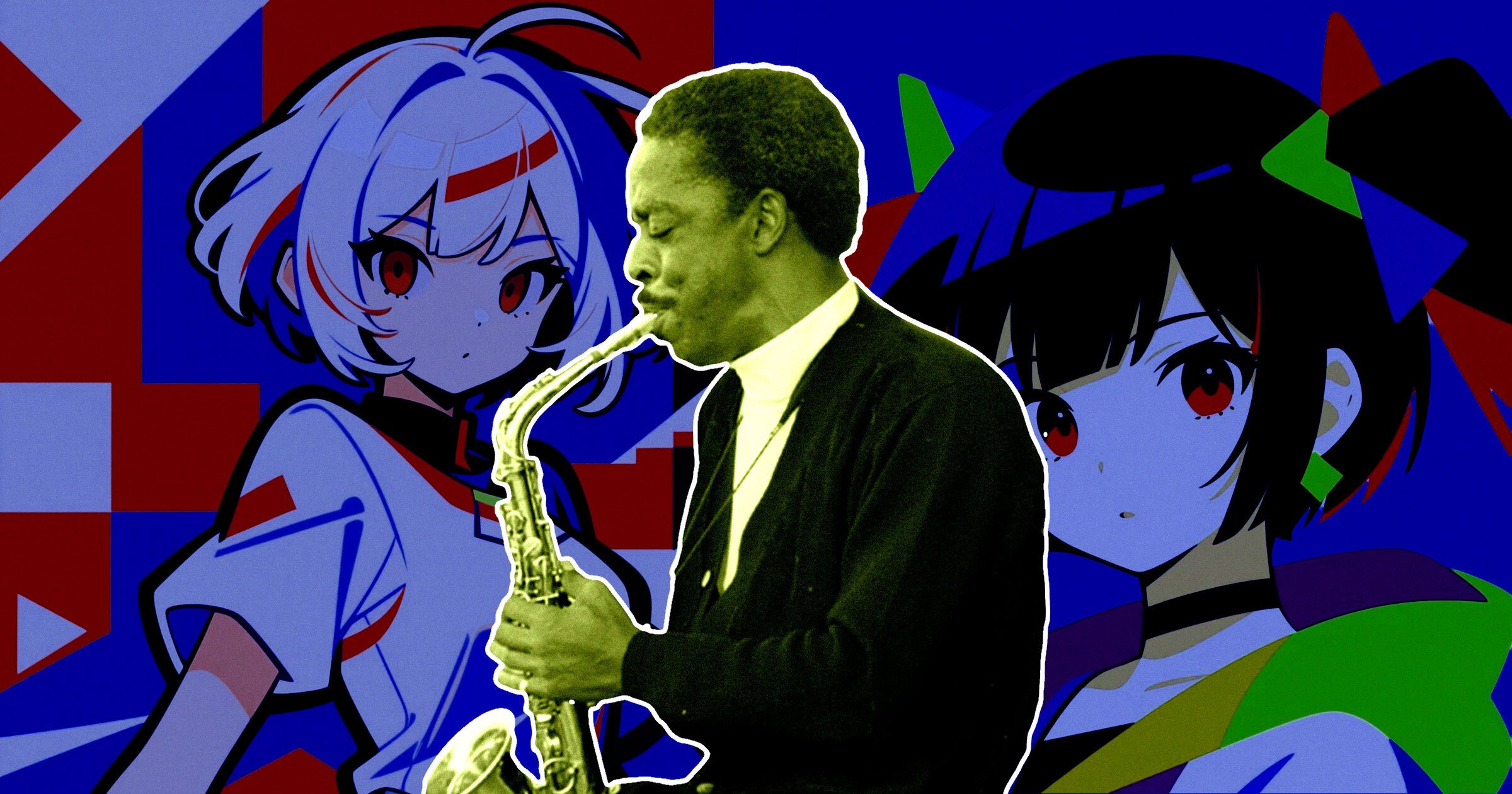
Хөгжмийн стриминг платформуудын хамгаалалтын тогтолцоо сул байгаагаас болж талийгаач уран бүтээлчдийн нэр дээр хиймэл оюун ухаанаар бүтээсэн хуурамч контентууд олноор нийтлэгдэж байна.
Сонни Крисс, Жимми Нүүн, Жан Карн зэрэг алдартай жаз хөгжимчдийн Spotify, YouTube болон Amazon Music дээрх албан ёсны хуудсуудад “Ami bacuk” хэмээх нийтлэгчийн нэрээр хиймэл оюун ухаанаар үүсгэсэн шинэ дуунууд нэмэгдсэн байна. Тухайлбал, 1977 онд таалал төгссөн саксофонч Сонни Крисст зориулан анимэ дүрслэл бүхий цомогтой шинэ дуунуудыг гаргасан бол Жимми Нүүний хуудсанд 2026 оны дөрөвдүгээр сарын 3-наас эхлэн хиймэл оюун ухаанаар бүтээсэн поп дуунууд нийтлэгджээ.
Эдгээр хуурамч контент нь уран бүтээлчдийн жинхэнэ уран бүтээлтэй огт хамааралгүй бөгөөд ихэнх тохиолдолд чанар муутай, хиймэл оюун ухааны тусламжтайгаар бүтээсэн зураг, дуу авиа ашигласан байна. Уг үйл явдал нь талийгаач уран бүтээлчдийн нэр хүнд, өв соёлыг ашиг хонжоо олох зорилгоор ашиглаж буй дижитал луйврын нэг хэлбэр болоод байна.
Spotify компани асуудал үүссэний дараа тухайн хуурамч контентуудыг устгаж байгаагаа мэдэгдсэн бөгөөд уран бүтээлчдийн таних тэмдгийг хамгаалах зорилгоор “Artist Profile Protection” хэмээх шинэ үйлчилгээг нэвтрүүлэхээр төлөвлөж буйгаа дурджээ. Гэвч энэ төрлийн спам агуулга стриминг платформуудад үргэлжлэн гарч байгаа нь платформуудын хяналт, хамгаалалтын тогтолцоонд ноцтой сорилт болсоор байна.
Дэлгэрэнгүйг эх сурвалжаас харах
↓Эх сурвалжийг нээх ↓
William “Sonny” Criss was the consummate working musician. Having started on the saxophone at 11 years old, Criss began his professional career filling in on gigs with bandleader Johnny Otis, before going on to play alongside jazz legends like Charlie Parker, Miles Davis, Cole Porter, and Dizzy Gillespie. Though he might never have risen to the level of a household name, his tremendous and ever-evolving output puts him in a league with some of the most celebrated bebop artists of his generation.
Today, most will interact with Criss’s music on a streaming service like Spotify or YouTube. Yet as these platforms fail to prevent the onslaught of AI slop, the musician’s streaming profiles are becoming a host for parasitic spam — and unfortunately, he’s not the only one.
In addition to Criss, profiles of artists including the vocalist Jean Carne, cornetist Red Nichols, and clarinetist Jimmie Noone have become inundated with various forms of AI spam. On Spotify, YouTube, and Amazon Music, each of these musicians recently picked up “new” singles plastered with AI-generated cover art, uploaded in 2026 and copyrighted to the publisher “Ami bacuk.”
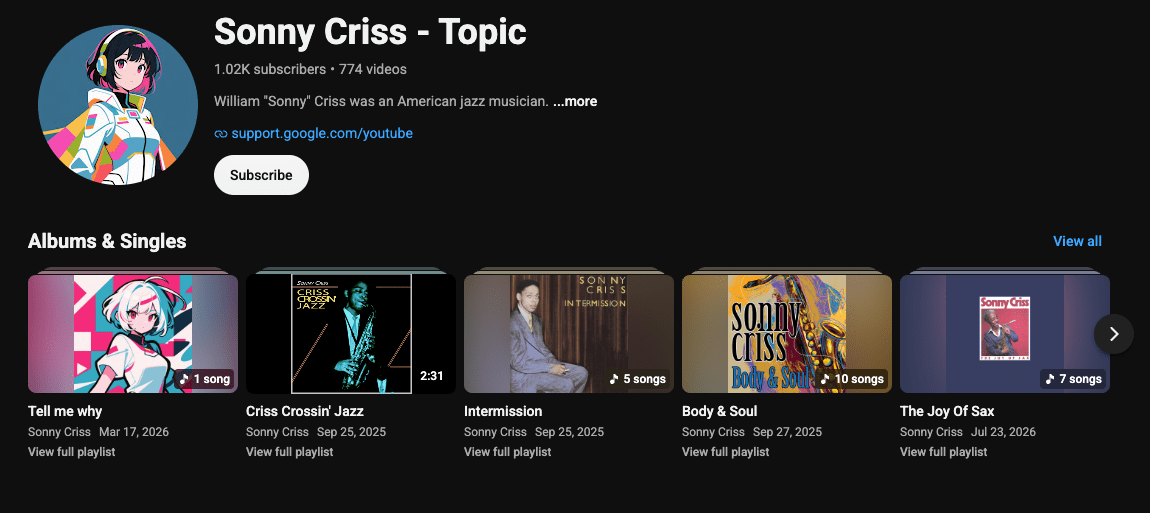
Criss’s profile on Spotify, for example, started displatwo brand-new tunes, which is an impressive feat considering he died in 1977. Titled “Tell me why” and “but a heartache,” both feature a generic anime waifu on their cover, and were supposedly composed by “Zainul Irpan,” a mashup of two generic Arabic-rooted names.
Though each song is a jazz tune featuring alto sax and a rhythm section, their origin is nearly impossible to trace, as they’re neither rebrands of existing tracks by Criss or identifiable via music ID software. If it weren’t for the jarring mishmash between characteristically laid-back bebop album covers and the bright, colorful anime images, the tunes would be difficult to distinguish from the musician’s original work. Both appear on Criss’s Spotify, Amazon Music, and YouTube Topic profiles. On YouTube, Criss’s artist image was even updated with one of the AI anime girls.
In other cases, the AI-generated singles stick out like a sore thumb. Take Jimmie Noone, a noted Black dixieland clarinetist and bandleader who died in 1944, for example.
On April 3rd of 2026, Ami bacuk released four new singles attributed to Noon: “You Have Hurt Him,” “You Have Hurt Him 2,” “He’s still there,” and of course, “He’s still there 2.” Each is a forgettable pop ballad featuring a female vocalist — likely AI generated —singing over somber piano accompaniment. Instead of anime, the scammer here went with AI-generated corporate Memphis, which clashes heavily against Noone’s black-and-white photo album covers.
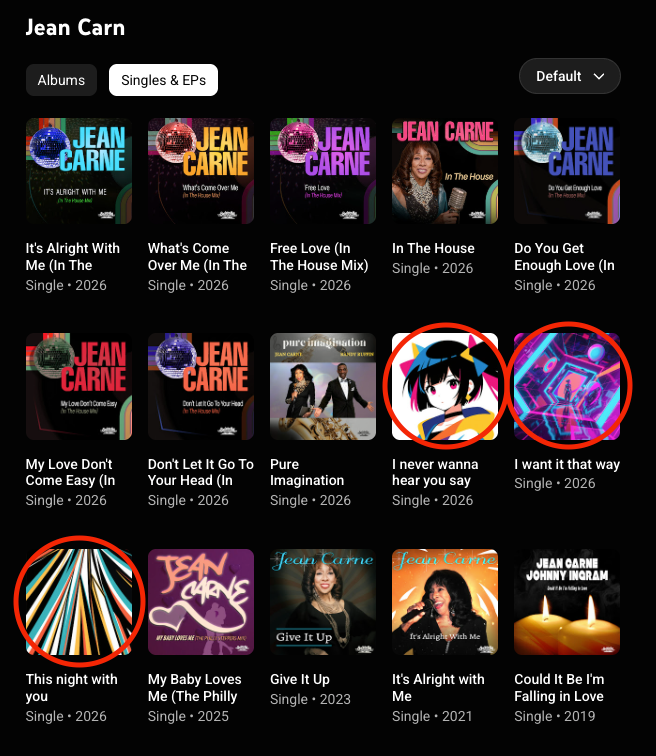
Famed R&B and jazz vocalist Jean Carne — also spelled Carn, as seen below — likewise had her YouTube Music profile inundated with slop. Though this is technically a different platform than Criss’s YouTube Topic page, it features many of the same hallmarks: AI-generated singles plastered with AI-generated imagery. Like Criss, the actual music here is an inoffensive blend of alto sax jazz, though it notably lacks Carne’s five-octave voice.
Adding to the bizarre situation, some of Carne’s new tunes appear to be cut-up lyrics from the Backstreet Boys’ repertoire, with two of them titled “I never wanna hear you say” and “I want it that way.” Carne has also supposedly put out a new collaborative EP with American soul duo Mel and Tim. Titled “This night with you,” it features three tracks: “My nightmare,” “My secret,” and “My everything,” as well as similarly schlocky AI-generated cover art.
While the garbled slop isn’t as egregious as other examples we’ve seen — Futurism broke the news last year that Australian prog rock band King Gizzard & the Lizard Wizard had been ripped off by a completely AI-generated profile called “King Lizard Wizard” — it’s no less galling, especially where the legacy of deceased Black musicians is concerned.
Though jazz rose out of the Black gospel tradition, the history of the craft is dogged with commercial exploitation of talented African American musicians for the benefit of wealthy white capitalists. Now that their estates are largely stagnant, it seems they’ve become easy fodder for digital hucksters who aren’t above abusing their legacy to eke out a quick buck.
And unfortunately, Ami bacuk is likely just the tip of the iceberg. Given the scope of previous music streaming scams, these few AI-generated singles are surely just one part of a much larger scheme. And while we can blame the scammers for running the hustle, their piecemeal exploitation of Black musicians ultimately wouldn’t be possible without the passive allowance of the streaming platforms themselves.
For example, after experiencing a massive rise in the amount of AI-generated spam songs, albums, and artists on Spotify in 2025, the company issued a September update meant to protect artists, songwriters, and producers from outside exploitation. In particular, Spotify insisted it was “ramping up” protections against this exact scenario, “where uploaders fraudulently deliver music (AI-generated or otherwise) to another artist’s profile across streaming services.”
So far, reality has shown that protecting artists is much easier said than done.
In a statement to Futurism, a Spotify spokesperson said “the releases have been removed from the artist profiles,” adding that “protecting artists’ identities is a top priority for us, and we continue to invest heavily in detection and prevention.”
The spokesperson also outlined an upcoming “service” called “Artist Profile Protection,” which “lets artists opt in to review and approve or decline incoming releases before they go live on their profile.” Though the music publishing and distribution landscape is undeniably complicated, it does invite the question of why such a common-sense feature isn’t standard practice for music streaming platforms in the first place.
After contacting Spotify, the content attributed to Ami bacuk was mostly removed from the platform, with the exception of that attributed to Jean Carne. Instead, the Ami bacuk tracks were sequestered into a separate artist profile named “Jean Carn,” though they no longer appear under the true artist’s discography.
At press time, Sonny Criss’ YouTube profile remains besmirched by the anime waifus. The platform’s parent company, Google, did not respond to a request for comment.
All in all, it remains to be seen how well the individual platforms handle the growing deluge of slop, and whether any action is taken to prevent this in the future. It isn’t even particularly clear what made these four artists targets from the same scammer in the first place — and against an ever-rising tide of AI slop, it likely never will be.
More on Spotify: Spotify Doubles Down on AI Slop As It’s Being Flooded With It
The post Spotify and YouTube Profiles of Legendary Jazz Musicians Hijacked by AI Waifu Spam appeared first on Futurism.

