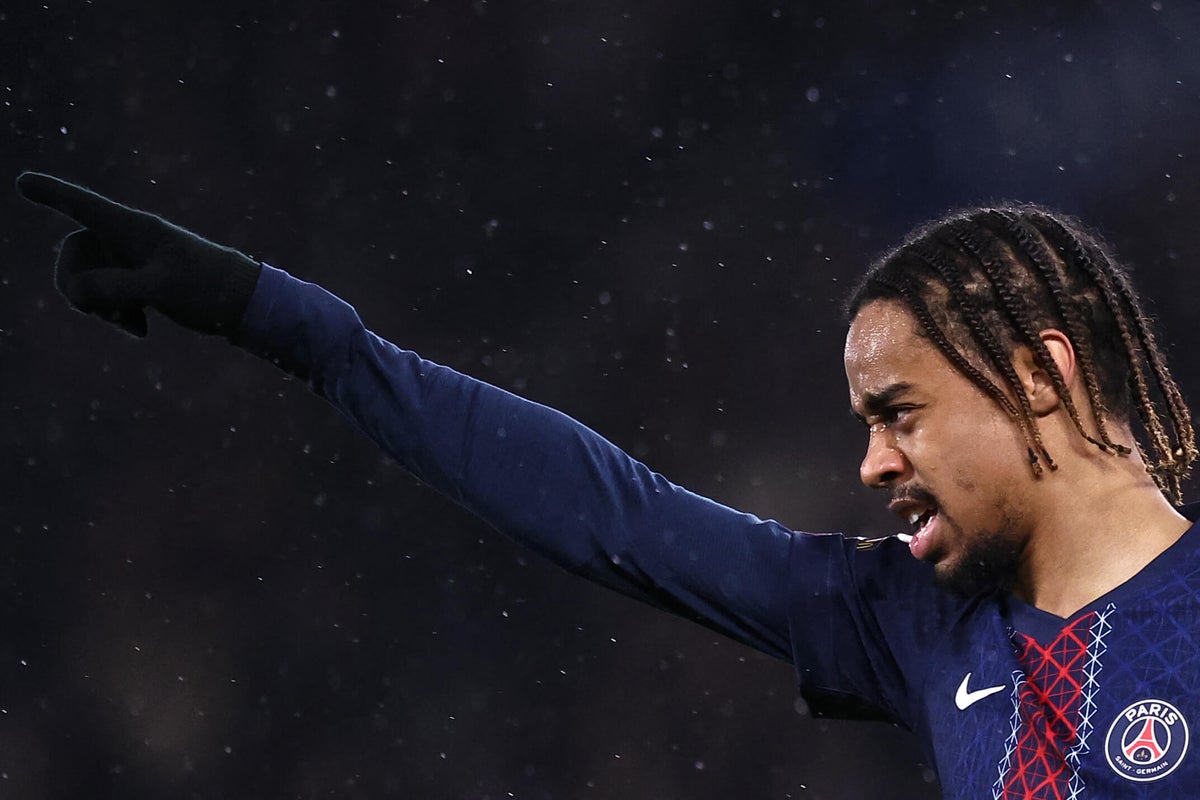
Францын довтлогч Брэдли Барколаг Ливерпүүл эгнээндээ нэгтгэсэн нь даваа гарагт албан ёсоор баталгаажлаа.
Ливерпүүлийн дасгалжуулагч Андони Ираола жигүүрийн довтлогчдын орон зайг нөхөх шаардлагатай байгаагаа илэрхийлж байсан бөгөөд 23 настай Баркола нь хоёр талын жигүүрт тоглох чадвартай гэдгээрээ онцлог юм. Тэрээр 2025-26 оны улиралд Европын шилдэг таван лигийн хэмжээнд “Peak Sprint Velocity” буюу дээд хурдаараа дөрөвт жагсаж, 32.7 км/ц хурдтайгаар хамгаалалтын шугамыг сэтлэх чадвараа харуулсан.
Баркола нь зөвхөн хурдны хүчээр бус, тактикийн ухаалаг шийдвэр гаргалт болон хамгаалалтаас довтолгоонд шилжих үеийн шахалт үзүүлэх чадвараараа Ираолагийн тактикийн системд чухал нэмэр болох юм. Тэрээр ПСЖ-д байхдаа Челси болон Лилль багуудын эсрэг тоглолтуудад өрсөлдөгчийн алдааг ашиглан бөмбөг таслах, улмаар гоолын боломж бүрдүүлэх зэргээр бөмбөггүй үеийн ур чадвараа нотолсон.
Талбайн төв рүү чиглэн тоглох дуртай Баркола нь Ливерпүүлийн довтолгоог илүү шууд, үр дүнтэй болгох боломжтой. ПСЖ-ийн бүрэлдэхүүнд 88 тоглолтод оролцохдоо 29 гоол оруулсан тэрээр талбайн аль ч хэсгээс оновчтой дамжуулалт өгөх, хамгаалалтын ард гарч аюул учруулах зэрэг ур чадварыг эзэмшсэн тоглогч юм.
Дэлгэрэнгүйг эх сурвалжаас харах
↓Эх сурвалжийг нээх ↓
Few players are as exciting to watch as Bradley Barcola at full tilt.
The 23-year-old’s explosivity is one aspect, but the danger he brings comes from his intelligence and the uncertainty he creates at will, often resulting in goals.
Those characteristics will soon be on show at Anfield, with the forward’s move being confirmed on Monday afternoon.
Below, we break down what Barcola brings to Andoni Iraola’s side and how he will fit in.
Iraola has been vocal about Liverpool’s need to add wingers to their squad, while adding that his wide players should be comfortable featuring on either flank.
Antoine Semenyo, Marcus Tavernier and David Brooks all played on both wings under him at Bournemouth, with the team relying more on their left flank. Forty-two per cent of their attacking touches between 2023-24 and 2025-26 came on that side, compared with 33 per cent on the right.
In Marcos Senesi and Dean Huijsen, Bournemouth had two left-sided centre-backs who could frequently target Semenyo with balls over the top. The current Manchester City man would either run in behind or receive infield to combine with the overlapping Milos Kerkez, now at Anfield.
In Liverpool’s Premier League opener against Newcastle United, Cody Gakpo frequently drifted infield while Kerkez provided the overlapping runs. Should he join, Barcola could help Liverpool attack opponents in a different and more direct way by pinning defences back with his running in behind.
As my colleague Conor O’Neill explained here, the France international was fourth across Europe’s top five leagues for ‘Peak Sprint Velocity’ in 2025-26, which measures the 99th percentile of his physical activities performed at above 15km/h. Barcola clocked 32.7km/h, with the ability to carry the ball at pace over long distances but also make multiple sprints in behind opposition defences in every game.
Many of those runs followed a similar pattern as seen in the two examples below. Barcola attracts the opposition right-back towards him, gets on his blindside and then attacks passes played in the gap between the right-back and right centre-back with an out-to-in run.

In more congested spaces, he is also excellent at initiating a one-two like the one below against Sporting CP in the Champions League, which also sees him cross with his left foot.

Barcola’s preference to drive infield also contributes to productivity in the final third.
His expected goals per shot across three Ligue 1 seasons at PSG stood at 0.17, with multiple efforts from the half space within the box. He scored roughly once in three games (29 goals in 88 league appearances), partly due to his limited minutes and partly due to converting just 32 per cent of his big chances. Barcola can rush his shots after a lengthy dribble or when pressured by a defender nearby, but his ability to get into good positions at a high frequency is commendable.
While crosses and cutbacks were his key method of creation, Barcola’s intelligence means he can slide passes into his attackers in tight areas after dragging defenders towards him, as seen in his chance creation map below.

In his rare appearances on the right flank for PSG, Barcola showed a different side to his game.
His relative comfort on his left foot and ability to wrap his right foot around the ball to deliver crosses means he can be effective from that side too. What has stood out more, though, is his anticipation at the back post, having initially played at centre-forward during his early days at Lyon’s academy.
Below against FC Espaly in the Coupe de France, he stays on the opposition left back’s blindside and begins his run into the box just as Nuno Mendes on the other side skips past his defender. Barcola watches Mendes’ cross closely throughout, which allows him to change direction on the fly to meet the ball when it takes a deflection and score while tumbling over.

A less-discussed aspect of Barcola’s fit at Liverpool is his out-of-possession skill set.
Iraola’s system demands plenty from his forwards out of possession as his teams look to disrupt opponents as they build out from the back. It is a coordinated effort, and individual players need to offer energy and awareness of who to track and when to shift between man-marking and zonal coverage.
Barcola checks both of those boxes and could be crucial to Iraola transferring the intensity of his Bournemouth team to Anfield.
The example below from PSG’s 5-2 Champions League win against Chelsea is a good illustration of Barcola’s work out of possession. When Wesley Fofana lets a backpass run across him, Barcola instantly sprints towards his right side to prevent the forward pass into Malo Gusto.

He harries Fofana into a backpass to Filip Jorgensen, which allows PSG to shift quickly into a man-marking approach high up the pitch. Barcola presses Jorgensen from out to in, forcing the Chelsea goalkeeper on to his weaker left foot.

Jorgensen fails to generate any power with his pass as a consequence, which Barcola anticipates to intercept on the stretch. Two passes later, Vitinha puts PSG ahead.
Another example of Barcola’s anticipation comes in PSG’s 3-0 win over Lille in January. He is initially positioned wide on the right as PSG once again man-mark their opponents from a backpass.

Lille goalkeeper Berke Ozer goes for the pass into his midfielder, and Barcola, after a glance at the receiver’s body shape, sprints towards the left centre-back (not in frame).

As the switch is played, he increases his speed to intercept before slotting it home with his left foot.


Barcola’s game blends intelligence, athleticism and risk-taking — qualities that define Iraola’s football and should help advance Liverpool under their new manager.

