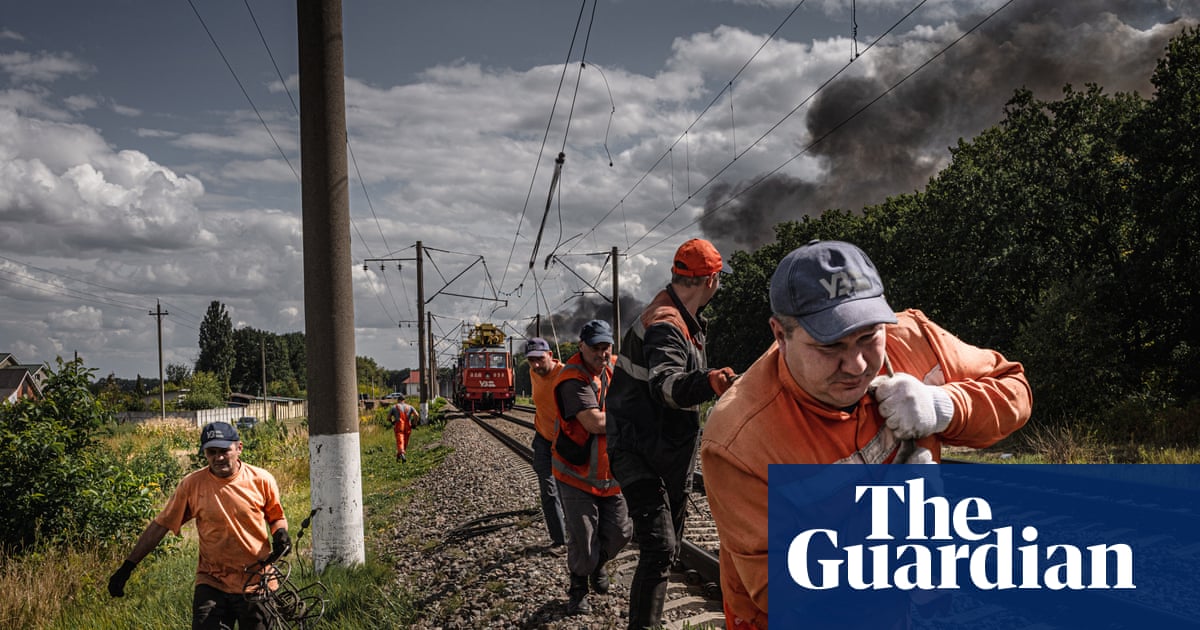
Оросын тал Украины нийслэл болон бүс нутгуудад өргөн хүрээтэй халдлага үйлдсэний улмаас төмөр замын ажилчид амь үрэгдэж, дэд бүтэц ихээхэн хохирол амслаа.
Украины төмөр замын “Ukrzaliznytsia” компани мягмар гарагт Оросын баллистик пуужингийн цохилтын улмаас зүтгүүрийн депо сүйдэж, зургаан ажилтан амиа алдсаныг мэдээллээ. Энэхүү халдлага нь Киевийг чиглэсэн хэдэн өдөр үргэлжилсэн томоохон цохилтын нэг хэсэг бөгөөд нийтдээ 12 хүн амиа алдаж, 12 хүн шархадсаны дотор гурван хүүхэд байна. Тус компанийн удирдах зөвлөлийн гишүүн Сергей Лещенкогийн мэдэгдснээр, ОХУ энэ онд төмөр замын сүлжээнд 1,500 гаруй удаа халдсан нь өнгөрсөн жилийн үзүүлэлтээс давсан байна.
Украины эдийн засгийн “нуруу” гэгддэг төмөр замын сүлжээ нь дайны нөхцөлд хүн ам, цэрэг, аж үйлдвэрийн логистикийн гол суваг болж ирсэн юм. ОХУ дайны эхний үед гүүрүүдийг онилж байсан бол одоо иргэний зүтгүүрүүд болон галт тэрэг рүү шууд халдаж байна. Лещенко нэмж хэлэхдээ, Украин агаарын довтолгооноос хамгаалах систем дутагдалтай байгаа нь энэ төрлийн эмзэг байдлыг улам нэмэгдүүлж байгааг онцолжээ.
Сүүлийн өдрүүдэд ОХУ 1,500 гаруй дрон ашиглан тасралтгүй цохилт өгч байгаагийн дотор илрүүлэхэд хүндрэлтэй, тийрэлтэт түлшээр ажилладаг загварууд багтаж байна. Агаарын түгшүүрийн улмаас галт тэрэгний хуваарь 12–15 цагаар хоцрох нь ердийн үзэгдэл болж, зорчигчид болон ажилчид байнгын аюул дунд ажиллаж байна. Дайны эхлэлээс хойш нийт 58 төмөр замчин амиа алдаж, 318 гаруй хүн шархадсан гэсэн тоон мэдээлэл байна.
Дэлгэрэнгүйг эх сурвалжаас харах
↓Эх сурвалжийг нээх ↓
Russia has opened a deadly new phase in its war against Ukraine by deliberately targeting the country’s railway network, with six employees killed on Tuesday in the latest strikes on Kyiv.
Ukraine’s state-owned railway company, Ukrzaliznytsia, said its workers died when a ballistic missile plunged into a locomotive depot. The Russians hit other railway facilities, it added, during a massive bombardment of Kyiv and the Kyiv region. At least 12 people died, with a dozen wounded, including three children.
“An unbearably difficult night for the entire railway family. Railway staff have been working at the scene since early this morning. The attack has caused significant damage. Rescue workers are still putting out a number of fires,” Ukrzaliznytsia’s chair, Oleksandr Pertsovsky, said.
The grim strike took place as Russia escalated its attacks on the Ukrainian capital. It has carried out continuous raids for six days, beginning last week, in an attempt to disrupt daily life and demoralise the city’s inhabitants. The onslaught took place hours before Ukrainian children began a new school year.
Since Russia’s full-scale invasion, 58 railway staff have been killed and at least 318 injured. One wounded railway employee, Volodymyr, was taken to hospital on Tuesday, with people urged to donate blood if they were B positive – his group. “Our colleagues are by his side,” Ukrzaliznytsia said, adding it would support victims’ families.
The railway network is Europe’s third largest, with 15,000 miles (24,000km) of track. It has been a lifeline for the country’s wartime civilians, transporting four million people and an estimated 120,000 pets. It has brought world leaders to Kyiv, including Joe Biden and Andy Burnham, who arrived last week on an overnight service from Poland.
Serhih Leshchenko, a member of Ukrzaliznytsia’s supervisory board, described the railway as the “backbone of Ukraine’s economy”. It was the main logistical supplier for the country’s army and industry, and every week transported 600,000 people, he told the Guardian. With 170,000 workers, it was also its biggest company.
For these reasons Russia was trying to destroy railways, he added. In the first year of the war it attacked bridges, which could be easily replaced. Next, it targeted rails and electricity substations. Ukraine then switched to using diesel engines. This year, it started “direct attacks on civilian locomotives”, he said – an insidious tactic, at a time when Ukraine is short of air defences.
Several drivers have been killed and locomotives targeted inside depots. Leshchenko said that if a Shahed drone comes within 50km of a train, it has to be evacuated, and can only continue once the threat has passed. So far this year Russia has hit the network more than 1,500 times – a higher figure than the whole of 2025. Overall, 249 carriages and 492 locomotives have been damaged.
Once known for their punctuality, trains now suffer regular delays, sometimes lasting as long as 12 to 15 hours. Amid air raid sirens, passengers are forced to disembark and take cover, including during winter. Writing on Facebook, the Ukrainian journalist Tetiana Zaiets described how she hid in April when Russian drones flew overhead.
“It was hell. The train stopped at night somewhere in central Ukraine. I don’t even know the name of the town. Half asleep, I just heard the conductor say ‘Evacuation’. We took only our personal belongings and valuables with us. It was raining outside. Thank you to the conductors for handing out blankets,” she posted.
She added: “That’s how we held out for two hours. While kamikaze drones were buzzing overhead, we crawled under a goods wagon. The last carriage in the train was full of children. They were being taken back from hospital. They were crying in their sleep. I thought I’d ended up in some sort of horror film. But no, this is our life.”
after newsletter promotion
Since the incident, Zaiets said she was too frightened to travel by train. “Until the war is over, I won’t be using it,” she said, stressing she respected Ukraine’s “courageous” railway workers.
Last week, an enemy drone hit a train in the Odesa region with 600 people on board, including 15 children. “The train was stopped, we were kicked out. We heard explosions, everything was burning. It was scary,” one passenger, Andriy, told the website Suspline.
Another passenger, Eva, said she was evacuated twice, and “dropped off in a field”. “We sat there and heard something flying. Then we saw a drone very close by.” She managed to collect her belongings and was eventually picked up by a bus, she said.
Leshchenko admitted the Russian strikes were hurting Ukraine’s economy and had slowed the export of grain from its under-fire Black Sea ports. He said Kyiv needed air defences from western partners, so it could protects its trains from marauding missiles and drones. “If the whole country is under attack, they will attack railways for sure,” he said.
Up until this year more than 90% of Ukrainian trains arrived on time. This was in part down to the fact engines never go especially fast, rolling at 55mph. Carriages are clean and comfortable: the best way of getting around a vast country. Stewards look after night train customers and bring them morning tea in filigree holders. There is a trolley on day trains, and patchy wifi.
On international services, border guards scrutinise male passengers, while dogs roam up and down corridors. Since the invasion, men between 18 and 60 have been forbidden from leaving the country, with some exemptions. On trains from Kyiv to Przemyśl, a railway hub in eastern Poland, most travellers are women. Since 2022 around six million people have departed abroad, many exiting by train.
In recent days Russia has launched over 1,500 drones at Ukraine, 800 of them jet-fuel models, which are harder to shoot down. In the past, Moscow would send a swarm of drones a couple of times a week, usually at night. Now the attacks continue without a pause, with one or two drones dispatched every hour, paralysing ordinary life. Air raid sirens in Kyiv are non-stop.
Pertsovsky, Ukrzaliznytsia’s boss, described the loss of his employees on Tuesday as “terrible”. “We are in touch with their loved ones. Everyone is with them to get through this extremely difficult time. The night is bitter with impossibility,” he wrote.

