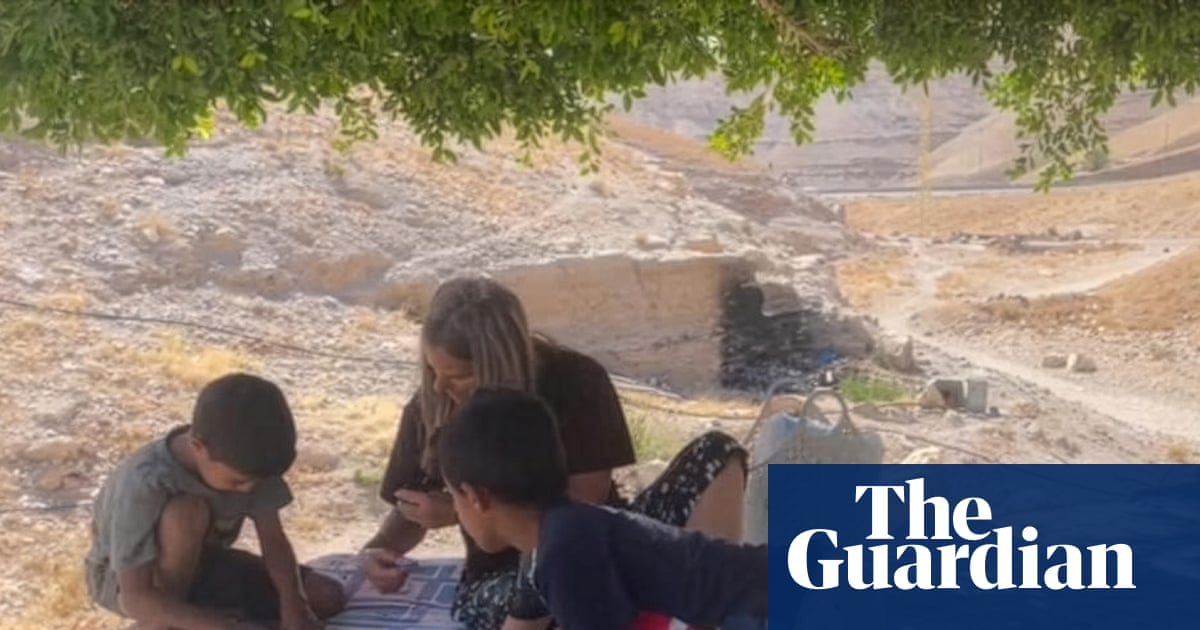
Израйлын найруулагч Амос Гитай өөрийн шинэ баримтат кинонд Баруун эргийн нөхцөл байдал болон бүс нутагт өрнөж буй мөргөлдөөний хүндрэлийг хөндөн харуулжээ.
Баруун эргийн Хан аль-Ахмар тосгонд байрлах, дугуй болон модоор барьсан “дугуйн сургууль” нь олон жилийн турш нураагдах аюулд өртөж буй бөгөөд Израйлын эрх баригчид үүнийг хууль бус бүтээн байгуулалт гэж үздэг. Найруулагч Амос Гитай энэхүү сургуулийг олон улсын хамтын нийгэмлэгийн анхаарлыг татаж, хүний эрхийг хамгаалах сорилт болсон газар хэмээн тодорхойлсон байна. Түүний “Иерихон руу хүрэх зам” нэртэй баримтат кинонд 1990-ээд оны Ослогийн хэлэлцээрийн үеэс өнөөг хүртэлх Израйл-Палестины мөргөлдөөний түүхийг архивын дүрс бичлэгүүдээр дамжуулан харуулжээ.
Гитай 1995 онд Ерөнхий сайд Ицхак Рабин амь үрэгдсэн нь энхийн яриа хэлэлцээний эхлэлийг тасалдуулсан гэж үзэж байна. Тэрээр одоогийн нөхцөл байдлыг өөрийн амьдралдаа үзсэн хамгийн хүнд үе хэмээн тодорхойлж, хэт барууны үзэлтнүүд болон ХАМАС-ын үйлдлүүд энх тайвныг үгүйсгэж буйг онцолжээ. Израйлын нийгэм сүүлийн гурван жилийн турш өрнөж буй хүчирхийлэл, түрэмгийллийн улмаас гүн шоконд орсон гэдгийг тэрээр тэмдэглэв.
Венецийн кино наадамд толилуулж буй энэхүү бүтээл нь улс төрийн шууд ухуулгаас ангид, ой санамжийг сэргээхэд чиглэсэн иргэний байр суурь гэдгийг найруулагч тайлбарласан юм. Гитай кино урлаг нь бодит байдлыг шууд өөрчлөхгүй ч санаа бодлыг түгээх замаар нийгмийн өөрчлөлтийн хөдөлгүүр болдог гэдэгт итгэлтэй байна. Тэрээр дэлхийн хоёрдугаар дайны дараах Европ дахин сэргэж чадсан түүхэн жишээг дурдаж, итгэл найдвараа алдахгүй байх нь чухал болохыг санууллаа.
Дэлгэрэнгүйг эх сурвалжаас харах
↓Эх сурвалжийг нээх ↓
The Palestinian village of Khan al-Ahmar sits off dust-blown Highway-1, between Jerusalem and Jericho in the Israeli-occupied West Bank. At the village centre is the “school of tires”, a fragile construction of rubber, wood and adobe which is attended by around 300 Bedouin boys and girls. The Israeli authorities denied the villagers an official building permit and ruled that the entire settlement is illegal. For the past eight years the school has been operating under threat of imminent demolition, a symbol of resistance to widespread settler violence.
It is only international pressure, says the veteran Israeli writer-director Amos Gitai, that has kept the place upright and still open. “The school has become a litmus paper. It is a test of how far the international community will go [to protect the rights of the people of Khan al-Ahmar]. For once, on this issue, Europe stood up and said no.” As for the future, who can tell?
Khan al-Ahmar’s “school of tires” provides an anchor of sorts for Gitai’s The Road to Jericho, a fluid, haunting documentary that elects to frame fraught recent history as a great tidal churn. In tackling the issue of the occupied West Bank, 75-year-old Gitai is also exploring his own role as a ringside observer and frequent commentator, delving back through the bulging back catalogue of a director who the critic Michael Atkinson dubbed “Israel’s one-man New Wave.” His film stirs a documentary portrait of the school with ghostly footage from the past 40 years. So we see a clip of the playwright Arthur Miller from Gitai’s 2001 drama Eden, plus archive interviews with Shimon Peres and Yitzhak Rabin during the golden false dawn of the mid-90s Oslo accords.
The future, Gitai admits, looked altogether brighter back then. The wise heads, by and large, have since left the building. “The killing of Rabin [in 1995 by a far-right Israeli law student] decapitated the efforts to create a dialogue,” he explains. “Rabin was very simple, very sober. He wanted an agreement and was prepared to put all the questions on the table and discuss them [because he knew that] you cannot force an agreement. An agreement has to be agreed upon.”
And now? “That’s all gone,” he says flatly. “Everything has been destabilised and we are now in the hands of people who don’t want peace, whether it’s extreme-right settlers or Hamas. So this is, absolutely, the worst time I’ve known in my life. Many of us in Israel have been living these last three years in a state of shock at the levels of violence and savagery we are seeing.”
The Road to Jericho is one of several pictures at this year’s Venice film festival that explicitly focus on the Middle East. NAZA, a co-production with the Guardian that plays in the main competition, spotlights the Israeli government’s role in the mass killing of Palestinian civilians. Raj’in (We Shall Return), a VR documentary about ethnic cleansing in the West Bank, is a harrowing highlight of the Venice Immersive section. The Road to Jericho, though, is something else again. It’s more akin to a tone poem in that it is elliptical, deeply felt and about as far from polemic as political cinema gets.
“I consider my work as a civic gesture,” Gitai says. “I make films when I’m moved or disturbed by something – that’s always the trigger.” He first visited Khan al-Ahmar while shooting another picture, 10 years ago, and was touched by the perseverance and dedication of its Bedouin community. “I wanted to use film-making to defend the school,” he says.
He is wary, though, of films that deal in certainties and set out with a clear, laser-focused agenda. “I don’t believe art changes reality,” he says. “That was never the case. What art can do is scratch a memory – and that’s important. Machine guns and money move the world, but so do ideas. And cinema is a great vessel for ideas.”
In Field Diary, his 1982 documentary about Gaza on the eve of the Lebanon War, the director interviewed Bassam Shakaa, the then-mayor of Nablus. Shakaa was confined to a wheelchair, having lost a leg in an attack by Israeli settlers. Gitai asked him whether he considered himself an optimist or a pessimist. “Pessimism is a luxury we cannot afford,” Shakaa said.
More than 40 years on those words resonate more than ever. “I don’t know if I’m an optimist,” Gitai says. “That would be a naive thing to say when we see everything that’s going on. But look at Europe 80 years ago – the stage for the killing of millions and millions of people – and it’s a good historical reference. It shows that people can always still come together and reconstruct, even after the horror of the second world war. So you have to preserve hope. Hope and ideas – these are the great motors for change.”


Израйлчуудын амьдрал сүүлийн жилүүдэд ямар их шоконд байгааг амьд дүрсээр харуулсан байна. Энэ киноны зураг авалт, сэдэв нь хүний эрх, ялангуяа хүүхдийн сургууль орчныг хамгаалахад ямар хэцүү байгааг илтгэж байна уу? Та энэ кино үзсэн үү, эсвэл ямар нэгэн өөр түүхээс юу сургамж авсан бэ?