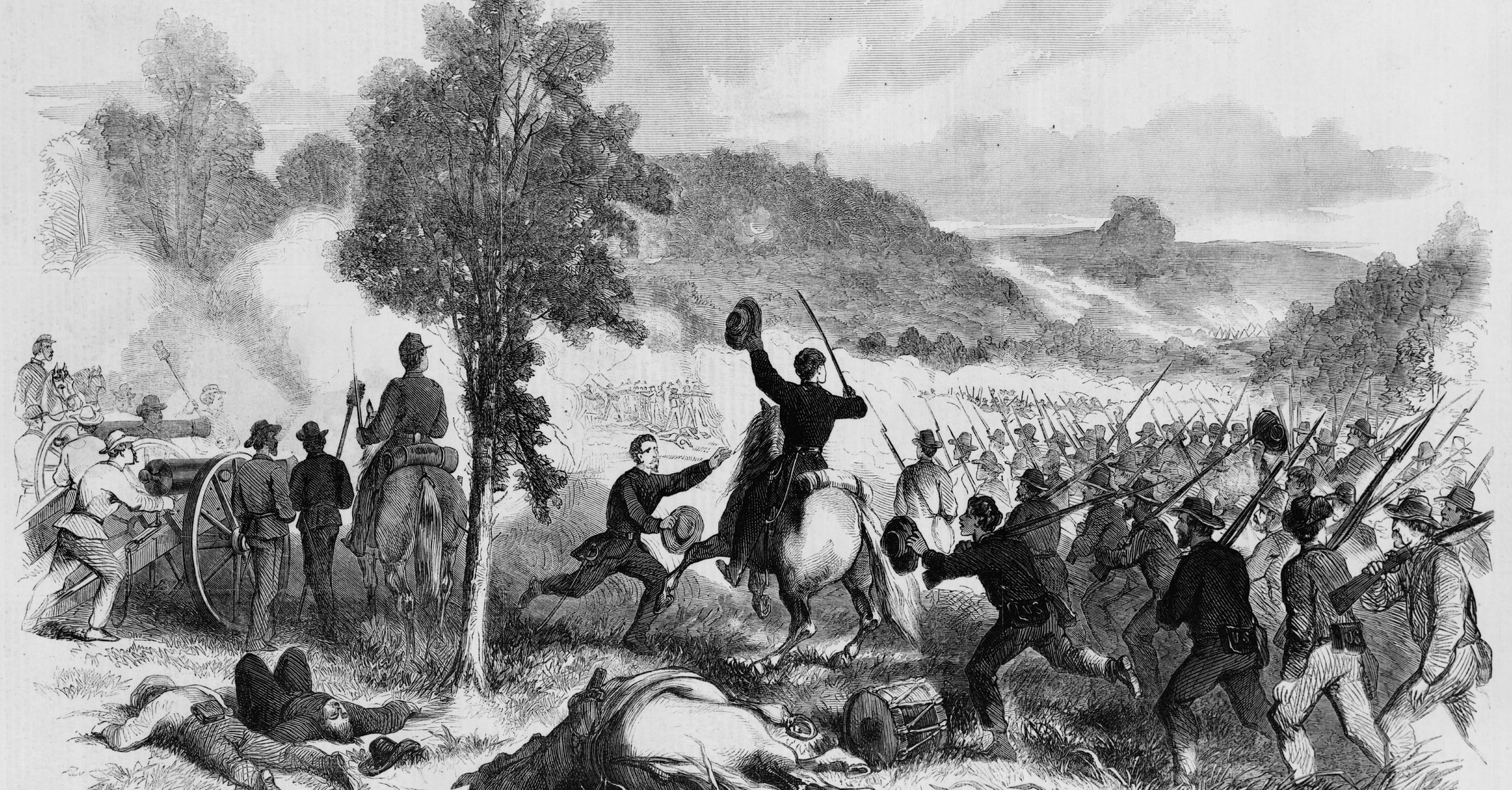
Америкийн иргэний дайны өрнөд фронтын анхны томоохон тулалдаан болсон Уилсонс Крикийн мөргөлдөөн нь Миссури мужийг Холбооны талд үлдээхэд шийдвэрлэх нөлөө үзүүлсэн түүхэн үйл явдал юм.
1861 оны наймдугаар сарын 10-нд Миссури мужийн Спрингфилд хотын ойролцоох Уилсонс Крик хэмээх газарт болсон энэхүү тулалдаан нь Америкийн иргэний дайны хоёр дахь томоохон тулаан байв. Тулалдаан Холбооны талын (Union) ухралтаар өндөрлөж, Холбооны хүчин ялагдал хүлээсэн ч Конфедерацийн цэргүүд ихэд ядарсан байсан тул дайсныг бүрмөсөн устгаж чадаагүй юм. Энэхүү үйл явдлыг 1861 оны долдугаар сарын 21-нд болсон “Булл-Раны анхны тулалдаан”-тай төстэй үр дагавар, мөн дүрэмт хувцсын ижил төстэй байдлаас үүдэн нөхөр дайсныг ялгахад хүндрэлтэй байсан зэрэг шалтгаанаар “Өрнөдийн Булл-Ран” хэмээн нэрлэдэг.
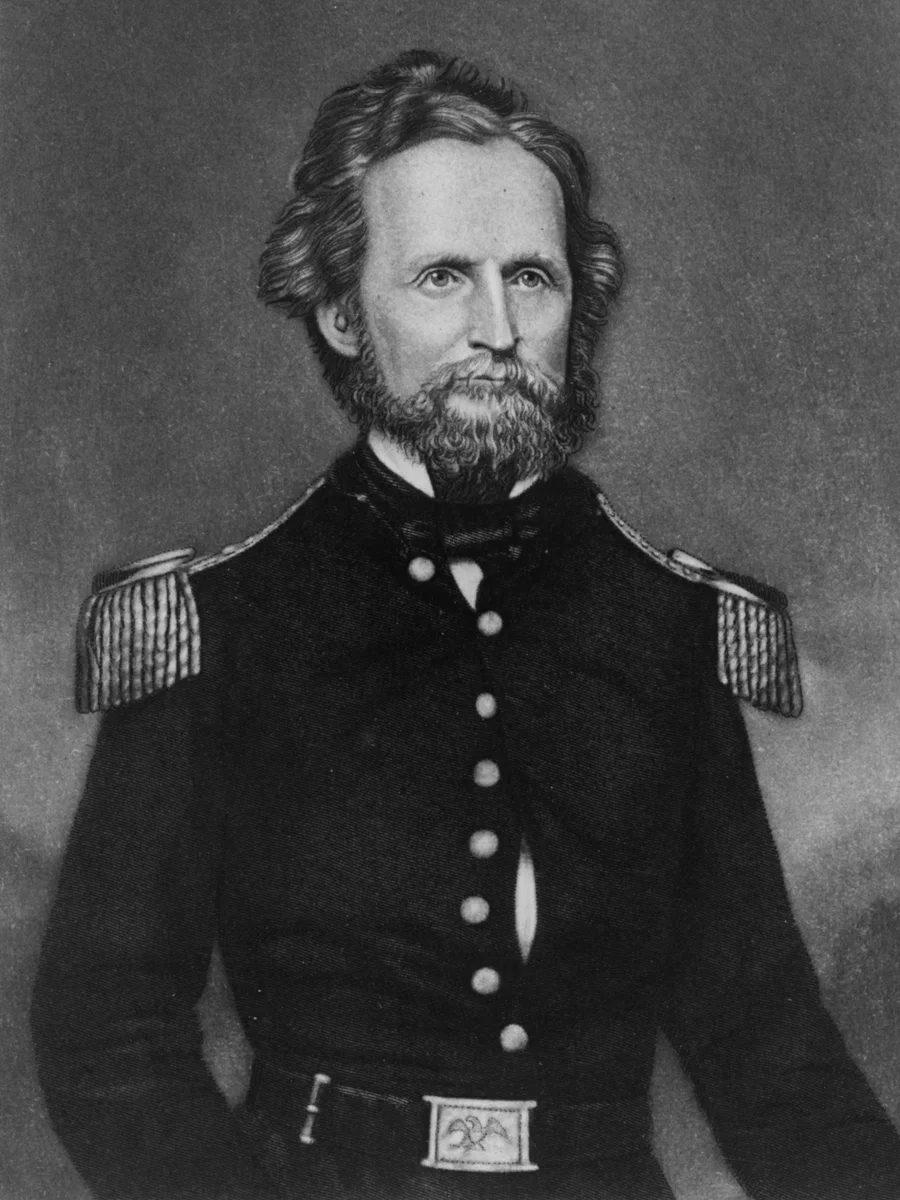
Энэхүү тулалдаанд Холбооны армийн генерал Натаниэль Лайон амь үрэгдсэн нь түүхчдийн анхаарлыг ихэд татдаг. Лайон өөрийн 5,400 цэрэгтэйгээр Миссури мужийн хамгаалагчид, Конфедерацийн баруун арми болон Арканзасын армиас бүрдсэн 12,000 гаруй цэрэгтэй дайсны хүчний эсрэг зоригтой тэмцсэн юм. Лайон алагдсаны дараа Холбооны хүчин ялагдсан нь Конфедерацийн генерал Стерлинг Прайсыг 1861 оны есдүгээр сард Лексингтоны бүслэлтийг эхлүүлэхэд хүргэсэн байна. 1861 оны сүүл, 1862 оны эхээр Холбооны цэргүүд Прайс болон МакКаллох нарын хүчнийг Миссуригээс шахан гаргасан бөгөөд 1862 оны гуравдугаар сард Арканзас мужийн баруун хойд хэсэгт болсон Пи-Рижийн тулалдаанд Конфедерацийн хүчийг бүрмөсөн ялснаар Миссури муж дайны туршид Холбооны талд үлджээ.
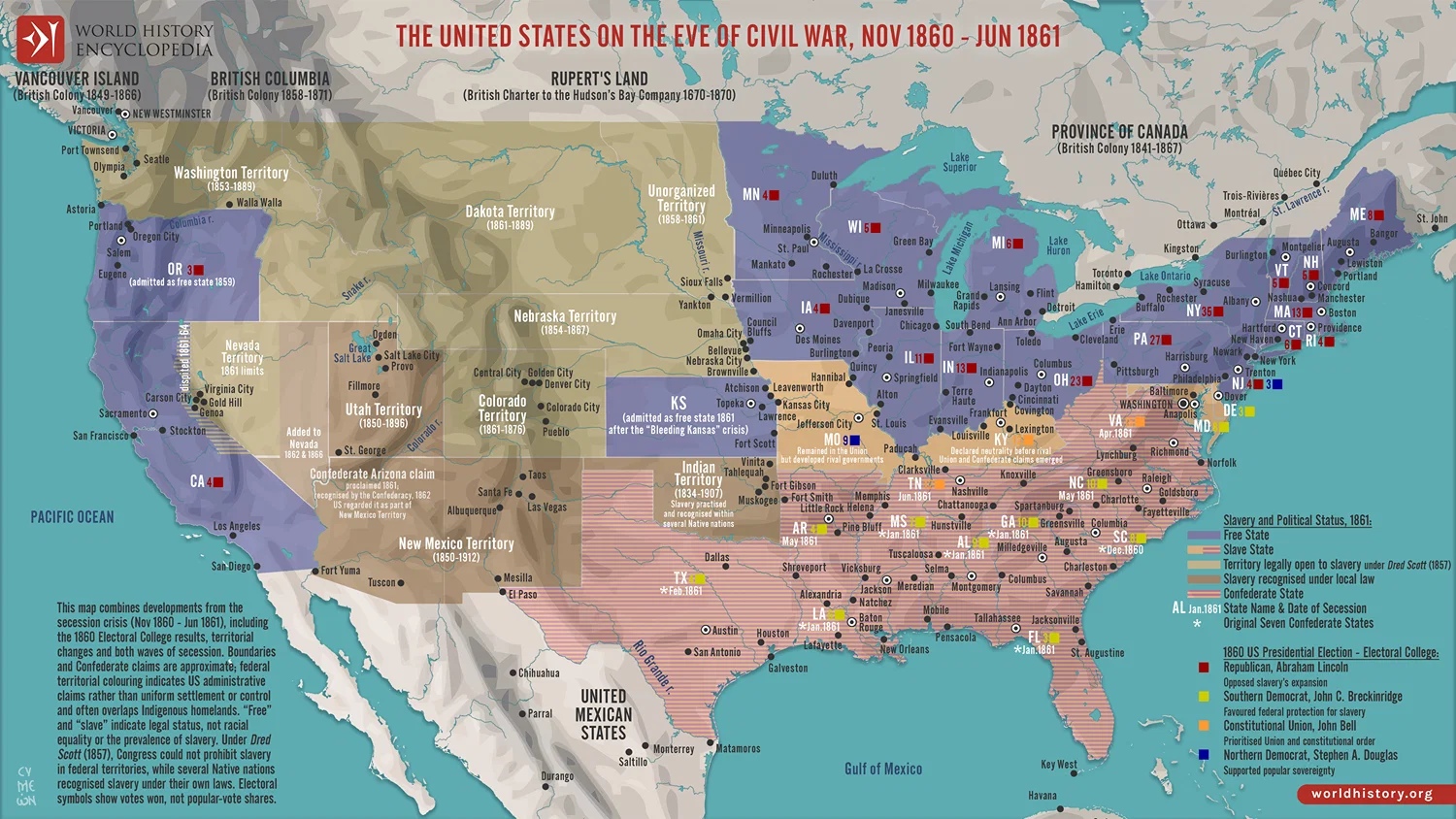
Миссури мужийн хувьд 1820 онд боолчлолыг зөвшөөрсөн муж болон Холбоонд нэгдсэн бөгөөд 1854-1859 оны хооронд “Цус асгаруулсан Канзас” хэмээх мөргөлдөөнд татагдан орсон түүхтэй. 1860 оны АНУ-ын ерөнхийлөгчийн сонгуулиар Абрахам Линкольн ялж, өмнөдийн мужууд Холбооноос салан тусгаарлахад Миссури төвийг сахисан бодлого баримтлахаар шийдсэн юм. Гэвч мужийн захирагч Клэйборн Фокс Жэксон Конфедерацийн талыг баримтлагч байсан тул Либерти дахь зэвсгийн агуулахыг эзлэх төлөвлөгөө боловсруулж, Миссурийн сайн дурын цэргийг байгуулжээ.
Камп Жэксон дахь цэргийн сургуулилалтын үеэр генерал Даниэль М. Фрост болон Жэксон нар зэвсэг хуримтлуулж байсныг Холбооны ахмад Натаниэль Лайон илрүүлсэн байна. Лайон өөрийн цэргүүдийг удирдан Камп Жэксоныг бүсэлж, буун дуу гаргалгүйгээр бууж өгөхөд хүргэв. Гэвч баривчлагдсан цэргүүдийг Сент-Луис хотын гудамжаар туух үед үймээн дэгдэж, буудалцаан болсны улмаас 28 энгийн иргэн амь үрэгдсэн нь “Камп Жэксоны хэрэг” гэгдэх эмгэнэлт явдлыг үүсгэжээ.
Энэхүү явдлын дараа Миссурийн хууль тогтоох байгууллага Холбооны эсрэг байр суурь баримталж, Стерлинг Прайсын удирдлага дор Миссурийн мужийн хамгаалагчдыг байгуулсан байна. Генерал Лайон болон Стерлинг Прайс нарын хооронд 1861 оны зургадугаар сард болсон Бунвиллийн тулалдааны дараа Лайон Миссурид Холбооны хүчийг бэхжүүлэхийн тулд эрчимтэй ажиллаж эхэлжээ.
Уилсонс Крикийн тулалдааны өмнөхөн Конфедерацийн генерал МакКаллох болон Арканзасын цэргийн удирдагч Н. Барт Пирс нар Стерлинг Прайстай нэгдэн 12,000 хүнтэй арми бүрдүүлж, Спрингфилд рүү давшихаар төлөвлөжээ. Лайон өөрийн цэргийн хүч хангалтгүй байгааг мэдэж байсан ч дайсныг зогсоохын тулд давшилт хийхээр шийдсэн байна. Наймдугаар сарын 10-ны үүрээр Холбооны цэргүүд Конфедерацийн хуаран руу гэнэтийн дайралт хийжээ. Тулалдааны явцад генерал Лайон амь үрэгдэж, Холбооны цэргүүд сум хэрэгсэл дууссаны улмаас ухралт хийсэн байна.
Тулалдааны дараа Конфедерацийн тал хохирол ихтэй ялалт байгуулсан ч Холбооны цэргийг мөрдөн хөөхөөс татгалзсан юм. Энэхүү тулалдааны стратегийн үр дүнд Холбооны хүчин Ролла хот хүртэл ухарсан ч Миссури муж дайны туршид Холбооны талд үлдсэн билээ. Өнөөдөр Уилсонс Крикийн тулалдааны талбар нь үндэсний цэцэрлэгт хүрээлэн болон хадгалагдаж, жил бүрийн наймдугаар сарын 10-нд дурсгалын арга хэмжээг зохион байгуулдаг уламжлалтай.
Дэлгэрэнгүйг эх сурвалжаас харах
↓Эх сурвалжийг нээх ↓
The Battle of Wilson’s Creek (also known as the Battle of Oak Hills, 10 August 1861) was the second major battle of the American Civil War and the first major battle of the Western theater of the war. It was fought at Wilson’s Creek near Springfield, Missouri. The engagement ended in a Confederate victory and Union troops retreating from the field. The Confederate forces were too worn out to pursue and finish them, and so this battle is often referred to as the “Bull Run of the West” because its conclusion so closely resembled the First Battle of Bull Run (First Manassas) of 21 July 1861 (see Panic at Bull Run and Losing an Opportunity at Bull Run) and aspects of that engagement, such as confusion over who was friend or enemy due to non-standardized uniforms, also played a part at this one.
The Battle of Wilson’s Creek is noted by historians for the first death in combat of a Union general – General Nathaniel Lyon – who, though his forces were vastly outnumbered by those of the Missouri State Guard under Major General Sterling Price, the Confederate Western Army under Brigadier General Benjamin McCulloch, and the Army of Arkansas under Nicholas Bartlett Pearce (a combined force of over 12,000 troops to Lyon’s 5,400), chose to make a stand to keep Missouri in the Union as a border state. Lyon was killed, and his forces were defeated, encouraging Price to launch the Siege of Lexington (also known as the First Battle of Lexington, 13-20 September 1861), which was also a Confederate victory.
In late 1861 and early 1862, the forces of Price and McCulloch were driven from Missouri by Union forces but launched an offensive to drive into Missouri from Arkansas with more men under Confederate Major General Earl Van Dorn. These were defeated at the Battle of Pea Ridge (Battle of Elkhorn Tavern, 7-8 March) in northwestern Arkansas, where McCulloch was killed. The Union then held Missouri as a border state for the rest of the war, although pro-Confederate guerrilla actions continued throughout the conflict and into the following years.
Tensions in Missouri
Missouri was admitted to the Union as a slave state in 1820 and, between 1854 and 1859, contributed to the hostilities known as ‘Bleeding Kansas‘ in the neighboring Kansas Territory as pro-slavery border ruffians from Missouri crossed over to attack free staters who were trying to establish Kansas as a free state.
After the election of 1860, Missouri chose to remain a neutral border state.
Antislavery forces also crossed from Kansas into Missouri, as in the case of The Immortal Ten, a group of abolitionists who rescued fellow abolitionist Dr. John Doy from imprisonment by pro-slavery authorities. Missouri, clearly, favored maintaining the institution of slavery and so was aligned with the values of the Confederacy.
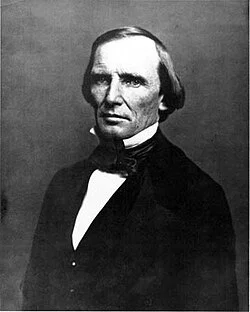
After the US presidential election of 1860, however, when Abraham Lincoln was elected and Southern states seceded from the Union, Missouri chose not to join them, electing to remain a neutral border state. This decision was officially supported by Missouri’s governor, Claiborne Fox Jackson, but he was strongly sympathetic to the Confederate cause.
When pro-secession forces took the arsenal in Liberty, Missouri, Union forces responded. Jackson called for the mustering of the Missouri Volunteer Militia to be trained and deployed, allegedly to maintain order and the state’s neutrality, but actually he planned – along with the militia leader General Daniel M. Frost – to use the 900-man, pro-Confederate militia to seize the arsenal in St. Louis.
Map of the United States at the Outbreak of Civil War, 1861
Lyon & Camp Jackson
Jackson had been in communication with Confederate forces in Arkansas and had secretly been given two cannons to use in taking the arsenal. These two guns were kept at the training camp known as Camp Jackson, where Frost was conducting daily drills of the men. To many of those outside the camp, it seems to have appeared the militia was training for the objective stated by Jackson – to keep order and maintain the neutrality of the state – but Union Captain Nathaniel Lyon found out the truth, including Jackson’s plan to take the arsenal. Scholar Alan Taylor comments:
A Free Soiler [free stater] from Connecticut, Lyon had a booming voice, intense blue eyes, and red beard, commanding attention despite his small stature. Brave, stubborn, resourceful, and profane, Lyon declared that, rather than allow Jackson “to dictate to my government in any manner,” he would see “every man, woman, and child in the State, dead and buried.” Lyon recruited 4,000 volunteers from the city‘s immigrants.
(167)
Lyon contacted US Representative Francis Preston Blair Jr. about his concerns, and the two of them arranged to have the weapons and ammunition housed at the St. Louis arsenal moved to a more secure Union site in Illinois.
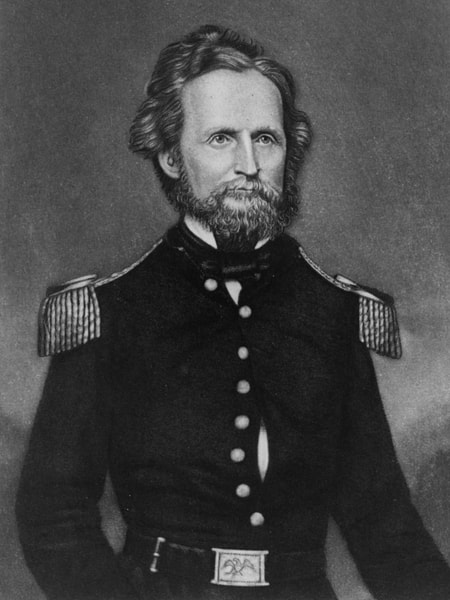
Brigadier General Nathaniel Lyon
This act heightened tensions between pro-Confederate and pro-Union forces in the state and also encouraged the militia at Camp Jackson to ready itself for deployment against Union forces. Taylor describes what happened next:
A master of improvisation, Lyon dressed as a genteel old lady with a shawl, veil, and wide sunbonnet to scout Jackson’s militia encampment by riding through in a carriage. Returning to St. Louis, Lyon switched into his uniform and led his troops out to surround the militia camp [on 10 May 1861], compelling surrender without firing a shot.
(167)
Afterwards, he paraded the captured militia through the streets of St. Louis, drawing a crowd.
Camp Jackson Affair & Aftermath
Four of the five of Lyon’s volunteer regiments were composed mainly of Germans who had settled in Missouri, but many had not yet mastered English and were often mocked and derided by their American neighbors. When the crowd saw their militia being marched under guard by the German Union Home Guard, they began to riot, someone shot at the Germans, and they returned fire, killing 28 civilians and wounding around 75 others.
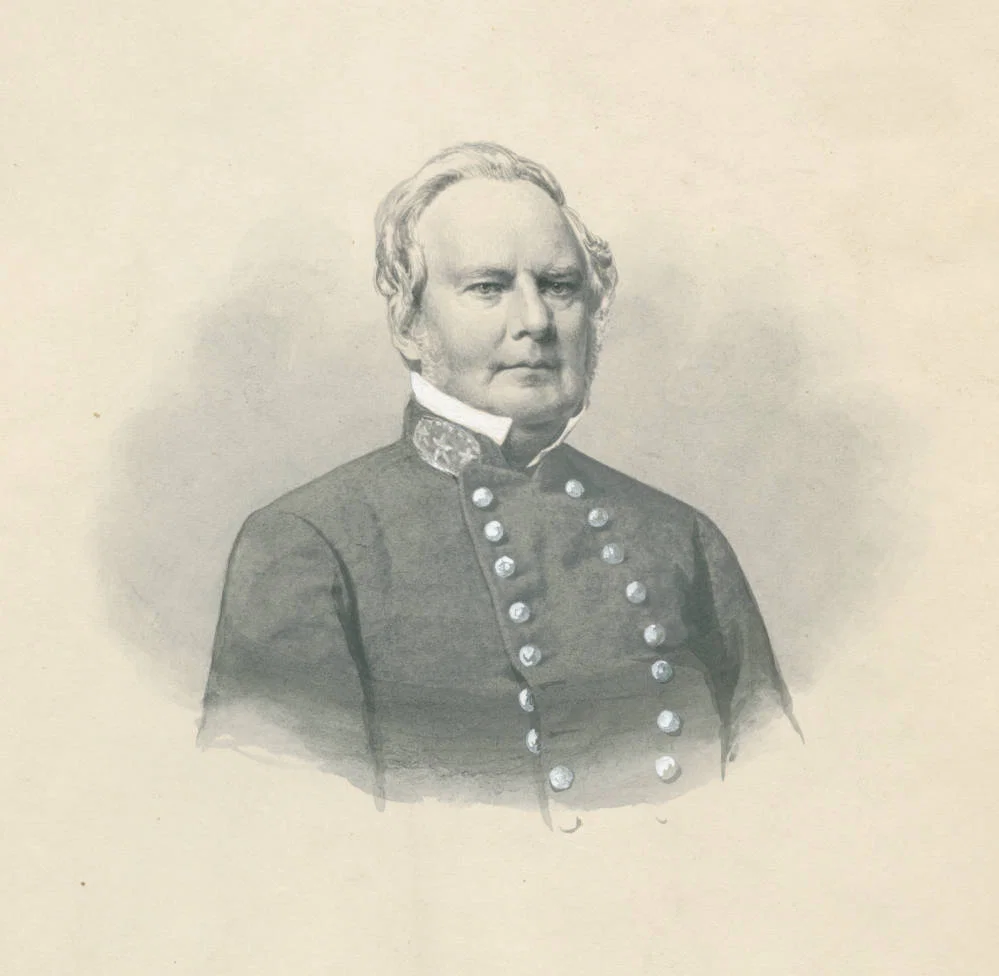
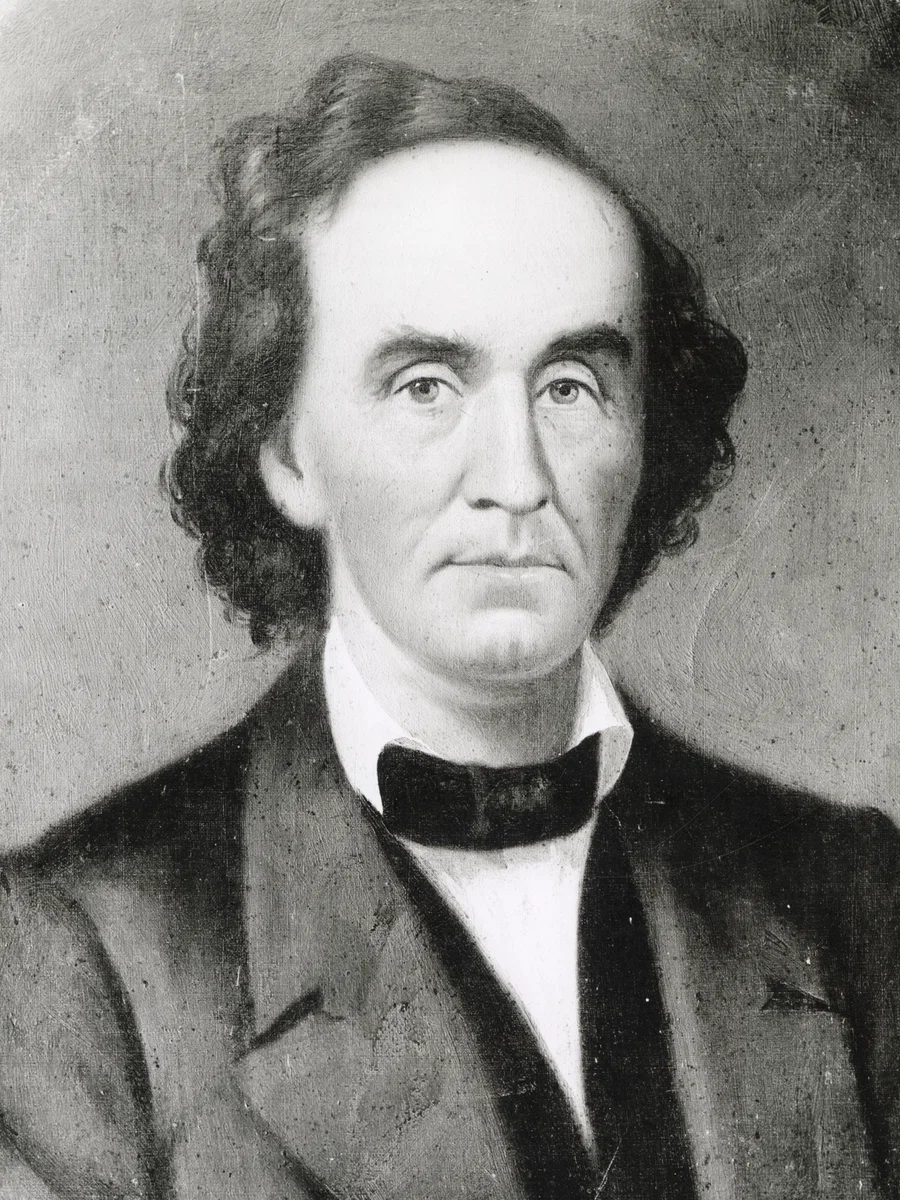
In the North, this event became known as the Camp Jackson Affair; in the South it was known as the Camp Jackson Massacre. The “massacre” designation stuck with the Missouri State Legislature as well, which denounced Lyon’s action and the ensuing violence. Legislation supporting secession was introduced as it seemed to many that the Union forces had broken the terms of Missouri’s neutrality. The legislature voted on the formation of a new state militia, the Missouri State Guard, which would be commanded by Major General Sterling Price, and this organization would be tasked with keeping the peace.
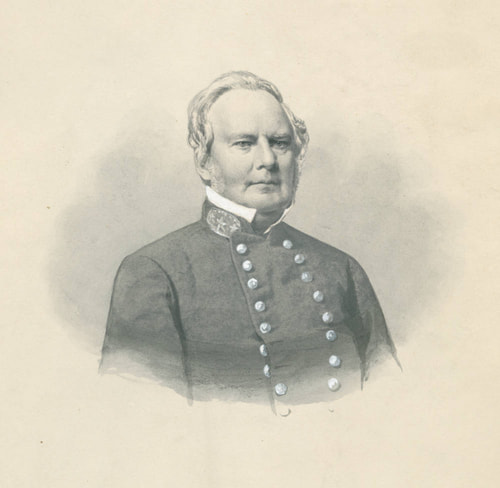
Sterling Price of the Missouri State Guard
Union General William S. Harney, commanding the Department of the West, and never the most trusting of men, negotiated a truce with Missouri that stipulated cooperation between the Missouri State Guard and Union forces. As long as the Guard actually did what it was supposed to, Harney would keep Union forces from further intervention.
Rising Tensions & Hostilities
Blair, who was strongly pro-Union, regarded Harney’s actions as inadequate and had him transferred, promoting Lyon (who was made a general) to Harney’s position, as it was clear Lyon would take decisive action to prevent Confederate incursions in the state. While this was going on, Sterling Price, who had previously favored state neutrality, now sided with Claiborne Fox Jackson due to the Camp Jackson Affair.
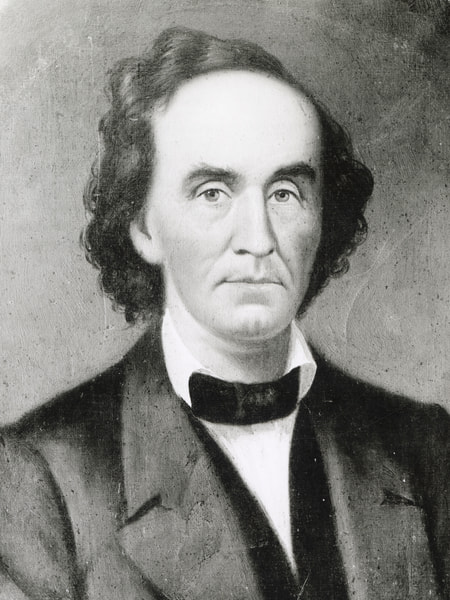
Claiborne Fox Jackson, Governor of Missouri
Blair encouraged Lyon to meet with Jackson and Price in June to try to come to a compromise, but Lyon rejected any concessions to the Confederate cause and took action to secure Union interests in Missouri. Price did the same, mobilizing the Missouri State Guard.
On 17 June, Lyon defeated the Missouri State Guard at the Battle of Boonville. Scholar William Riley Brooksher notes:
Lyon probably could have stopped his advance following the Battle of Boonville with assurance that, at least for the foreseeable future, the state would be safely in the Union fold. There were two remaining issues that he believed required resolution before he could rest.
The first of these was the status of those who had opposed him. In Lyon’s mind, opposition to the federal government was intolerable, and those guilty of such actions could not remain unpunished…The second issue confronting Lyon was the Missouri State Guard. Although he had pushed it around rather handily, it could still potentially grow into a force that could seriously challenge the federal government.
(93-94)
Lyon’s concerns were justified. Jackson had contacted Confederate General McCulloch in Arkansas, who arrived in Missouri with his troops on 4 July along with General Nicholas Bartlett Pearce (better known as N. Bart Pearce), commanding the Confederate Arkansas Militia (which he referred to as the Army of Arkansas). These two joined with Price’s Missouri State Guard to form an army usually given at around 12,000 soldiers.
Lead-up To Battle
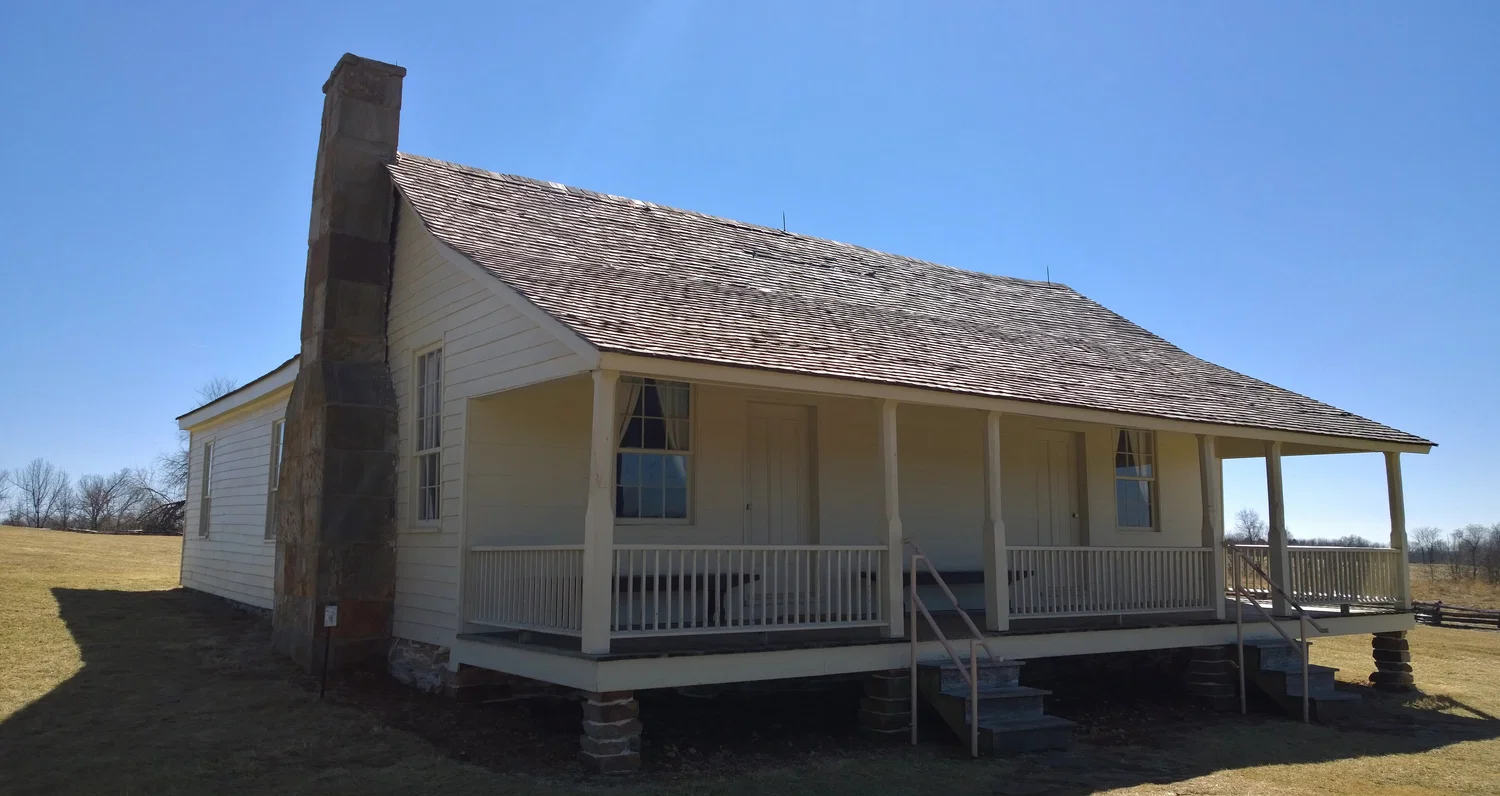
Their plan was to seize the city of Springfield, and they began to march, reaching Wilson’s Creek, which was 10 miles (16 km) southwest of their objective, on 6 August, where they set up camp. They lived off the land – and in the area of Wilson Township, Greene County, Missouri, there was plenty of food available. Wilson Township had a population of over 100 people, almost all farmers, including John and Rosanna Ray and their four daughters and Joseph Sharp, who owned the largest farm. The Ray and Sharp farms, especially, were raided for food and firewood, and both would be severely damaged during the battle.
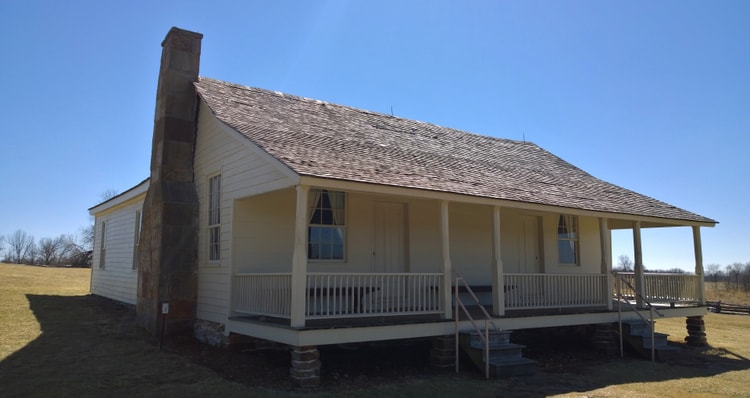
The Ray House, Wilson’s Creek National Battlefield
Lyon appealed to his commanding officer, John C. Fremont, for reinforcements, but his request was denied. He understood he was badly outnumbered, with only a little over 5,400 troops, but also that his volunteers’ enlistment period was about to expire, and once that happened, he would have even fewer men – since it was clear he would be receiving no help from Fremont. He decided any action was better than none – which would have left Springfield open to invasion by the Confederates – and so mobilized his forces to meet the enemy.
Lyon called a council of war on 9 August, having received intelligence on the location of the enemy at Wilson’s Creek, and Colonel Franz Sigel suggested a plan of action in which they would divide their force – Lyon and Major Samuel D. Sturgis launching a frontal attack from the north with the main force while Sigel led a smaller command in a flanking maneuver – thereby catching the enemy in a pincer movement. This plan was rejected by most of the other officers but approved by Lyon.
Battle of Wilson’s Creek
McCulloch, Price, and Pearce planned on marching toward Springfield on the 9th and had mobilized their troops and withdrawn their pickets. It rained on the 9th, however, and so they decided to wait until the weather cleared and the roads dried out. They had no idea that Lyon’s forces were marching toward them. With their pickets still withdrawn the morning of 10 August, they were surprised when the Union forces appeared, and the first shots of the battle were fired around 5:00 a.m.
Lyon had already situated his forces on the wooded ridge of Oak Hill (which would be known as “Bloody Hill” after the battle) with Major James Totten commanding his artillery, sending shots directly into the Confederate camp. Word was quickly sent to McCulloch, who was having breakfast some ways off, that they were under attack – but McCulloch dismissed this as another overreaction by one of his staff officers. An acoustic shadow prevented McCulloch from hearing the guns on Oak Hill and the response from his own. Once it was confirmed that Lyon was attacking, McCulloch joined the fight.
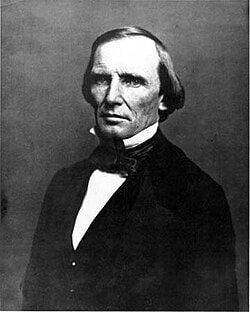
Confederate Commander Benjamin McCulloch
Meanwhile, Sigel had set up his position on a hill above the Sharp farm and, when he heard Totten’s guns fire, ordered his own artillery to do the same. This barrage scattered the Confederate and Missouri forces camped below. Sigel then ordered his infantry forward toward Wilson’s Creek. At approximately 6:30 a.m., Sigel halted to provide time for the artillery to move down from the hill and redeploy to support the infantry. Sigel again moved forward, driving back more of the opposing force.
At this same time, the first Confederate charge was launched against the Union position on Oak Hill and was repulsed. Fighting continued until around 8:00 a.m. on both Oak Hill and Sigel’s position just past the Sharp farm. McCulloch, meanwhile, saw that Sigel’s forces were poorly arrayed as they advanced and believed their line could be broken by a sudden advance. He sent the 3rd Louisiana regiment toward Sigel.
The 3rd Louisiana Confederates that morning wore the same gray uniforms as the 1st Iowa Union soldiers.
One of the many problems encountered by soldiers at the First Battle of Bull Run (First Manassas) was that uniforms of the opposing sides had not been standardized – there was no Union Blue or Confederate Gray (or butternut) established yet – and the same was true at Wilson’s Creek. The 3rd Louisiana Confederates that morning wore the same gray uniforms as the 1st Iowa Union soldiers, and so, when they approached, Sigel ordered his men to hold fire. He learned, too late, that he was facing hostile forces when the advance unit he had sent to meet the soldiers was fired upon. The 3rd Louisiana charged, supported by the Missouri State Guard, and Sigel’s command broke and ran. The retreat became a rout, and survivors of the attack were said to have kept running all the way back to Springfield.
On Oak Hill, Lyon had no idea where Sigel was or why he had not yet flanked the enemy. The Missouri State Guard under Price launched another assault on Lyon’s position, and this was met by Lyon, leading the 2nd Kansas Regiment. During this counterattack, Lyon was shot and fell dead. Sturgis assumed command and held off the Arkansas forces under Pearce for almost an hour. At this point, with no word from Sigel and ammunition running low, Sturgis ordered a full retreat around 11:30 a.m., returning to Springfield in the late afternoon.
Aftermath
McCulloch, Price, and Pearce had won the day at the cost of 1,222 casualties to Lyon’s loss of 1,317 but agreed not to pursue Sturgis, as their forces were exhausted. They also had no way of knowing whether Sturgis planned to regroup and reinforce at some point between Wilson’s Creek and Springfield. Instead of pursuing the Union forces, they ordered details to begin burying the dead. Lyon’s body was carried to the Ray farmhouse, which was being used as a field hospital, and was later transported back to his home state of Connecticut.
Sturgis had no plan to regroup or do anything else during his retreat. After meeting Sigel at Springfield, he reported Lyon’s death and handed over his command. Sigel ordered a retreat from Springfield to the city of Rolla the next morning. Pearce and McCulloch retreated to Arkansas, and Price, as noted above, mobilized his Missouri State Guard for what would become the Siege of Lexington. Scholar James McPherson comments:
Although the tactical victory at Wilson’s Creek was much less decisive than at Manassas, and its impact on public opinion outside Missouri was small, its strategic consequences at first seemed greater. The Union forces retreated all the way to Rolla, 100 miles north of Springfield. Having gained confidence and prestige, Price marched northward to the Missouri River, gathering recruits on the way. (352)
Conclusion
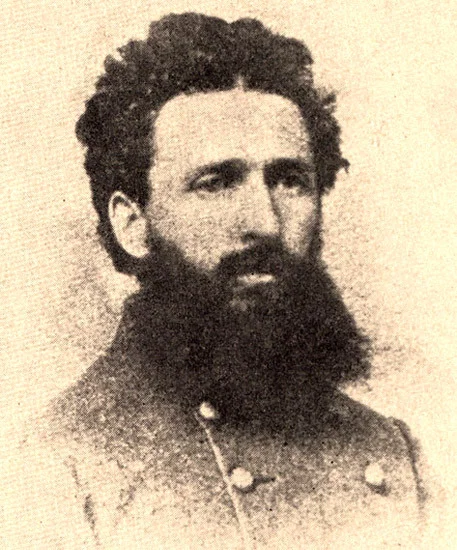
Price would eventually be defeated by Union Major General Samuel Ryan Curtis in 1862 and withdrew from Missouri. McCulloch, as noted, was killed at the Battle of Pea Ridge in March 1862, and Pearce was removed from command after his forces were transferred to Confederate service; he spent the rest of the war serving in the Commissary Department in Arkansas.
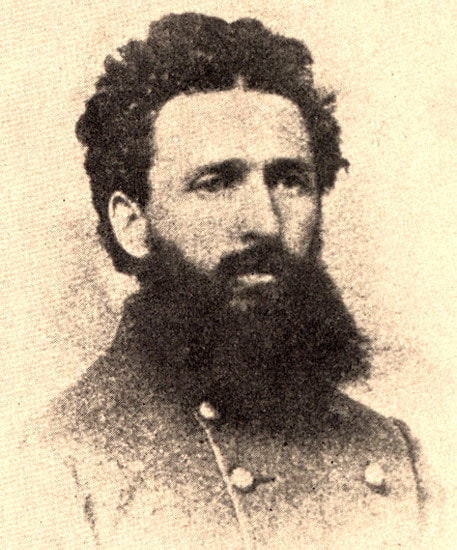
Nicholas Bartlett Pearce
Claiborne Fox Jackson finally succeeded in having Missouri recognized by the Confederacy as its twelfth state in November 1861, but, as the state by that time was occupied by Union forces, this gesture was meaningless. Jackson died of pneumonia in December 1862, and Missouri remained in the Union throughout the war, just as Lyon had fought to ensure.
Today, the Wilson’s Creek National Battlefield is a National Park, which hosts living history programs, tours, and has replanted the vegetation that was native to the area at the time of the battle. The Ray family’s house has been preserved, and commemorative events are held annually on 10 August, honoring General Lyon and all those who fell at the Battle of Wilson’s Creek.

