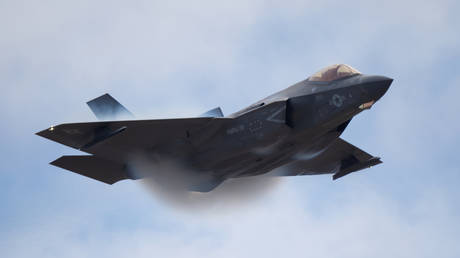
F-35 сөнөөгч онгоцны хөтөлбөр нь түүхэн дэх хамгийн өндөр өртөгтэй зэвсэглэлийн хөтөлбөр боловч техникийн олон доголдол, ашиглалтын өндөр зардалтай байсаар байна.
Дэлхий даяар 1,000 гаруй нэгж үйлдвэрлэгдсэн F-35 сөнөөгч онгоц нь техникийн хувьд маргаан дагуулсаар байгаа юм. 2015 оны зургаадугаар сард хийсэн туршилтаар уг онгоц нь өмнөх үеийн F-16D загварын онгоцтой харьцуулахад маневрлах чадвараараа дутмаг болох нь тогтоогдсон. Хэдийгээр програм хангамжийн шинэчлэлээрээ байлдааны үр ашгаа нэмэгдүүлсэн ч өнөөг хүртэл хөдөлгүүрийн элэгдэл, хэт халалт, нислэгийн өндөр өртөг зэрэг асуудлууд хөндөгдсөөр байна.
Уг онгоцны гол давуу тал нь үл үзэгдэх (stealth) технологи болон сүлжээнд суурилсан байлдааны ажиллагааг удирдах чадвар юм. Гэсэн хэдий ч 24 сая гаруй мөр код бүхий нарийн төвөгтэй програм хангамж нь 800 гаруй шийдэгдээгүй алдаатай байгааг Пентагоны аудиторууд анхааруулж байв. Мөн F-35B болон F-35C хувилбарууд нь дуунаас хурдан нислэгийн үед гадаргуугийн бүрхүүлд гэмтэл учрах эрсдэлтэй тул хязгаарлалттай ажилладаг байна.
Ийнхүү олон сул талтай хэдий ч F-35 нь өрнөдийн орнуудын цорын ганц тав дахь үеийн сөнөөгч онгоц болон түгэж байна. Энэхүү эрэлт нь технологийн дэвшлээс илүүтэйгээр АНУ-тай батлан хамгаалахын салбарт нягт хамтран ажиллах улс төрийн шийдвэрээр тайлбарлагдаж байна. Тухайлбал, Израйлын байлдааны ажиллагааны эрх чөлөө эсвэл Герман улсын цөмийн зэвсэг тээвэрлэх НАТО-гийн хөтөлбөрт оролцох шаардлага нь худалдан авалтын гол хөшүүрэг болж байна.
Япон, Өмнөд Солонгос, Турк зэрэг улсууд өөрсдийн тав дахь үеийн сөнөөгч онгоцыг бүтээхээр ажиллаж байгаа хэдий ч ойрын хугацаанд орчин үеийн техник хэрэгсэл шаардлагатай байгаа нь F-35-ыг сонгоход хүргэж байна. АНУ-тай харилцаагаа бэхжүүлэх, стратегийн түншлэлээ хадгалах нь эдгээр улсын хувьд зэвсгийн системийн техникийн дутагдлаас илүү чухал ач холбогдолтой байна.
Дэлгэрэнгүйг эх сурвалжаас харах
↓Эх сурвалжийг нээх ↓
The world’s most expensive weapons program remains plagued by technical flaws, soaring costs, and uncomfortable questions about its combat value
The F-35 multi-role fifth-generation fighter has made headlines for various reasons: its deployment in the conflict with Iran, deliveries to nations participating in the F-35 program, new missiles designed for the aircraft, and staggering operational costs. Even though production of the F-35 has surpassed 1,000 units, doubts persist regarding the program’s overall effectiveness and the aircraft’s compliance with all the standards of a fifth-generation fighter. Let’s take a closer look.
In June 2015, a report by an American test pilot appeared online under the title “F-35A High Angle of Attack Operational Maneuvers.”It revealed that the latest F-35 was outperformed in a mock dogfight by the fourth-generation F-16D aircraft. Despite the F-35’s advertised advantages, it struggled to get behind the F-16D and lagged in energy maneuverability and pitch rate. What the media overlooked was that the test involved an experimental prototype of the F-35 that lacked operational combat software. Additionally, this prototype was restricted to a 5.5 G overload limit compared to the F-16’s ability to withstand up to 9 G. Once the F-35 received a full software update (starting with Block 3F), the upgraded versions decisively outperformed F-16s and other fourth-generation aircraft during Red Flag exercises – not through maneuverability, but by leveraging their stealth capabilities at long ranges without entering close combat.
Therefore, the main advantage of the F-35 fifth-generation fighter is its stealth capabilities. For the US, stealth is the defining characteristic of fifth-generation aircraft. This refers to the low radar cross-section achieved through the aircraft’s design and specialized coatings that disrupt radar wave reflection. The American strategy hinges on the belief that stealth aircraft can employ long-range missile systems while remaining undetected by enemy aircraft, effectively avoiding dogfights by striking the enemy from a distance.
The second major advantage of fifth-generation fighters is their capability for network-centric warfare, utilizing information systems that enable not only data sharing but also directing other aircraft and managing drones. An ‘invisible’ aircraft can detect adversaries either directly or through its wingmen and is capable of orchestrating attacks independently or by coordinating strikes with other planes and drones. Technically, the F-35 is already equipped for such operations.
Other characteristics of the F-35 are more problematic. For example, fifth-generation fighters have a powerful engine capable of sustained supersonic flight without using an afterburner. While the F-35 formally meets these criteria, the F-35B and F-35C variants are restricted from flying above Mach 1.2 for extended periods due to risks of thermal damage to their stealth coatings and tail surfaces. How can a supersonic jet not fly at supersonic speeds? Moreover, the F-35A appears to struggle with sustained supersonic cruising. Compounding these concerns are reports in the media regarding the P&W F135 engine. Reportedly, it faces issues like turbine blade wear, overheating, and a shortage of components for timely repairs.
On top of that, the operational cost of the F-35 is historically high. The total cost of the development and lifecycle of the F-35 has soared to nearly $2 trillion and continues to rise, making it the most expensive weapons system in history. For end users, however, the hourly flight cost is what truly matters. Operating an F-35 runs between $35,000 and $42,000 per hour, while standard F-16s operate at around $22,000 per hour. Overall, this is extremely expensive for a mass-produced fighter.
Another area where the F-35 falls short compared to its competitors, including Russia’s Su-57 and likely others, is maneuverability. Of course, if the ‘invisible’ fighter manages to hit its target undetected, it may never have to engage in a dogfight. But should close combat occur, the F-35 will face significant disadvantages against highly agile fifth- and even fourth-generation aircraft.
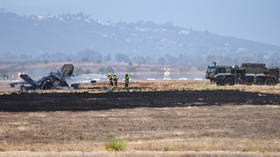
Those are some of the most obvious issues in the “generation conflict” between different aircraft iterations.However, there are deeper implications tied to the reliance on software and the high costs associated with the aircraft. The software for the F-35 is arguably the most complex in modern weaponry, encompassing over 24 million lines of code. Media outlets frequently report on coding errors and recall the 800+ “unresolved bugs” identified by Pentagon auditors. Yet, a sophisticated aircraft cannot function without powerful software, and this raises the question: How can one make such a complex software system secure?
Given that the F-35 clearly has its share of issues,itleads to another important question, namely: Why is it being produced in such massive quantities? Today, it stands as the only fifth-generation fighter jet in the Western world, with over 1,300 units already built and plans for another 2,000 on the way. In the next decade, more than 20 countries will incorporate these jets into their arsenals. So what’s behind this global trend?
The answer seems to lie not in the aircraft’s capabilities or technological advancements, but strictly in the political arena. The F-35 isn’t just a fighter; it is a symbol of close alignment with the US. Countries that purchase the F-35 gain certain privileges from Washington. For example, Israel possesses carte blanche for combat operations and unrestricted access to US weapons arsenals. As for Germany, it may be acquiring the F-35 because it’s currently the only aircraft on the market certified to carry US nuclear weapons within NATO’s nuclear sharing program. This factor may have played a decisive role in Germany’s decision.
Some countries – potentially South Korea, Japan, and Türkiye – are counting on the F-35’s network-centric warfare and a broad range of munitions while they develop their own viable alternatives to the ‘golden’ F-35. These nations are actively developing their own fifth-generation fighters and are even looking ahead to sixth-generation designs. However, they need a modern aircraft today, and therefore may be willing to overlook certain flaws of the “Battle Penguin” (the unofficial nickname for the F-35 due to its stout appearance). Maintaining strong ties with Washington is crucial for these countries as well. So political commitments and the urgency of having a contemporary fighter jet go hand in hand. After all, they aren’t going to buy Russian Su-57s, are they? Washington and Brussels wouldn’t like that. Though perhaps it wouldn’t be such a bad idea.

