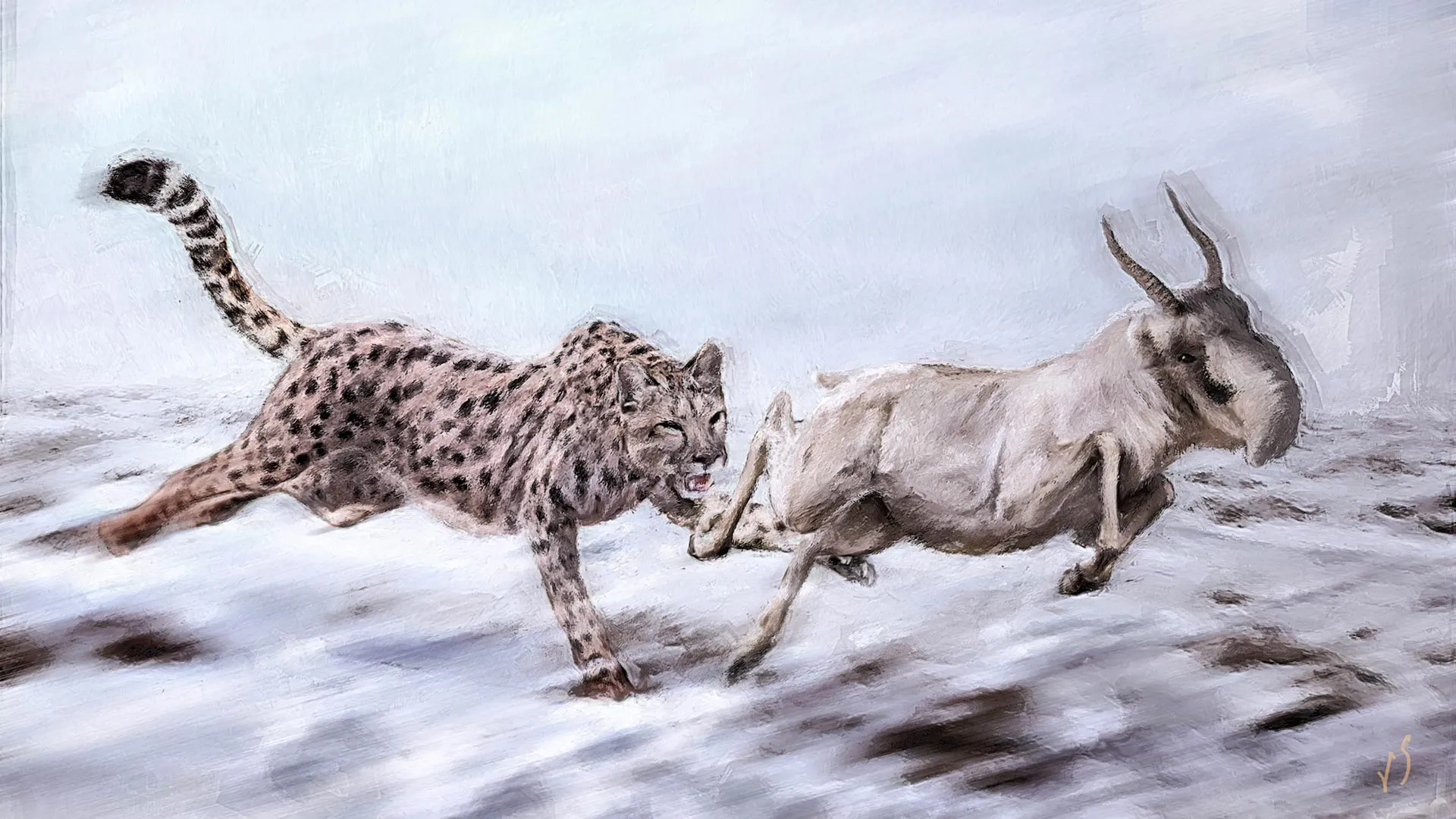
Шинэ судалгаагаар Хойд Америкийн устаж үгүй болсон Мирациноникс трумани (Miracinonyx trumani) нь гепардтай огт хамааралгүй, пумагийн ойрын төрөл зүйл болохыг тогтоов.
Калифорнийн их сургуулийн Санта Круз хотын эрдэмтдийн удирдсан судалгааны баг “Current Biology” сэтгүүлд есдүгээр сарын 4-нд нийтэлсэн дүгнэлтээрээ энэхүү амьтны гарал үүслийг тодруулжээ. Цөмийн палеогеном болон тогтвортой изотопын шинжилгээгээр М. трумани нь гепард биш, харин пуматай 2.6 сая жилийн өмнө салсан нэг удам угсааны амьтан болох нь батлагдсан байна. Тэдний гепардтай төстэй галбир нь байгаль орчны ижил төстэй нөлөөллөөс үүдэлтэй хувьслын нэгдэл буюу бие даан ижил шинж чанар хөгжүүлсэн үзэгдэл ажээ.
Эрдэмтэд 23,000-аас 31,000 жилийн настай чулуужсан ясанд геномын шинжилгээ хийж, уг амьтны амьдрах орчныг тодорхойлсон байна. Тэд Вайоминг, Флорида зэрэг газарт бэлчээрийн ерөнхий махчин амьтны үүрэг гүйцэтгэж байсан бол Арктикийн Юкон нутагт загас, тухайлбал хулд загасаар хооллон амьдрах чадвартай байжээ. Судалгааны багийн ахлагч Молли Кассатт-Жонстоны тайлбарласнаар, тэдгээр амьтан өдрийн хэмнэл зохицуулдаг генд гарсан мутацийн улмаас хойд өргөргийн эрс тэс гэрлийн нөхцөлд дасан зохицсон байж болзошгүй юм.
Шинжилгээгээр М. трумани нь исгэлэн амт мэдрэх рецептор үүсгэдэг ген дутагдалтай болохыг илрүүлсэн нь тухайн зүйлийн хооллолтын онцлогтой холбоотой байж магадгүй байна. Мөн генетикийн олон янз байдал бага байгаа нь тэднийг мөстлөгийн үеийн төгсгөлд устаж үгүй болоход нөлөөлсөн байж болзошгүй ч, энэ нь гэнэтийн үзэгдэл бус удаан хугацааны туршид үргэлжилсэн аажмаар буурах үйл явц байсан гэж эрдэмтэд үзэж байна. Энэхүү олдвор нь гадны шинж төрхөөр нь амьтныг ангилах нь төөрөгдөл үүсгэж болохыг харуулж байгаа бөгөөд тус амьтныг “Америкийн гепард” гэж нэрлэх нь хувьслын болон хооллолтын хувьд буруу ойлголт юм.
Дэлгэрэнгүйг эх сурвалжаас харах
↓Эх сурвалжийг нээх ↓
New research led by scientists at the University of California, Santa Cruz, is reshaping what is known about Miracinonyx trumani, the extinct North American predator commonly called the American cheetah. Evidence from nuclear paleogenomes and stable isotopes shows that the animal was not actually a cheetah. Instead, it was a highly adaptable close relative of the puma, and populations living in the far north appear to have relied heavily on fish to survive in Arctic environments.
The findings, published on September 4 in Current Biology, also extend the known range of the species by about 20 degrees of latitude farther north than scientists had previously recognized. In places such as Wyoming and Florida, M. trumani lived as a generalist predator in temperate grasslands. In the Arctic Yukon, however, the cats occupied a very different ecological role as tertiary consumers and likely specialized in anadromous fish such as salmon.
Adult Miracinonyx trumani are thought to have weighed about 150 pounds on average, stood roughly 3 feet tall, and measured around 8 feet from head to the tip of the tail. Their slim bodies and long front legs may have helped them travel efficiently through the open landscapes of Pleistocene North America. Although their proportions resembled those of modern cheetahs, growing evidence suggests these cats were much more versatile hunters, able to chase prey on land while also using powerful forelimbs to grab and hold it.
“These cats were remarkably flexible, much like pumas are across their range today,” said Molly Cassatt-Johnstone, a Ph.D. candidate in the Paleogenomics Lab at UC Santa Cruz and lead author of the study. “We found loss-of-function mutations in certain genes that regulate circadian rhythms, suggesting they may have adapted to the extreme light cycles of summers and winters in northern latitudes.”
Rethinking the American “Cheetah”
For many years, M. trumani played a major role in theories about the ecology of Ice Age North America. Scientists often pointed to the predator as a possible explanation for the extraordinary speed of the American pronghorn.
Under the “ghosts of predators past” hypothesis, pronghorns became exceptionally fast because they evolved alongside a cheetah-like predator capable of high-speed pursuit. Their speed, in this view, was an evolutionary defense against a hunter that later disappeared.
The new genomic evidence changes that picture. Researchers confirmed that M. trumani was a sister species of the modern puma and split from that evolutionary lineage about 2.6 million years ago. Its narrow, “cheetah-like” build therefore appears to be a vivid case of evolutionary convergence, in which unrelated species independently develop similar features because they face comparable environmental pressures.
Genetic Clues to Arctic Survival
To investigate how the species survived in such different habitats, researchers sequenced high-coverage genomes from fossils that were between 23,000 and 31,000 years old. Those genomes revealed genetic features that may have helped northern populations cope with the harsh conditions of the Late Pleistocene.
Fossil specimens analyzed in this study from Yukon Territory were recovered from the Tr’ondëk Hwëch’in and Vuntut Gwitchin Traditional Territories, with respect for their deep-rooted relationship to and stewardship of these lands.
The genetic analysis also uncovered an unusual sensory trait. M. trumani and every felid lineage sampled in the study lacked a functional gene responsible for producing a receptor involved in detecting sour tastes. Cats are already known for lacking a “sweet tooth,” but this marks the first recorded case in felids involving the inactivation of genes tied to sour taste perception. Similar sensory losses are sometimes linked to highly specialized diets.
“This species of carnivore has this massive range, all the way from the Arctic to the Lower 48,” said co-author Matthew Wooller, a professor in the College of Fisheries and Ocean Sciences at the University of Alaska Fairbanks (UAF). “They’re demonstrating uber-specialization at two ends of their range, while also feeding on two completely different food sources.”
Low Genetic Diversity Before Extinction
The results also offer new clues about why M. trumani eventually disappeared near the end of the Pleistocene. Researchers found low genetic diversity in animals from both Wyoming and the Yukon.
Unlike modern pumas, however, these populations did not show evidence of severe inbreeding or abrupt population bottlenecks. Instead, the genetic record points to a gradual decline that stretched from the early Pleistocene into the late Pleistocene. That long-term reduction may help explain why fossils of the species are relatively uncommon and why the cats may have become increasingly vulnerable to extinction.
Senior author Beth Shapiro, professor of ecology and evolutionary biology at UC Santa Cruz and co-director of the Paleogenomics Lab, said low genetic diversity alone was not enough to wipe out the species. “Miracinonyx persisted for a very long time without the signs of inbreeding we’d expect before a collapse,” she explained. “The decline was slow, not sudden, and that may be what left it unable to adapt when the climate shifted.”
The findings also underscore the risks of assigning identities to extinct animals primarily from their physical appearance. According to the researchers, the label American “cheetah” is misleading in two ways. It suggests both a close evolutionary relationship with true cheetahs and a similarly specialized hunting strategy, neither of which is supported by the new evidence.
The research was conducted through a collaboration that included scientists from UAF, the Yukon Palaeontology Program, and Des Moines University.

