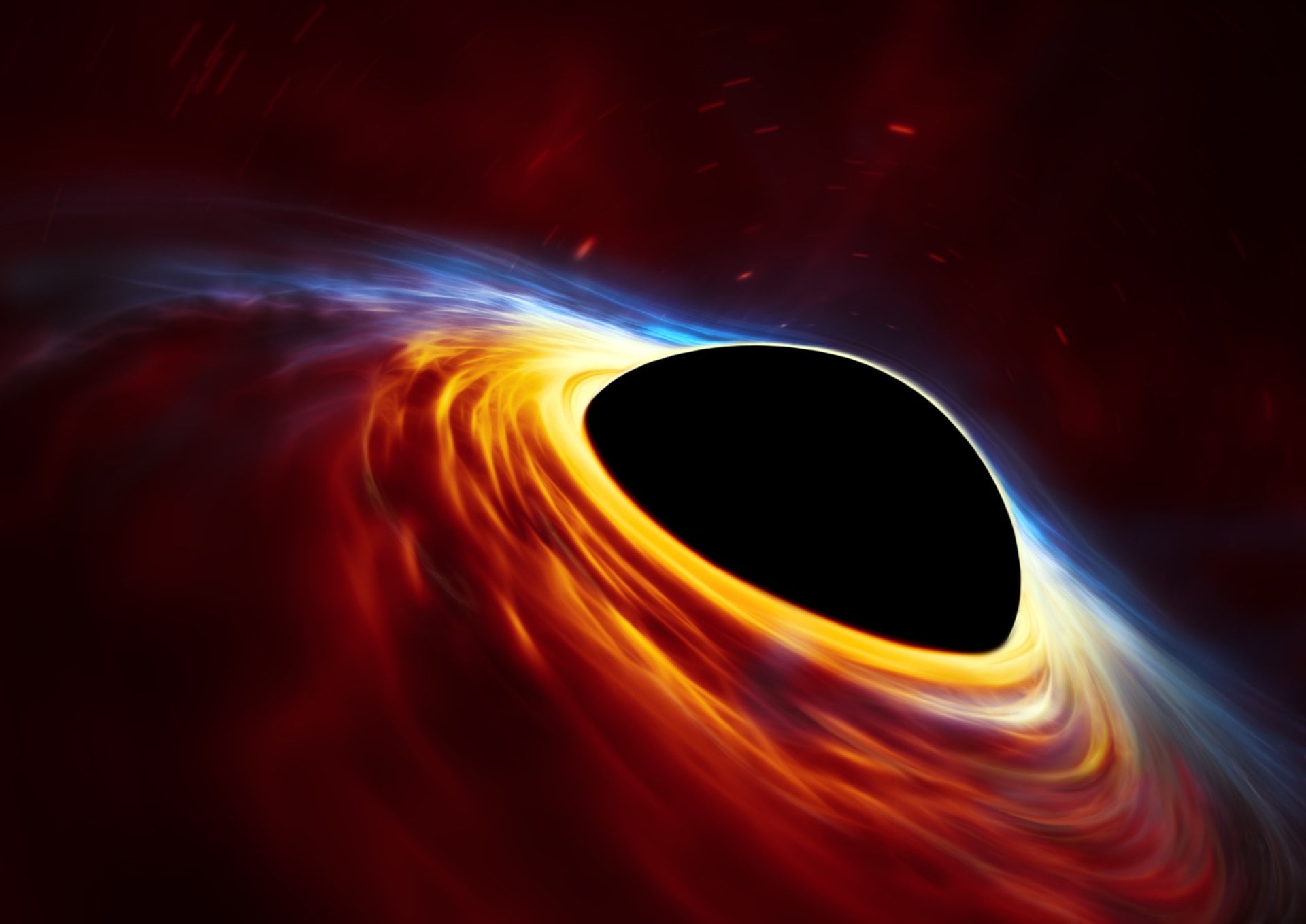
Судлаачид галактикийн хэмжээтэй харьцуулахад ердийнхөөс хавьгүй том масстай хар нүхнүүдийг олсноор тэдгээрийн хувьслын талаарх ойлголтыг сорьж байна.
Ихэнх галактикийн төвд орших супермассив хар нүхнүүд нь галактикийнхаа нийт массын ердөө 0.5 орчим хувийг эзэлдэг бөгөөд энэ нь хоёр тал харилцан хамааралтай хөгждөгийг илтгэдэг. Гэвч “Astronomy & Astrophysics” сэтгүүлд нийтлэгдсэн судалгаагаар, эрдэмтэд eROSITA рентген телескоп болон бусад ажиглалтын хэрэгслийг ашиглан 20,000 гаруй квазарыг судлах явцад энэхүү тогтсон харьцаанаас эрс ялгаатай дүр зургийг илрүүлжээ.
Судалгааны багийнхан нийт найман квазарыг онцолсон бөгөөд тэдгээрийн хар нүх нь галактикийнхаа массын 5 орчим хувийг эзэлж байв. Энэ нь ердийн 200:1 харьцаатай харьцуулахад 20:1 буюу асар их ялгаатай үзүүлэлт юм. Эдгээр хар нүхний зарим нь маш хурдтайгаар бодис сорж байгаа бөгөөд ердөө нэг тэрбум жилийн дотор масс нь хоёр дахин нэмэгдэх төлөвтэй байна.
Онцлог нь эдгээр хар нүх бүхий галактикууд маш бүдэг, оддын тоо цөөн болох нь тогтоогджээ. Хар нүхнүүд дэргэдэх бодисоо эрчимтэй сорж байгаа нь цаашид шинэ од үүсэхэд саад болох уу, эсвэл эсрэгээрээ галактик цаашид илүү олон од үүсгэх үү гэдэг нь одоогоор тодорхойгүй байна.
Энэхүү судалгаа нь хар нүх болон галактикийн хөгжлийн хооронд нарийн төвөгтэй, зарим тохиолдолд харилцан хамаарал нь сул байж болохыг харуулж байна. Хар нүхний өсөлт нь галактикийн өсөлтөөс түр зуур ч болов хурдацтай давах боломжтойг энэхүү нээлт гэрчилж байгаа тул цаашид илүү нарийвчилсан ажиглалт шаардлагатай байна.
Дэлгэрэнгүйг эх сурвалжаас харах
Эх сурвалжийг нээх ↓
Nearly every galaxy has a supermassive black hole. The few that don’t have had theirs ejected during a galactic collision. That’s because galaxies and their black holes have formed hand in hand. There is still some debate as to whether galaxies formed around the seeds of supermassive black holes or the other way around, but there is plenty of evidence to support the idea that the two evolve together. One point of evidence is the fact that supermassive black holes generally have about half a percent of a galaxy’s mass. The mass correlation between black holes and galaxies suggests a strong connection in how they form. In the same way, the correlation between the size of a city and the number of people that live there suggests a connection between structural size and population.
But recently a study has found oversized galactic black holes, which challenges our understanding of their evolution. For this study the team used the eROSITA X-ray telescope and other observations to look at more than 20,000 quasars. Quasars are powered by active supermassive black holes. As the black holes consume nearby material, they emit a tremendous amount of light, such as x-rays and radio. The intensity of a quasar is related to the mass of the black hole, so quasars are a great way to study the distribution of black hole masses. For many quasars, we also know the mass of their galaxies. By observing the region of a quasar in visible and infrared, we can determine the brightness of the galaxy, which is proportional to its mass.
Some eROSITA quasars in this study. The eight exceptional black hole are at the upper left of the figure. Credit: Buchner, et al
When the team compared galaxy masses to the masses of their black holes, eight quasars stood out. Rather than the usual mass ratio of 200 to 1, these systems had a ratio of 20 to 1. In other words, the mass of these black holes makes up about 5% of the galaxy’s mass. Not only that, three of the quasars were among the brightest in the samples, meaning that they are consuming matter at an exceptional pace. The authors estimate these particular black holes could double in mass in just a billion years.
In short, these giant black holes are eating themselves out of house and home.
One distinct feature of these unusual black holes is that their galaxies are particularly faint. This means they don’t contain nearly the number of stars as, say, the Milky Way. It’s possible that over time more stars will form. It’s also possible that the black hole will consume enough material that later stars can’t form. We don’t have enough observations to determine which.
Based on the observations we do have, it seems there is a mechanism where black hole growth can quickly outstrip galaxy growth, at least for a time. So while there is a causal connection between the two broadly, the connection is not always strong. Something subtle and complex happens between galaxies and their black holes, and we’ll need more observations to determine what that is.
Reference: Buchner, Johannes, et al. “A large population of over-massive black hole quasars at z= 0.3-0.8 revealed by eROSITA.” Astronomy & Astrophysics, 713, A11 (2026).

