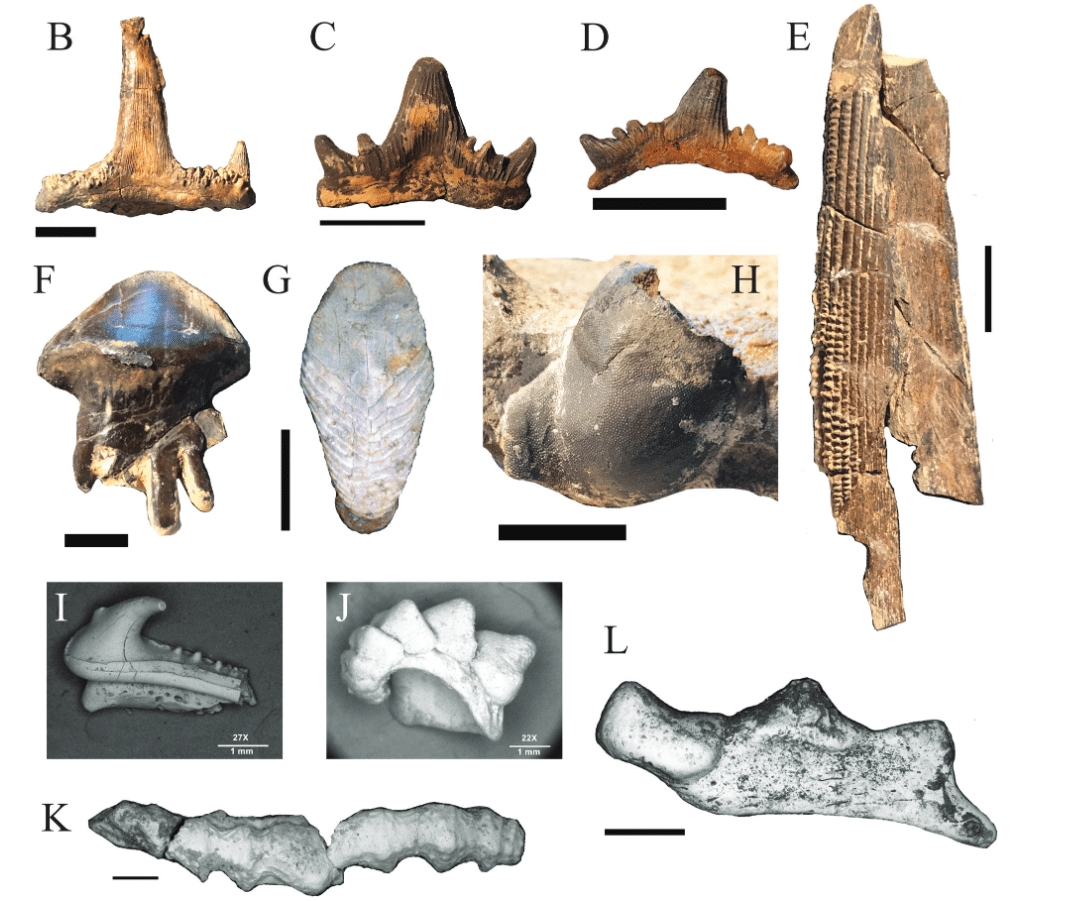
Эрдэмтэд Маммот агуйн үндэсний цэцэрлэгт хүрээлэнгээс шинжлэх ухаанд өмнө нь бүртгэгдээгүй, акулын хоёр шинэ төрөл зүйлийн чулуужсан олдворыг илрүүлжээ.
Маммот агуйн үндэсний цэцэрлэгт хүрээлэн болон Алабама мужийн нутгаас олдсон эдгээр олдворууд нь 340-325 сая жилийн өмнөх үед хамаарах бөгөөд тухайн бүс нутгийг бүрхэж байсан гүехэн тэнгисийн экосистемийн талаар шинэ мэдээлэл өгч байна. Судлаачид Troglocladodus trimblei болон Glikmanius careforum хэмээн нэрлэсэн эдгээр акулуудыг Ctenacanth төрөлд багтахыг тогтоожээ. Эдгээр махчин амьтад нь тухайн үед Хойд Америк, Европ, Африк тивийг холбосон өргөн уудам далайн замд амьдарч байсан аж.
Палеонтологийн судалгаагаар Troglocladodus trimblei нь 3-3.7 метр урттай, орчин үеийн далайн акултай төстэй хэмжээтэй байсныг тогтоов. Харин Glikmanius careforum-ын хувьд эрүүний хэлбэр нь хүчирхэг хазалтыг илтгэж байгаа бөгөөд энэ төрлийн акул нь өмнө нь таамаглаж байснаас 50 сая жилийн өмнө үүссэн байж болзошгүйг судалгааны үр дүн харуулж байна. Эрдэмтэд эдгээр акулыг жижиг загас болон далайн бусад амьтдаар хооллодог байсан гэж таамаглаж байгаа юм.
Parks Stewardship Forum сэтгүүлд нийтлэгдсэн уг судалгаа нь Маммот агуйгаас олдсон 70 гаруй зүйл эртний загасны үлдэгдлийг шинжилсний нэг хэсэг юм. Судалгааны баг үндэсний цэцэрлэгт хүрээлэн, Алабамагийн их сургуулийн геологийн тэнхим болон бусад байгууллагын хамтын ажиллагааны үр дүнд эртний далайн амьтдын бүтэц, амьдралын хэв маягийг илүү тодорхой болгож байна. Энэхүү нээлт нь дэлхийн далай тэнгисийн түүх болон эртний амьтдын хувьслын үйл явцыг ойлгоход чухал ач холбогдолтой юм.
Дэлгэрэнгүйг эх сурвалжаас харах
↓Эх сурвалжийг нээх ↓
Deep beneath Kentucky, scientists have uncovered the remains of two unknown prehistoric sharks that swam through ancient seas more than 325 million years ago. The fossils, discovered during research at Mammoth Cave National Park, are helping researchers piece together what marine life looked like long before today’s oceans existed.
The two new species, named Troglocladodus trimblei and Glikmanius careforum, belonged to a group of extinct sharks called ctenacanths. Their fossils were found in rock layers inside Mammoth Cave and in parts of Alabama, revealing new details about a forgotten underwater world.
Millions of years ago, the area was covered by shallow seas. As underground rivers slowly carved through layers of limestone, they exposed rocks dating back between 340 and 325 million years, preserving traces of creatures that once lived there. Fossils of corals, shell-covered animals, ancient mollusks and many other marine organisms have already been found in these formations.
According to the study published in Parks Stewardship Forum, researchers working on a paleontological survey of Mammoth Cave have identified more than 70 species of ancient fish. Around 90% of them belonged to cartilaginous fish, including sharks and their relatives.
Two Sharks That Swam Through A Long-Lost Sea
More than 325 million years ago, the region that is now Kentucky and Alabama looked completely different. A shallow sea covered the area and formed part of a much larger marine route connecting what would later become eastern North America, Europe and northern Africa.
Researchers identified Troglocladodus trimblei from fossil teeth belonging to both young and adult sharks. These remains were found in the St. Louis and Ste. Genevieve Formations at Mammoth Cave, as well as in the Bangor Formation.
The shark was not small. Scientists estimate that it reached between 3 and 3.7 meters (10 to 12 feet) long, roughly the size of a modern oceanic whitetip shark. Its presence suggests that it was one of the larger predators moving through these ancient coastal waters.
The second species, Glikmanius careforum, was also identified through fossil teeth collected from different rock formations at Mammoth Cave and in Alabama. The research also discovered part of a young shark’s jaws and gills, giving them a closer look at its anatomy.
A Shark Species That Changes What Scientists Knew
One of the most surprising aspects of the research concerns Glikmanius careforum. The fossil evidence suggests that this type of ctenacanth shark appeared much earlier than scientists previously thought.
“The discovery pushes the origins of this ctenacanth shark back over 50 million years earlier than expected,” the paleontologists explained.
The shark measured between 3 and 3.7 meters long, and its jaw shape points to a powerful bite. Researchers believe it was capable of hunting smaller sharks, bony fish and squid-like orthocones that lived in the same environment. The oceans of the Carboniferous period were filled with species that have long disappeared, including predators that played roles similar to some modern marine hunters.

Barclay Trimble, superintendent of Mammoth Cave National Park, highlighted the importance of cooperation behind the research.
“Every new discovery at Mammoth Cave is possible due to collaborations. Our park team is honored to work alongside the National Park Service Paleontology Program and now the University of Alabama Geological Sciences Department whose coordinated efforts have made this latest announcement possible.”
A Lost Ocean Was Hiding Beneath Mammoth Cave
Although millions of visitors know Mammoth Cave for its underground landscapes, the site also preserves a history written in stone. The fossils found throughout the cave show a surprisingly diverse marine environment. Ancient sharks shared these waters with many other creatures, from small invertebrates to larger animals that formed complex food chains.
Finding fossils like Troglocladodus trimblei and Glikmanius careforum proves that places like Mammoth Cave still hold plenty of secrets. Every discovery gives researchers a clearer picture of how ancient creatures lived and how our planet has changed over millions of years.

Enjoyed this article? Subscribe to our free newsletter for engaging stories, exclusive content, and the latest news.

