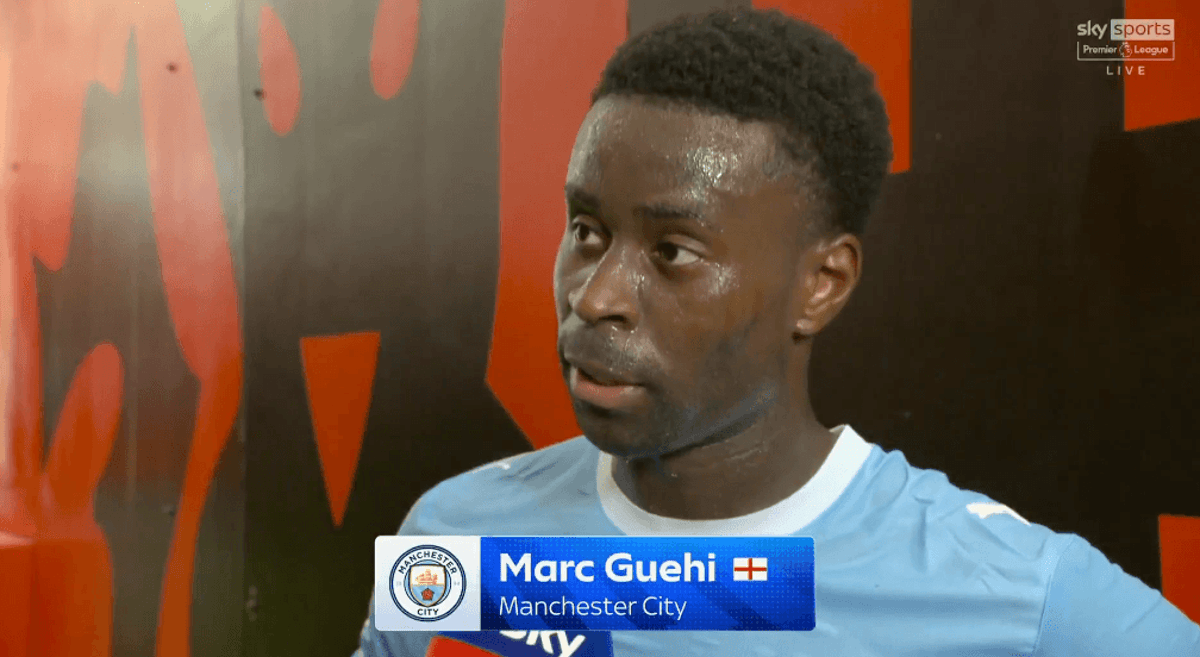
Английн Премьер лигийн багууд тоглолтын завсарлагааны үеэр тоглогч болон дасгалжуулагчдаас товч ярилцлага авах шинэ журмыг хэрэгжүүлж эхэлснээс хойш түүний ач холбогдлын талаар шүүмжлэл өрнөж байна.
Ням гарагт болсон Манчестерын дерби тоглолтын завсарлагааны үеэр Марк Гэхигээс авсан ярилцлага нь энэхүү журмын сул талыг харууллаа. Багийн нөхөр Фил Фоден улаан хуудас авсан явдлын талаарх асуултад тэрээр уг үйл явдлыг хараагүй гэдгээ илэрхийлж, дараагийн хагаст анхаарлаа хандуулах ёстойгоо хэлсэн нь ямар ч ахицтай мэдээлэл өгөөгүй юм. Мөн тус тоглолтын үеэр Манчестер Юнайтед-ын дасгалжуулагч Майкл Карриктай хийсэн ярилцлага ч мөн адил үр дүн муутай өнгөрөв.
Премьер лигийн 2026-27 оны улирлын дүрэмд зааснаар багууд “Сайжруулсан тоглолтын өдрийн хүртээмж” хөтөлбөрийн хүрээнд хувцас солих өрөөнд зураг авалт хийх, эсвэл сэлгээгээр суусан тоглогч болон дасгалжуулагчаас тоглолтын дундуур ярилцлага авах үүрэг хүлээдэг. Гэвч ихэнх тохиолдолд тоглогчид тоглолтын хэмнэлээсээ гарахыг хүсдэггүй тул өгч буй хариултууд нь хэт товч бөгөөд ач холбогдол багатай байдаг.
Дэлхийн аварга шалгаруулах тэмцээний үеэр Энтони Барригийн өгсөн илэн далангүй ярилцлагуудыг эс тооцвол, Премьер лигийн энэхүү шинэ санаачилга нь тоглогчдыг талбай дээр анхаарлаа төвлөрүүлэхэд нь саад болж байна. Үзэгчид болон хэвлэл мэдээллийнхэн ч үүнээс ямар нэгэн үнэ цэнтэй мэдээлэл авч чадахгүй байгаа тул энэхүү журмыг бүр мөсөн цуцлах шаардлагатай гэсэн байр суурь хүчтэй байна.
Дэлгэрэнгүйг эх сурвалжаас харах
↓Эх сурвалжийг нээх ↓
At half-time of the mostly engrossing, controversial Manchester derby on Sunday, Marc Guehi was accosted by a Sky Sports reporter and asked a few questions.
In response to a query about the red card given to his City team-mate Phil Foden, Guehi responded that he hadn’t seen the incident and that “my job is to focus on what’s next”. That was about the extent of the insight offered in his interview, and the interval continued.
This, to be absolutely clear, is not a criticism of Guehi or any similar player in his position. He looked like he would rather be literally anywhere else in the world, but specifically in the away dressing room at Old Trafford, where he was supposed to be.
Top-level footballers often do media interviews under duress at the best of times, even when it’s away from the pressures of a game, but if their blood is pumping from a half of Premier League football and they’ve got another half ahead of them, you can see why they wouldn’t be delighted to have a microphone stuck in their face.
“We’ve reacted well, hopefully it can carry on”
Marc Guehi speaks at half-time about Phil Foden’s red card 🎙️ pic.twitter.com/DfmMXr56lK
— Sky Sports Premier League (@SkySportsPL) September 13, 2026
Half-time interviews with players and managers have been a thing in the Premier League since the start of the 2025-26 season, but there is a question to be asked about whether you can really call them interviews. These are brief snatches of conversation, a handful of clipped and rushed questions that generally receive clipped and rushed answers, because the interviewees have got better things to be doing.
The media speak to players and managers before games. The media speak to players and managers after games. Does the media absolutely need to also speak to players and managers during games?
These interviews were part of a new initiative agreed to by the 20 Premier League clubs before the beginning of last season, described in the competition’s handbook for 2026-27 as “Enhanced Matchday Access”. This also includes filming in the dressing rooms and an “in-match” interview with a player (who has been substituted) or manager. Clubs have to submit to one of these three things at least twice per season. Requests have to be submitted by the host broadcaster at least five days in advance of a game, and the club must then confirm whether they will grant this within two days and then tell the broadcaster exactly what they will be getting at least 24 hours before the match.
The interviews can take place on the touchline, in the tunnel or in the designated interview area, but must not impede or delay the restart of play. Clubs can withdraw their prior agreements if the game isn’t going as planned. The rules state that these interviews “should consist of no more than three questions, all of which should be related to the league match and be positive”.
Interestingly, Sky dipped their bread and used up one of their two season credits for both Manchester clubs yesterday, because they also spoke to United head coach Michael Carrick at the end of half-time. That one was conducted while he was walking along the touchline towards the dugouts, like a lower-speed version of when a news reporter spots an embattled politician moving between car and office building and scurries along beside them, trying to get a few breathless questions in.
But those can be valuable. The ‘enhanced’ access to players and managers in the Premier League has been, for the most part, pointless.
There is a broad frustration, justified to a point, from the football media when it comes to access to players and managers. Things are very different to the traditional big American sports, where reporters are allowed, for an allocated period of time, to roam around the locker room and pretty much ask anyone anything. This results in a saturation point where, quite frequently, journalists talk to coaches so often that they run out of things to ask.
In football, things are much more tightly regulated. For the most part, without exceptional contacts and strong prior relationships, when you submit an interview request to a big Premier League club for a relatively high-profile figure, if you’re really lucky, you’ll get a “no”.
Everything is pretty closely controlled. There are press conferences with managers/head coaches, and players are sporadically made available. Clubs are required to put someone up for interview for the companies that hold broadcast rights before televised games. Post-match “mixed zones” are organised where a player or two will speak to a gaggle of reporters, which can be valuable but also — at international tournaments in particular — are often deeply undignified experiences.
But gone are the days when journalists could show up at a training ground and collar a player for an interview. Again, this is not necessarily intended as a criticism of clubs: some are better than others, and the lower down the pyramid you get, the easier it is to speak to people. But the increased interest in the game generally, but especially the Premier League over the past few decades, means that, if they facilitated every request, the players wouldn’t have time to play football.
So from that perspective, you can understand why any opportunity is leapt upon.
If you tell a journalist they can ask an elite footballer some questions, few will say no. Journalists operate with the view that even the most ostensibly sterile and futile interview opportunity should be taken, on the basis that the subject might say something interesting, or explosive, or entertainingly unwise because, very occasionally, they do.
🗣️ “We had too many central ball losses and that opened us up to counterattacks”
England assistant head coach Anthony Barry speaks with Gabriel Clarke at halftime pic.twitter.com/JR3tRrUqwz
— ITV Football (@itvfootball) June 27, 2026
But not often.
Which isn’t usually the fault of the interviewer, either: when the number of questions, the subject of those questions and even the tone of those questions is proscribed in advance… well, it’s a tough gig.
At least we haven’t reached the point where players are being interviewed on the pitch during play.
That’s been a staple in cricket for years, where a player from the fielding side is nominated to wear an earpiece, into which commentators will sporadically fire slightly inane questions, and they usually reply in a distracted, slightly inane fashion. For which they can’t be blamed, given they’re supposed to be playing top-level sport: during the recent final of the men’s Hundred tournament, one guy made a fielding error while he was being asked which football club he supports.
What are we even gaining from this? The interviews are so short that anything approaching insight is unlikely.
It is a contractual obligation that, in most cases, those involved will fulfil with platitudes. The players are inconvenienced when they should be concentrating on the game, or recovering so they can play the rest of it. The media and the public rarely glean anything of value. It’s an illusion of access that rarely benefits anyone.
They haven’t always been as pointless as Guehi’s on Sunday.
During the World Cup, England assistant coach Anthony Barry’s half-time interviews during their matches were startlingly honest, to the point that you worried whether it was constructive for him to be laying things that bare.
In their opening game, against Croatia, he spoke of “fearful patterns”, broke down where the team were playing badly and lamented how Harry Kane’s early, retaken penalty had not calmed their “nervous energy”. During the third-place play-off against France, Barry was almost in tears, talking about watching an England side playing “with broken hearts” after semi-final defeat by Argentina three days earlier.
But those are the rare exceptions.
For the most part, these interviews are a waste of time that add little value for anyone. It’s time to scrap them.

