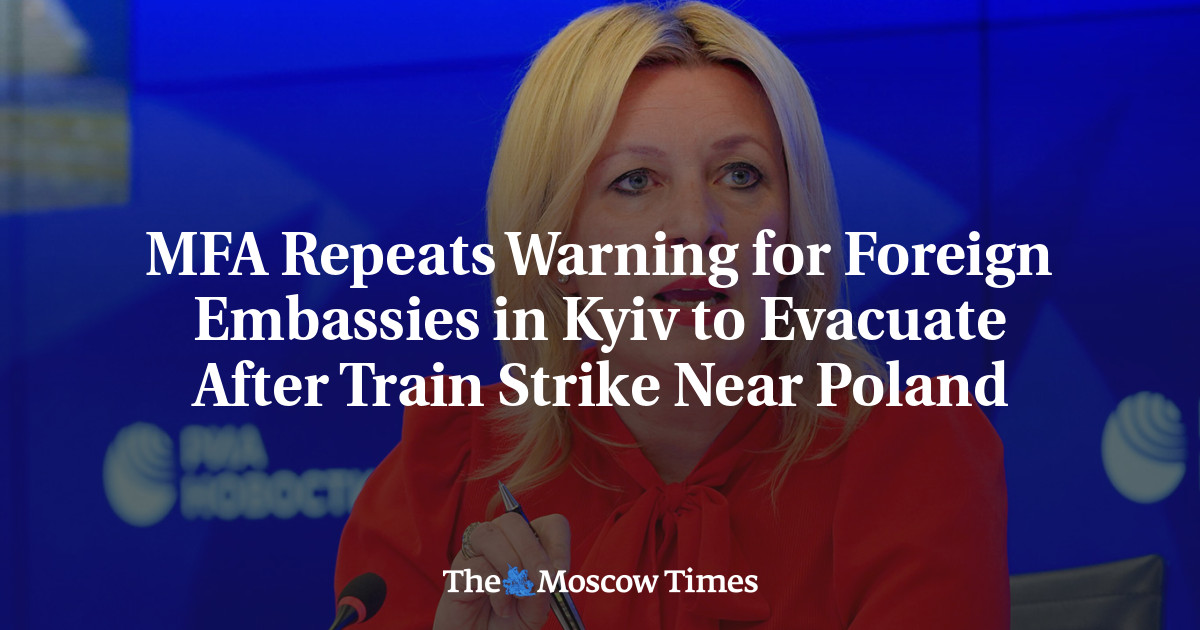
ОХУ-ын Гадаад хэргийн яам Польшийн хил орчимд төмөр замын дэд бүтцэд цохилт өгсний дараа Киев дэх гадаадын дипломат төлөөлөгчийн газруудыг аюулгүй байдлын үүднээс нүүлгэн шилжүүлэхийг дахин уриаллаа.
ОХУ-ын Гадаад хэргийн яамны хэвлэлийн төлөөлөгч Мария Захаровагийн мэдэгдснээр, энэ хавраас эхлэн гаргасан анхааруулга одоо ч хүчинтэй хэвээр байгаа аж. Тэрээр Өрнөдийн улс төрчид болон дипломатуудыг Украйнд нэвтрэхдээ учирч болзошгүй эрсдэлийг бодитойгоор үнэлэхийг сануулжээ. Энэхүү байр сууриа тэрээр ням гарагт Польшийн хилээс хоёр километрийн зайд орших төмөр замын зорчигч тээврийн галт тэргэнд ОХУ-ын зэвсэгт хүчин цохилт өгсөнтэй холбон тайлбарласан байна.
Уг халдлага болохоос хэдхэн минутын өмнө Их Британийн ерөнхий сайд асан Борис Жонсон, Шведийн ерөнхий сайд асан Карл Бильдт нарын багтсан төлөөлөгчид тухайн төмөр замын шугамыг ашиглан зорчсон байжээ. Захарова эдгээр улс төрчдийг өөрийн засгийн газрын өгсөн аюулгүй байдлын зөвлөмжийг үл тоомсорлож байна хэмээн буруутгав.
ОХУ-ын Батлан хамгаалах яамны мэдээлснээр, ням гарагийн цохилтууд нь Европоос Украйн руу цэргийн ачаа тээвэрлэхэд ашигладаг дэд бүтцийг онилсон байна. Украйн улс нь Польштой хиллэдэг хэд хэдэн гарцаар дамжуулан барууны орнуудын цэргийн болон хүмүүнлэгийн тусламжийг хүлээн авдаг бөгөөд ОХУ-ын зүгээс эдгээр тээврийн дэд бүтцийг цэргийн зориулалттай гэж үзэн хууль ёсны бай гэж мэдэгджээ.
Дэлгэрэнгүйг эх сурвалжаас харах
↓Эх сурвалжийг нээх ↓
Russia’s Foreign Ministry on Tuesday once againurgedforeign embassies in Kyiv to evacuate following a Russian strike on a passenger train near the Polish border shortly after European diplomats used the same rail track.
Foreign Ministry spokeswoman Maria Zakharova said the warning, first issuedthis spring, “remains relevant” despite occasional diplomatic requests to grant Western “political tourists” safe passage into Ukraine.
“Western politicians and diplomats should make a sober assessment of the existing risks,” Zakharova said in response to a question about Sunday’s attack on a passenger train around 2 kilometers (1.2 miles) from the Polish border.
The rail track that was attacked had been used minutes earlier by another train carrying a group including former British prime minister Boris Johnson and former Swedish prime minister Carl Bildt.
Zakharova accused the politicians of “blatantly ignoring” the warnings of their own governments against visiting Ukraine.
She argued that Ukrainian railway stations and transportation infrastructure used for military purposes were legitimate targets and accusedPresident Volodymyr Zelensky of treating Western visitors as “human shields.”
Russia’s Defense Ministry said its attacks on Sunday targeted infrastructure used to move military cargo from Europe to Ukraine.
Ukraine operates several border crossings with Poland, through which a significant proportion of the military and humanitarian aid from its Western allies is delivered to the country.
A Message from The Moscow Times:
Dear readers,
We are facing unprecedented challenges. Russia’s Prosecutor General’s Office has designated The Moscow Times as an “undesirable” organization, criminalizing our work and putting our staff at risk of prosecution. This follows our earlier unjust labeling as a “foreign agent.”
These actions are direct attempts to silence independent journalism in Russia. The authorities claim our work “discredits the decisions of the Russian leadership.” We see things differently: we strive to provide accurate, unbiased reporting on Russia.
We, the journalists of The Moscow Times, refuse to be silenced. But to continue our work, we need your help.
Your support, no matter how small, makes a world of difference. If you can, please support us monthly starting from just $2. It’s quick to set up, and every contribution makes a significant impact.
By supporting The Moscow Times, you’re defending open, independent journalism in the face of repression. Thank you for standing with us.
Continue
Not ready to support today?
Remind me later.
×
Remind me next month
Thank you! Your reminder is set.
We will send you one reminder email a month from now. For details on the personal data we collect and how it is used, please see our Privacy Policy.

