Эрдэмтэд 165 сая жилийн тэртээ амьдарч байсан хөхтөн амьтдын үсний өнгө нь сааралдуу хүрэн байсныг судалгаагаар илрүүллээ
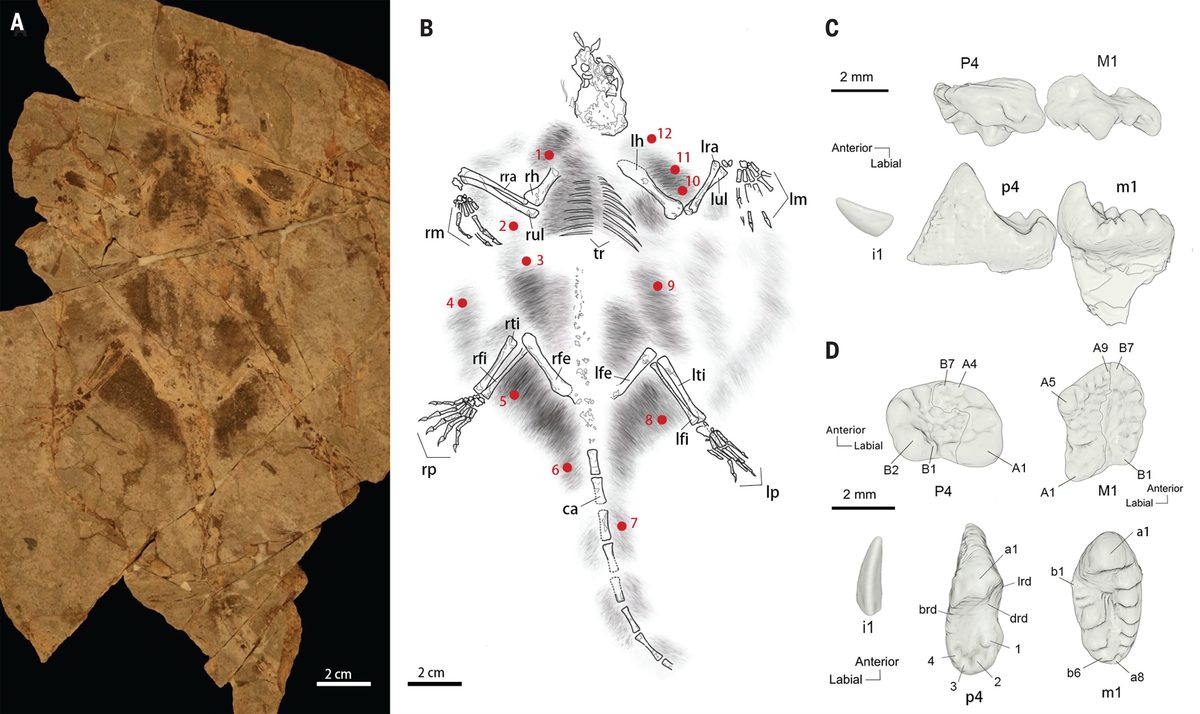
Science сэтгүүлд нийтлэгдсэн шинэ судалгаагаар Юрийн болон Цэрдийн галавын үед амьдарч байсан зургаан төрлийн хөхтөн амьтны үсний өнгийг анх удаа тогтоов. Судлаачид орчин үеийн 116 хөхтөн амьтны меланосом буюу өнгөний пигмент агуулдаг бичил бүтцийг судалж, тэдгээрийн хэлбэр болон өнгө хоорондын хамаарлыг тодорхойлох загвар боловсруулжээ. Энэхүү загвараа Хятадаас олдсон, 165-120 сая жилийн тэртээ амьдарч байсан эртний хөхтөн амьтдын чулуужсан үлдэгдэлд ашигласан байна.
Шинжилгээний үр дүнд эдгээр амьтан бүгд сааралдуу хүрэн өнгөтэй байсан нь тогтоогдсон бөгөөд энэ нь судлаачдын таамаглаж байснаас илүү ижил төстэй үзүүлэлт байв. Гент их сургуулийн судлаач Мэттью Шоукэй эдгээр эртний амьтдын өнгөний хувилбар маш бага байсныг онцолжээ. Тэдний үзэж буйгаар, эдгээр амьтан шөнийн идэвхтэй амьдралтай байсан тул махчин амьтдаас нуугдаж, өөрийгөө хамгаалахын тулд ийм бүдэг өнгөтэй байх нь давуу тал болж байсан аж.
Эртний амьтдын гадаад төрхийг сэргээн босгоход меланосомын бүтэц чухал үүрэг гүйцэтгэдэг бөгөөд энэ нь тэдгээрийн хар-хүрэн эсвэл шар-улаан өнгийн пигмент агуулж байсныг илтгэдэг. Өмнө нь энэ аргыг ихэвчлэн өдтэй үлэг гүрвэлүүдэд ашигладаг байсан бол одоо хөхтөн амьтдын хувьд ч амжилттай хэрэгжүүлж байна. Судлаачид цаашид дэлхийн бусад бүс нутгаас олдсон эртний хөхтөн амьтдын чулуужсан үлдэгдлийг судлахаар төлөвлөж байгаа ч ирээдүйн олдворууд ч мөн адил төстэй өнгөтэй байх магадлалтай гэж үзэж байна.
Дэлгэрэнгүйг эх сурвалжаас харах
↓Эх сурвалжийг нээх ↓
Early mammals may have looked far less colourful than many animals alive today. A new study shows that six mammals from the Jurassic and Cretaceous periods all had greyish-brown fur, a colour pattern that may have helped them stay hidden while living alongside much larger predators.
For years, scientists had very limited ways to understand the appearance of animals that disappeared millions of years ago. Fossils usually preserved bones, but rarely the soft tissues that reveal details such as fur colour. That began to change as researchers discovered fossils containing traces of feathers and fur.
By studying tiny structures called melanosomes, scientists can now investigate the colours of some extinct animals. These structures contain melanin, the pigment responsible for colour, and their shape can provide clues about whether an animal had darker black-brown or yellow-red tones.
The research offers a rare look at mammals that lived during a time when dinosaurs dominated the planet. While some dinosaurs and pterosaurs developed colourful feathers, these early mammals appear to have relied on a much simpler appearance that helped them avoid being noticed.
A Shared Coat Among Early Mammals
Published in Science, the research began by examining melanosomes from the fur of 116 modern mammals. Using this information, they developed a model that could connect the shape of these microscopic structures with different fur colours.
The scientists then applied the model to six fossil mammals discovered in China. These species lived at different points between the Middle Jurassic and Early Cretaceous periods, around 165 million to 120 million years ago. One of the fossils belonged to Arboroharamiya fuscus, a gliding mammal that lived approximately 159 million years ago.
The analysis showed that all six mammals had greyish-brown fur. The result surprised the researchers because the animals were separated by millions of years, yet their colours remained extremely similar.
“We expected them to have pretty subdued colours,” Matthew Shawkey from Ghent University said. “The one thing I was surprised by is how invariant they were. The colours were even more similar than I would have predicted.”
The researchers believe this lack of colour variation was linked to the lifestyle of these mammals. Since they were probably active at night, having a less noticeable appearance may have helped them avoid predators.
Ancient Colours Preserved In Fossils
The study relied on the preservation of melanosomes, microscopic structures that can sometimes survive inside fossilised feathers and fur. Their shape changes depending on the type of melanin they contain, allowing the research team to estimate the colours of animals that lived millions of years ago.
Melanin mainly appears in two forms: black-brown and yellow-red. By comparing fossil melanosomes with those found in living animals, scientists can build a clearer picture of ancient appearances. This technique has already helped researchers study the colours of feathered dinosaurs, but investigations into early mammal fur have been much less common. The new research expands the use of this method beyond birds and reptiles.

The animals examined in the study were thought to have been nocturnal, which made their muted appearance less surprising. A bright coat would have offered little advantage for creatures trying to remain unnoticed. Shawkey explained the pressure these mammals faced during the Mesozoic era.
“They were dinosaur food,” he said. “You didn’t want to be conspicuous.”
Mammals Living In Dinosaur Times
Before the extinction of non-avian dinosaurs 66 million years ago, early mammals lived in environments where avoiding predators was essential. Many were small, lived at night and occupied a very different role from mammals today. The researchers plan to study more early mammal fossils from other parts of the world. However, Shawkey does not expect future discoveries to show major differences from the fossils already examined.
The study suggests that mammal colours became more diverse later, after some groups began spending more time active during the day following the dinosaur extinction. With new lifestyles came new opportunities for different appearances.

Fossils from dinosaurs and marine reptiles sometimes preserve traces of skin, but reconstructing their colours remains much more difficult. Compared with feather and fur studies, fewer attempts have been made to determine the original appearance of these animals.
Enjoyed this article? Subscribe to our free newsletter for engaging stories, exclusive content, and the latest news.

