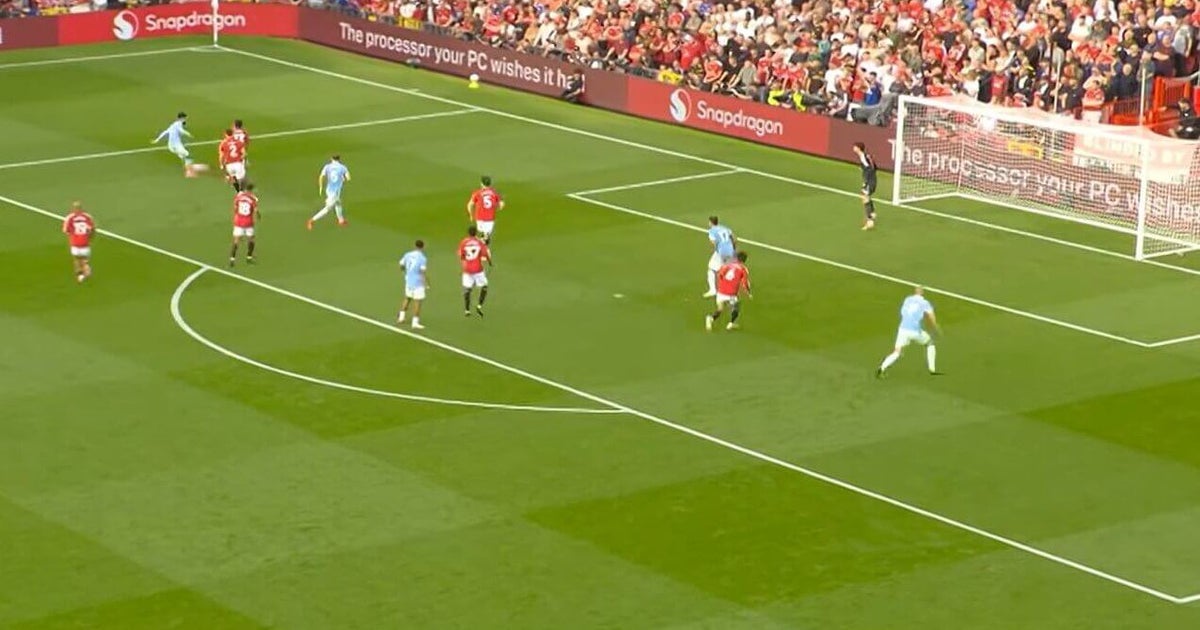
Хөлбөмбөгийн шүүгчийн шийдвэрт камерын өнцгөөс үүдэлтэй оптик хуурмаг үзэгдэл хэрхэн нөлөөлдгийг Манчестер Дербигийн үеэр гарсан оффсайдтай холбоотой маргаан харууллаа.
Манчестер Сити болон Манчестер Юнайтед багуудын тоглолтын үеэр Эрлинг Холандын гоол анх оффсайд гэж тооцогдсон ч ВАР бичлэгийг нягталсны дараа хүчинтэй гэж үзсэн юм. Гэвч тухайн үед камерын өнцгөөс харахад тоглогчийн биеийн байрлал оффсайд мэт харагдаж байсан нь “параллакс” буюу ажиглалтын өнцгөөс шалтгаалан харагдах байдал өөрчлөгдөх шинжлэх ухааны үзэгдэлтэй холбоотой ажээ. Премьер лигийн шүүгч асан Грэм Скоттын тайлбарласнаар, тоглогчид хоорондоо хол зайтай байх үед камерын өнцөг нь оффсайд байрлалыг бодит байдлаас зөрүүтэй харуулах эрсдэлтэй байдаг.
Технологийн дэвшил, ялангуяа хагас автомат оффсайд систем нь шүүгчийн шийдвэр гаргах үйл явцад гар ажиллагааг багасгаж, параллакс үзэгдлийн нөлөөг ихээхэн бууруулсан байна. Хэдийгээр уг систем нь 10,000 хүртэлх цэгийг секундэд хянаж, 30 камер ашиглан миллиметрийн нарийвчлалтай мэдээлэл өгдөг ч бөмбөгөнд хүрсэн мөч болон тоглогчийн байрлалыг тодорхойлоход харагдах орчин хязгаарлагдмал байх үед алдаа гарах магадлал хэвээр байна.
Хөлбөмбөгийн түүхэнд ийм төрлийн оптик хуурмаг үзэгдэл нь оффсайд төдийгүй бөмбөг шугамыг бүрэн давсан эсэхийг тодорхойлоход ч маргаан дагуулсаар ирсэн. Тухайлбал, 2022 оны Дэлхийн аварга шалгаруулах тэмцээний үеэр Япон болон Испанийн тоглолтын үеэр бөмбөг талбайгаас гарсан мэт харагдсан ч технологийн тусламжтайгаар шугам дээр байсныг тогтоосон билээ. Энэ нь хөгжөөн дэмжигчид болон шинжээчдийн хувьд зөвхөн шууд дамжуулалтын камерын өнцөгт найдах нь алдаатай шийдвэр гаргахад хүргэж болохыг сануулж байна.
Дэлгэрэнгүйг эх сурвалжаас харах
↓Эх сурвалжийг нээх ↓
Was that goal actually offside, or did the visual phenomenon known as ‘parallax’ merely give the viewer an optical illusion compared to the actual reality of the real-life images?
That’s not a question that gets asked too often on Super Sunday but Erling Haaland’s Manchester derby match-winner for City against United was the perfect example of how certain camera angles can distort, in a parallactic sense, whether a player looks offside or not.
Parallax may sound like a medieval system of taxing peasants but it’s a pretty simple scientific concept: looking at an object from one viewpoint offers different angles and lines of sight than it does from another viewpoint.
For example, stick your thumb in front of your chops and close your left eye. Then close your right eye instead… the thumb appears to jump sideways, even though it obviously hasn’t moved. That’s parallax, baby. A parallactic rule of thumb, if you will.
Parallax is a constant presence in the way football is played, given that perspectives on distances or angles dictate what a player decides to do with a football — i.e. a midfielder moving a couple of yards to the side of a static opposition player may open up a passing lane that he or she didn’t previously see.
Or, when we’re watching on television, a passing angle might appear blindingly obviously from a high vantage on the halfway line, leading us to yell something like, “Just pass it out wide, you moron!” whereas for said moron, a congested midfield may not give them the line of sight required to see the same gap.
Why Do Some Onside Goals Look Offside?
That same visual geometry might make an offside decision look like a dreadful call to a fan in the stands who is sat 30 yards up the touchline, perhaps causing them to shout something even ruder such as: “Lino, put your f****** flag up and p*** off to Specsavers, you useless t***”, whereas again, in reality, the assistant referee with the far superior view can see the striker was level with the defender.
That wasn’t quite the case on Sunday as Haaland looked offside and was duly flagged offside, only for VAR to overturn the decision (ultimately incorrectly as it turned out, due to Enzo Fernandez quite clearly interfering with play, but that’s not what we’re getting our teeth stuck into here) as Haaland was in fact onside.
When Josko Gvardiol sent over his cross from the left of the box, Haaland looked clearly off, mostly via his hulking Norwegian right knee, which was surely beyond the body of United’s Patrick Dorgu, the defender who was attempting to block the cross.
Haaland appeared to be even more offside from the camera positioned in line with the 18-yard box…

And yet the VAR still image, calculated via motion sensors and multiple camera angles, showed Haaland was in fact fairly comfortably onside.

VAR, as Sunday showed, will interminably be a flawed concept while humans are making the final decisions but semi-automated offside has made parallax obsolete (almost) when it comes to judging offside decisions.
“Before VAR, you were purely going off one person’s view from the touchline,” Graham Scott, a Premier League referee until 2025 and now The Athletic’s refereeing expert, says.
“Pre-VAR, people would have looked at Haaland on Sunday and thought he was probably offside. A minority wouldn’t have been sure but without the perfect camera angle, no one would have been able to win that argument.
“Parallax is particularly pertinent when the two players involved in the offside decision are a long way apart. Think of it as adjudicating who has won a 100-metre race. If the athletes are in lanes four and five, you can probably tell who won, but if you put them in lanes one and eight, it becomes harder.”
There are countless examples in football history where parallax distorts our opinion of whether a player was offside or, before goal-line technology, whether a ball crossed the line.
If we’re being painfully truthful, if there was a camera level with the goal line at Wembley on July 30, 1966, it may have settled a perennial argument as to whether Geoff Hurst’s shot crossed the line after bouncing down off the bar.
If Hurst’s goal was contentious, Pedro Mendes’ halfway line strike for Tottenham Hotspur at Old Trafford in 2005 surely offered a more definitive conclusion…

Not according to the assistant referee, though, who disallowed it. Perhaps it was parallax that distorted his view, perhaps it was because of whose goal the ball dropped in, eh Manchester United fans?
Sometimes, parallax or no parallax, decisions are pretty much unforgivable. Behold, the worst offside decision of all time.
VAR being introduced just under a decade ago undoubtedly helped, given the boffins at Stockley Park (yes, before you head to the comments, that word is used ironically) now had camera angles galore to check offside decisions, but it was by no means a foolproof system, certainly in the early days.
Remember the squiggly lines we were shown after Juan Mata’s goal for Manchester United against Huddersfield Town was ruled out for offside, during the 2017-18 FA Cup trial of VAR?

Hawk-Eye, which provided those VAR images, insisted the crudely-drawn lines weren’t the ones the decision was made from, but still, VAR was very much in its infancy and considered something of a joke (how times have changed).
“I used to draw a lot of squiggly lines!” Scott adds. “They were very unsatisfactory and we didn’t actually know if they were right or wrong.
“We created a 2D line but you needed a 3D reference point, which was being done separately by Hawk-Eye.
“I remember one during Brighton versus Crystal Palace (in February 2023) was contentious as the replay operator ended up dropping his cursor onto the wrong player. The goal (scored by Pervis Estupinan) was disallowed and it should have stood. After that, we got taught how to do it properly.”

Parallax also deceives us when it comes to the ball rolling out of play, with the most famous recent example coming in the 2022 World Cup.
When Japan’s Kaoru Mitoma pulled the ball back for Ao Tanaka to score in their famous 2-1 victory over Spain in Qatar, it looked for all the world as though the ball had rolled out of play.
However, VAR ruled the curvature of the ball was hanging over the line. New cameras were duly introduced for the 2026 World Cup.

Semi-automated offside, again as we saw at the World Cup, has changed the game in terms of both offside decisions and the parallax effect.
While the technology hasn’t made incorrect decisions obsolete, as witnessed on Sunday, it has removed the need for lines to be manually drawn (except when the system fails, like for Manchester City’s disallowed goal in the Carabao Cup semi-finals at Newcastle last season when it took more than five minutes to make a decision).
“It still takes too long and isn’t as quick as we saw at the World Cup (the Premier League uses a different system), but it has eradicated any doubts about a straight offside decision,” Scott says.
“Before semi-automated offsides, there were still dead spots. You’d have a halfway line camera, an 18-yard line camera and a goal-line camera, but if someone was offside 30 yards from goal, none of the cameras would pick it up properly.
“I remember the EFL Cup semi-final between Spurs and Chelsea (in 2019) and Chelsea provided their own camera angle that proved the on-field decision (which ruled Harry Kane was onside for Spurs) was probably wrong.
“They weren’t guessing, but they weren’t far short of a guess.
“Now they claim to have 10,000 surface points per second and 30 cameras capturing footage at 100 frames per second. It’s super accurate with a margin of error of less than a centimetre, if that, but where it can still fail is who has touched the ball and when, especially if the ball is obscured from view.”
Parallax rendered obsolete? Just about. But when you see someone posting a screenshot on social media from a halfway-line camera claiming a decision is or isn’t offside, maybe don’t trust your parallex-based eyes.

