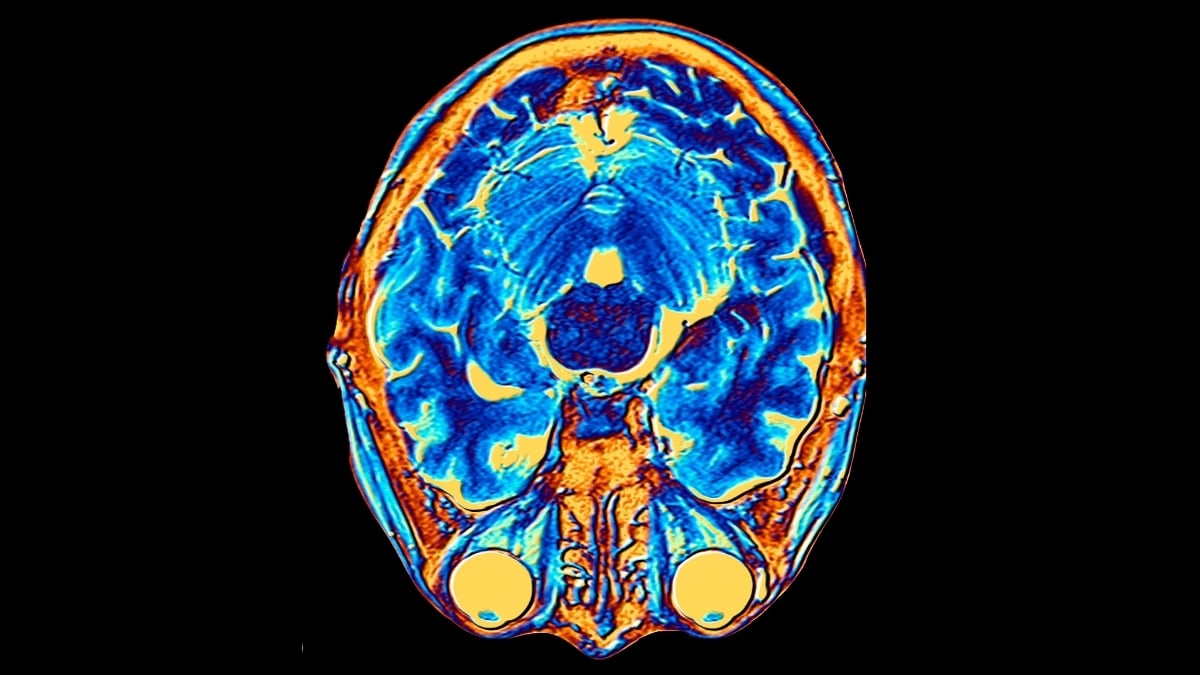
Stanford-ийн судлаачдын баг хүний болон амьтны тархи эх хөврөлийн хөгжлийн эхэн үед хоёр тусдаа мэдрэлийн системээс бүрэлдэн тогтдог болохыг Nature Neuroscience сэтгүүлд нийтэлжээ.
Судалгааны багийн ахлагч Rayyan Jokhai, Carolyn Dundes нар хулганы үр хөврөлийн гаструляци буюу эхэн үеийн хөгжлийг судлах явцдаа тархины бүсүүд нь “прогенитор” хэмээх өөр өөр төрлийн эх хөврөлийн эсүүдээс үүсдэг болохыг илрүүлсэн байна. Тодруулбал, нэг төрлийн эс нь тархины урд болон дунд хэсгийг бүрдүүлдэг бол нөгөө нь тархины арын хэсгийг үүсгэдэг болох нь тогтоогджээ. Эдгээр эсүүд нь тус тусын үүрэгтэй бөгөөд Otx2 болон Gbx2 генүүдийг илэрхийлэхээс гадна хроматины бүтэц нь ч ялгаатай байдаг аж.
Эрдэмтэд хүний олон чадамжит үүдэл эсийг ашиглан хийсэн туршилтаар эдгээр эсийг тодорхой дохио өгөх замаар тархины арын хэсгийн хөдөлгөөний мэдрэлийн эсүүд болгон хөгжүүлж чаджээ. Өмнөх туршилтуудад тархины арын хэсгийн эсийг гарган авахад бэрхшээлтэй байсны учир нь буруу төрлийн эсийг ашиглаж байсантай холбоотой байж болохыг судалгаагаар тайлбарласан байна.
Энэхүү ололт нь тархины үүдэл (brainstem)-ийн өвчнийг судлах, эмчлэх шинэ боломжийг нээж байгаа юм. Судлаач Kyle Loh-ийн тайлбарласнаар, амьтны тархины хөгжил нь 500 сая жилийн тэртээгээс эхлэн хоёр тусдаа системийг нэгтгэн бүрэлдсэн гэсэн таамаглал дэвшүүлж байгаа бөгөөд энэхүү хоёр бүрэлдэхүүн хэсэг нь хоорондоо солигдох боломжгүй юм.
Дэлгэрэнгүйг эх сурвалжаас харах
↓Эх сурвалжийг нээх ↓
The brain is an immeasurably complex organ, and we’re only just scratching the surface of how it even comes into existence.
In a paper published in Nature Neuroscience today, a Stanford-led research team says the brains of humans and other animals are actually made up of two collaborating neural systems that start developing in parallel in an embryo’s earliest moments.
The study suggests that the different brain regions arise from separate kinds of embryonic cells known as progenitors.
They found one progenitor cell type leads to the development of the forebrain and midbrain, while another goes on a totally different path to form the hindbrain.
The scientists made their initial discovery by analyzing the way mouse brains developed from the very early embryonic stage known as gastrulation.
Then, they confirmed that human pluripotent stem cells also follow these same paths, depending on the signals they receive.
In a scientific first, they successfully encouraged the human stem cells to develop into hindbrain motor neurons, complete with electrical activity and proteins characteristic of these cells.
The progenitor cells that create the fore- and midbrain regions produce a specific protein using a gene called Otx2, while the soon-to-be hindbrain cells express a gene called Gbx2.
Both kinds of progenitor cells form the basis for the complete organ that is our brain, but their roles are not interchangeable.
The way their DNA is packaged is fundamentally different too, with totally distinct chromatin ‘landscapes’.
This could explain why experiments to grow the cells that make up the hindbrain in the laboratory have often failed: They may have been using the wrong building blocks, those fated to become forebrain tissue.
“In stem cell biology, people are always fixated with creating the end cell type, like the neuron… But it’s important to begin at the earliest stages of embryonic development,” says developmental biologist Rayyan Jokhai, who is co-first author with his colleague Carolyn Dundes on the paper.
“Our careful attention to that early time point allowed us to find this fundamental split in brain development,” Jokhai adds.
This element of the research will probably accelerate research investigating diseases that affect the brainstem, hitting at our bodies’ most basic functions.

Beyond the medical research implications, the discovery also raises a lot of questions about the evolutionary history of animal brains.
“Our research suggests that evolution took two existing neural systems and pushed them together spatially,” says developmental biologist Kyle Loh, whose lab hosted the research.
“Having the brain as one organ would probably be more efficient, but we rely on this primordial way to make the brain as two separate pieces.”
“I was surprised at our findings because the word ‘brain’ implies a contiguous organ that likely has a singular origin,” Jokhai says.
“But even 500 million years ago, there were these separate neural systems, which now almost operate as one, which is very cool.”
Those statements need a bit of extra context: Loh and Jokhai don’t mean that the neural systems were necessarily two separate organs to start with.
What they are describing is a bit of evolutionary inference, based on how the brains of modern animals develop in gastrulation.
The researchers found this composite brain system (with the two progenitor cell types co-operating to form a complete organ) was present in the gastrulation stage of modern mouse, macaque, chicken, zebrafish, and acorn worm embryos.
All of these animals share a common ancestor in the evolutionary tree of life, and scientists estimate that they all diverged from that singular node around 550 million years ago.
Related: Scientists Grew Human Brain Cells Inside Mice – And They Wired Into The Mouse Nervous System
The study suggests animal brains – including our own – have been following this two-part blueprint for hundreds of millions of years.
But the evidence so far cannot tell us whether those two parts actually evolved independently: that’s a question for future research.
The research was published in Nature Neuroscience.
This article was fact-checked by Peter Dockrill and edited by Peter Dockrill. While we pride ourselves on our process, we are only human. If you spot a mistake, please let us know.

