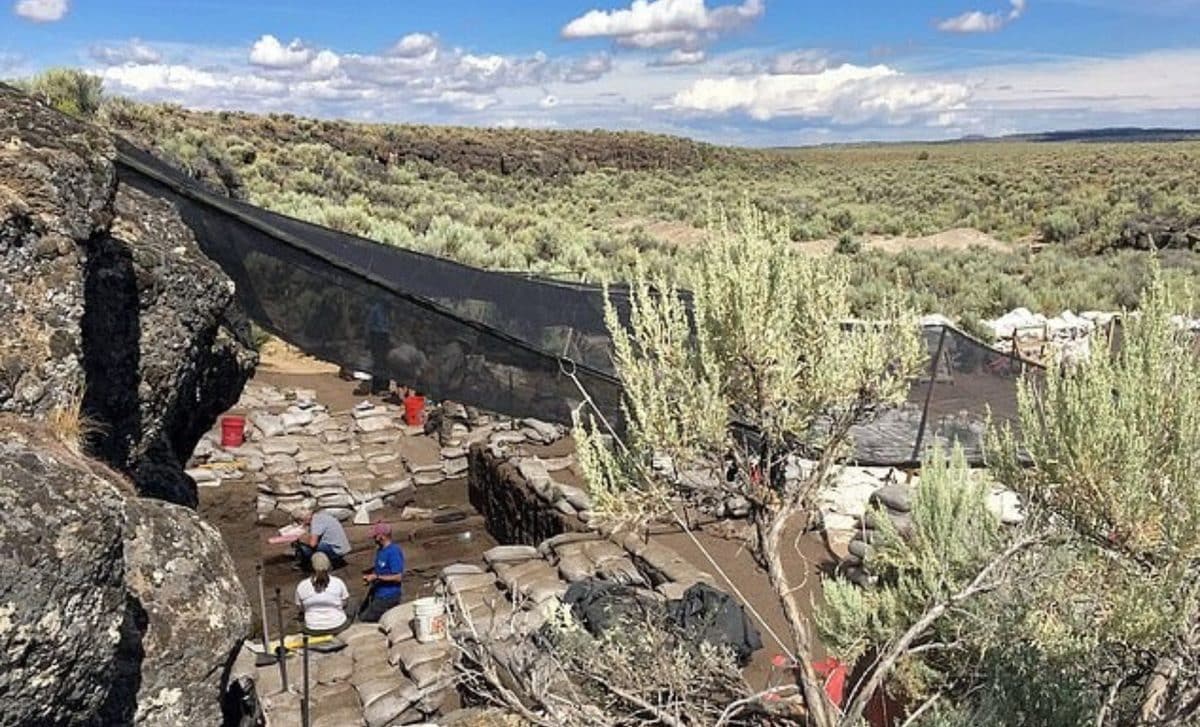
Орегон муж дахь “Rimrock Draw” хадны хоргодох байрнаас олдсон чулуун зэвсгүүд нь хүн төрөлхтөн тус тивд 18,250 жилийн өмнө амьдарч байсныг илтгэж байна.
Орегоны их сургуулийн судлаачид “Rimrock Draw” хадны хоргодох байранд олон жилийн турш малтлага хийсний үр дүнд галт уулын үнсэн давхаргын доороос хагас үнэт чулуу болох улбар шар өнгийн агатаар хийсэн хоёр ширхэг чулуун зэвсэг илрүүлжээ. Эдгээр олдвор нь Сент-Хеленс галт уулын 15,000 жилийн өмнөх дэлбэрэлтийн үнсэн давхаргын доороос олдсон бөгөөд зэвсгийн нэгэнд нь бизоны цусны ул мөр үлдсэн нь тухайн үеийн хүмүүс ан агнах эсвэл боловсруулах ажилд ашиглаж байсныг гэрчилж байна. Мөн уг зэвсгүүд нь нүүрстөрөгчийн шинжилгээгээр 18,250 жилийн настай гэж тогтоогдсон устаж үгүй болсон тэмээ, бизоны шүдний хэлтэрхийнүүдийн доод давхаргаас олдсон нь хүн амьдарч байсан хугацааг улам эрт үед хамааруулж байна.
Энэхүү судалгаа нь эртний хүмүүс Азиас Хойд Америк руу 13,000 жилийн өмнө мөсгүй коридороор дамжин ирсэн гэх түгээмэл онолтой зөрчилдөж байна. Орегон мужийн бусад хэсгээс олдсон 12,000 жилийн настай хувцас, гутлын эд анги зэрэг 55 олдвортой хамт авч үзвэл, эртний хүмүүс Номхон далайн эргээр дамжин илүү эрт нүүдэллэж ирсэн байх магадлалтай гэж судлаачид үзэж байна. Орегон мужийн их сургуулийн антропологич Дэвид Льюисийн тэмдэглэснээр, тухайн бүс нутгийн уугуул иргэдийн аман түүхэнд дурдагддаг аварга амьтад болон геологийн томоохон үйл явдлуудын тухай домог нь эдгээр олдворын цаг хугацаатай давхцаж байгаа нь анхаарал татаж байна.
Гэсэн хэдий ч энэхүү судалгааны үр дүн нь хараахан эрдэм шинжилгээний хянан магадлагаанд ороогүй байгаа тул шинжлэх ухааны нийгэмлэгээс нягт нямбай шалгах шаардлагатай гэж мэргэжилтнүүд анхааруулж байна. Газрын менежментийн товчоо (BLM)-ны тэргүүлэх археологич Стан Макдоналдын үзэж байгаагаар, эдгээр олдвор нь маш сонирхолтой боловч аливаа эртний олдворын талаарх нотолгоог маргаангүй баримтжуулах нь чухал юм. Цаашид энэхүү олдворууд нь Хойд Америкийн анхны оршин суугчдын нүүдлийн түүх болон тухайн үеийн хүмүүсийн амьдралын хэв маягийг дахин эргэцүүлэхэд чухал нөлөө үзүүлэх боломжтой байна.
Дэлгэрэнгүйг эх сурвалжаас харах
↓Эх сурвалжийг нээх ↓
A cluster of artifacts unearthed beneath layers of volcanic ash in a remote Oregon rock shelter suggests humans may have been living in North America nearly 18,250 years ago, thousands of years earlier than the timeline long accepted by mainstream archaeology. If the findings hold up, the site known as Rimrock Draw would rank among the oldest confirmed traces of human life on the continent.
The discovery adds fresh weight to a debate that has simmered for decades: when, and how, did the first people actually reach the Americas? For years, the dominant theory held that early humans crossed into the continent via an ice-free corridor from Asia around 13,000 years ago. But a growing body of evidence, including this latest find, points instead toward an earlier migration along the Pacific coastline, well before that inland route would have been passable.
Researchers from the University of Oregon have been excavating the shelter for years as part of an ongoing field school, and the results, while not yet peer-reviewed, are already reshaping conversations about the peopling of North America.
Artifacts Buried Beneath Ancient Ash
At the heart of the discovery are two finely crafted stone tools made of orange agate, a form of quartz, found buried beneath a layer of ash from a Mount St. Helens eruption more than 15,000 years ago. One of the tools still bore traces of bison blood, an indication that it had likely been used to butcher or process an animal before being discarded at the site.
The tools were found beneath tooth fragments from extinct camels and bison, remains that were themselves radiocarbon-dated to around 18,250 years old. Because the tools sat in an even deeper layer, researchers concluded they had to predate those remains, pushing the likely age of human activity at the site back further still. As archaeologist Patrick O’Grady, who leads the field school at Rimrock Draw, put it in press release from the Bureau of Land Management (BLM):
“The identification of 15,000-year-old volcanic ash was a shock. Then [data from Tom Stafford of Stafford Research] 18,000-year-old dates on the enamel, with stone tools and flakes below, were even more startling.”
Echoes in Tribal Oral Histories
The dating doesn’t just challenge scientific timelines. It also lines up, according to David Lewis, a professor of anthropology at Oregon State University who took part in the research, with stories long told by tribal nations in the region. Many of these oral histories describe witnessing major geological upheavals, including the Missoula floods, a series of catastrophic events that reshaped the landscape for tribes between roughly 18,000 and 15,000 years ago.
Lewis also pointed to oral traditions describing encounters with giant animals and “monsters on the land,” suggesting that the evidence from Rimrock Draw of interaction with megafauna may explain how such creatures became woven into origin stories passed down long before written history began.

Part of a Broader Pattern of Discoveries
Earlier this year, a separate discovery elsewhere in Oregon uncovered stitched pieces of animal hide dating back roughly 12,000 years, found preserved in dry caves in the state’s northern Great Basin region. Archaeologist Richard Rosencrance of the University of Nevada, who led that research said that his team recovered 55 crafted items spanning 15 different plant and animal types, some of which are believed to be early clothing or footwear.
He believes these cave artifacts close important gaps in the historical record, revealing that Ice Age communities in North America were far more resourceful than previously believed. Dr. Stan McDonald, the BLM’s lead archaeologist for Oregon and Washington, said.
“While a handful of archaeological sites older than Clovis cultures have been discovered in the past few decades, there is still considerable scrutiny of any finding that appears older,” adding that, “with the recent findings at Rimrock Draw Shelter, we want to assemble indisputable evidence because these claims will be scrutinized by researchers. That said, the early discoveries are tantalizing.”

Enjoyed this article? Subscribe to our free newsletter for engaging stories, exclusive content, and the latest news.

