Эрдэмтдийн боловсруулсан шинэ загварчлалаар дэлхийн агаар мандлын найрлага өөрчлөгдөж, нарийн бүтэцтэй амьд биетүүд оршин тогтнох нөхцөл хязгаарлагдах төлөвтэй байна.
Тохо их сургуулийн туслах профессор Казуми Озаки болон Жоржиа мужийн технологийн их сургуулийн дэд профессор Кристофер Рейнхард нараар ахлуулсан судалгааны баг дэлхийн уур амьсгал, биологийн үйл ажиллагаа болон агаар мандлын химийн харилцан үйлчлэлийг харуулсан компьютерын загварыг боловсруулжээ. Тэд 400,000 гаруй удаагийн симуляци явуулсны дүнд дэлхийн хүчилтөрөгчөөр баялаг агаар мандал ойролцоогоор нэг тэрбум жилийн турш тогтвортой байх боломжтой гэж дүгнэв. Энэ хугацааны дараа дэлхий даяар хүчилтөрөгч хомсдох үйл явц эрчимтэй явагдаж, агаар мандал нь хүчилтөрөгчөөр баяжихаас өмнөх эртний үеийн нөхцөл байдал руу эргэн орох магадлалтай байна.
Судлаачдын үзэж буйгаар энэхүү өөрчлөлт нь нарны гэрэлтүүлэг нэмэгдэж, нүүрстөрөгчийн давхар ислийн хэмжээ буурснаар фотосинтезийн үйл явц хязгаарлагдахтай холбоотой юм. Хүчилтөрөгч хомсдсоны дараа агаар мандалд метан хий ихсэж, озоны давхарга үгүй болох тул дэлхий дээрх амьдрал үндсэндээ хүчилтөрөгч шаарддаггүй анаэроб биетүүдээр солигдох төлөвтэй байна. Энэхүү үйл явц нь гэнэтийн гамшиг бус, харин олон зуун сая жилийн турш үргэлжлэх дэлхийн геологийн хувьслын аажим өөрчлөлт байх болно.
Энэхүү судалгааны үр дүн нь экзопланет буюу нарны аймгийн гаднах гараг дээрх амьдралыг хайх ажилд шинэ өнцөг нээж байна. Одоогийн байдлаар эрдэмтэд хүчилтөрөгчийг амьдралын гол шинж тэмдэг буюу биосигнатур гэж үздэг ч, амьдралтай гараг бүр хүчилтөрөгчөөр баялаг агаар мандалтай байх албагүй болохыг судалгаа харуулж байна. Иймд эрдэмтэд хүчилтөрөгч багатай орчинд амьдрал оршин тогтнох боломжтой эсэхийг судлах нь харь гарагийн амьдралыг олоход чухал ач холбогдолтой хэмээн онцолжээ.
Дэлгэрэнгүйг эх сурвалжаас харах
↓Эх сурвалжийг нээх ↓
A new scientific model suggests that Earth’s oxygen-rich atmosphere may last for around 1 billion more years before a dramatic transformation removes the conditions that support complex life. The study, published in Nature Geoscience, provides a new timeline for the distant future of Earth’s atmosphere and changes how scientists view the search for life beyond our planet.
A Computer Model Looks Billions Of Years Into Earth’s Future
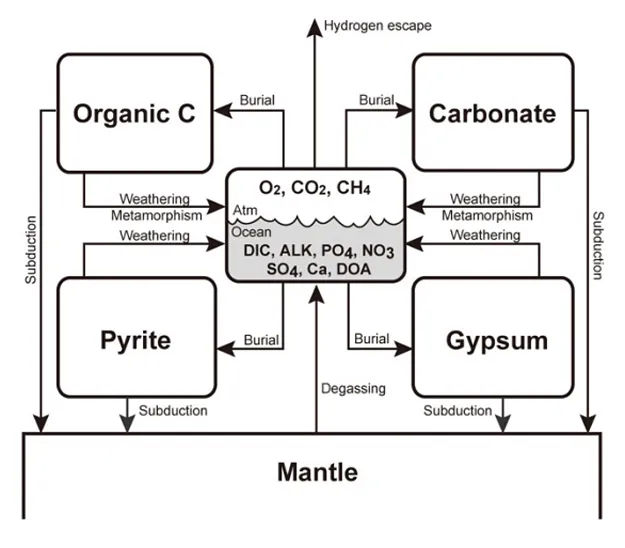
Scientists have long studied how Earth’s atmosphere will evolve as the planet changes over geological timescales. A team led by Kazumi Ozaki, an assistant professor at Toho University, and Christopher Reinhard, an associate professor at the Georgia Institute of Technology, developed a computer model designed to simulate the interaction between climate systems, biological activity, and atmospheric chemistry.
The researchers used the model to explore how different factors could influence the future availability of oxygen on Earth.
Rather than relying on a single prediction, the team ran the simulation more than 400,000 times, adjusting different variables to examine a wide range of possible outcomes.
The results indicated that Earth’s oxygen-rich atmosphere has a limited lifespan and is expected to remain stable for approximately one billion years.
After that period, the planet could experience a rapid process known as deoxygenation, causing atmospheric oxygen levels to fall sharply.
The future atmosphere would resemble conditions found on early Earth before oxygen became abundant.
This transition would represent one of the largest changes in Earth’s environmental history.
The findings provide a new perspective on how planetary atmospheres evolve and how life interacts with global chemical cycles.
The researchers’ work also highlights that conditions supporting complex organisms are not permanent features of a planet.
Their results add another dimension to the study of Earth’s long-term habitability.
Credit: Nature Geoscience
The Ancient Event That Created Earth’s Oxygen-Rich World
Today’s oxygen-filled atmosphere is the result of a major transformation that began billions of years ago during the Great Oxidation Event.
Around 2.5 billion years ago, oxygen levels in Earth’s atmosphere and oceans started increasing significantly, changing the planet’s chemistry and opening new possibilities for biological evolution.
Scientists believe that microscopic organisms, particularly oxygen-producing bacteria, played a major role in this atmospheric shift.
Before this transformation, Earth’s environment was dominated by organisms that could survive without oxygen.
The rise of oxygen eventually allowed more complex forms of life to develop and expand.
The atmosphere humans depend on today is therefore linked to a specific period in Earth’s geological history rather than being a permanent planetary condition.
According to the research published in Nature Geoscience, the oxygen-rich era may represent only around 20 to 30 percent of Earth’s total history.
The study examines how future geological and biological changes could reverse some of the processes that created an oxygen-rich planet.
The researchers focused on the balance between carbon cycles, solar evolution, and biological activity.
Their findings show that atmospheric composition can change dramatically over the lifespan of a planet.
Why Earth’s Oxygen Could Eventually Disappear
The researchers examined previous theories about Earth’s distant future, including the gradual increase in the Sun’s brightness and changes in the global carbonate-silicate geochemical cycle.
“For many years, the lifespan of Earth’s biosphere has been discussed based on scientific knowledge about the steady brightening of the Sun and global carbonate-silicate geochemical cycle,” says Ozaki.
The study explains that increasing solar energy will influence Earth’s climate over extremely long timescales, affecting the availability of carbon dioxide needed for photosynthesis.
“One of the corollaries of such a theoretical framework is a continuous decline in atmospheric CO2 levels and global warming on geological timescales.”
“It’s generally thought Earth’s biosphere will come to an end in 2 billion years due to the combination of overheating and CO2 scarcity for photosynthesis.”
The researchers explored how these processes could also affect atmospheric oxygen levels.
“If true, one can expect atmospheric O2 levels will also eventually decrease in the distant future. However, it remains unclear exactly when and how this will occur.”
The new simulations provide a more detailed estimate of when that atmospheric decline could happen.
The results suggest that oxygen loss could occur earlier than some previous models of Earth’s biological future implied.
This shift would not happen because of a sudden disaster, but through slow planetary changes unfolding over hundreds of millions of years.

Image credit: stihii/Shutterstock
A Future Earth Dominated By Different Forms Of Life
After the oxygen-rich period ends, Earth’s atmosphere could become very different from the environment that supports humans and other complex organisms today.
The model predicts a rapid atmospheric transition where oxygen levels fall and other gases become more dominant.
“The atmosphere after the great deoxygenation is characterised by an elevated methane, low-levels of CO2, and no ozone layer. The Earth system will probably be a world of anaerobic life forms,” says Ozaki.
Such an environment would resemble aspects of early Earth, when oxygen-dependent organisms had not yet become widespread.
Life may continue to exist, but it would likely consist mainly of organisms capable of surviving without oxygen.
The disappearance of the ozone layer would also alter the planet’s surface conditions by changing how radiation interacts with the atmosphere.
The findings do not suggest that Earth will become lifeless after oxygen loss, but that the dominant forms of life would be radically different.
The research demonstrates that planetary habitability depends on a constantly changing balance of environmental factors.
Earth’s history shows that life can adapt to major atmospheric transformations, even though those changes reshape the entire biosphere.
Understanding these processes helps scientists study the possible futures of planets throughout the universe.
What The Study Means For The Search For Alien Life
The research also has implications beyond Earth because oxygen is one of the main chemical signals scientists examine when searching for life on exoplanets.
Atmospheric oxygen is considered a potential biosignature because biological processes can produce detectable amounts of oxygen under certain conditions.
The study suggests that a planet with life may not always display oxygen in its atmosphere.
If distant civilizations observed Earth at a different point in its history, they might not detect the oxygen signature that is visible today.
The same challenge applies to astronomers searching for life around other stars.
A planet could contain living organisms while lacking the atmospheric conditions scientists traditionally associate with biology.
The researchers suggest that future studies should consider a wider range of possible biosignatures, including indicators linked to oxygen-poor environments.
This approach could expand the number of worlds that scientists can evaluate in the search for extraterrestrial life.
Earth’s atmospheric evolution provides a natural example of how a living planet can move through different chemical phases.
The new research shows that finding life elsewhere may depend on understanding not only where planets are, but also where they are in their own long-term history.
Enjoyed this article? Subscribe to our free newsletter for engaging stories, exclusive content, and the latest news.

