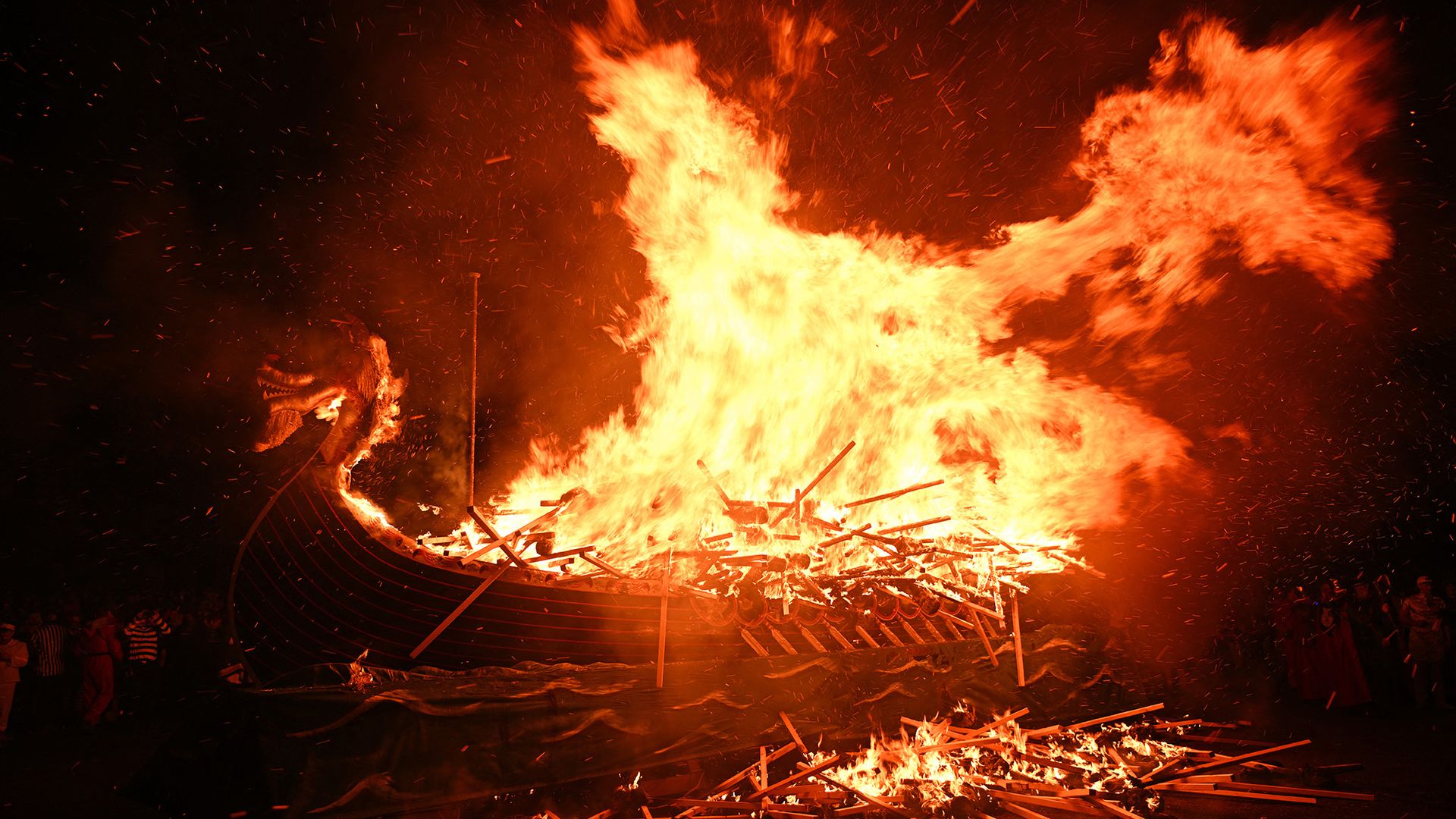
Археологийн судалгаагаар Викингүүд нас барсан хүнээ завьтай нь далайд тавьж, галт сумаар харван шатаадаг байсан гэх түгээмэл ойлголтыг батлах баримт олдоогүй байна.
Археологичдын үзэж буйгаар, кино урлагт гардаг энэхүү дүр зураг нь түүхэн бодит үйл явдал гэхээсээ илүүтэй орчин үеийн уран сайхны төсөөлөл юм. Честерийн их сургуулийн археологийн профессор Ховард Уильямс болон Викториягийн их сургуулийн антропологич Эрин Макгуайр нарын тэмдэглэснээр, ийм төрлийн оршуулгын үйл ажиллагаа явуулсан гэх археологийн ул мөр огт байхгүй аж. Хэдийгээр Викингүүд нас барагсдаа чандарлах уламжлалтай байсан ч, галт сумаар завь шатаах нь практик талаасаа ч боломжгүй, аюултай үйлдэл хэмээн судлаачид дүгнэжээ.
Түүхийн эх сурвалжуудын хувьд, 10-р зууны араб аялагч Ахмад ибн Фадлан Викингүүдийн оршуулгын ёслолын талаар бичиж үлдээхдээ, тэд завьтай хүнээ шатаасан тухай дурдсан байдаг. Гэвч энэ нь далайд биш, харин хуурай газарт болсон үйл явдал бөгөөд ямар нэгэн галт сум ашиглаагүй, харин гашуудлын тэргүүн нь өөрөө гал тавьсан гэж тэмдэглэгджээ. “Беовульф” зэрэг эртний уран зохиолын бүтээлүүдэд завьтай оршуулгын тухай гардаг ч, эдгээр нь ихэвчлэн домог зүйн шинжтэй байдаг.
Германы Хайтабу Викингүүдийн музейн археологийн хэлтсийн дарга Маттиас Топлакын үзэж буйгаар, завь шатаахын тулд хэдэн цагийн турш өндөр температурт шатаах шаардлагатай бөгөөд тэнгист үүнийг хэрэгжүүлэх нь техникийн хувьд бүтэшгүй юм. Судлаачид энэхүү домог нь 1958 онд бүтээгдсэн “The Vikings” киноноос эхлэлтэй байх магадлалтай гэж үзэж байна. Энэ нь тухайн үеийн хүмүүсийн үхэл, нэр төр, хувь тавилангийн талаарх төсөөллийг илэрхийлснээс бус, Викингүүдийн бодит ёс заншлыг харуулаагүй ажээ.
Дэлгэрэнгүйг эх сурвалжаас харах
↓Эх сурвалжийг нээх ↓
In movies and TV shows, it’s a popular motif: A dead Viking is placed on a boat, and it drifts slowly out to sea; from land, an archer shoots a fiery arrow that falls onto the boat and engulfs it in flames.
It’s been seen in the 1958 movie “The Vikings,” the History Channel show “Vikings” and fantasy series such as “Game of Thrones.” But did the Vikings actually do this?
To find out, we asked experts whether there is any archaeological or historical evidence to support the idea.
Archaeological evidence
Sign up for our weekly Life’s Little Mysteries newsletter to get the latest mysteries before they appear online.
Our sources noted that a burial like this would leave little archaeological evidence. Such “practices would leave little trace, and they are unverified by archaeological sources,” Howard Williams, an archaeology professor at the University of Chester in the U.K., said in an email.
Erin McGuire, an anthropology professor at the University of Victoria in Canada, also noted this limitation. From “an archaeological standpoint, we have no evidence for this very common motif,” McGuire told Live Science in an email, adding that it would be hard to differentiate a fire set by a fire arrow from a regular fire. Additionally, shipwrecks “with human remains are very, very rare globally,” McGuire added. “It takes particular kinds of environmental conditions for them to be preserved and I know of none from the Viking Age.”
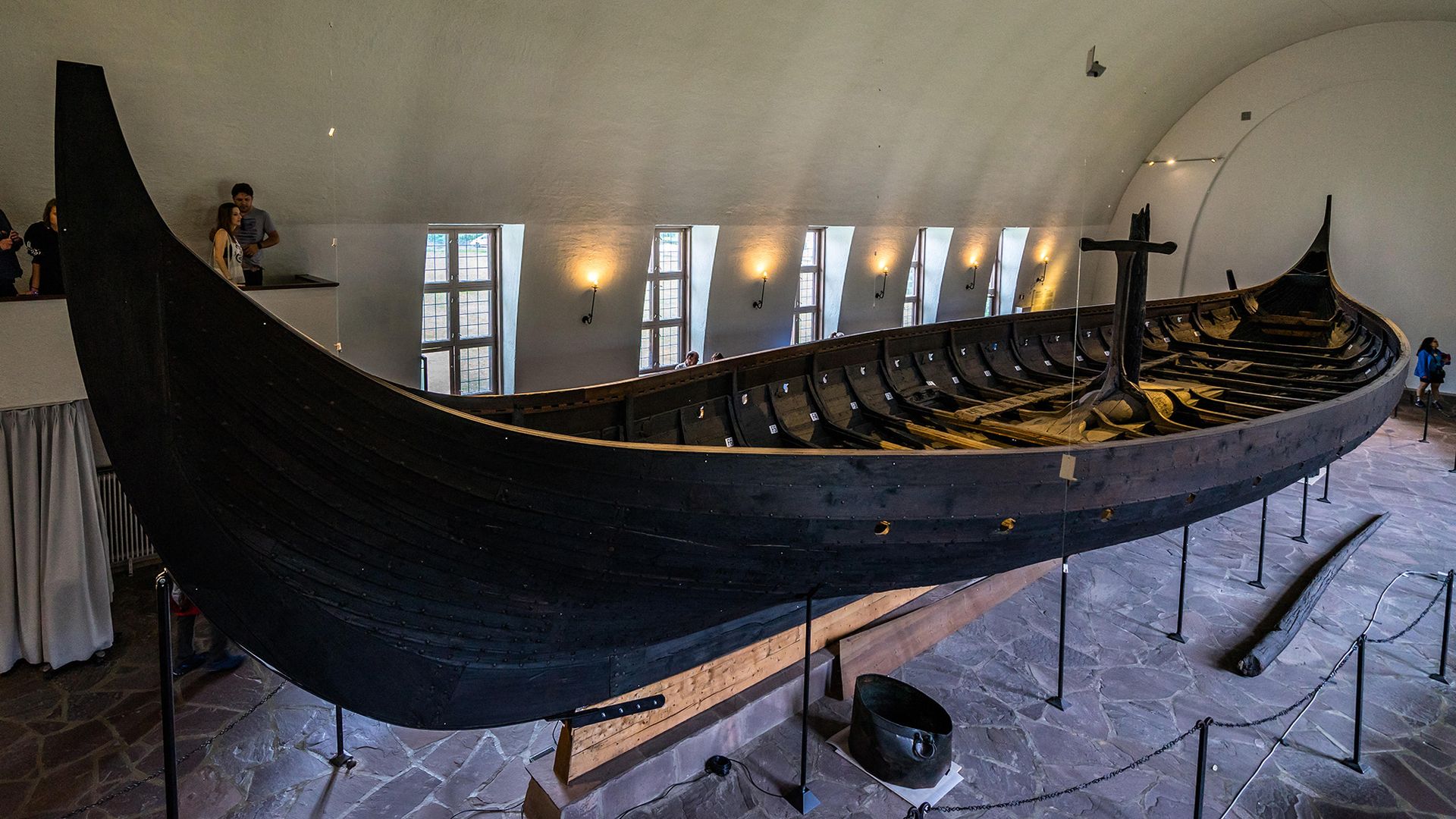
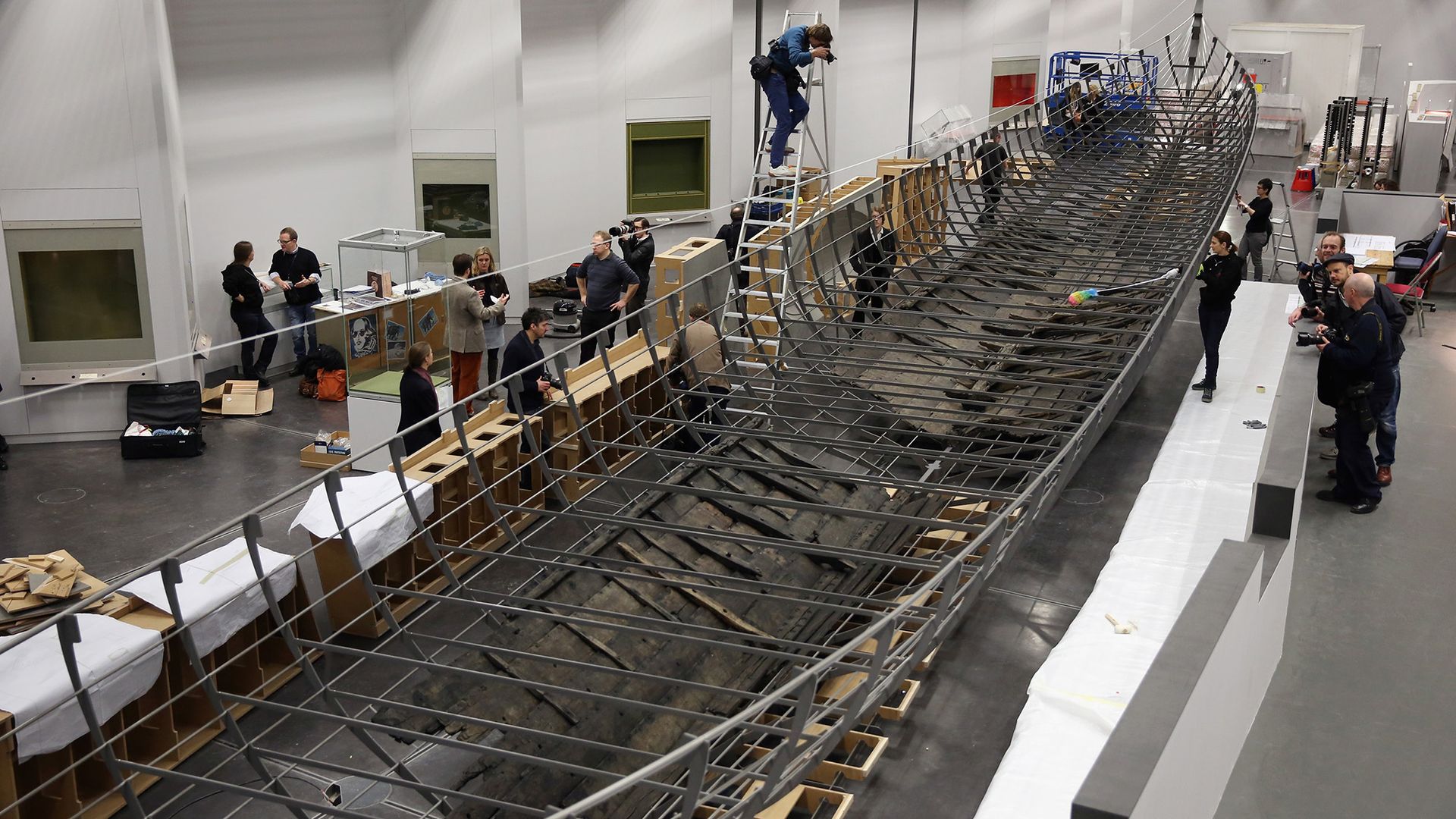
However, the Vikings were master seafarers and frequently cremated their dead. And there is evidence that Vikings burned ships, McGuire noted. We “do have archaeological examples of ships and parts of ships that were burnt during funerary practices while still on land and were buried after being burned,” McGuire said. These include the ninth-century Myklebust ship, a burnt Viking ship that was found in a burial mound in Norway and was built for a rich person, possibly a king.
Historical evidence and legends
Perhaps the closest historical evidence for the fire-arrow ritual comes from Ahmad ibn Fadlan, a 10th-century Arab traveler who went to the Volga River in what is now Russia and spent time with Viking groups there. In ibn Fadlan’s written account, a Viking chieftain is placed on a boat, which is set ablaze.
However, there are some key differences between this account and the scene depicted in popular culture. First, there’s no flaming arrow; rather, the boat was lit on fire by a person described as a chief mourner. Additionally, the boat and its dead chieftain were on land, not on the water.
Although not strictly historical, there are some legendary and mythical accounts of burials at sea that were possibly inspired by real events. “From medieval literature we have rare references to boats/ships involved in funerals over water,” Williams said.
In the epic poem “Beowulf,” the funeral of the Danish king Scyld Scefing sees the dead king placed on a ship that drifts off to sea. In the 13th-century Scandinavian book “Heimskringla,” by Snorri Sturluson of Iceland, the “sea-king Haki [was] set adrift and set alight so that his body burned with those of his slain retinue,” Williams said, and in another story by Sturluson, “the god Baldr is set adrift and his ship set alight by his brother Thor.”
The funeral of Baldr has been particularly notable, McGuire said, noting that it inspired J.R.R. Tolkien to include a similar scene in his “Lord of the Rings” books.
Practical problems
Experts noted that this kind of fire-arrow burial might not have even been possible.
“Personally, I consider cremation at sea using a ship set alight from the shore with flaming arrows to be rather unrealistic,” Matthias Toplak, head of the archaeology department at the Viking Museum Haithabu in Germany, told Live Science in an email. “My own experiments show that it is not at all easy to set something alight with flaming arrows.”
He noted that fire must burn at a high temperature for several hours for cremation to be effective. “At sea, the ship would probably sink before the body had been sufficiently cremated,” Toplak said. “Apart from that, there is of course also the danger that a ship ablaze and adrift would be driven by currents or the wind into other ships or harbour facilities.”
McGuire also noted that there are practical problems with the idea. “if you send a burning boat out onto the water, how do you stop it from drifting ashore with rather grisly contents?”
Overall, the scholars we spoke with doubted that the Vikings used fire arrows to burn funeral boats set adrift at sea. “However romantic the idea of such a funeral scene may be, I unfortunately consider it highly unlikely,” Toplak said.
Instead, Williams suspects 20th-century Hollywood movies played a major role in the creation of this idea. “I strongly suspect this specific trope owes its origin to the 1958 film The Vikings and the concluding scene of Einar’s funeral,” Williams said.
It “says little about how ‘Vikings’ treated their dead,” Williams added, “but tells us a lot about our valorised ideals of fate, honour and death linked to both fantasy and historical ‘Vikings.'”
See how much you know about ancient norsemen with our Viking quiz!

