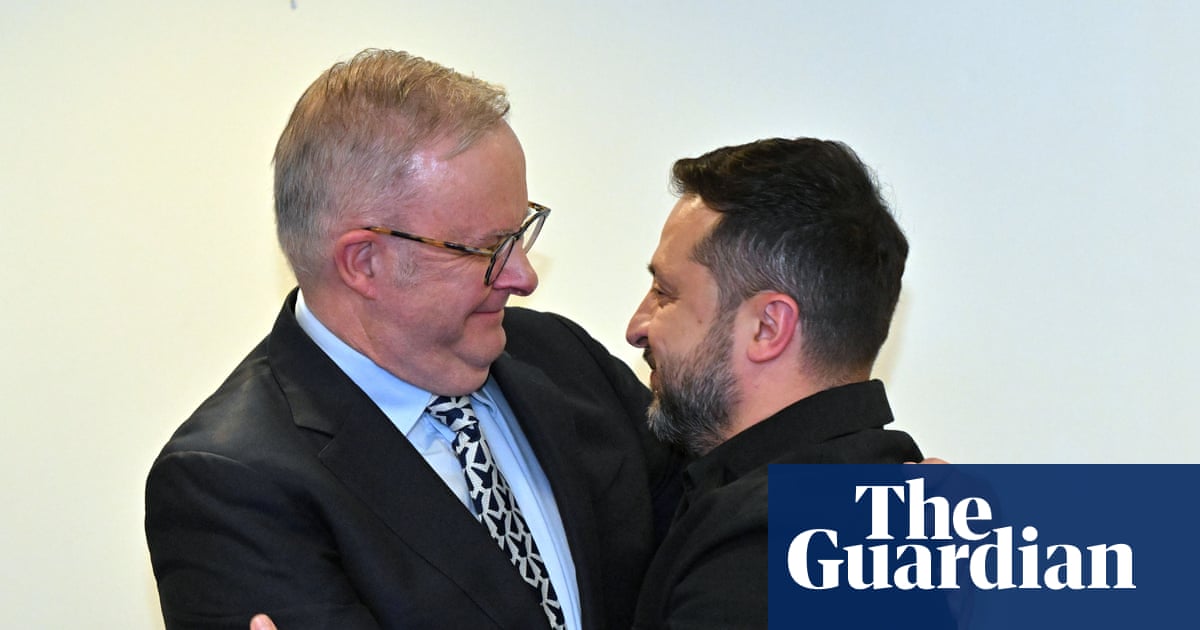
Австралийн Ерөнхий сайд Энтони Албаниз болон Украйны Ерөнхийлөгч Володимир Зеленський нар Нью-Йорк хотноо уулзаж, 10 жилийн хугацаатай аюулгүй байдлын хамтын ажиллагааны гэрээнд гарын үсэг зуржээ.
Нью-Йорк хотод болсон НҮБ-ын чуулганы үеэр Австралийн Ерөнхий сайд Энтони Албаниз Украйны талд 60 сая ам.долларын нэмэлт тусламж үзүүлэхээ зарлалаа. Үүний 45 сая ам.долларыг Австралийн Зэвсэгт хүчний тоног төхөөрөмж нийлүүлэхэд, 10 саяыг эрчим хүчний дэмжлэгт, үлдсэн 5 саяыг хүмүүнлэгийн тусламжид зарцуулах юм. Ингэснээр 2022 онд ОХУ-ын түрэмгийлэл эхэлснээс хойш Австрали улсын үзүүлсэн нийт тусламжийн хэмжээ 1.9 тэрбум ам.долларт хүрч байна.
Хоёр улсын удирдагчдын үзэглэсэн 10 жилийн хугацаатай аюулгүй байдлын гэрээ нь дайны үед төдийгүй дайны дараах энхийн цагт ч үргэлжлэх юм. Гэрээний хүрээнд Австрали улс Украйны зэвсэгт хүчний сургалтыг эрчимжүүлж, агаарын довтолгооноос хамгаалах хэрэгсэл, пуужин болон дрон хамтран үйлдвэрлэх боломжийг судлахаар тохиролцлоо.
Ерөнхий сайд Энтони Албаниз хэлэхдээ, олон улсын дүрэм журмыг зөрчсөн аливаа түрэмгийлэл нь дэлхий нийтийн аюулгүй байдалд сөрөг жишиг тогтоох эрсдэлтэйг анхааруулав. Тэрбээр дэлхийн хоёрдугаар дайны дараа тогтоосон олон улсын дэг журам өнөөгийн сорилтуудыг шийдвэрлэхэд хангалтгүй байгааг онцолж, улс орнуудын эвсэл холбоо улам бүр чухал болж байгааг тэмдэглэлээ.
Дэлгэрэнгүйг эх сурвалжаас харах
↓Эх сурвалжийг нээх ↓
Anthony Albanese has announced Australia will provide $60m more in support for Ukraine’s fight against Russia’s invasion during an emotional meeting with Volodymyr Zelenskyy on the sidelines of the UN meeting in New York.
With the prime minister planning to use a key speech in New York to warn that the international world order was “no longer fit for purpose”, he hugged the Ukrainian president as the latyter thanked Australia for its support.
Albanese became emotional as he paid tribute to his “friend” Zelenskyy in his fight against Russian aggression.
“[His] leadership has been, I think, quite extraordinary, leading people in circumstances which are extraordinarily difficult,” he said.
“Russia thought it could just steamroll through in a matter of weeks, and what we have found is that the people of Ukraine were underestimated.”
The two leaders signed a 10-year bilateral security agreement which will lead to an extra $45m in Australian Defence Force equipment for Ukraine.
A further $10m will go to Ukraine’s energy support fund, while $5m will be spent on humanitarian assistance.
The $60m fund will bring Australia’s total contribution to Ukraine since Russia’s invasion in 2022 to $1.9bn.
As part of the agreement, Australia will also step up training to help Ukrainian forces deter and repel any future Russian attacks. It will also look to explore co-operation for training centres and jointly produce air-defence measures, missiles and drones.
The prime minister said the agreement was a proud day for Australians in seeking to uphold international laws.
“This is an issue not just for Europe, this is an issue for the world,” Albanese told reporters in New York upon signing the agreement.
“If a large, more powerful country in Russia is allowed to profit from breaking the international rules of law with its illegal and immoral invasion of Ukraine, then that sets a bad precedent for the entire world.”
Albanese said the bilateral agreement would be in place not only during the war in Ukraine, but during peacetime once the conflict concludes.
Zelenskyy said the agreement was the “strongest document between our countries”, and would increase trade and security.
“It’s all for our people, for the security,” he said.
It was a busy day of diplomacy for Albanese, who was addressing the Atlantic Council with a major speech on foreign policy and also signed a new strategic partnership with the Netherlands, seeking to boost defence ties and secure justice for the victims of MH17.
In his speech, the prime minister was expected to say that the international world order set up following the second world war was no longer fit for purpose and that institutions that were necessary post-1945 were not enough to meet present-day challenges.
The prime minister will use the speech on the sidelines of the United Nations general assembly in New York to argue partnerships with alliances remain crucial in a rapidly changing global environment.
“Since the end of the cold war, the prevailing assumptions of international affairs were clear: openness was security, efficiency mattered more than resilience and international rules would be observed,” he will say.
“Those assumptions rested on the expectation that the influence of the major democratic powers would remain largely unchallenged.
“The post-1945 world order is no longer fit for purpose. Universal institutions that remain necessary are now not always sufficient for the challenges we face.”
Australian Associated Press also contributed to this report.

