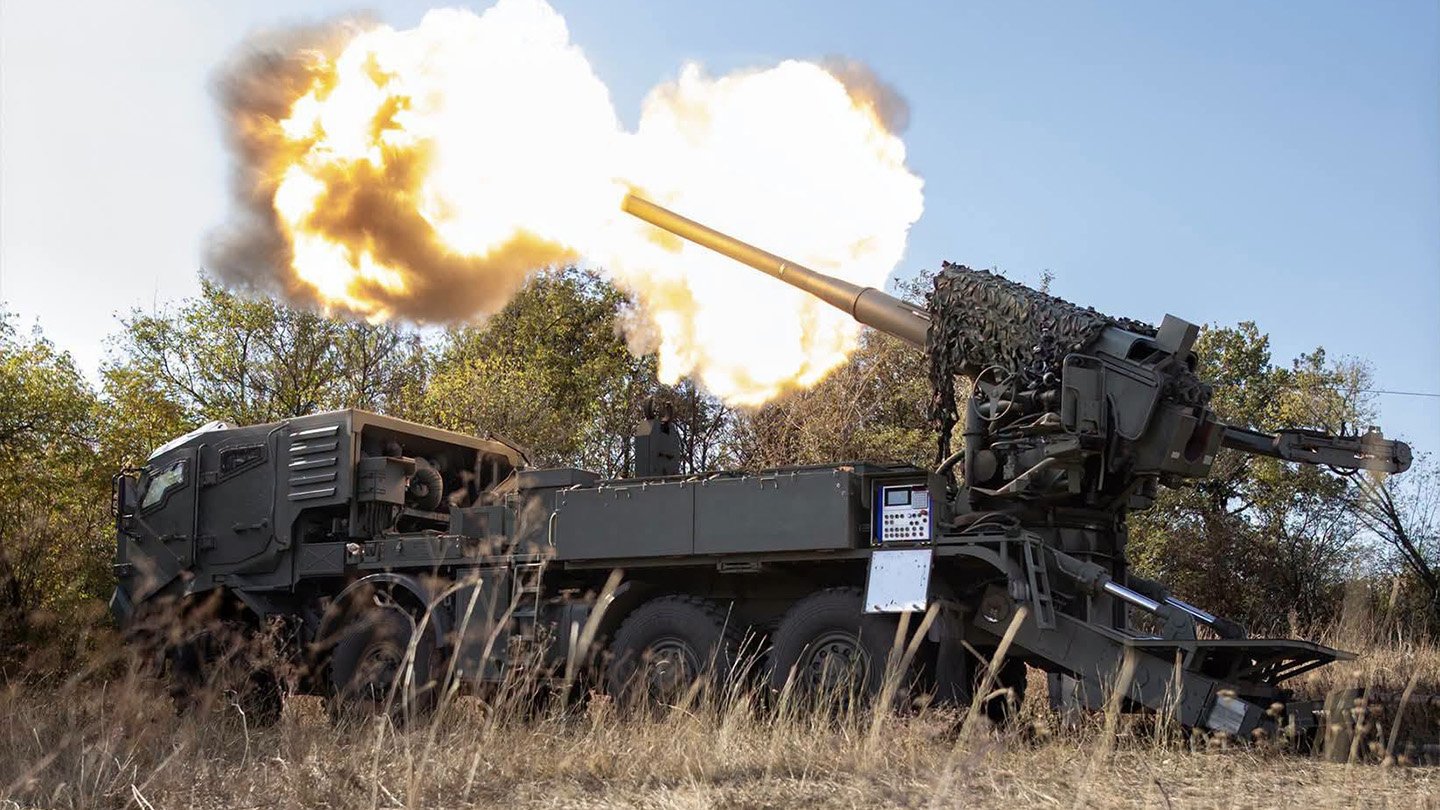
Украины артиллерийн ангиуд дроны давамгайлалтай байлдааны талбарт өөрсдийн тактик болон зэвсэглэлээ шинэчлэн, үр дүнтэй ажиллагааг хангахын тулд дронуудтай хослуулан ажиллаж байна.
Украины Үндэсний гвардийн 7-р артиллерийн бригадын командлагч, дэд хурандаа Виталий Корниенкогийн мэдээлснээр, орчин үеийн байлдаанд артиллерийн үүрэг өөрчлөгдөж, их бууг олноор төвлөрүүлэн гал нээх хуучин тактик ач холбогдлоо алджээ. Өдгөө дронууд нь тагнуул хийх, хөдөлгөөнт болон нарийн байг устгахад илүү хэмнэлттэй хэрэгсэл болсон тул артиллерийг зөвхөн явган цэргийг хамгаалах, дайсны дайралтыг саатуулах, бэхлэлтийг устгах зэрэг тусгай зорилгоор ашиглаж байна. Артиллерийн системүүд нь цаг агаарын нөхцөл байдал болон радио электрон саад бэрхшээлээс үл хамааран ажиллах чадвартай тул дроныг орлох боломжгүй цэргийн цохилтын чухал хүчин хэвээр үлджээ.
Байлдааны талбарт их бууны байрлалыг илрүүлэхээс сэргийлж, урьдчилан бэлтгэсэн, сайтар бэхэлсэн, халхавч бүхий нуувч ашиглах болсон байна. Мөн сумны төрлийн хувьд хол зайд тусах болон ойрын тусгалын сумны харьцааг оновчтой тогтоох нь артиллерийн ашиглалтын хугацааг уртасгах, байрлалаа нууцлахад чухал ач холбогдолтой гэж үзэж байна. Гаднын болон дотоодын үйлдвэрлэлийн сумны чанарын зөрүү нь байг оноход хүндрэл учруулдаг тул цэргийн ангиуд сум бүрийн жинг нарийн хэмжиж, өөрийн гэсэн буудлагын хүснэгт зохиох замаар алдааг багасгаж байна.
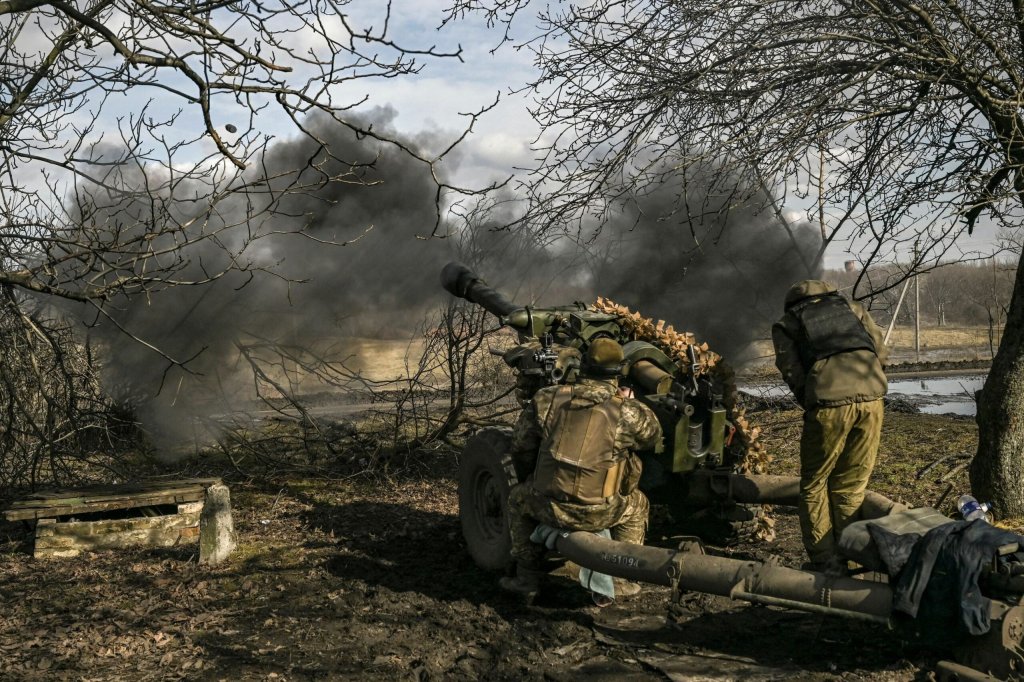
Украины зэвсэгт хүчин дотоодын “Богдана” системээс гадна барууны орнуудаас хандивласан M777 болон Зөвлөлтийн үеийн “Пион” зэрэг их буунуудыг ашиглаж байна. Гэсэн хэдий ч барууны зэвсэглэлийн сэлбэг хэрэгслийг хүлээх хугацаа удаан, засвар үйлчилгээний хязгаарлалттай байдаг нь дотоодын үйлдвэрлэлийн системүүдтэй харьцуулахад үйл ажиллагааны бэлэн байдалд сөргөөр нөлөөлж байна. Тиймээс артиллери болон дроныг нэгтгэсэн бригадын бүтэц нь хоёр системийн дутагдлыг нөхөж, байлдааны ерөнхий үр ашгийг нэмэгдүүлэх үндсэн арга зам болж байна.
Дэлгэрэнгүйг эх сурвалжаас харах
Эх сурвалжийг нээх ↓
It’s stunning to comprehend how much has changed since Russia began its invasion of Ukraine. The conflict quickly turned into one dominated by artillery, with both sides scrambling to source shells wherever possible. Drones have since replaced tubed artillery as the ‘king of battle’ along the front, but cannons still have an important place on the battlefield. The commander of a new combined drone-artillery brigade offered some fresh insights into how his guns are now being deployed to achieve effects that drones still can’t provide.
As we have frequently documented, the ubiquity of drones has changed the nature of combat, especially when it comes to artillery. Not only do can drones hold artillery positions at risk, many are cheaper than shells and easier to produce at scale. Most types are also precision guided munitions capable of hitting moving targets with pinpoint accuracy and can also provide battlefield surveillance. However, they are not a panacea, especially amid the cat-and-mouse game of electronic warfare countermeasures and improving kinetic and passive defenses.
In a recent interview with the Ukrainian Oboronka news outlet, Lt. Col. Vitalii Korniienko, commander of the 7th Artillery Brigade, talked about the changing nature of artillery warfare. Korniienko, whose unit is part of the Ukrainian National Guard, explained what is being done to keep his array of domestically produced Bogdana 155mm systems, donated weapons like M777 howitzers, remaining Soviet-era 2S7 Pion 203mm self-propelled howitzers and other guns, relevant. Here are some takeaways from that discussion.
How The Game Changed
“Guns used to be massed at positions to create an ‘artillery wall’ and a barrage of fire,” the lieutenant colonel said. “That practice is gone now. So, how effective is artillery today? We can create an artillery barrage, but what is the point of mindlessly churning up the earth? I’d rather send 20 FPV drones to destroy the target. The cost of that mission is $20,000.”
“Alternatively, I could fire 200 shells, but the cost would be astronomical,” he pointed out. “Plus, if we fired 100 shells from a gun in a single day, it likely wouldn’t survive until evening. The sky is full of drones; every shot gives away the position, leading to detection and an attempt to dismantle it using every available means. Nowadays, a typical mission involves a series of up to 10 shots. First, 3–5 shells for ranging, followed by fire on the target. That’s a minimum of five shells, with each costing at least $2,000.”
What Does The Drone-Artillery Brigade Do Differently?
“It is a concept of ours that was approved: combining artillery and drones within a single brigade,” Korniienko said. “Drones take out enemy artillery and logistics, while our guns provide cover for the infantry, destroy targets, and pin the enemy down in their dugouts. This way, we mitigate the limitations of both systems and boost overall effectiveness.”
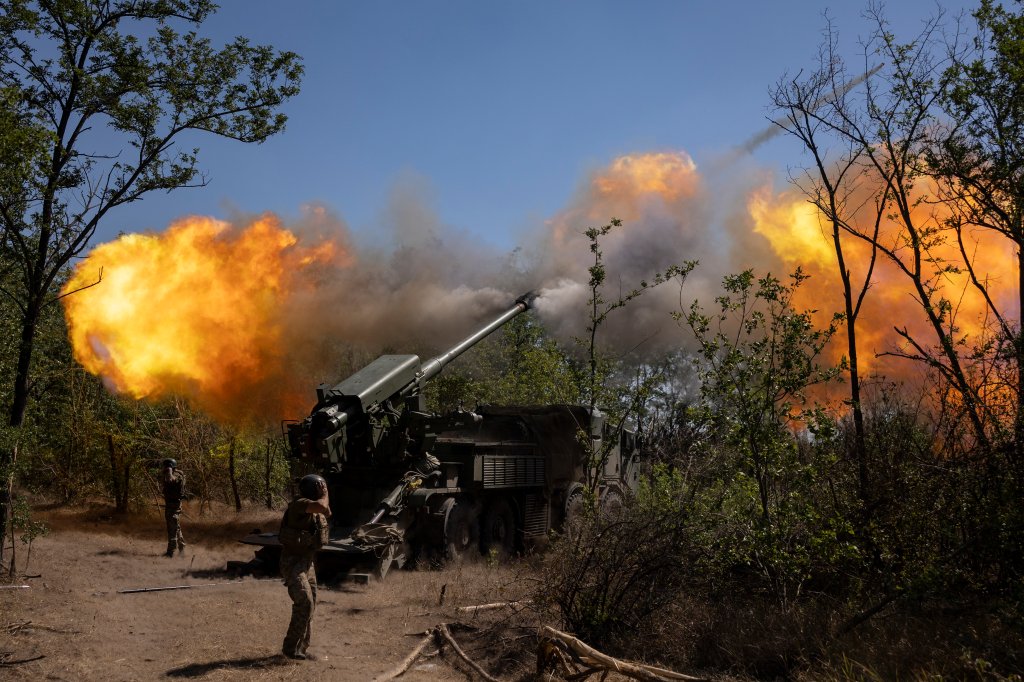
“Our primary operations are focused within the corps’ area of responsibility—targeting positions 10 kilometers deep or farther behind enemy lines. Of course, we will also engage closer targets if requested by the brigade holding the defense. In addition, we are shifting logistics tasks from pickup trucks to ground-based robotic systems. They are already transporting ammunition to drone and artillery positions, as well as food and fuel for generators.”
What Artillery Can Do That Drones Can’t
“Let’s be honest: 95% of strikes right now are carried out by drones,” Korniienko explained. “Yet, we cannot simply abandon artillery. The focus of our operations has shifted from merely striking the enemy to destroying, suppressing, and halting the actions of assault groups and armored columns—and the need for that remains as critical as ever. There are tasks that only artillery can handle.”
The high art of war, as practiced by the warriors of the National Guard’s Artillery Brigade.
So high, it lands beyond the horizon.
: @ng_ukraine pic.twitter.com/v06aJ8KcjM
— Defense of Ukraine (@DefenceU) September 23, 2026

“For instance, we currently have several enemy targets in the Kupyansk sector that drones cannot reach due to electronic warfare (EW) interference, while slow fiber-optic drones are simply shot down,” the officer noted. “What do we do? We call in artillery. Nothing affects its shells. Fog, strong winds, snow, or headwinds—it makes no difference to artillery; it will operate regardless.”
Preparing Artillery For The Modern Battlefield
“At the beginning, both we and the Russians might have had two or three guns at a single position,” Korniienko proffered. “The enemy was doing this as late as 2023. Then it tapered off, because if you deployed six guns, an hour later they’d be gone. No one drives out into an open field anymore. Today, a gun wouldn’t even make it to the position without being spotted.”
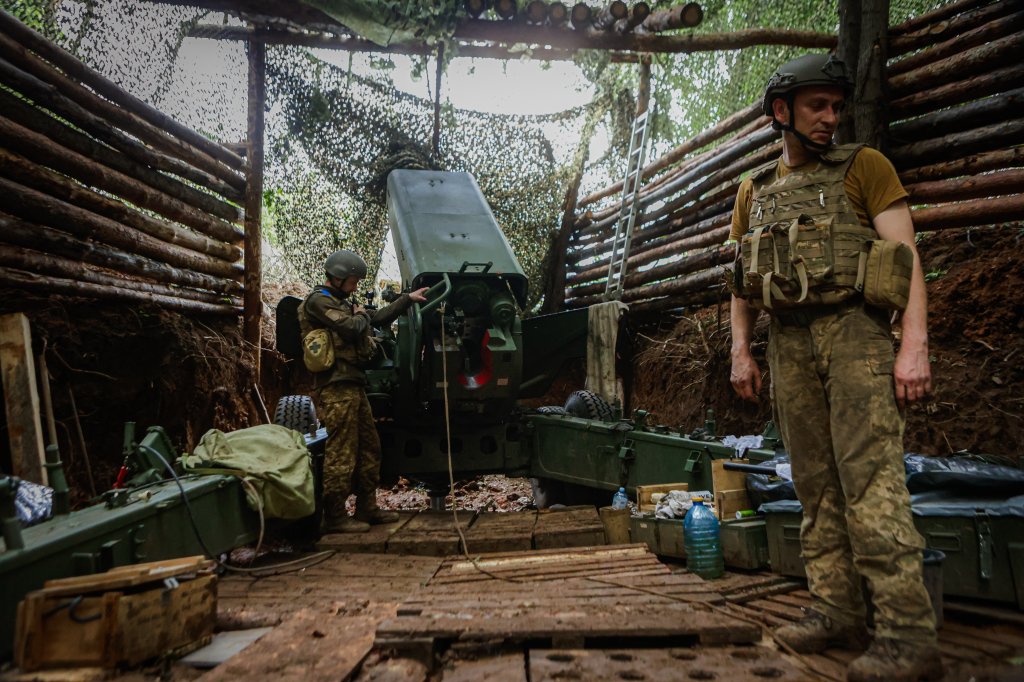
As a result, the artillery crew’s deployment “is prepared in advance,” the officer stated. “First, anti-aircraft drone teams ‘clear’ the sky above the site of enemy reconnaissance assets. The position itself is a fully underground-dugout caponier with well-camouflaged access routes. We put a lot of effort into ensuring the artillery doesn’t get destroyed. Losing a gun is a huge blow to us.”
Short Range Versus Long Range Shells
“There is currently an ongoing debate about phasing out ‘short’ shells and switching entirely to long-range variants,” the officer stated. “This is intended to protect artillery from drone strikes.”
“What exactly is a ‘short’ shell, and should we stop using it?” he asked rhetorically. “The M107 155mm round is what is known as a ‘short’ shell. It is inexpensive and mass-produced; all our allies—and even our own country—manufacture it. We have sufficient stocks of them for combat operations. While accurate, its range is limited to 14–18 km, depending on the propellant used.”
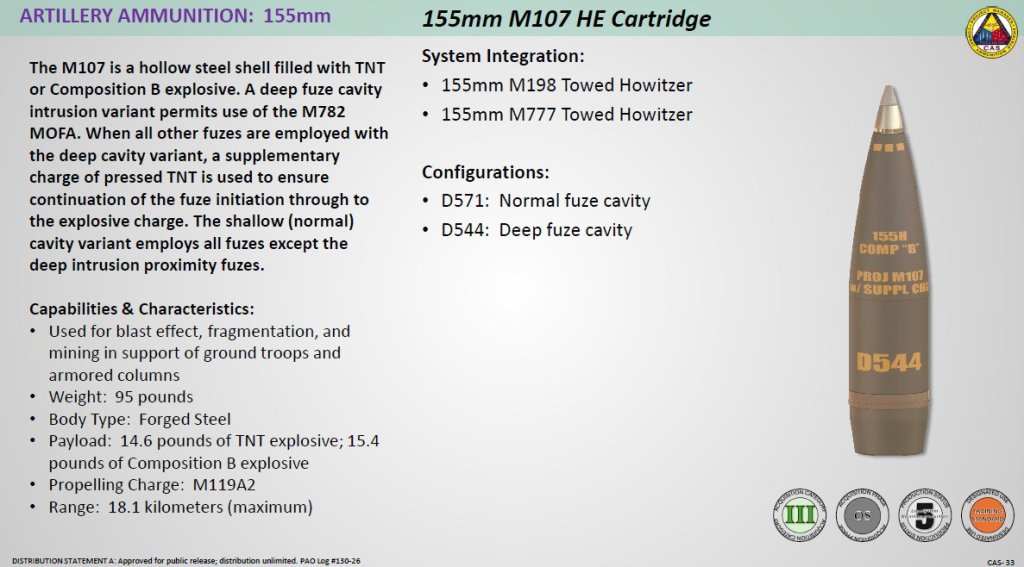
Long-range options “include the M795 and its foreign equivalents,” Korniienko explained. “These are longer, heavier, and significantly more expensive. With high-quality propellant, they can reach 30 km, or even further if equipped with a base-bleed unit. However, both these shells and the necessary propellants are in short supply.”
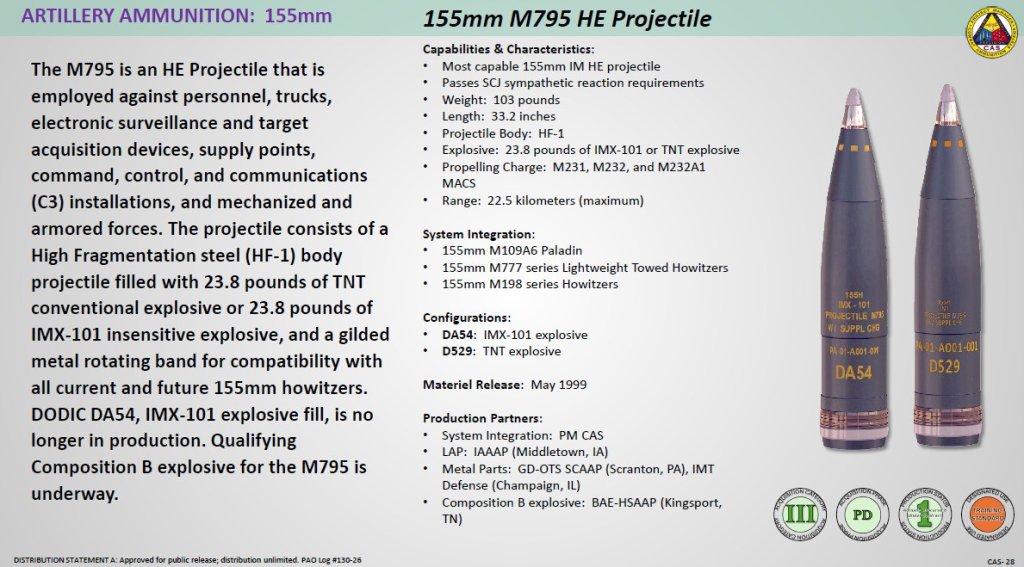
“I do not believe abandoning the M107 is the right move,” the officer suggested. “Long-range shells cause faster barrel wear and compromise position concealment; firing a long-range charge produces a massive burst of flame from the muzzle—visible for kilometers at dusk or dawn.” “Besides,” he added, “18 km is a respectable range. If the gun is positioned 15 km back, it still has a 3-km margin to spare. That is sufficient for engaging frontline infantry. In my view, the ideal mix for most brigades would be 60% long-range shells and 40% standard M107 rounds.”
Big Versus Small Guns
“I operated 105mm guns in the Serebryanka area, on the Kharkiv axis,” Korniienko noted. “Based on intercepted communications, the enemy thought it was a mortar and searched for it within a five-to-six-kilometer range. But the howitzer was positioned eight or nine kilometers away and fired out to 10–12 kilometers.”
“There is almost no muzzle flash, just a bit of dust,” he added. “The shell arrives, and the enemy doesn’t even hear the sound of the shot. It’s compact and lightweight—you can transport it on a pickup truck. So yes, it would be useful.”
“I’d also like to see the development of 203mm artillery; why move away from that caliber?” the officer wondered aloud. “Our ‘Pion’ systems fire a massive 100-kilogram shell capable of punching through at least two floors of a building or a bunker. And it’s reasonably accurate, too. You wouldn’t want to be on the receiving end when guns like that are firing at you. Overall, I believe we need competition. Right now, the ‘Bogdana’ is evolving under wartime conditions, which is good. But in a few years, momentum could stall. They might just keep producing the same system without significant upgrades because there’s no incentive to innovate. Yet, the nature of war doesn’t stand still.”
Wary Of Asian Shells
“We have a wide range of shells from different countries, and the ones coming from the West are fine,” Korniienko said. “However, their counterparts produced in certain Asian countries… the quality is frankly poor.”
“What is wrong with them?” queried Korniienko, who did not name the country in question. “On paper, the shell weight is listed as 46 kilograms, but when we weigh them, we find 46.9 or 45.4 kg. And that half-kilogram difference—give or take—has a huge impact on where the shell lands.”
As a result, “we no longer trust the standard firing tables provided with the shells; instead, we compile our own for each manufacturer. We weigh every batch and sort them by weight so that the difference between the ‘piles’ is minimal, ensuring a reasonably tight grouping. I can’t afford to make a mistake that causes a shell to land 2 kilometers off-target—right where our infantry guys are positioned. I should add that our artillerymen are actually wary of shells from one specific country. There have been instances where they tore off the muzzle brake or even caused the barrel to burst. A barrel burst is a disaster.”
Homegrown Is The Best
Korniienko said his unit was one of the first to test the Bogdana system, adding that he prefers it to other guns.
“We tested them and provided feedback to the manufacturer, which was then used to refine the design,” he explained. “It is a solid gun now, and it is my preferred choice. It might not be the absolute best, but I am very satisfied with the support and service.”
“If there’s a breakdown, the gun is back in position within a day or two,” he pointed out. “For instance, a gun broke down today, and we needed a repair team from the manufacturer. I know I’ll have it fixed by the day after tomorrow. They arrive in the morning, and by midday, the gun is ready. Then it takes another day or two to get it back to the position. That is very fast.”
That’s a very different experience than what he sees with donated weapons like the U.S.-made M777.
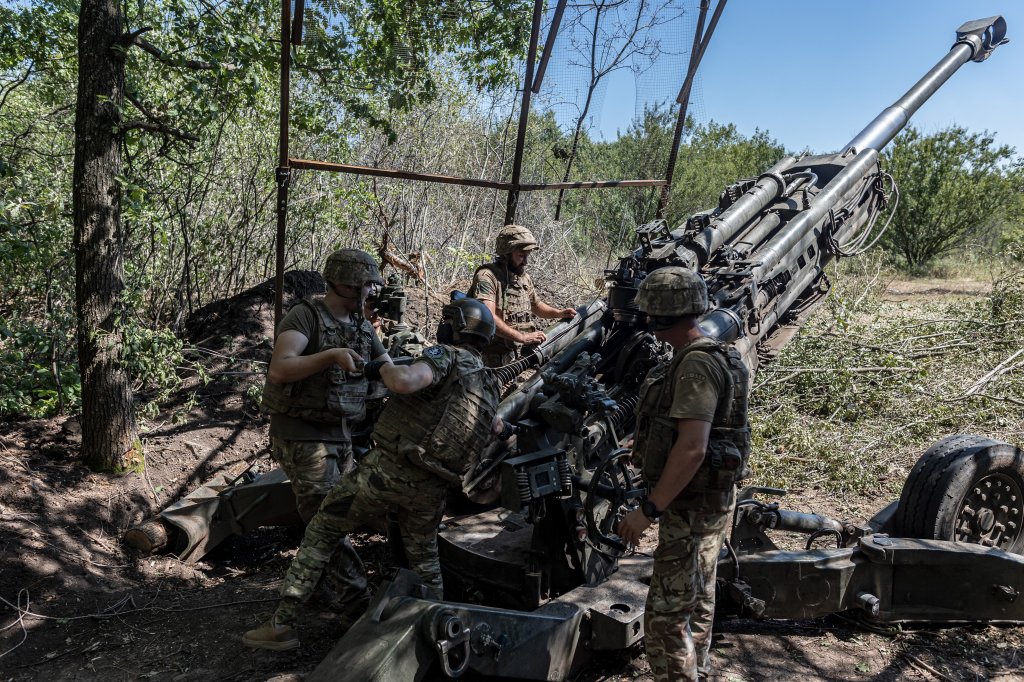
“As for the Western partners helping us—we are deeply grateful,” the officer avowed. “However, by the time you actually receive a part—say, a sensor—the gun might have been sitting idle for six months. And you can’t try to fix it yourself, because that would void the warranty.”
While artillery may no longer be the reigning weapon of war, as far as Ukraine is concerned, it has not been relegated to the dustbin of history yet either.
Contact the author: howard@twz.com
The post The Evolving Role Of Ukraine’s Artillery In The Age Of Drones appeared first on TWZ.

