Анх удаагаа эрдэмтэд алс холын гарагийн соронзон оронтой холбоотой радио долгионыг бүртгэж авсан нь сансрын биетүүдийг судлах шинэ боломжийг нээж байна.
Олон улсын одон орон судлаачдын баг Өмнөд Африкийн MeerKAT радио дуран авайг ашиглан манай дэлхийгээс 63 гэрлийн жилийн зайд орших Beta Pictoris b хэмээх аварга хийн гарагаас ирж буй сул, давтагдах радио дохиог илрүүлжээ. Өмнө нь ижил төстэй дохионууд нь од эсвэл гарагийн алинд хамаарах нь тодорхойгүй байсан бол энэ удаад судлаачид сансрын суурин квазаруудыг жишиг цэг болгон ашиглаж, дохионы эх үүсвэрийг тус гарагтай яг таг холбож чадсан байна.
Уг радио дохио нь дэлхий дээрх туйлын туяатай төстэй, гарагийн соронзон орон дахь цахилгаан соронзон үзэгдлийн үр дүнд үүссэн байх магадлалтай ажээ. Судалгааны үр дүнгээр Beta Pictoris b гарагийн соронзон орны хүчийг ойролцоогоор 1,250 гаусс гэж тогтоосон нь Бархасбадь гарагийнхаас хавьгүй хүчтэй үзүүлэлт юм.
Гарагийн соронзон орон нь эх одны цацраг идэвхт болон цэнэгт бөөмсөөс хамгаалах бамбай болдог тул энэхүү нээлт нь тухайн гарагийн амьдрал оршин тогтнох чадамжийг үнэлэхэд чухал ач холбогдолтой юм. Хэдийгээр энэ нь харь гаригийн амьдралтай холбоотой дохио биш боловч одон орон судлаачдад нарны аймгийн гаднах гарагуудын физик шинж чанарыг илүү нарийвчлалтай судлах шинэ арга хэрэгслийг олгож байна.
Дэлгэрэнгүйг эх сурвалжаас харах
Эх сурвалжийг нээх ↓
For the first time, astronomers have detected radio signals from a planet beyond our solar system, according to a study available on the preprint server arXiv. The landmark observation offers a new way to study distant worlds and understand how they interact with their host stars and the environments that surround them.
Radio signals can carry clues about a planet’s magnetic field and its interaction with the star it orbits—information that can be surprisingly difficult to tease out from the tiny amount of light reaching Earth. By detecting and studying these signals from exoplanets, scientists can begin to build a clearer picture of the extraordinary diversity of planetary systems across the galaxy.
Picking up a signal
Previous radio detections from other star systems couldn’t be definitively linked to the planets themselves, leaving astronomers unsure whether the signals originated from the planets or their host stars.
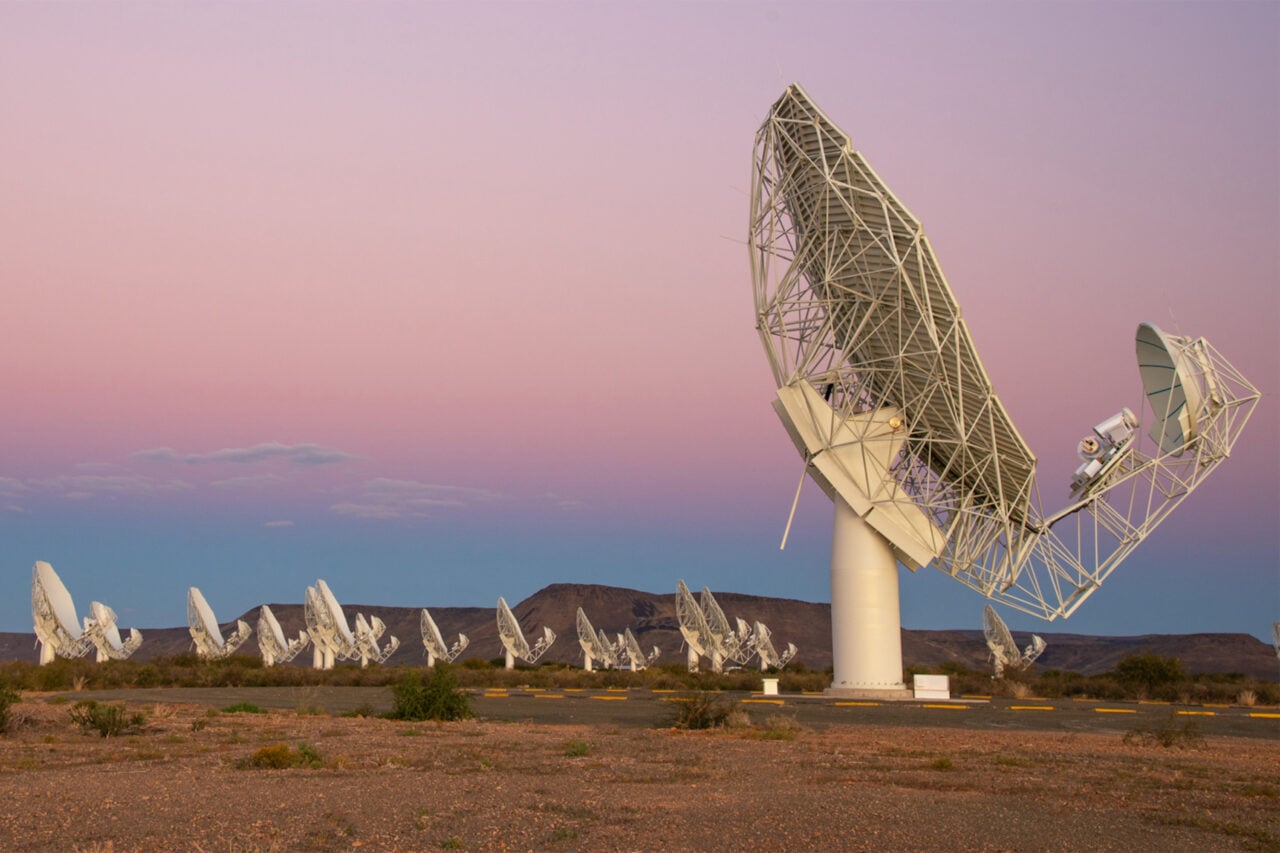
For the recent study, an international team of astronomers turned South Africa’s MeerKAT radio telescope toward Beta Pictoris b. Located around 63 light years away, the exoplanet is a gas giant that’s roughly 10 to 12 times the mass of Jupiter.
The researchers picked up faint, repeating bursts of radio signals originating from the star system. They weren’t initially certain whether the radio waves were coming from the planet or its host star. To pinpoint the source, the researchers compared radio images of both the planet and the star with the positions of distant background quasars.
The quasars act as fixed markers, allowing the researchers to map the exact position of the planet and the star. By layering the radio images over the map, the radio signals lined up with the position of Beta Pictoris b rather than its host star.
Probing alien worlds
In the search for habitability beyond Earth, astronomers have found thousands of exoplanets ranging from super-Earths to gas giants. But simply detecting a planet tells us surprisingly little about what it’s actually like.
Radio observations could help fill in some of those blanks, giving astronomers another tool for figuring out how planets behave in the extreme environments of other star systems.
The signals detected from Beta Pictoris b were likely the result of auroral radio emissions. On Earth, auroras happen when particles from the Sun get funneled toward Earth’s magnetic poles and collide with gases in our atmosphere, causing those gases to glow.
Since the radio signals correlate with the planet’s magnetic field, the researchers behind the study were able to calculate its strength to be roughly 1,250 gauss. That’s thousands of times stronger than Earth’s magnetic field, which is at a mere 0.5 gauss, while Jupiter’s magnetic strength is at 4.3 gauss.
A planet’s magnetic field factors into its habitability, acting as a shield against radiation and charged particles from its host star. Being able to estimate a planet’s magnetic field strength, therefore, provides new clues about its potential habitability.
So while the recent detection is not a direct “hello” from alien life, it does help scientists on the road to learning more about planets beyond our solar system.

