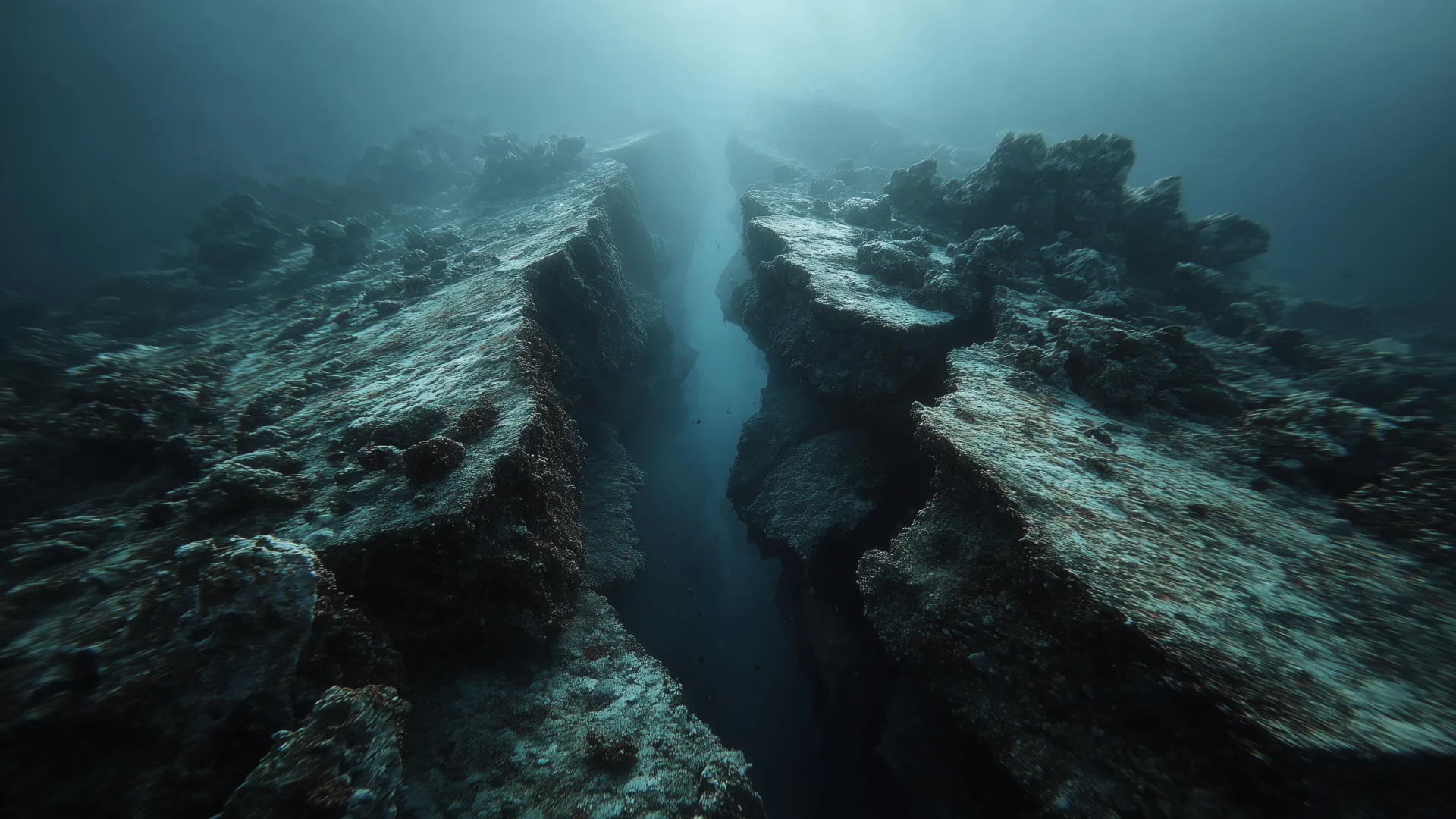
Судлаачид Каскадын бүс дэх тектоникийн хавтангийн нэгдэл аажмаар хэд хэдэн хэсэгт хуваагдан задарч байгааг анх удаа нарийвчлан ажиглажээ.
Луизиана мужийн их сургуулийн геологич Брэндон Шак болон түүний баг “Science Advances” сэтгүүлд нийтлүүлсэн судалгаандаа Номхон далайн баруун хойд хэсгийн субдукцийн бүс буюу нэг хавтан нөгөөгийнхөө доогуур шурган ордог тектоникийн зааг дээрх үйл явцыг судалжээ. Тэд 2021 оны “Cascadia Seismic Imaging Experiment” (CASIE21) төслийн хүрээнд далайн ёроол руу дууны долгион илгээж, эргэн ирэх цуурайг хэмжих замаар газрын гүн дэх бүтцийг хэт авиан шинжилгээний зарчмаар дүрсэлсэн байна. Үр дүнд нь Хуан де Фука болон Эксплорер хавтангууд нэг дор биш, харин хэсэгчлэн задарч, бичил хавтангууд үүсгэж байгаа нь тодорхой болжээ.
Судалгаагаар 75 километрийн урттай томоохон хагарал үүсэж, хавтангийн нэг хэсэг таван километр орчим доошилсон нь тогтоогдсон байна. Газар хөдлөлтийн бүртгэлийг шинжлэхэд хагарлын зарим хэсэгт чичирхийлэл ажиглагдахаа больсон нь тухайн хэсэг аль хэдийн бүрэн салсныг илтгэж байна. Энэхүү үйл явц нь субдукцийн бүс нэг мөсөн зогсох бус, харин олон сая жилийн турш аажмаар задардаг “шат дараалсан” процесс болохыг харуулж байгаа юм.
Энэхүү нээлт нь өмнө нь учир битүүлэг байсан эртний тектоникийн системүүдийн үлдэгдэл болон галт уулын үйл ажиллагааны өөрчлөлтийг тайлбарлахад чухал ач холбогдолтой юм. Хавтангийн хэсгүүд салснаар үүсэх “хавтангийн цонх” нь газрын гүнээс халуун магма дээшлэх боломжийг олгож, галт уулын идэвхжилд нөлөөлдөг байж болзошгүй гэж судлаачид таамаглаж байна. Одоогийн байдлаар энэ үзэгдэл нь хүний амьдралын хугацаанд газар хөдлөлтийн эрсдэлийг шууд өөрчлөхгүй ч, ирээдүйн чичирхийллийн загварчлалыг боловсронгуй болгоход хувь нэмэр оруулна.
Дэлгэрэнгүйг эх сурвалжаас харах
↓Эх сурвалжийг нээх ↓
Scientists have captured an unusually detailed view of a major tectonic system beneath the Pacific Northwest beginning to come apart.
The discovery, reported in Science Advances, shows a subduction zone actively breaking into pieces. Subduction zones form where one tectonic plate is forced beneath another and pushed deep into Earth. They are responsible for some of the planet’s largest earthquakes, powerful volcanic eruptions, and long term changes to continents and ocean basins.
Until now, however, scientists have had few opportunities to see clearly how one of these enormous systems reaches the end of its life.
How a Subduction Zone Dies
Subduction is one of the main processes that continually reshapes Earth’s surface. As an oceanic plate sinks beneath another plate, material from the crust is carried downward toward the mantle, the hot layer beneath Earth’s crust.
These systems can remain active for millions of years, but they cannot continue indefinitely. Otherwise, continents would eventually pile into one another, oceans would disappear, and much of Earth’s geological history would be erased.
That leaves geologists with a fundamental question: what actually causes a mature subduction zone to stop?
“Getting a subduction zone started is like trying to push a train uphill — it takes a huge effort,” said Brandon Shuck, a geologist at Louisiana State University and lead author of the study. “But once it’s moving, it’s like the train is racing downhill, impossible to stop. Ending it requires something dramatic — basically, a train wreck.”
Scientists may now be watching that process unfold beneath Cascadia.
A Tectonic Plate Breaking Apart Beneath Cascadia
Off Vancouver Island, the Juan de Fuca and Explorer plates are slowly being forced beneath the North American plate. This area is part of the Cascadia subduction zone, a vast tectonic boundary stretching along the Pacific Northwest.
Researchers combined detailed earthquake records with seismic reflection imaging to look deep beneath the seafloor. The technique works somewhat like medical ultrasound. Scientists send sound waves into Earth and measure how those waves bounce back from different underground structures.
The seismic measurements came from the NSF funded 2021 Cascadia Seismic Imaging Experiment (CASIE21), during which researchers aboard a ship sent sound waves into the ocean floor. A 15-kilometer-long streamer carrying underwater listening instruments recorded the returning signals.
By analyzing those echoes, scientists created detailed images of structures hidden beneath the seafloor. What emerged was striking: large faults and fractures cutting through the sinking plate, including areas where the plate appears to be actively snapping apart.
“This is the first time we have a clear picture of a subduction zone caught in the act of dying,” said Shuck. “Rather than shutting down all at once, the plate is ripping apart piece by piece, creating smaller microplates and new boundaries. So instead of a big train wreck, it’s like watching a train slowly derail, one car at a time.”
A 75 Kilometer Tear Through the Plate
The researchers identified several tears running through the oceanic plate. One especially dramatic feature involves an enormous offset where part of the slab has dropped by roughly five kilometers.
“There’s a very large fault that’s actively breaking the plate,” Shuck explained. “It’s not 100% torn off yet, but it’s close.”
Earthquake activity provides another clue about what is happening.
Along a tear stretching about 75 kilometers, some portions continue to produce earthquakes while others have become unusually quiet. That difference matters because earthquakes occur when connected blocks of rock build up stress and suddenly slip.
“Once a piece has completely broken off, it no longer produces earthquakes because the rocks aren’t stuck together anymore,” he said.
The absence of earthquakes along part of the tear therefore suggests that a section of the plate has already separated. According to the researchers, that detached area is gradually expanding.
Earth’s Crust May Break Apart Piece by Piece
Rather than failing in one enormous event, the subduction zone appears to be shutting down through a series of smaller breakups.
Researchers describe the process as “episodic” or “piecewise” termination. Individual sections tear away at different times, slowly dismantling the larger tectonic system.
Transform boundaries play an important role. These are faults where sections of Earth’s crust move sideways past one another. In this setting, they can act almost like geological scissors, cutting across the plate and helping isolate individual fragments.
Once a piece becomes separated, it can form a microplate. A microplate is essentially a smaller piece of Earth’s rigid outer shell that moves somewhat independently from the major tectonic plates surrounding it.
Meanwhile, nearby portions of the larger plate can continue sinking.
As more pieces detach, the remaining plate loses some of the downward pull that keeps subduction going. Shuck compares the process to removing cars from a runaway train. Eventually, there is not enough of the system left to continue in the same way.
The breakup of each individual section can take several million years. Together, however, these episodes can eventually bring an entire subduction zone to an end.
Ancient Tectonic Mysteries Begin to Make Sense
The discovery may help explain geological puzzles seen in other parts of the world.
Scientists have found abandoned plate fragments and unusual sequences of volcanic rocks that appear to record the final stages of ancient subduction systems. Until now, researchers had evidence that these systems had broken apart, but much less direct information about how the process unfolded.
One important example can be found off Baja California.
There, geologists have identified fossil microplates left behind by the Farallon plate, an enormous ancient oceanic plate that once extended across a large portion of the eastern Pacific.
Those fragments have long suggested that the Farallon plate did not simply disappear in one event. The Cascadia observations now offer a possible explanation for how such remnants form.
Instead of collapsing all at once, a dying subduction zone may gradually unravel, leaving smaller plate fragments scattered behind as geological evidence.
Tearing Plates Could Trigger Volcanic Changes
The breakup can also change what happens deeper beneath Earth’s surface.
When a piece of a sinking plate separates, an opening called a “slab window” can form. This gap allows hotter material from the mantle to rise toward the surface.
That rising material can alter magma production and potentially contribute to episodes of volcanic activity.
As the breakup continues, tectonic boundaries can shift, additional microplates can form, and different parts of the subduction system may shut down at different times.
“It’s a progressive breakdown, one episode at a time,” said Shuck. “And it matches really well with what we see in the geologic record, where volcanic rocks get younger or older in a sequence that reflects this step-by-step tearing.”
That connection between modern observations and ancient rocks gives researchers a new way to interpret the remains of long vanished plate boundaries.
What This Means for Cascadia Earthquakes
The findings also raise an important question for the Pacific Northwest: could these newly identified tears affect future earthquakes?
Researchers now want to understand whether a large earthquake could continue rupturing across one of the breaks or whether the damaged sections of the plate might alter the path of a rupture.
A rupture is the rapid movement along a fault that produces an earthquake. The distance a rupture travels, and the structures it encounters along the way, can strongly influence the size and behavior of an earthquake.
For now, the researchers emphasize that the discovery does not significantly change Cascadia’s earthquake hazard on a human timescale.
The region is still capable of producing extremely large earthquakes and tsunamis. The breakup observed beneath the ocean is unfolding over millions of years, not decades or centuries.
However, adding these newly discovered structures to earthquake models could eventually improve scientists’ understanding of how future ruptures may behave.
For geologists, Cascadia is offering something even rarer: a chance to watch one of Earth’s great tectonic systems slowly dismantle itself, one piece at a time.

