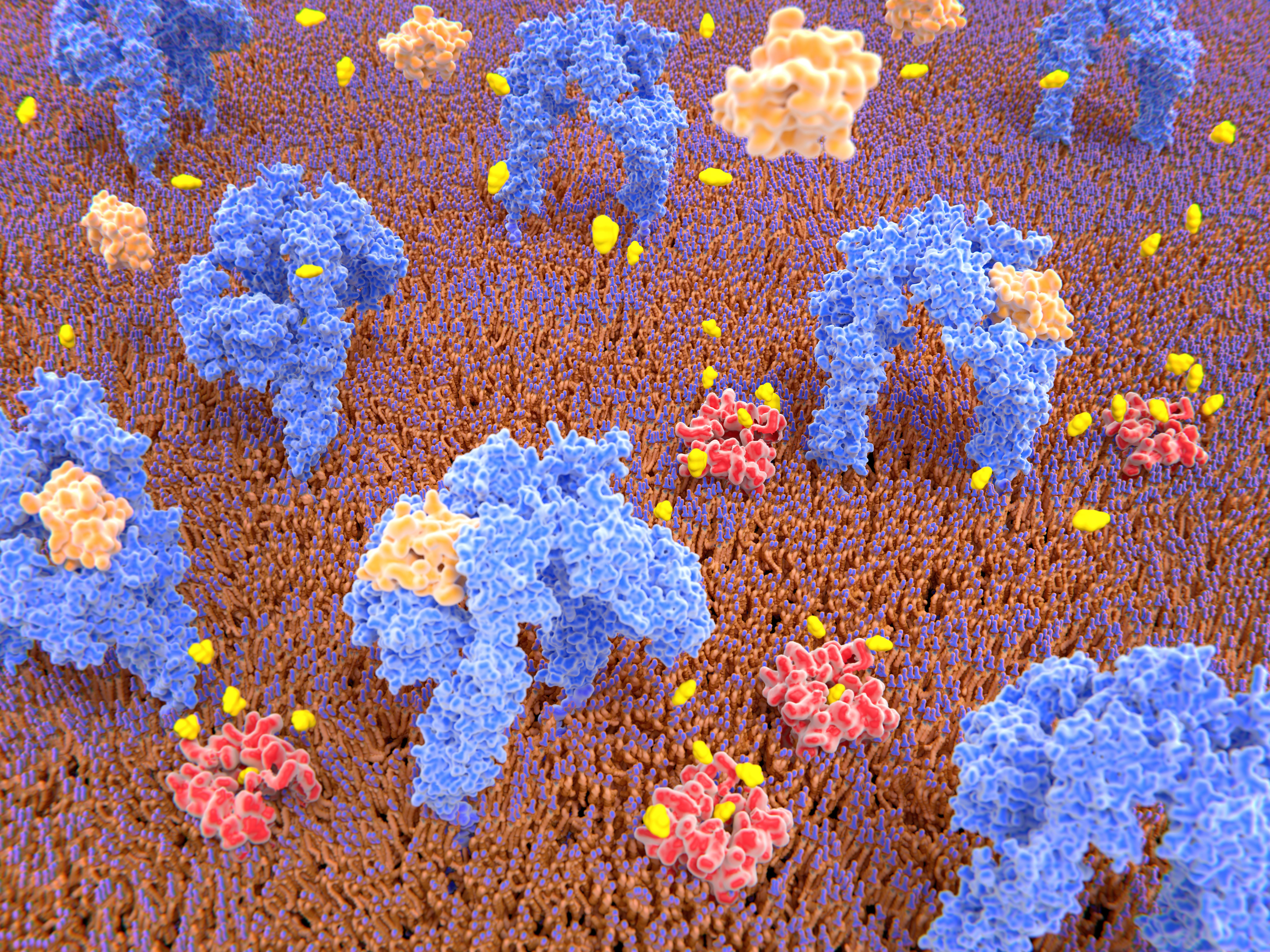
Эрдэмтэд нойр булчирхайн сувгийн эсүүдийг генетикийн аргаар өөрчилж, инсулин ялгаруулдаг эс болгон хувиргах туршилтыг амжилттай гүйцэтгэлээ.
Харвардын анагаах ухааны сургуулийн судлаач Жиан Ли тэргүүтэй эрдэмтдийн баг нойр булчирхайн сувгийн эсүүд тодорхой нөхцөлд инсулин ялгаруулдаг бета эс болон хувирдаг үзэгдлийг судалжээ. “Science Translational Medicine” сэтгүүлд нийтлэгдсэн судалгаагаар, эрдэмтэд генийн скрининг ашиглан ALDH3B2 хэмээх генийг идэвхгүй болгосноор энэхүү хувирлын хурдыг 1 хувиас 8.5 хувь хүртэл нэмэгдүүлж болохыг тогтоосон байна.
Туршилтын хүрээнд генетикийн өөрчлөлтөд оруулсан хүний эсүүдийг диабеттэй хулганад шилжүүлэн суулгахад, тухайн эсүүд инсулин ялгаруулж, хулганы цусан дахь сахарын хэмжээ зургаан долоо хоногийн турш хэвийн түвшинд ойртсон байна. Энэхүү арга нь өвчтөний өөрийн эсийг ашиглан эмчилгээ хийх боломжийг бүрдүүлж, дархлааны тогтолцооны сөрөг нөлөөг бууруулах давуу талтай байж болох юм.
Гэсэн хэдий ч судлаачид энэхүү арга нь хараахан туршилтын шатанд байгааг онцолж байна. ALDH3B2 ген нь нойр булчирхайнаас гадна биеийн бусад эсэд ч үүрэг гүйцэтгэдэг тул эмчилгээний нарийвчлалыг хангах нь чухал асуудал болоод байна. Цаашид энэхүү ген нь эсийн хувиралд хэрхэн нөлөөлдөг болохыг нарийвчлан судалж, генийн эмчилгээ эсвэл тусгай молекулуудыг ашиглан ижил үр дүнд хүрэх боломжийг эрэлхийлэх шаардлагатай байна.
Дэлгэрэнгүйг эх сурвалжаас харах
↓Эх сурвалжийг нээх ↓
A human pancreas typically contains about a billion beta cells, the primary producers of insulin. Among people with diabetes, these cells are either missing or dysfunctional, and thus scientists have been looking for ways to replenish their numbers as a possible long-term treatment or even cure for the condition. A team of researchers recently took a step closer to that reality, genetically altering another type of pancreatic cell to produce and release insulin in response to high blood sugar.
The researchers engineered ductal cells, which—as some previous studies had found—occasionally transform into beta cells all on their own. This is an unusual phenomenon among cells in adult bodies, which tend to be firmly fixed in their identities, and it hinted to the scientists that these ductal cells would be a good place to start.
Scientists previously had no clue what genes were driving this metamorphosis, said Jian Li, a postdoctoral researcher at Harvard Medical School who led the recent study in Science Translational Medicine. The researchers therefore took an approach called a genetic screen, which involves breaking little bits of DNA all across the genome to see which are important for a certain biological process. It’s a bit like individually removing pieces of a car engine without a schematic and seeing what breaks to learn which components are involved in delivering fuel or are essential for steering.
Through this process, the researchers found that taking out a gene called ALDH3B2 turned ductal cells into beta-like cells at a higher rate. Without the genetic alteration, fewer than 1 percent of ductal cells spontaneously took on a beta-cell-like state, but when ALDH3B2 was silenced, that proportion increased to about 8.5 percent.
Those initial experiments were performed on human cells in a dish, which the researchers then transplanted into mice with diabetes. Human insulin began circulating in the mice, and the animals’ glucose levels dropped to near-normal levels. These effects persisted for six weeks.
Science has previously explored some gene therapies for diabetes with the hopes of offering long-term relief. For example, a clinical trial launched earlier this year is taking the creative approach of equipping muscle cells with the genetic instructions to make insulin. Other emerging treatments aim to generate new insulin-producing cells in the laboratory and then transplant them into the patient.
This comes with a few risks, namely activation of the immune system. This new study points to another possibility: harnessing the cells that already exist in the pancreas and causing them to change function by turning off some of the genetic switches that maintain their identity.
That method also has its own hurdles, one of the most important of which is ensuring that only the target cells are edited. ALDH3B2 is used by many cells in the body, not just in the pancreas, so precision is important to prevent unforeseen complications.
There’s also a major lingering question: How is this gene involved in turning ductal cells into beta cells? “That’s the part we need to verify first,” Li said. Then, “the next step is either gene therapy or to find specific small molecules to inhibit this gene to see if we can achieve a similar—or even better—effect.”
Even partial improvement could make a massive impact in the lives of the estimated 830 million people who have diabetes worldwide, including many who die each year due to related complications.
This story originally appeared on WIRED en Español and has been translated from Spanish.

