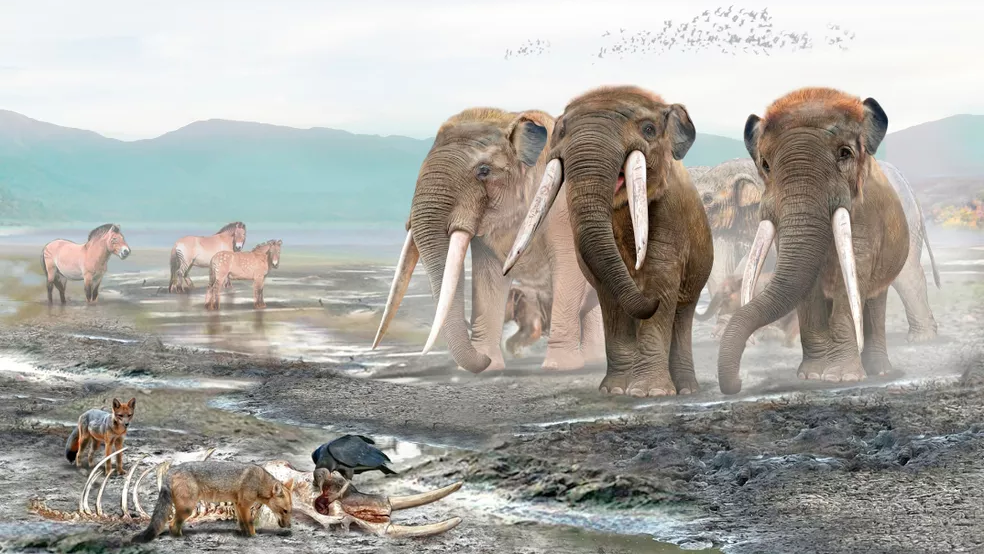
Археологичид Чилийн Тагуа Тагуа нуурын эрэг дээрээс 13,000 жилийн тэртээх эртний хүмүүс заантай төстэй гомфотер амьтдыг агнаж, хүнсэндээ хэрэглэж байсныг нотлох олдворуудыг илрүүлжээ.
Каталоны Хүний палеоэкологи, нийгмийн хувьслын хүрээлэнгийн (IPHES-CERCA) судлаачид сүүлийн хоёр жилийн хугацаанд явуулсан малтлагаар чулуун зэвсэг болон мегафауна буюу аварга амьтдын үлдэгдлийг олноор нь олсон байна. Гомфотер буюу соёот хөхтөн амьтдын ясан дээр хурц иртэй зэвсгээр огтолсон ул мөр байгаа нь тухайн үеийн уугуул иргэд эдгээр амьтдыг нядалж байсныг гэрчилж байна. Олдворуудын нас нь 12,000-13,000 жилийн тэртээд хамаарч байгаа нь Өмнөд Америкийн өмнөд хэсэгт анчин-түүвэрлэгчдийн бүлгүүд эрт үеэс нутаглаж байсныг баталж буй чухал нотолгоо юм.
Тус бүс нутгаас өмнө нь устаж үгүй болсон адуу, бугын төрөл зүйлийн үлдэгдэл олдож байсан бөгөөд тэдгээр нь мөн л хүний гараар хийсэн огтлолтын болон галд түлэгдсэн ул мөртэй байв. Археологичдын үзэж буйгаар эдгээр олдворууд нь Өмнөд Америкт өнөөг хүртэл олдож байсан олдворуудтай харьцуулахад хосгүй ач холбогдолтой бөгөөд эртний хүмүүс Америк тивд хэрхэн суурьшиж, аварга амьтдыг хэрхэн ашиглаж байсныг илүү тодорхой болгож байна.
Судлаачид малтлагаар цуглуулсан тунадас болон амьтдын ясны үлдэгдэлд нарийвчилсан шинжилгээ хийхээр төлөвлөж байна. Энэхүү судалгаа нь эртний хүмүүс Өмнөд Америкийн эх газрын өмнөд үзүүрт анх хэзээ ирсэн, тэдний аж төрөх арга барил ямар байсныг тогтооход чухал хувь нэмэр оруулах юм.
Дэлгэрэнгүйг эх сурвалжаас харах
↓Эх сурвалжийг нээх ↓
Bones from extinct elephant-like creatures discovered along the shore of Lake Tagua Tagua in central Chile bear human-made cut marks and were found alongside stone tools, revealing that some of the first humans to live there were killing and eating these animals 13,000 years ago, new research shows.
Archaeological excavations carried out over the past two years in the basin of the ancient lake revealed a large concentration of megafauna remains and stone tools, according to a Sept. 24 statement from the Catalan Institute for Human Palaeoecology and Social Evolution (IPHES-CERCA). Several bones from gomphotheres, an extinct group of tusked mammals related to modern elephants, displayed clear cut marks, suggesting that Indigenous people butchered the animals at the site.
The animal bones and artifacts date to around 12,000 to 13,000 years ago, according to the statement, which means they provide further evidence of early human occupation in southern South America as hunter-gatherers repeatedly visited the ancient lake shore.
The earliest confirmed archaeological site in South America is Monte Verde, which dates to about 14,500 years ago and is also located in Chile. Other early Indigenous sites on the continent include Huaca Prieta in Peru and Arroyo Seco in Argentina, both of which are around 14,000 years old.
Archaeologists had previously discovered the remains of other animals in the Lake Tagua Tagua basin, including now-extinct American horses and deer species, some of which also show evidence of cut marks and burning that suggest ancient humans were cooking and eating them.
- 1,100-year-old mummy found in Chile died of extensive injuries when a turquoise mine caved in, CT scans reveal
- Monte Verde, one of the earliest Indigenous sites in South America, is much younger than thought, study claims. But others call it ‘egregiously poor geological work.’
- Rare form of leprosy infected people in Americas before European arrival, 4,000-year-old bones suggest
The well-preserved assemblage of animal bones, plant remains and stone tools that archaeologists have unearthed constitute “a record with no known parallels currently in South America,” IPHES-CERCA representatives said in the statement, providing key information about when people first arrived in the Americas and the earliest Americans’ exploitation of the continents’ megafauna before the animals went extinct.
Now that the research team has completed their fieldwork, they will study the samples of sediment and remains they’ve excavated over the past few years.
According to the statement, the analyses will help narrow down when humans first lived in the Lake Tagua Tagua basin and help figure out how humans were killing, butchering and eating the animals they encountered as some of the first people to reach the Southern Cone of South America.
How much do you know about the first people to reach the Americas? Find out with our First Americans quiz!

