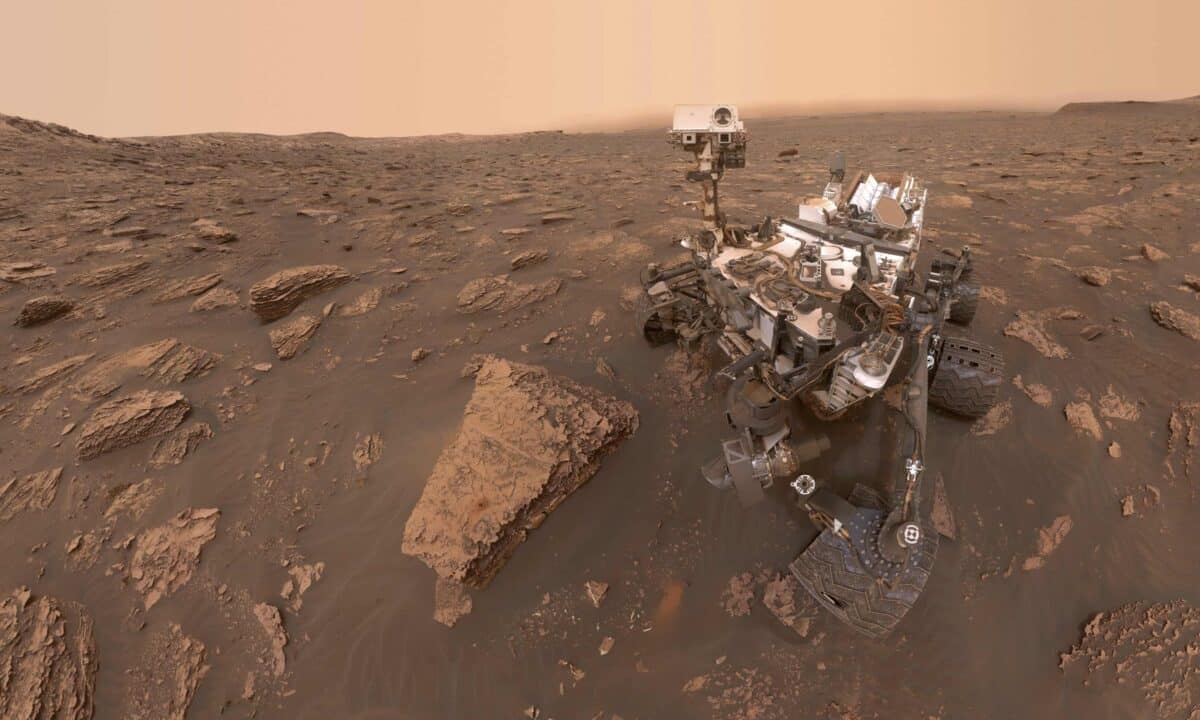
NASA-гийн “Curiosity” роботын цуглуулсан дээжээс илэрсэн томоохон органик молекулууд Ангараг гараг дээрх эртний химийн үйл явцыг судлахад чухал ач холбогдолтой болохыг эрдэмтэд тогтоожээ.
2013 оны тавдугаар сарын 19-нд “Curiosity” ровер Ангараг гарагийн Гэйл тогоон дахь “Cumberland” хэмээх чулуулгаас дээж авсан бөгөөд уг дээжийг олон жилийн турш янз бүрийн аргаар шинжилж байна. 2025 оны гуравдугаар сарын 24-нд “Proceedings of the National Academy of Sciences” сэтгүүлд нийтлэгдсэн судалгаагаар, тус дээжнээс Ангараг гараг дээр урьд өмнө бүртгэгдээгүй хамгийн том органик молекулууд болох декан, ундекан, додекан илэрчээ. Судлаачид эдгээр бодисыг өөхний хүчлүүдийн үлдэгдэл байж болзошгүй хэмээн таамаглаж байгаа бөгөөд үүнийг батлахын тулд лабораторийн нөхцөлд загварчилсан туршилт хийсэн байна.
Дэлхий дээр өөхний хүчлийг амьд бие махбод эсийн мембран бүрдүүлэхэд ашигладаг ч энэ нь геологийн үйл явцаар, тухайлбал ус болон эрдэс бодисын харилцан үйлчлэлээр ч үүсэх боломжтой юм. Иймд илэрсэн молекулууд нь биологийн болон биологийн бус гаралтай байх магадлалтай тул эрдэмтэд одоогоор тэдгээрийн үүслийг эцэслэн тогтоох боломжгүй гэж үзэж байна.
Судалгааны багийн ахлагч Каролин Фрейссинет болон түүний хамтрагчид Ангараг гарагийн эрс тэс уур амьсгал, цацраг идэвхт туяаны нөлөөгөөр органик нэгдлүүд устах эрсдэлтэй ч эртний чулуулгаас тэдгээрийг илрүүлж буй нь ирээдүйд амьдралын ул мөрийг олох боломжтойг харуулж байна гэв. Гэсэн хэдий ч “Curiosity” роботын төхөөрөмжүүд нь илүү урт гинжин хэлхээтэй молекулуудыг илрүүлэхэд зориулагдаагүй тул цаашдын судалгааг илүү нарийвчлалтай хийхийн тулд Ангараг гарагийн дээжийг Дэлхий рүү авчрах шаардлагатай байгааг мэргэжилтнүүд онцолжээ.
Дэлгэрэнгүйг эх сурвалжаас харах
↓Эх сурвалжийг нээх ↓
On May 19, 2013, the 279th Martian day of its mission, NASA’s Curiosity rover drilled a hole about 0.6 inches wide and 2.6 inches deep into a rock called Cumberland in Gale Crater. The powder it collected has been analyzed many times since using different techniques. More than a decade later, scientists are still learning from the same sample.
Cumberland is located in Yellowknife Bay, an area that appeared to be an ancient lakebed on Mars. Scientists considered the site important enough to direct Curiosity there before the rover continued toward its main destination, Mount Sharp. Earlier studies found that the sample is rich in clay minerals, which form in water, as well as sulfur, which can help preserve organic molecules.
Scientists also determined that Yellowknife Bay was once the site of an ancient lake. Such an environment could have concentrated organic molecules and helped preserve them in fine-grained mudstone. That made the Cumberland sample especially useful for studying the chemistry of ancient Mars.
In 2015, Caroline Freissinet co-led a team that conclusively identified Martian organic molecules in the same Cumberland sample. Her latest analysis, however, began with a different goal. The researchers were looking for amino acids, the building blocks of proteins.
The team heated the Cumberland sample twice in the oven of Curiosity’s Sample Analysis at Mars (SAM) instrument and then measured the mass of the molecules released. They found no evidence of amino acids. Instead, the sample released small amounts of decane, undecane and dodecane, molecules containing 10, 11 and 12 carbon atoms.
According to a study published in the Proceedings of the National Academy of Sciences on March 24, 2025, these are the largest organic molecules on Mars found to date. Freissinet is the study’s lead author and a research scientist at the French National Centre for Scientific Research. She is based at the Laboratory for Atmospheres and Space Observations in Guyancourt, France.
Testing the Fatty Acid Explanation for Curiosity’s Mars Molecules
Heating can break larger molecules into smaller pieces, so the researchers considered what the detected compounds might have come from. They hypothesized that decane, undecane and dodecane were remnants of the fatty acids undecanoic acid, dodecanoic acid and tridecanoic acid, respectively. The fatty acids themselves were not directly detected but were inferred from the fragments produced during heating.
To test the idea, the team mixed undecanoic acid into a Mars-like clay and carried out an experiment designed to resemble the analysis performed by SAM. When the material was heated, it released decane, as predicted. For the other two pairings, the researchers relied on previously published experiments showing that undecane could break off from dodecanoic acid and dodecane from tridecanoic acid.

On Earth, living organisms produce fatty acids for functions that include forming cell membranes. However, fatty acids can also form without life through geological processes. These include reactions involving water and minerals, such as those that occur in hydrothermal vent environments.
Because fatty acids can form through both biological and non-biological processes, the researchers cannot determine which route produced the Martian molecules. The study does not establish a biological origin for the material found in Cumberland. NASA’s account also states that there is currently no way to confirm the source of the molecules identified.
Why the Origin of the Organic Molecules on Mars Is Still Open

The researchers noticed another detail in the presumed fatty acids. Each would have a long, straight carbon chain containing between 11 and 13 carbon atoms. According to the study, non-biological processes typically produce shorter fatty acids containing fewer than 12 carbon atoms.
That pattern does not answer the question of ancient life on Mars. The scientists say longer-chain fatty acids may also be present in Cumberland, but SAM is not optimized to detect them. The current data therefore do not show whether larger fatty acids are present in the sample.
The findings also relate to a long-standing question about whether complex organic molecules can survive on Mars for very long periods. Molecules that can be made only in the presence of life, known as biosignatures, might not survive tens of millions of years of intense radiation and oxidation. The new study increases the chances that such molecules could remain preserved long enough to be detected in Martian samples.

“Our study proves that, even today, by analyzing Mars samples we could detect chemical signatures of past life, if it ever existed on Mars,” Freissinet said. Her statement refers to the possibility of detecting preserved chemical signatures rather than evidence that life has already been found. The Cumberland results show that organic material can remain detectable in ancient Martian rock.
Daniel Glavin, senior scientist for sample return at NASA’s Goddard Space Flight Center and a co-author of the study, also pointed to the history of water in Gale Crater. “There is evidence that liquid water existed in Gale Crater for millions of years and probably much longer, which means there was enough time for life-forming chemistry to happen in these crater-lake environments on Mars,” he said. His comment points to the amount of time that chemical processes had to take place in the ancient lake environment.
Curiosity’s results still leave a limit that instruments operating directly on Mars cannot easily overcome. The fatty acids behind decane, undecane and dodecane remain a hypothesis, while the instrument was not built to search for the longer chains that could provide more information. Scientists therefore point to one next step that could allow the material to be examined in far greater detail: Mars sample return, which would bring Martian samples to Earth for analysis with the most sophisticated laboratory instruments available.
Enjoyed this article? Subscribe to our free newsletter for engaging stories, exclusive content, and the latest news.

