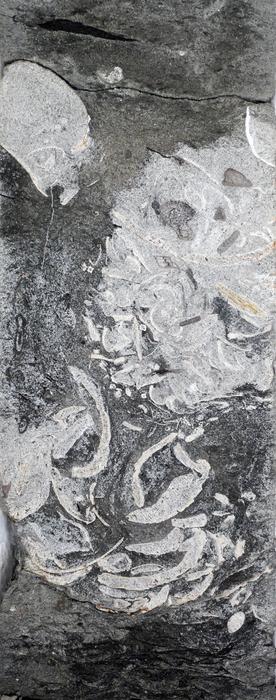
Норвегийн Equinor компанийн палеонтологич Дирк Кнауст газрын тос, байгалийн хийн өрөмдлөгийн явцад олдсон чулуулгийн дээжүүдээс эртний далайн махчин амьтдын үлдээсэн бөөлжис болохыг тогтоожээ.
Палеонтологич Дирк Кнауст сүүлийн гучин жилийн турш Хойд тэнгисийн ёроолын хөрсний дээжүүдэд судалгаа хийх явцдаа хясаа, далайн өт, далайн сараана болон эртний ургамлын үлдэгдэл бүхий ер бусын бөөгнөрлүүдийг илрүүлжээ. Эдгээр олдворыг шинжилж үзэхэд шуурганы улмаас хуримтлагдсан эсвэл амьтны нүх ухалтаас үүдэлтэй үлдэгдэл биш, харин хоол боловсруулах эрхтний хүчлийн нөлөөгөөр зэвэрсэн, нягт бүтэцтэй болох нь тогтоогдсон байна. Судлаачид эдгээр олдворыг шар шувууны бөөлжистэй адилтган “регургиталит” хэмээн нэрлэжээ.
Эдгээр олдвор нь ихэвчлэн голын адаг орчмын хурдас давхаргаас олдсон бөгөөд зарим далайн амьтны үлдэгдэл нь зөвхөн давстай усанд амьдардаг төрөл зүйл байсан нь эртний махчин амьтад далайн гүнээс олзлон ирж, эрэг орчимд боловсруулаагүй үлдэгдлээ гадагшлуулдаг байсныг илтгэж байна. Олдворт ямар нэгэн шүдний мөр эсвэл хазаж тасдсан ул мөр байхгүй байгаа нь махчин амьтдын хооллох онцлогтой холбоотой байж болох юм.
Судлаачийн таамаглаж буйгаар, эдгээр бөөлжис нь 4-өөс 8 метр урттай, урт хүзүүт плезиозавр хэмээх далайн амьтдынх байх магадлалтай байна. Тэдний жижиг толгой, урт хүзүү нь хясаа зэрэг хатуу бүрхүүлтэй амьтдыг бүхлээр нь залгихад тохиромжтой байсан бөгөөд хоол боловсруулах явцад шингээж чадаагүй хатуу хэсгүүдээ ийнхүү буцаан гаргадаг байжээ. Энэхүү нээлт нь өмнө нь зүгээр л хог хаягдал эсвэл хясааны хэлтэрхий гэж андуурч байсан олдворуудыг дахин үнэлэх боломжийг олгож байна.
Дэлгэрэнгүйг эх сурвалжаас харах
↓Эх сурвалжийг нээх ↓
A pile of 160-million-year-old fossilized vomit, unearthed from rock cores beneath the North Sea, is giving paleontologists an unusually vivid window into how ancient marine predators hunted and fed. The clusters of shell fragments and marine debris appear to be regurgitated meals from plesiosaurs, long-necked sea creatures that once patrolled Jurassic coastal waters.
The find didn’t come from a dedicated dinosaur dig, but from decades of routine drilling work. Palaeontologist Dirk Knaust, who works for the Norwegian energy company Equinor, spent thirty years combing through thousands of meters of rock samples pulled from beneath the seabed, material dating to a period when today’s North Sea was a patchwork of shallow lagoons, river deltas, and coastlines. Buried in that rock, he kept noticing small, oddly packed clusters of fossil material that didn’t quite fit any obvious explanation.
A Puzzle Hidden in the Rock Cores
The clusters, typically just a few centimeters wide, varied in makeup. Some were dominated by broken seashells, others by the remains of tube-dwelling marine worms, and still others by fragments of crinoids, the starfish-like creatures related to modern sea urchins. Occasionally, bits of ancient plant material turned up mixed in as well.
According to a statement on the study, no matter how Knaust compared the species present, their shapes, or the surrounding geology, the combinations simply didn’t make sense as natural accumulations.
That mismatch turned out to be the key. Storms typically pile shells together in fairly uniform ways, and burrowing animals tend to scatter material through sediment rather than concentrate it. These clusters behaved differently. They are tightly packed, sometimes showing signs of corrosion consistent with digestive fluids, and made up of irregular, largely undigested fragments. That ruled out fossilized feces, which has a distinct chemical signature, and pointed instead toward something Knaust hadn’t initially been looking for, which was vomit.
Owl Pellets, but Underwater
Knaust‘s comparison point was surprisingly familiar. In the study, he stated that owls swallow prey whole, digest what they can, and cough up compact pellets of bone and fur, a phenomenon birdwatchers actively search for on the ground. The Jurassic clusters, formally described as “regurgitalites,” seem to preserve the same basic process, just with shells and hard marine remains standing in for bones and fur.
Location added another layer to the story. Many of the clusters turned up in ancient river-delta deposits, places where freshwater inflow would have constantly shifted the water’s salinity. But some of the animals found inside, certain crinoids and tube worms among them, needed consistently salty, fully marine conditions to survive.

That suggests a predator gathered them further out at sea, then swam toward the coast before bringing them back up, plant fragments included.
A Likely Suspect With No Teeth To Prove It
Pinning down exactly who did the vomiting is harder, since the clusters contain no teeth or bite marks to work from. Knaust weighed several candidates, including ancient sharks and marine crocodile relatives, but his leading suspects are the cryptoclidids, a family of long-necked plesiosaurs that lived from the Middle Jurassic into the Early Cretaceous, some reaching four to eight meters in length.
Their small heads and long necks were suited to picking prey off the seabed rather than crushing shells outright, which fits with swallowing hard-shelled animals relatively intact. The behavior itself remains something of a mystery. It may simply have been part of normal feeding rather than a deliberate act, though modern fur seals and dolphins are known to regurgitate indigestible material after eating.

Either way, the discovery suggests similar fossils may already sit unrecognized in existing collections, mistaken for ordinary shell debris rather than the leftovers of a Jurassic sea monster’s meal.
Enjoyed this article? Subscribe to our free newsletter for engaging stories, exclusive content, and the latest news.

