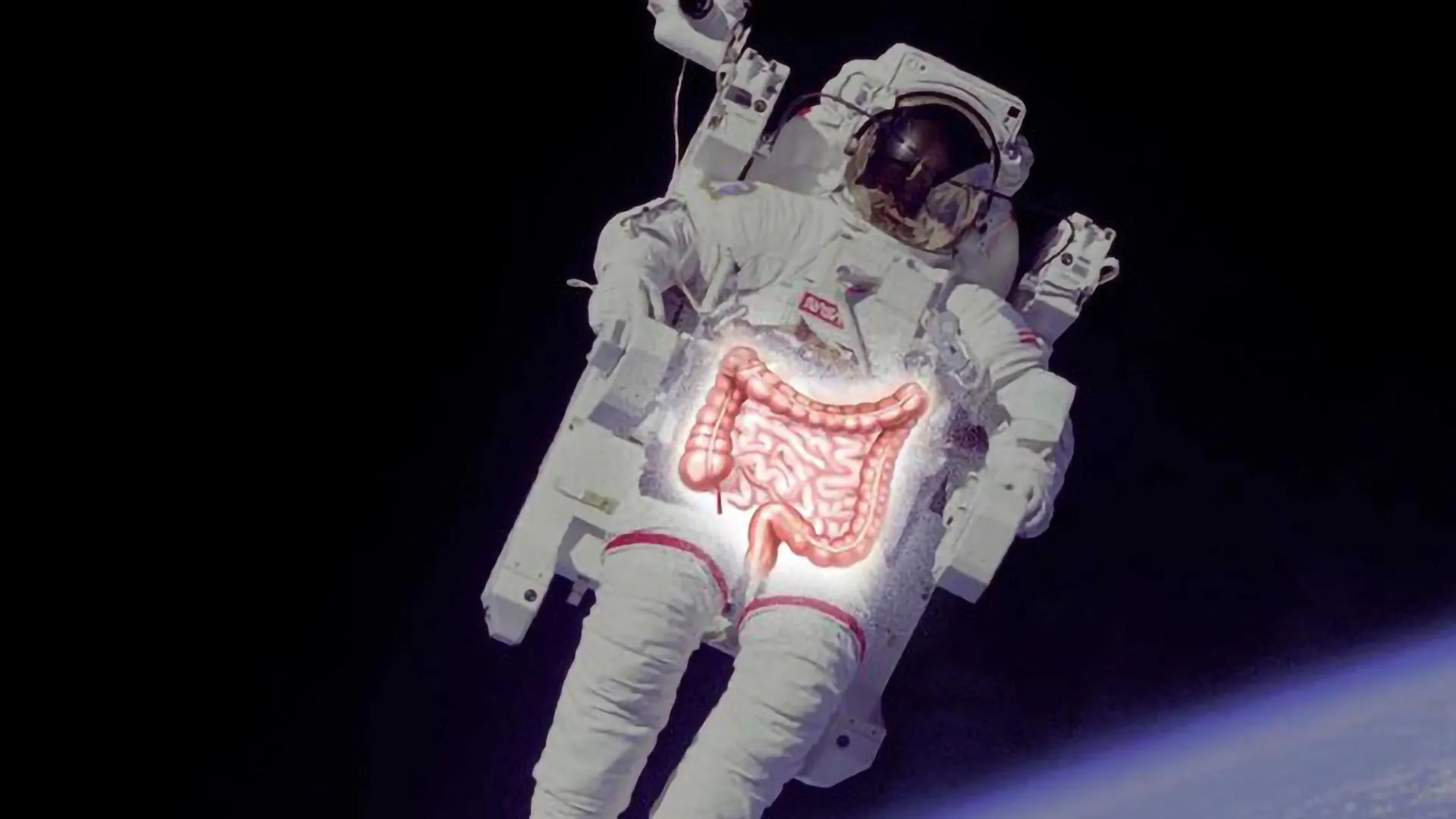
Копенгагены их сургууль болон NASA-гийн хамтарсан судалгаагаар сансарт удаан хугацаагаар байх нь гэдэсний бактерийн үйл ажиллагаанд хэрхэн нөлөөлдгийг тогтоожээ.
Олон улсын сансрын станцад ажилласан 52 сансрын нисгэгчийн цусны шинжилгээг судлаачид задлан шинжилсэн байна. Үр дүнгээс үзэхэд сансрын нисгэгчид Дэлхийг орхин одсоноос хойш хэдхэн долоо хоногийн дотор гэдэсний бактериуд эслэгийг бус, уургийг исгэх үйл явц эрчимждэг болох нь тогтоогджээ. Энэхүү өөрчлөлт нь сансрын нисгэгчдийг Дэлхийд эргэн ирэх хүртэл үргэлжилдэг байна.
Судлаачдын таамаглаж буйгаар, таталцлын хүчгүйн улмаас хоол хүнс гэдэс дотор удаан хөдөлж, улмаар бактериуд уургийг исгэхэд илүү их хугацаа зарцуулдаг аж. Энэхүү үйл явц нь сансрын нисгэгчдийн дунд түгээмэл тохиолддог өтгөн хаталтын шалтгаан байж болзошгүй гэж үзэж байна. Уургийн исэлтийн бүтээгдэхүүн нь бөөр гэмтээх, анхаарал төвлөрөлт бууруулах, сэтгэл санаанд нөлөөлөх зэрэг эрүүл мэндийн сөрөг үр дагаварт хүргэж болзошгүйг эрдэмтэд анхаарууллаа.
Ангараг гараг руу хийх урт хугацааны нислэгүүдийн үед сансрын нисгэгчдийн гэдэсний эрүүл мэндийг хамгаалах арга хэмжээ авах шаардлагатай гэж судлаачид үзэж байна. Тухайлбал, хоол хүнсэн дэх эслэгийн хэмжээг нэмэгдүүлэх, пребиотик нэмэлт тэжээл хэрэглэх эсвэл гэдэсний гүрвэлзэх хөдөлгөөнийг идэвхжүүлэх эмчилгээ хийх нь үр дүнтэй байж болох юм.
Энэхүү судалгааны үр дүн нь сансрын нисгэгчдээс гадна Дэлхий дээр удаан хугацаагаар хэвтэрт байдаг өвчтөнүүдэд ч хамааралтай байж болох юм. Хөдөлгөөний хомсдолтой хүмүүсийн гэдэсний хөдөлгөөн удааширснаас үүдэн ижил төстэй исэлтийн үйл явц явагдаж, эрүүл мэндийн байдлыг нь хүндрүүлдэг байх талтай гэж эрдэмтэд дүгнэжээ.
Дэлгэрэнгүйг эх сурвалжаас харах
↓Эх сурвалжийг нээх ↓
Constipation is a familiar problem for astronauts, but scientists have not fully understood why spending time in space can disrupt normal digestion.
New research from the University of Copenhagen, conducted in collaboration with NASA, offers a possible explanation. Scientists analyzed blood samples from 52 astronauts who spent months aboard the International Space Station and found signs that the digestive system begins changing relatively soon after astronauts leave Earth.
“We see changes in astronauts’ blood samples that indicate that the gut bacteria begin to ferment protein to a greater extent than usual within weeks after the astronauts arrive in space, and this change continues until they are back on Earth,” says joint first author and associate professor at the Department of Nutrition, Exercise and Sports, Giorgia La Barbera.
Gut Bacteria Shift Toward Protein
Protein fermentation occurs when bacteria in the intestines begin breaking down protein rather than fiber because available dietary fiber has already been used. The process is not unique to astronauts and can also occur in people on Earth.
The researchers suspect that microgravity may slow the movement of food through the digestive tract. If food remains in the intestines longer, bacteria have more time to turn to protein fermentation.
“The lack of gravity in space probably causes food to move more slowly through the intestine, and this fits with the fact that we are seeing signs of increased protein fermentation. This may also help explain constipation in astronauts,” says co-author of the article Henrik Roager, who is also an associate professor at the Department of Nutrition, Exercise and Sports.
Gut Changes Could Affect the Brain
The findings came from an investigation of metabolites in astronauts’ blood. Metabolites are small molecules circulating through the bloodstream that can provide clues about how the body is functioning.
By analyzing these molecules, researchers can learn about processes ranging from diet and metabolism to what is happening inside the intestines.
The results could matter beyond digestion because changes in the gut can influence other parts of the body, including the brain.
“We know that products of protein fermentation [are] often associated with negative health consequences, such as kidney damage, potential effects on mood or reduced ability to focus, among others,” says Lars Ove Dragsted, senior author of the study and professor at the Department of Nutrition, Exercise and Sports.
Why This Matters for Missions to Mars
The findings could become especially important as space agencies prepare for longer missions to the Moon and eventually Mars. Astronauts on those journeys may spend far more time away from Earth’s gravity than crews currently stationed aboard the International Space Station.
“When we plan for longer journeys in space – for example to Mars countermeasures may be needed to mitigate negative effects of space travel on the intestines,” says Giorgia La Barbera.
Researchers say several approaches might help reduce these digestive changes.
“Our findings can inform potential interventions – either directly through increasing dietary fiber, supplementation with prebiotics or other types of treatments that promote peristalsis and decrease gut transit time. This would help reduce protein fermentation and thus provide a healthy gut environment and avoid negative health consequences,” adds Henrik Roager.
Peristalsis refers to the coordinated muscle contractions that move food and waste through the digestive system. Supporting that movement could shorten the amount of time material remains in the intestines and reduce the opportunity for excessive protein fermentation.
The Findings Could Also Help Patients on Earth
The work may also have implications far beyond spaceflight.
People who spend extended periods confined to bed often experience constipation as well. Researchers suggest that slowed intestinal movement in these patients could potentially produce similar changes in gut fermentation.
“You can use this knowledge to help bedridden patients. They also experience constipation and likely also have increased protein fermentation that may aggravate health conditions,” concludes Lars Ove Dragsted, senior author of the paper.
What Is Protein Fermentation?
Protein fermentation happens when bacteria in the gut begin breaking down protein after they no longer have enough fiber available.
The process is more likely when food remains in the intestines for an extended period, even if a person does not feel noticeably constipated.
As bacteria digest protein, they produce various metabolites. These molecules can enter the bloodstream and travel throughout the body.
Some can also influence the brain through the gut-brain axis, the two-way communication system linking the digestive tract and the brain.
Previous research has associated metabolites produced during protein fermentation with effects on the brain, including anxiety and reduced ability to concentrate.
Why the Results Were Unusually Clear
Research on blood metabolites can be difficult to interpret because metabolism differs considerably from person to person.
The unusual nature of the astronaut data helped researchers overcome some of that variability and strengthened confidence in the pattern they observed.
“The samples we have analyzed come from a total of 52 different astronauts, on different missions and across many years. This is very different from how you normally do a study. So, it is quite impressive that our method has been able to show so clearly that there is consistently more protein fermentation,” says joint first author and assistant professor Jan Stanstrup.
How the Study Was Conducted
The researchers examined how human metabolism changes during spaceflight by measuring metabolites in astronauts’ blood.
Their analysis indicated that protein fermentation in the intestines increases when astronauts leave Earth and enter microgravity. The blood samples also revealed smaller changes associated with fish and caffeine consumption.
Rather than searching only for predetermined substances, the researchers used a so-called non-targeted approach. This allowed them to analyze the broad range of metabolites in the blood and identify which ones changed during spaceflight.
The samples came from three studies conducted aboard the International Space Station. Even though only small quantities of blood were available, researchers were able to perform additional analyses and extract more scientific information from the existing studies.
The collaboration between researchers at the University of Copenhagen and NASA also highlights the international scientific cooperation made possible by the ISS.
NASA researchers Sara R. Zwart and Scott M. Smith contributed to the study. University of Copenhagen researchers Giorgia La Barbera, Jan Stanstrup, Henrik M. Roager and Lars Ove Dragsted also contributed.

