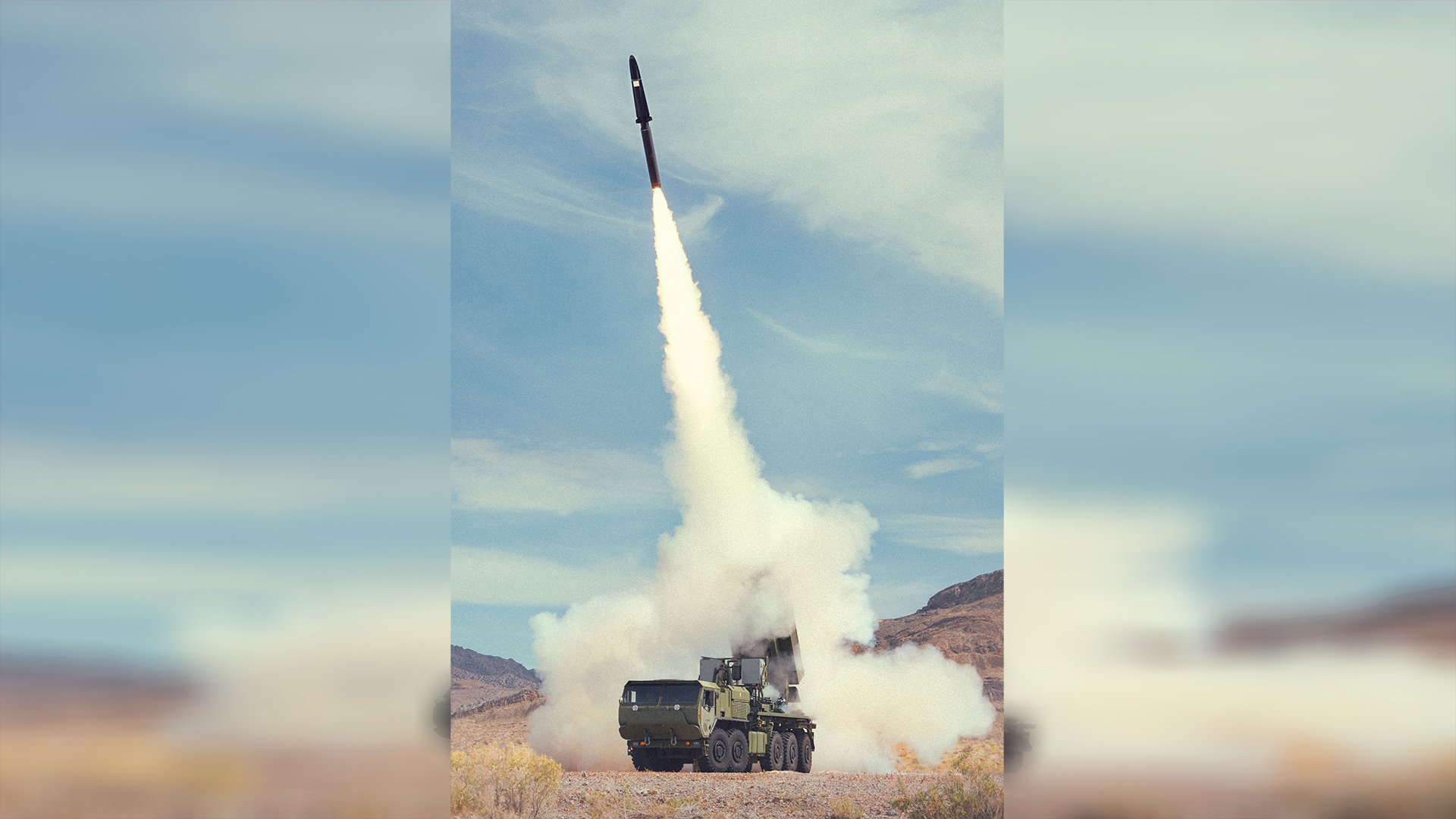
Кастелион компани АНУ-ын армид зориулан хөгжүүлж буй “Blackbeard” гиперсоник пуужинг газрын тээврийн хэрэгсэлд суурилуулсан төхөөрөмжөөс харваж буй анхны зургийг олон нийтэд үзүүллээ.
Кастелион компанийн мэдээлснээр, тус пуужинг өндөр хөдөлгөөнт ачааны машины явах эд анги дээр суурилуулсан харвагчаас хөөргөсөн байна. Энэхүү “Blackbeard GL” загвар нь АНУ-ын армийн одоо ашиглаж буй MFOM пуужингийн систем болон ирээдүйд HIMARS-ийн гал удирдах системтэй уялдуулан ажиллахаар төлөвлөгдөж буй контейнержүүлсэн харвагч архитектурын нэг хэсэг юм. 2027 оны санхүүгийн жилийн төсвийн баримт бичигт тусгаснаар, уг хөтөлбөрийн хүрээнд үйлдвэрлэлийн загварт ойртсон “Blackbeard GL” болон харвагч хонгилыг бодит гал тавих туршилтад оруулахаар төлөвлөж байна.
“Blackbeard” пуужин нь “Precision Strike Missile” (PrSM) системийн хүчин чадлын 80 орчим хувийг илүү хямд зардлаар гүйцэтгэх зорилготой бөгөөд цаг хугацааны хувьд мэдрэмтгий, бэхлэгдсэн байг устгахад чиглэгдэнэ. Пентагон тус системийг баталгаажуулсны дараа жил бүр дор хаяж 500 ширхэг пуужин худалдан авах гэрээ байгуулахаар төлөвлөж байгаа бөгөөд таван жилийн хугацаанд нийт 12,000 гаруй пуужин худалдан авах боломжийг судалж байна. Энэ нь АНУ-ын цэргийн салбарт хямд өртөгтэй, олноор үйлдвэрлэх боломжтой нарийвчлалт зэвсгийн нөөцийг бүрдүүлэх өргөн хүрээний бодлогын нэг хэсэг юм.
Газрын хувилбараас гадна Кастелион компани уг пуужинг АНУ-ын тэнгисийн цэргийн F/A-18E/F Super Hornet сөнөөгч онгоцонд нэгтгэхээр ажиллаж байна. Энэ оны дөрөвдүгээр сард тус компани пуужинг агаарын хөлөгт нэгтгэх болон эхний үе шатны үйл ажиллагааны чадавхыг бүрдүүлэхэд зориулж 105 сая ам.долларын гэрээ байгуулсан бол дараа нь 23.4 сая ам.долларын өртөг бүхий 50 ширхэг пуужин нийлүүлэх захиалга авчээ. Энэхүү хөтөлбөр нь Номхон далайн бүс нутагт үүсэж болзошгүй томоохон мөргөлдөөний үед зэвсгийн үйлдвэрлэлийг хэрэгцээ шаардлагад нийцүүлэн тогтвортой байлгах зорилготой юм.
Дэлгэрэнгүйг эх сурвалжаас харах
Эх сурвалжийг нээх ↓
Castelion has released what appears to be the first image of its relatively ‘cheap’ Blackbeard hypersonic missile being fired from a ground launcher, providing a new look at the containerized launch architecture now under development for the U.S. Army.
The photograph, posted by Castelion on X, shows a Blackbeard missile leaving a launcher mounted on a high-mobility truck chassis. While the missile itself is by now a familiar sight, the new image offers a first public glimpse of how Castelion intends to package and operate the ground-launched version of Blackbeard, known as Blackbeard GL.
The Army’s previously disclosed plans for the program call for an initial Blackbeard ground-launch demonstration using a modified Multiple Launch Rocket System Family of Munitions, or MFOM, pod, followed by the development of Blackbeard GL prototypes and a dedicated launcher pod. Ultimately, the service intends to conduct an MVP flight test using the M142 High Mobility Artillery Rocket System’s (HIMARS) fire-control system.
The Army’s Fiscal Year 2027 budget documentation indicates that this effort is moving toward increasingly representative hardware. Among the milestones listed for FY2027 is a live-fire launch of a “production representative” Blackbeard GL and launcher pod.
Castelion has already released extensive imagery of Blackbeard test vehicles, and the company formally unveiled the weapon’s current external configuration earlier this year. Those images showed a two-stage arrangement with a booster and an upper vehicle that has characteristics consistent with a hypersonic glide or maneuvering payload. Compared to the air-launched version, seen below, the ground-launch model lacks the cruciform tailfins at the rear of the lower stage, but otherwise appears similar.
The precise propulsion system and flight profile of the production weapon remain undisclosed. Little is known about its performance parameters, either. Castelion has previously hinted that the missile could strike targets at ranges of just under 500 miles, although its range would likely be reduced when launched from the ground, without the altitude and speed provided by an aircraft launch platform.
The launcher appears to use a relatively compact enclosed container, consistent with the Army’s stated interest in leveraging the existing MFOM ecosystem and, eventually, HIMARS. The photograph doesn’t establish how many Blackbeards could be carried by a single launcher, although, based on the dimensions, at least two and perhaps as many as four missiles appears a feasible load.
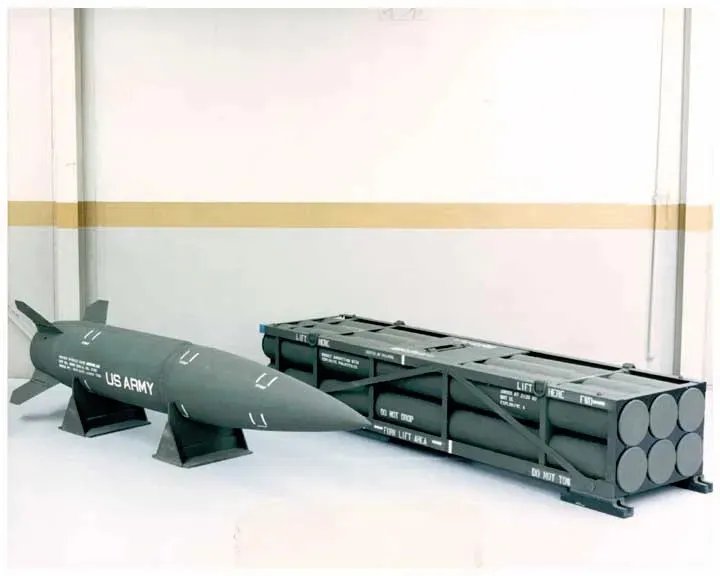
Exactly how closely the pictured launcher corresponds to the eventual production Blackbeard GL pod is also not yet clear. Castelion has previously stressed that its test hardware is deliberately designed to support rapid development cycles and should not necessarily be interpreted as representative of the final weapon system.
Castelion had previously shown Blackbeard-related test articles alongside palletized launch equipment, including launch hardware mounted on an Oshkosh MKR18 Logistics Vehicle System Replacement truck. The company has also said it was converting such a vehicle into a launcher for flight testing. That appears to be the vehicle shown in the new image, too.
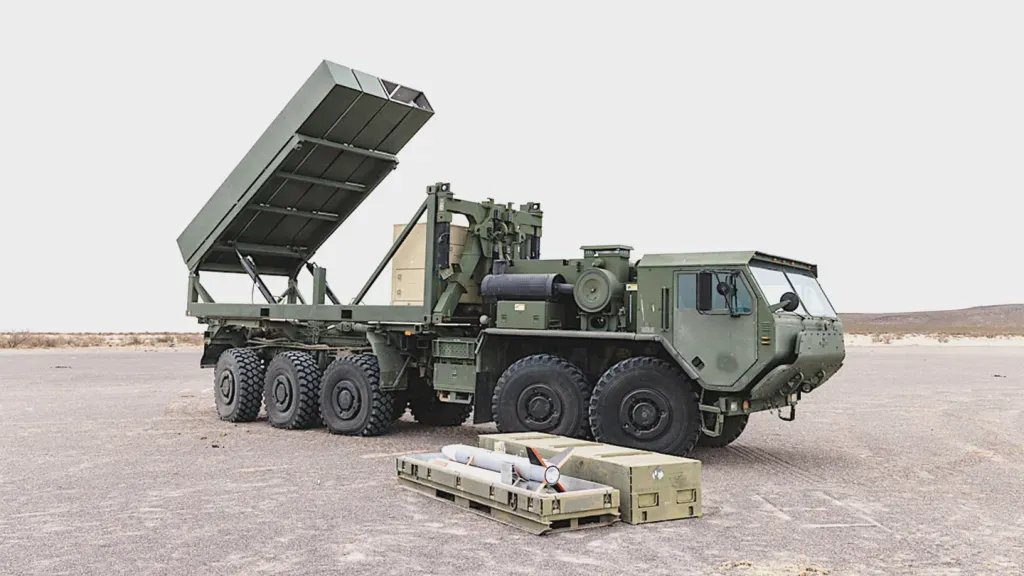
The Army’s interest in Blackbeard GL is rooted in cost as much as performance.
The service has described the weapon as an affordable, mass-produced hypersonic precision-fire capability intended to engage time-sensitive moving and hardened targets. The stated objective has been to obtain roughly 80 percent of the capability of the Army’s planned Precision Strike Missile (PrSM) Increment 4 while achieving a substantially lower cost per round.
Existing U.S. hypersonic weapons such as the Army’s Dark Eagle Long Range Hypersonic Weapon use large, highly specialized launch equipment. Blackbeard is instead being developed around the idea that a hypersonic weapon can be sufficiently compact, inexpensive, and manufacturable to be treated more like a conventional tactical munition.
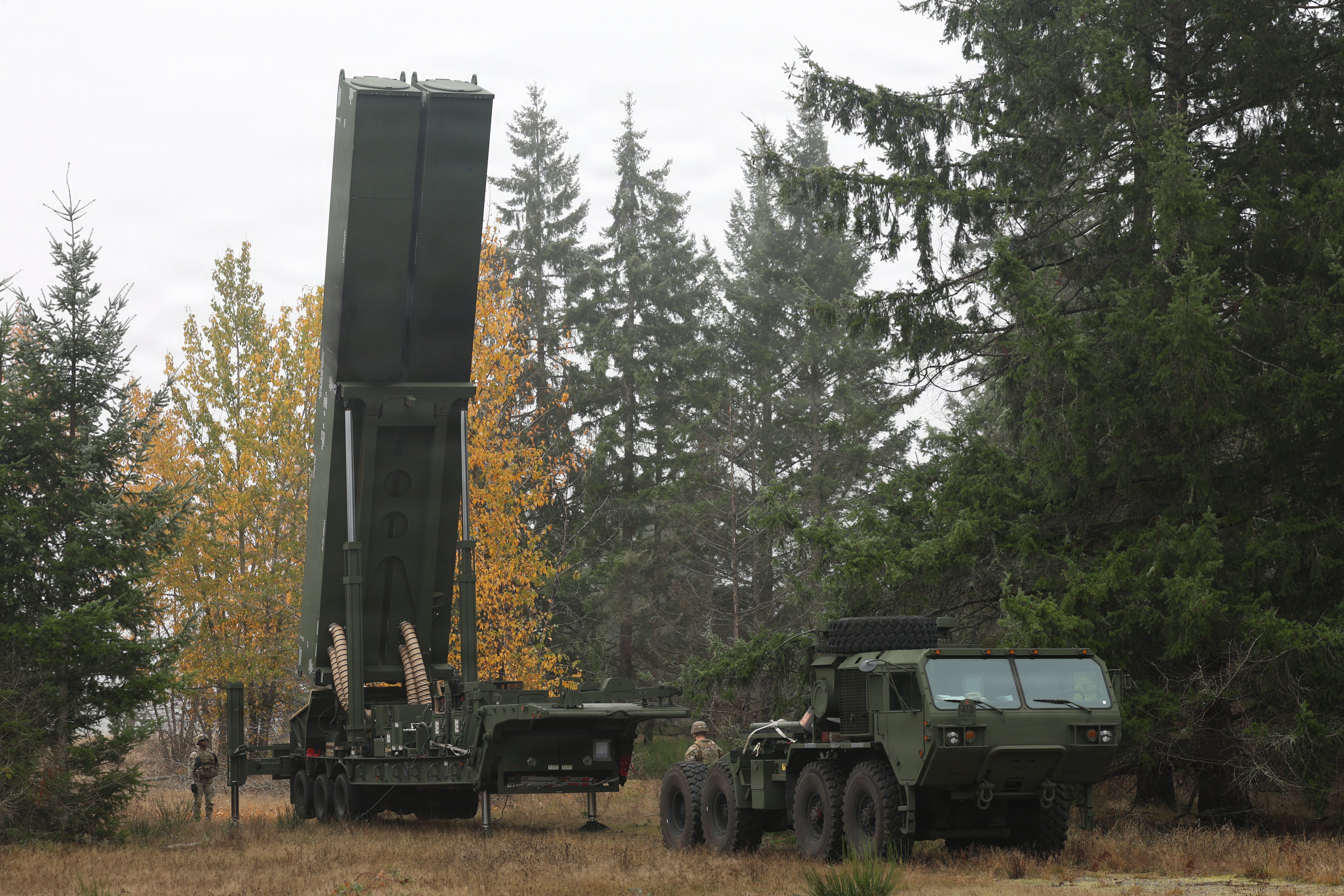
A containerized launcher compatible with an existing mobile fires ecosystem would reinforce that concept. It could allow the Army to introduce a new hypersonic effect without creating an entirely separate launcher, crew, transport, and reload architecture.
The ground-launched version is only one part of Castelion’s broader Blackbeard effort.
The company is also working with the Navy to integrate the weapon onto the F/A-18E/F Super Hornet. In April, Castelion received a $105 million Navy contract supporting integration and the transition toward an early operational capability, while a subsequent $23.4 million order covered 50 early-operational-capability pre-production missiles and associated storage and shipping containers.
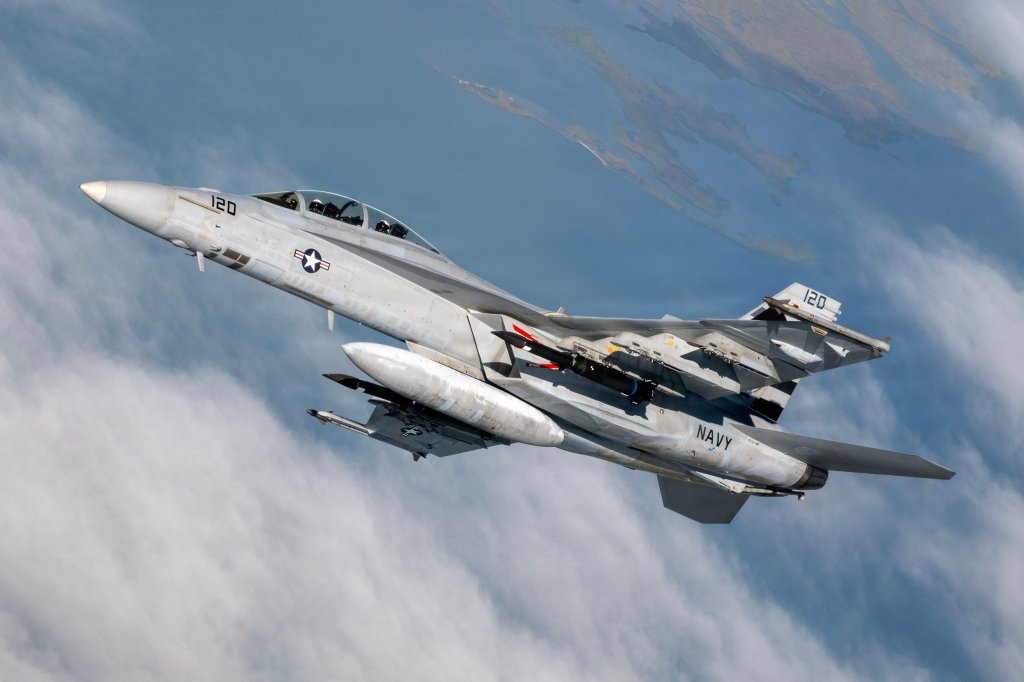
The Navy has since moved into additional procurement, underscoring Castelion’s effort to establish Blackbeard as a weapon that can be produced in the quantities required. Blackbeard could also find its way onto Navy ships and submarines, as well as ground-based launchers, as we have discussed in the past.
As for the Army, the next major milestone will be the planned production-representative Blackbeard GL and launcher-pod live-fire testing.

“Once Castelion achieves testing and validation, the Department will award a two-year multi-year procurement contract for a minimum of 500 Blackbeard missiles annually, with options to extend for up to five years,” the Pentagon announced in May of this year. “To further encourage Castelion’s self-funded facility expansion, the Department is actively seeking the necessary authorizations and appropriations to purchase over 12,000 Blackbeard missiles over five years.”
This reflects a broader and accelerating U.S. military push for lower-cost precision weapons that can be manufactured relatively simply and at scale, increasingly with help from non-traditional defense contractors. The goal is to build large stockpiles affordably before a major contingency, particularly a potential large-scale conflict with China in the Pacific, while ensuring production can keep pace with demand during a prolonged war.
Fow now, Castelion has demonstrated what the Army’s Blackbeard launch system actually looks like when it fires, at least in its initial form.
Contact the author: thomas@thewarzone.com
The post Blackbeard Hypersonic Missile Shown Being Fired From Ground Launcher appeared first on TWZ.

