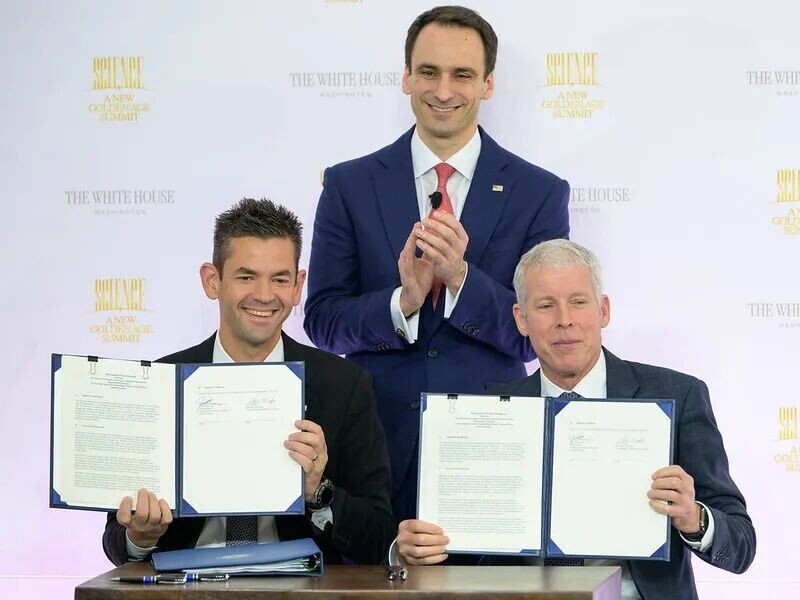
Уг хамтын ажиллагаа нь Марс гариг руу чиглэсэн цөмийн хөдөлгүүртэй сансрын хөлөг бүтээх болон Сарны баазыг эрчим хүчээр хангах зорилготой юм
NASA-гийн захирагч Жаред Айзекман болон Эрчим хүчний сайд Крис Райт нар сансрын цөмийн технологийн чиглэлээр хамтран ажиллах харилцан ойлголцлын санамж бичигт гарын үсэг зурлаа. Энэхүү гэрээ нь судалгаа, түлшний үйлдвэрлэл, туршилт, сансарт хөөргөх үйл ажиллагааг нэгтгэх замаар цөмийн эрчим хүчийг ашиглан сансрын хөлгийн ажиллагааг урт хугацаанд, илүү өндөр хүчин чадалтайгаар явуулах суурь болно гэж талууд үзэж байна.
NASA 2030 он гэхэд Сарны баазыг эрчим хүчээр хангах “Lunar Reactor-1” (LR-1) төслийг хэрэгжүүлэхээр төлөвлөж байгаа бөгөөд одоогоор уг төсөл тогтвортой үргэлжилж байгааг мэдэгдлээ. Үүнээс өмнө 2028 оны 12 дугаар сард хөөргөхөөр төлөвлөж буй “Freedom” нэртэй цөмийн хөдөлгүүртэй хөлөгт зориулсан “Space Reactor-1” (SR-1) реакторыг бүтээх ажил илүү шахуу хугацаатай байна.
SR-1 реактор нь 20 кВт-аас дээш цахилгаан эрчим хүч үйлдвэрлэж, Марс гариг руу чиглэх хөлгийн цахилгаан хөдөлгүүрийг тэжээх зориулалттай. Хөлгийг өмнөх төслүүдэд ашиглахаар бэлтгэж байсан хөлгийн үндсэн бүтцийг өөрчлөн засварлах замаар бүтээнэ гэж гуравдугаар сард танилцуулж байсан ч төслийн явцын талаарх мэдээлэл хангалтгүй байгааг салбарын шинжээчид онцолж байна.
АНУ-ын Засгийн газрын хариуцлагын газар (GAO) сүүлийн жилүүдэд NASA-гийн сансрын төслүүдийн хугацаа хэт шахуу байгааг анхааруулсаар ирсэн. Artemis хөтөлбөрийн хүрээнд хийгдэх Сарны буулт болон бусад төслүүд өмнө нь олон удаа хойшилж байсан тул уг шинэ зорилтуудыг тогтоосон хугацаанд биелүүлэх эсэх нь тодорхойгүй хэвээр байна.
Дэлгэрэнгүйг эх сурвалжаас харах
↓Эх сурвалжийг нээх ↓
NASA and the Department of Energy have agreed to expand their collaboration on the space agency’s nuclear ambitions, as administrator Jared Isaacman pushes ahead with a tight deadline to launch a fission-powered spacecraft to Mars. “We are entering the ‘Nuclear NASA-era,’” Isaacman said at a signing ceremony where he and Energy Secretary Chris Wright signed a joint memorandum of understanding. The MOU, the full text of which doesn’t appear to have been published, establishes a framework for collaboration on space nuclear technology. Per NASA, the agreement “unites both agencies” in pursuing its objectives, with work to include research and fuel production, testing, launch integration, and operations. “Nuclear power will allow us to go farther, operate longer, and field more capable spacecraft and instruments than ever before,” Isaacman added. “The work we’re doing today is laying the foundation for the fission-poweuing NASA’s objred spacecraft of tomorrow and opening an entirely new frontier for exploration and discovery.” NASA has been making big plans to launch nuclear reactors into space since earlier this year when the agency paused work on the orbital Lunar Gateway station in favor of a base on the Moon’s surface. Those plans include a nuclear reactor to power said base, which NASA said on Thursday it intends to have ready for launch by 2030, giving the agency precious little time to meet such an ambitious goal. NASA has provided little evidence the initiative is on track, aside from noting in Thursday’s announcement that it is “making steady progress” on Lunar Reactor-1 (LR-1), the unit it wants to use to power its Moon base. Before then, however, NASA faces an even tighter deadline for Space Reactor-1 (SR-1), which it intends to use to power a nuclear-propelled spacecraft scheduled to launch in December 2028. That’s just over two years away, mind you, and NASA has provided little public evidence of progress on the spacecraft, which it has dubbed “Freedom.” NASA provided details [PDF] for SR-1 back in March when it paused work on the Lunar Gateway, describing the spacecraft as being mostly constructed from a repurposed spacecraft bus that NASA had almost completed for a previous project. The reactor would produce more than 20 kilowatts of electricity to power Freedom’s electric thrusters on its journey to Mars, where it would deliver three Ingenuity-class helicopters to survey potential future human landing sites. Whether that’ll happen on any sort of timeline that resembles the current one is anyone’s guess, but let’s face it: NASA doesn’t exactly have a great track record for getting things done on time. The Government Accountability Office has been watching NASA’s lunar return ambitions for years, and has been noting for nearly a decade that its timelines were more fantasy than reality. In the past couple of years, the GAO has noted that existing NASA timelines were tight enough that any one mishap could push them back considerably, and massive workforce reductions under the second Trump administration haven’t helped matters. The Artemis missions to return humans to the Moon have also suffered a few hitches. Artemis I and Artemis II faced multiple delays, and NASA has since changed Artemis III’s objectives, turning the planned 2027 lunar landing into a demonstration mission in low Earth orbit, in part to address concerns about the readiness of lunar landing systems, including SpaceX’s Starship. We need not remind anyone of the saga of Boeing’s calamity capsule. Who is going to launch that nuclear reactor in just over two years’ time, and will NASA be able to land humans reliably on the Moon’s surface by then? We checked in with NASA to get some assurances things were actually on pace, but didn’t hear back. ®

